



Oak Leather Desk Chair
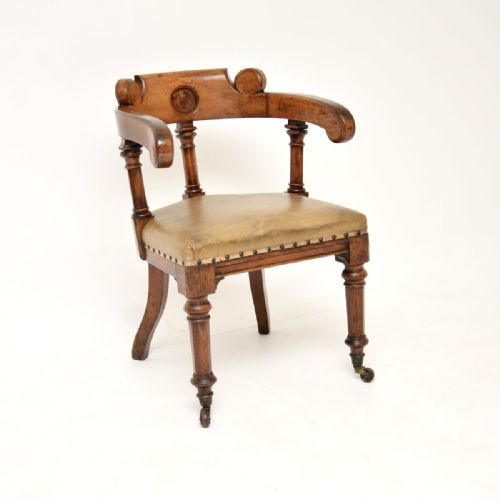
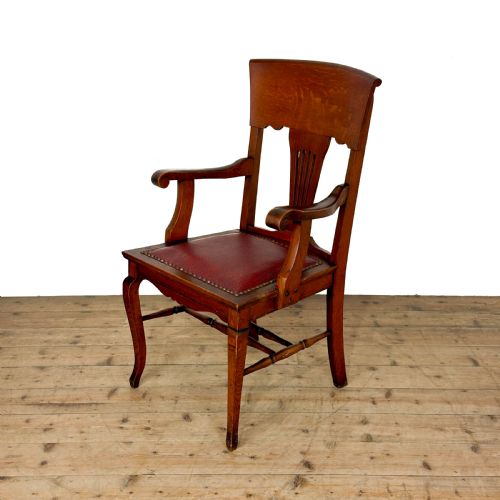
An oak leather desk chair brings solid nineteenth and early twentieth century utility to a study through durable timber framing and traditional hide upholstery.
Oak Leather Desk Chair
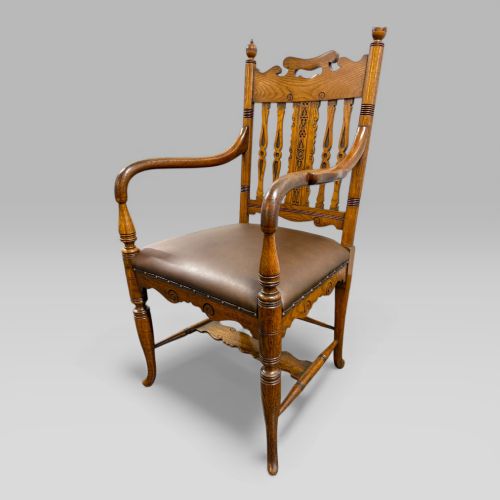
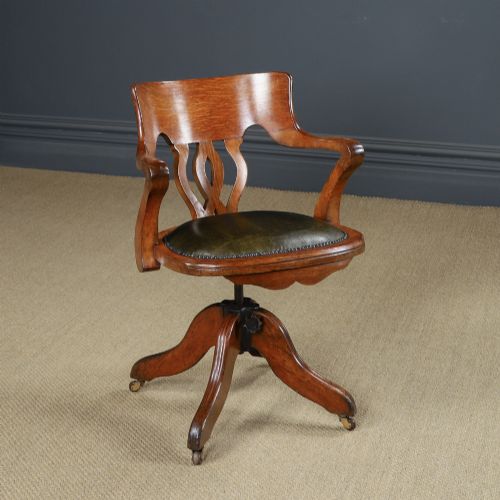
An oak leather desk chair provides a sturdy seating option designed for libraries, studies, and offices during the Victorian and Edwardian periods. These chairs combine timber frames with upholstered hide seats and backrests intended for daily professional or domestic use.
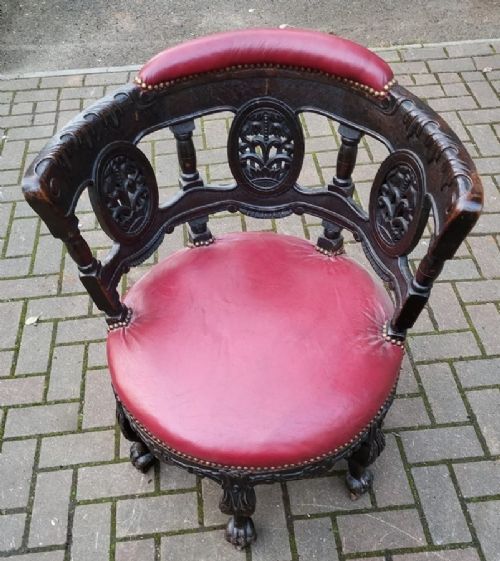
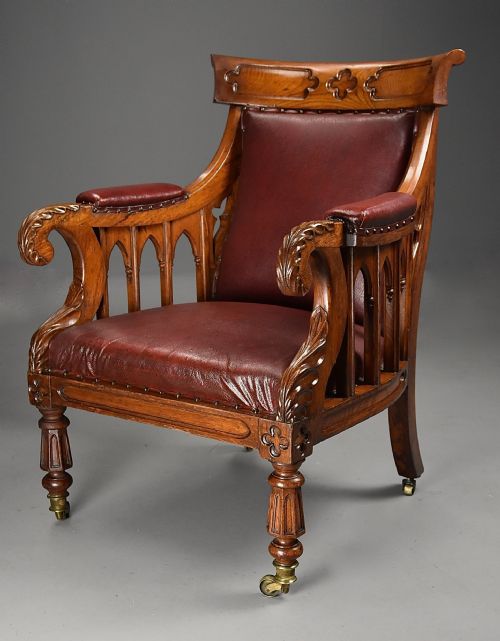
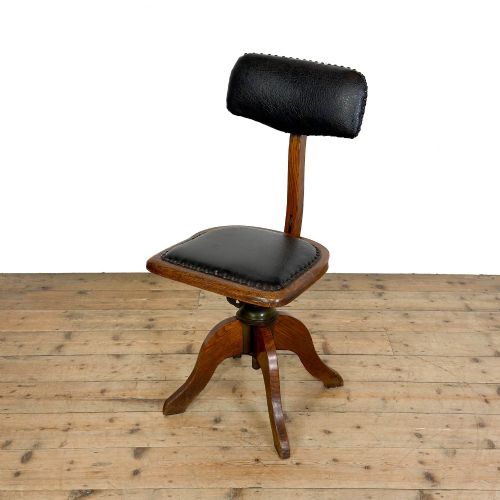
The versions most commonly encountered on this page date from the late nineteenth century through to the 1920s, spanning standard stationary models, high-backed library armchairs, and swivelling desk chairs with adjustable heights.
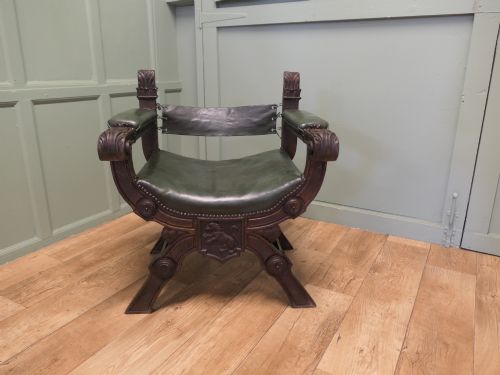
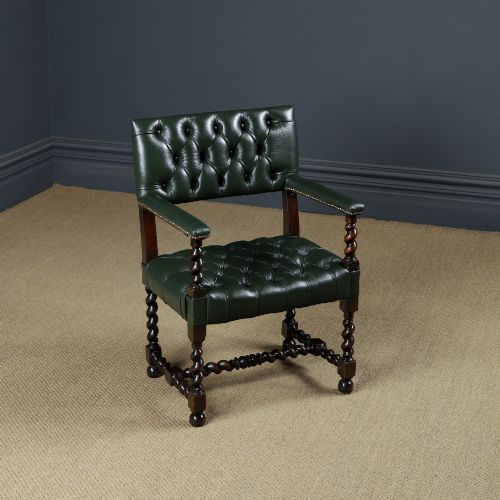
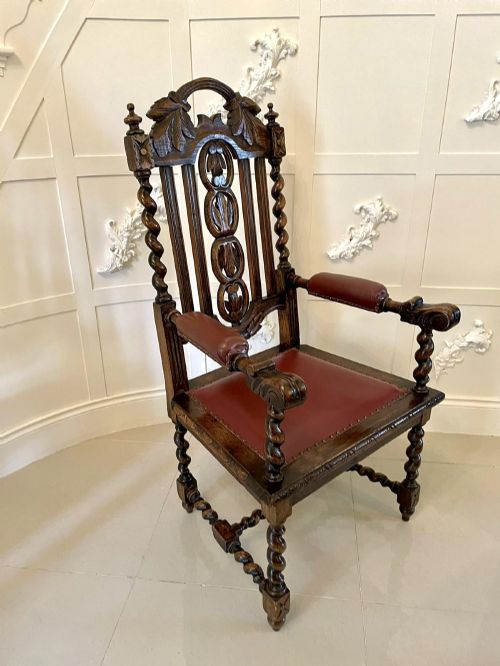
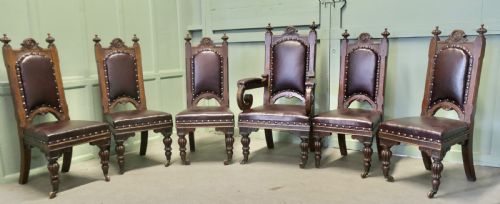
Many examples reflect prevailing historical influences, ranging from straightforward Arts and Crafts interpretations to heavily carved Gothic Revival designs featuring panelled backs and studded leather details.
Materials and construction methods
Timbers such as golden and solid oak form the structural framework, often shaped through traditional joinery, steam bending for curved elements like bentwood rails, and intricate hand carving.
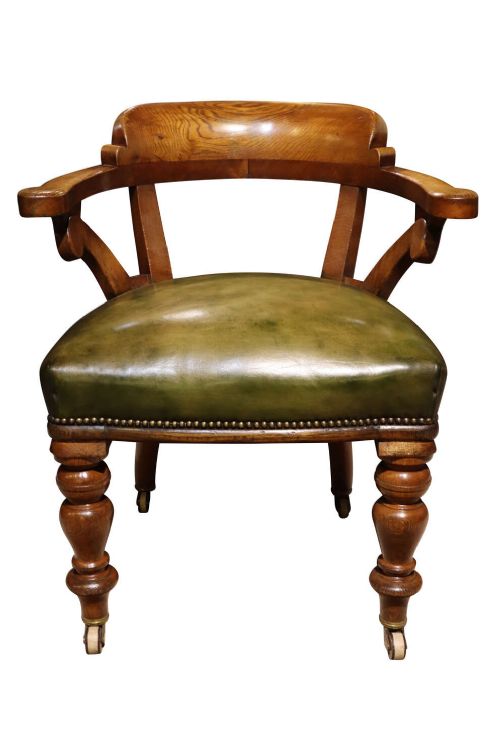
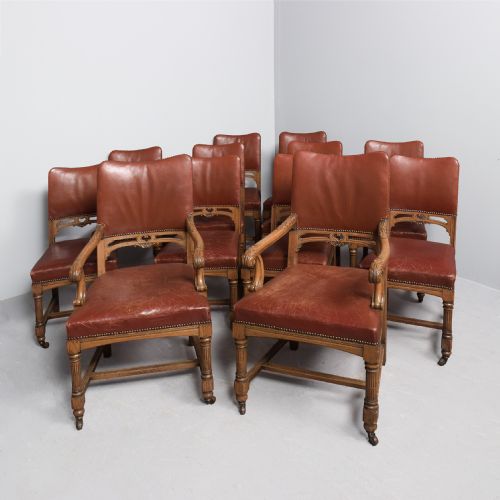
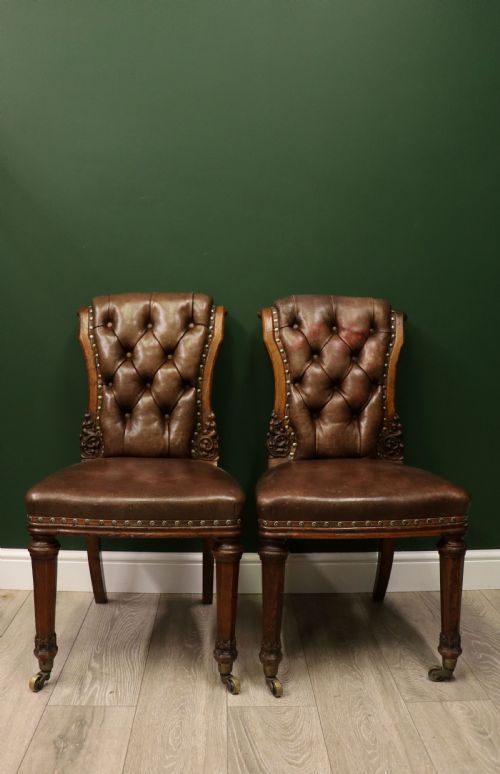
Upholstery relies on durable leather hides in shades of green, red, brown, and black, secured to the wooden bases and padded interiors using metal upholstery studs or brass tacks.
Swivel and tilt mechanisms incorporate iron, cast iron, and brass hardware, allowing movement and height adjustment on office and revolving desk models.
Oak Leather Desk Chair Retail Price Guide 2026
Typical asking prices for oak leather desk chair among the pieces listed under this phrase on Sellingantiques today, from the lower quarter to the upper quarter. They describe what is for sale here now, not the wider market.
A selection of chairs incorporates sturdy iron footings originally designed to withstand aggressive tilting in nineteenth-century offices.
Markers of distinction and craftsmanship
Superior examples display the hand of known makers and workshops, alongside refined joinery and dense, well-figured golden oak timber that has aged gracefully over time.
The integration of complex mechanical functions, such as smooth swivel and tilt movements paired with solid iron underframes, elevates the standard of a desk chair above basic utilitarian seating.
Gillows·W Williamson And Sons·Kendrick And Jefferson
The Oak Leather Desk Chair Glossary
- Revolving chair
- A seat mounted on a central spindle or mechanical pivot that allows full rotation without moving the base. These were widely adopted in offices from the late nineteenth century onward.
- Gothic Revival
- An architectural and decorative style drawing inspiration from medieval design, characterised by pointed arches, heavy carvings, and structural verticality. This aesthetic appears frequently on nineteenth-century library and dining seats.
- Smokers bow
- A low-backed Windsor-style armchair with a turned spindle gallery, often utilised as a comfortable desk or office seat.
- Bentwood
- Timber shaped into curved forms through the application of steam and pressure. This technique allowed makers to create flowing, continuous arm and back rails.
Oak Leather Desk Chair: Frequently Asked Questions
How do I date an oak leather desk chair?
Dating relies on observing construction techniques, hardware, and stylistic indicators such as Gothic Revival carving or Edwardian swivel mechanisms. Comparing the timber patination and joinery style against established period ranges helps narrow down the decade of manufacture.
Simpler stationary frames frequently point to the mid-nineteenth century, while complex iron swivel mechanisms and tan hides typically correspond to the Edwardian era or the 1920s.
Were these chairs used only in offices?
While many swivel models served commercial counting houses and legal chambers, large numbers were built for domestic libraries, studies, and private writing rooms. Heavy upholstered armchairs provided comfort for prolonged reading rather than purely clerical tasks.
Library variants often featured generous proportions and deep padding, distinguishing them from smaller, armless side chairs intended for tighter spaces.
How do I maintain the leather on a vintage desk chair?
Preserving historical leather requires gentle cleaning and regular application of appropriate conditioning balms to prevent the hide from drying and cracking. Avoiding direct sunlight and excessive heat sources protects both the leather surface and the underlying oak frame.
Metal components and brass tacks benefit from dry dusting to maintain their natural finish without disturbing the surrounding materials.