
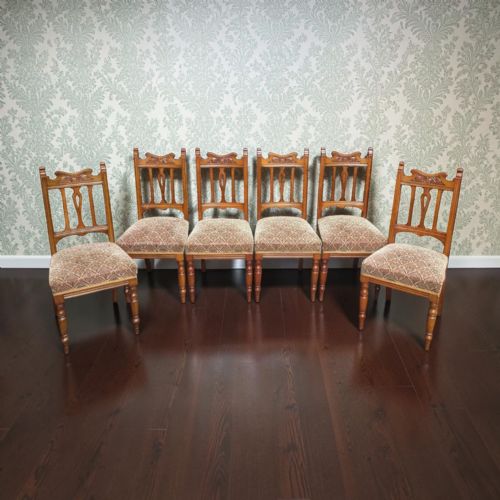
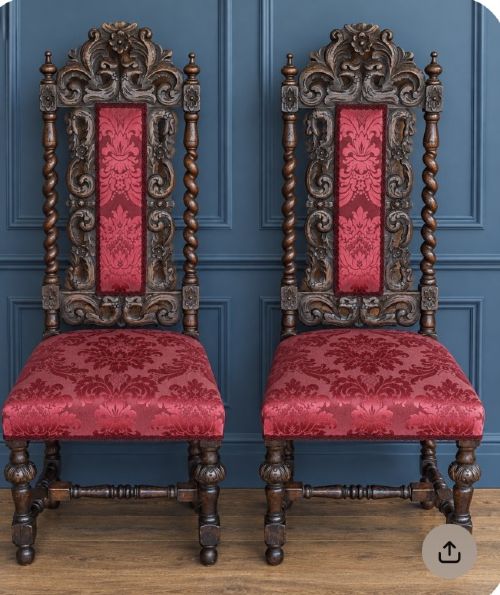
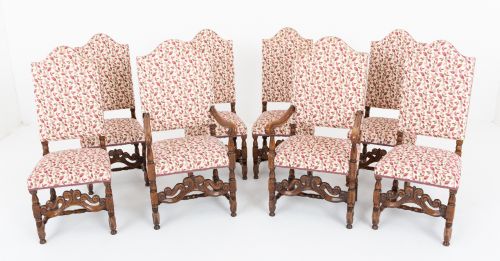
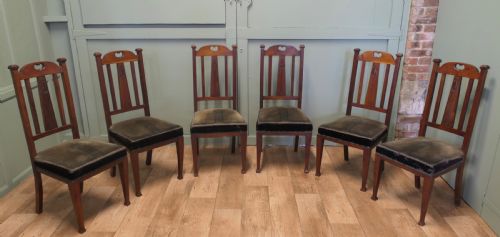

Oak High Back Dining Chairs
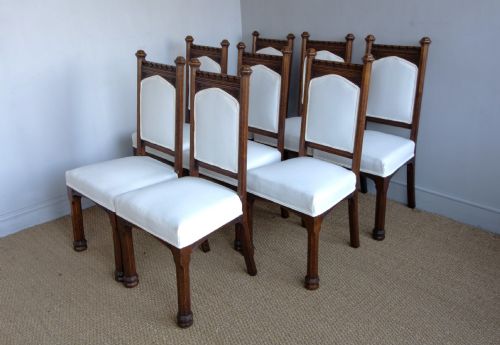
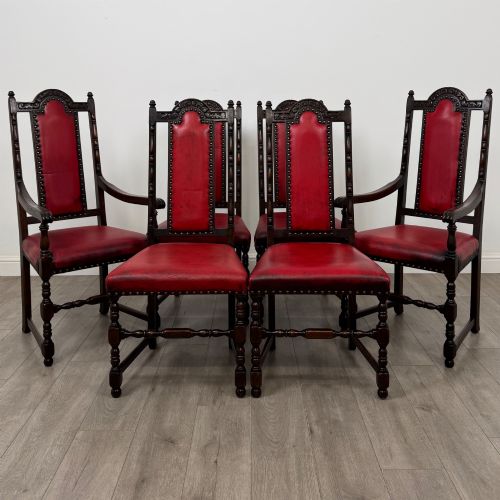
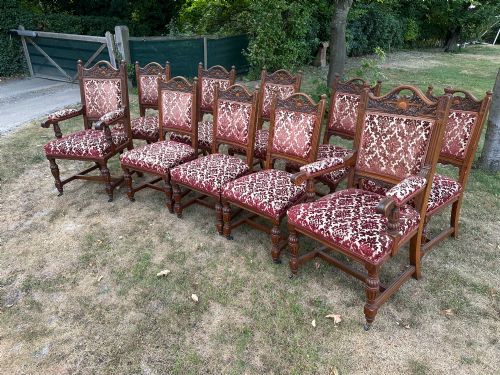
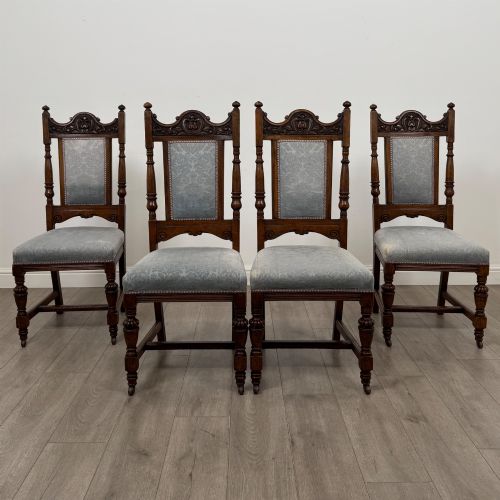
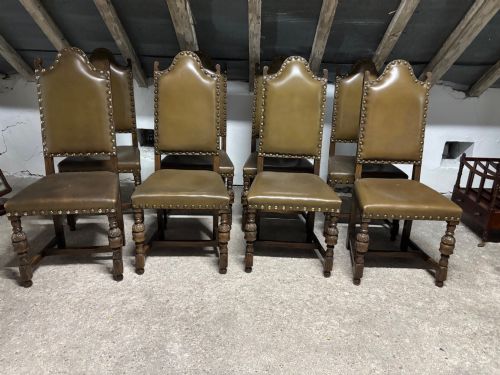
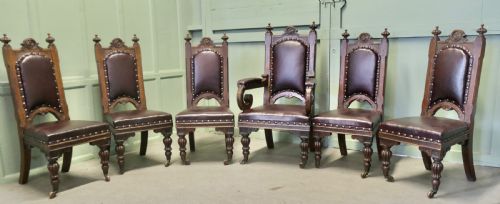
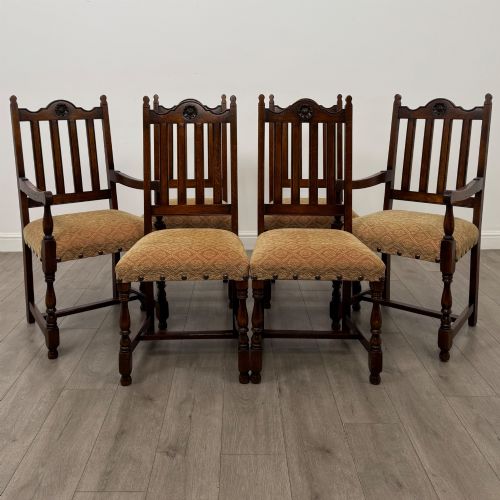
Oak high back dining chairs provide strong vertical lines and substantial timber frames around the table, bringing period presence to a room.
Oak High Back Dining Chairs
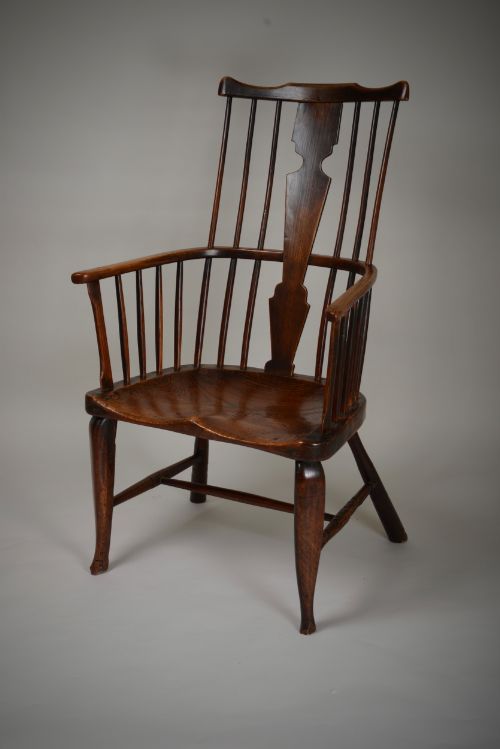
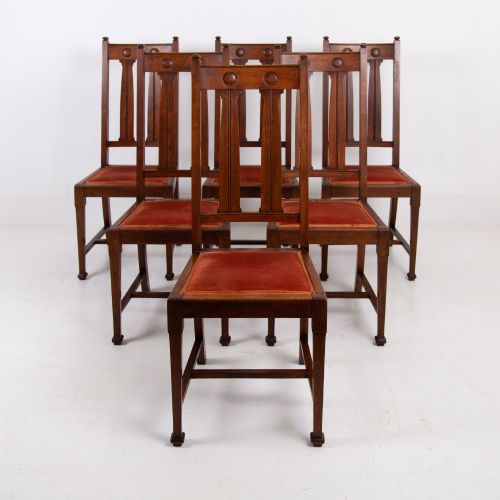
Oak high back dining chairs appear across multiple centuries and revival styles, ranging from robust seventeenth-century interpretations to lighter Edwardian and Arts and Crafts sets. Buyers encounter these tall-backed forms frequently in matched sets of four, six, or eight, designed to anchor a principal dining table.
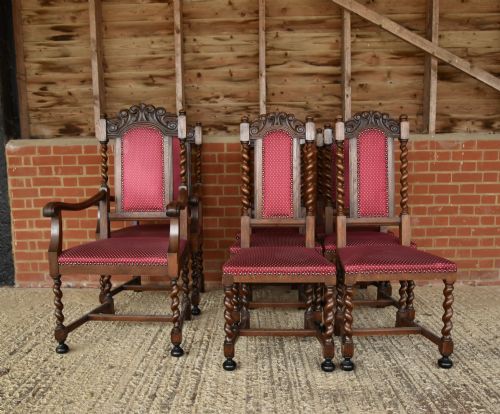
The phrase covers various regional designs and stylistic revivals, including Jacobean, Carolean, Gothic, and Art Nouveau expressions. Many examples utilise traditional joinery methods, combining upright stiles with carved crest rails and supportive stretchers.
Materials and Construction
Cabinetmakers built these frames primarily from solid oak, sometimes supplemented by elm or walnut for specific components, paired with brass fixings where structural reinforcement was required. Seats frequently feature woven cane, rush, leather, or upholstered pads covered in fabric or velvet.
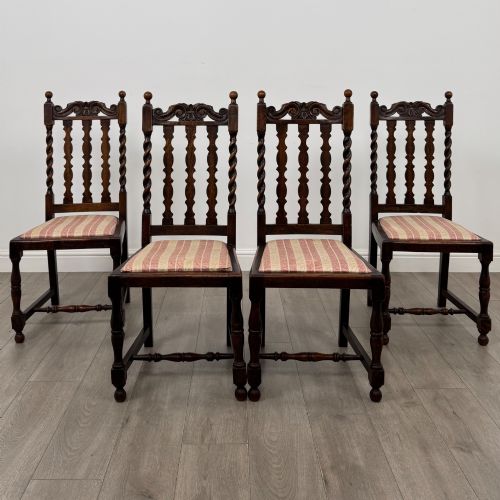
Framing techniques rely on mortise and tenon joints secured with wooden pegs, while turned elements like barley twists add decorative and structural rigidity to the legs and stretchers.
Listings feature oak high back dining chairs spanning the eighteenth, nineteenth, and twentieth centuries, incorporating cane, leather, and fabric elements.
Grading Timber and Craftsmanship
Quality depends on the selection of the timber grain, the depth and crispness of the hand-carved ornamentation on the crest rails, and the overall stability of the frame under daily use. Higher-grade examples display tight medullary rays in the quarter-sawn oak and retain their original seat pads or careful period-appropriate re-upholstery.
Consistency across a larger set distinguishes superior suites from assembled groups, as matched timber colour and uniform wear patterns indicate a unified origin rather than a later collection of individual seats.
Norwich Maker·William Morris·Liberty and Co·Shapland and Petter·Brights of Nettlebed
The Oak High Back Dining Chairs Glossary
- Barley twist
- A type of turning shaped to resemble a spiral rope or twist, commonly found on the legs and stretchers of seventeenth-century style chairs. It adds dynamic visual movement to the heavy timber frame.
- Stretcher
- A horizontal wooden brace connecting the legs of a chair to provide structural stability. On these taller forms, stretchers often sit low to the floor.
- Crest rail
- The uppermost horizontal member of a chair back, frequently carved with crests, scrolls, or foliage in revival pieces. It forms the visual crown of the silhouette.
- Stile
- The vertical side post of a chair back that runs from the seat up to the top. They give these tall designs their characteristic vertical emphasis.
- Bergere
- A closed-frame armchair or side chair with a cane-webbed back and seat. It provides a lighter texture compared to solid carved panels.
Oak High Back Dining Chairs: Frequently Asked Questions
How do I clean oak dining chairs?
Dust timber frames regularly with a dry, soft cloth to prevent particle buildup in the carved recesses. Feed the bare wood periodically with a traditional beeswax polish to maintain the lustre.
Avoid applying liquid cleaners directly to any fabric, leather, or cane inserts. Professional advice should be sought for delicate upholstered pads.
Are tall dining chairs comfortable?
The elevated backrest provides robust lumbar and upper back support during long meals. Many examples incorporate angled rake in the stiles to sit back slightly from the vertical.
Seat comfort depends largely on the upholstery type or the give in the rush and cane panels. Adding subtle squab cushions can adjust the seat height and softness.
How to date oak chairs?
Examine the construction marks, tool traces, and timber preparation methods visible on the underside and interior joints. Hand-sawn marks and pegged mortise and tenon joints point towards earlier centuries.
Stylistic motifs like organic curves indicate later movements such as Arts and Crafts or Art Nouveau. Comparing the timber patina helps separate original surfaces from later restorations.