

Oak Hallway Furniture
Oak hallway furniture brings together sturdy timber benches, stands, and tables that organise an entranceway with practical British craftsmanship.
Oak Hallway Furniture
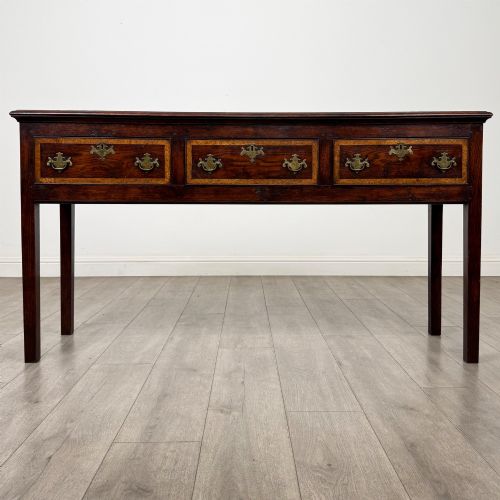
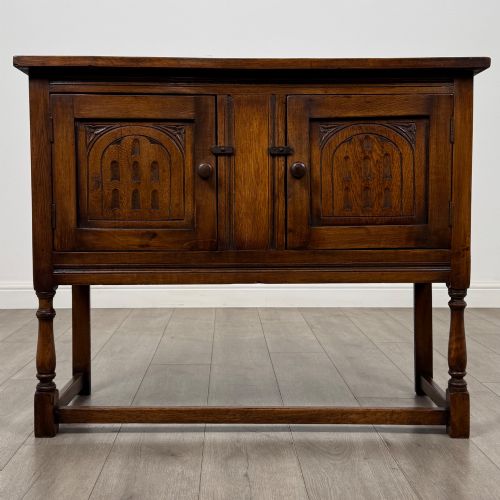
When you search for oak hallway furniture, you encounter a robust selection of pieces designed to furnish entrance halls, vestibules, and corridors from multiple periods. The selection spans the eighteenth century through to the Edwardian era and the twentieth century, capturing centuries of domestic utility.
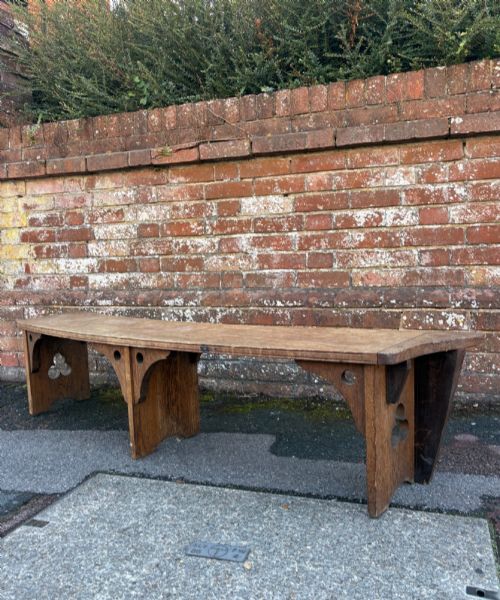
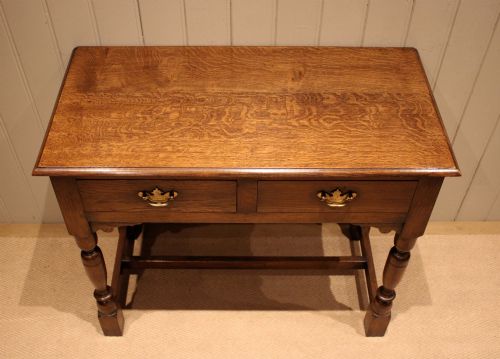
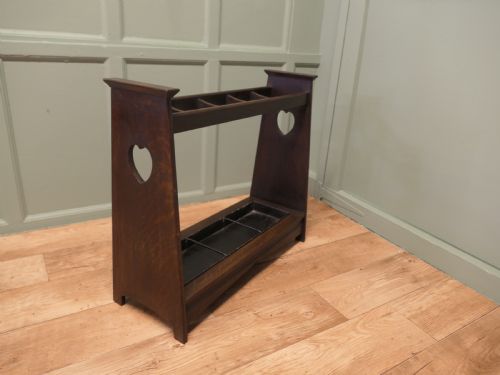
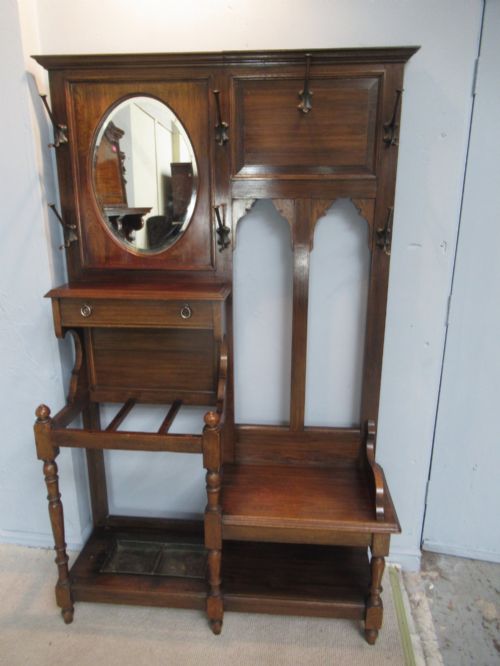
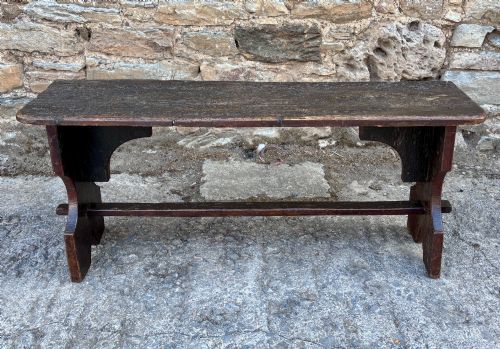
The most common forms you meet on this page include hall stands, benches, settle boxes, side tables, and umbrella stands. These items served the daily practical needs of traditional households by providing seating, outerwear storage, and umbrella containment.
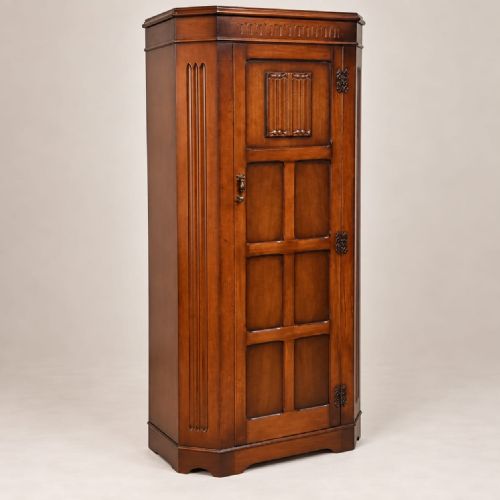
Makers and designers from various movements left their mark on these corridors, resulting in pieces reflecting Jacobean revival, Arts and Crafts, Gothic revival, and Georgian styles. The common thread is the use of solid timber to create durable furniture meant for high-traffic entry spaces.
Distinctions in Quality
Quality in these pieces rests upon the selection of the timber and the integrity of the joinery rather than surface ornamentation alone. Heavier grain patterns, well-fitted panels, and substantial structural members separate robust country pieces from lighter commercial equivalents.
The integration of secondary materials defines the better examples, such as heavy cast brass hooks, original drip trays, and hand-carved details like trefoil supports or linenfold panels. Pieces that retain their original structural layout without extensive timber replacement demonstrate superior longevity.
Materials paired with oak across these items include brass, iron, cast iron, and glass.
James Shoolbred and Co·Hubert Simpson of Kendal·Gillows
The Oak Hallway Furniture Glossary
- Settle
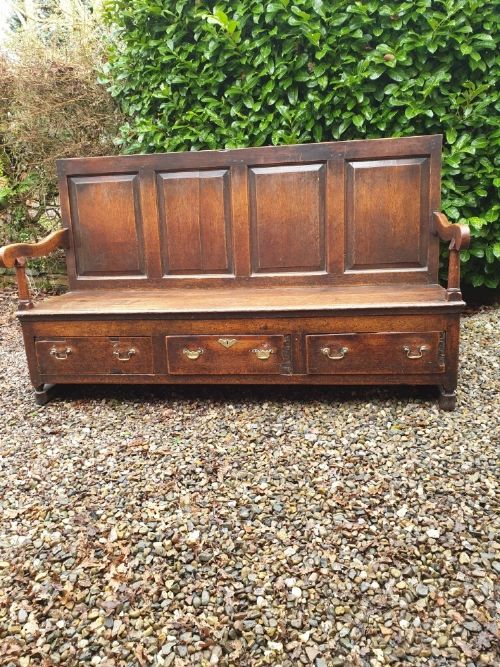
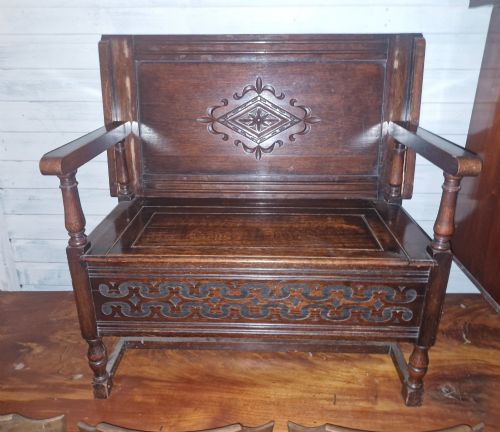
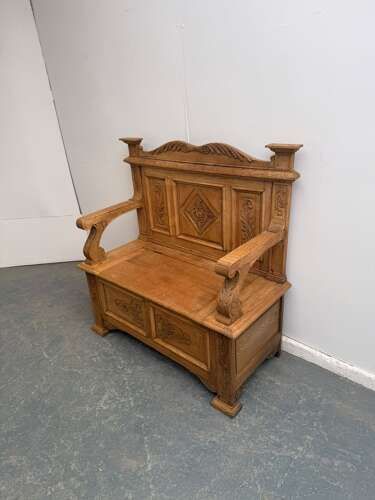
- A wooden bench with a high back, solid arms, and often a hinged seat revealing a storage box underneath. This form kept drafts away from the entrance and stored household items.
- Hall Stand
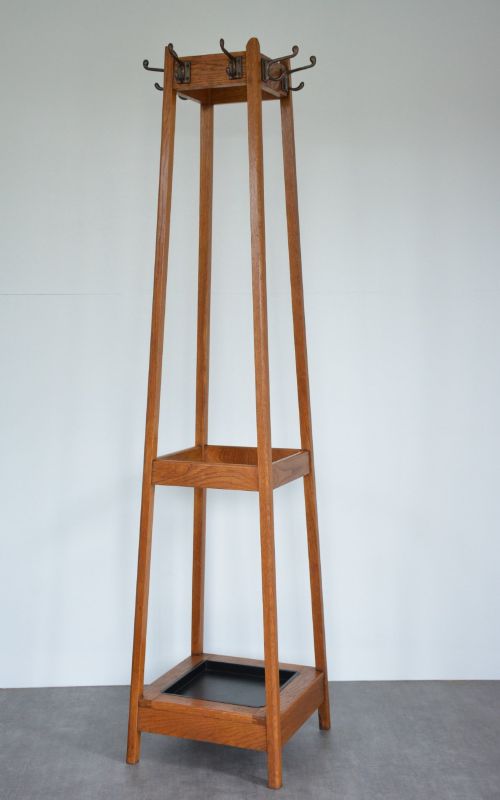
- A tall piece combining a mirror, coat hooks, umbrella holders, and a small bench or glove drawer. It served as the central storage hub for outdoor wear in Victorian and Edwardian hallways.
- Jacobean Revival
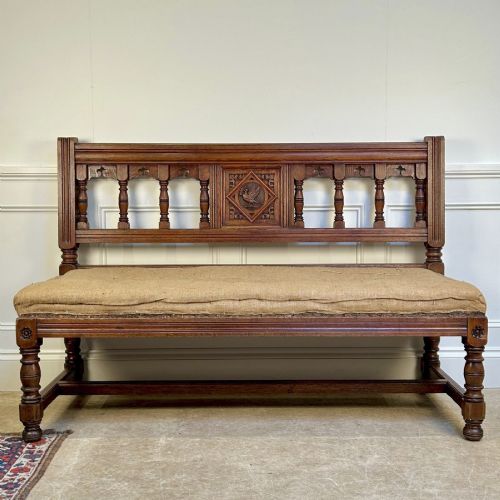
- A nineteenth-century style imitating seventeenth-century English furniture, characterised by dark oak, geometric moulding, and heavy turned legs. It brought a sixteenth- and seventeenth-century aesthetic to later Victorian and Edwardian homes.
- Drip Tray
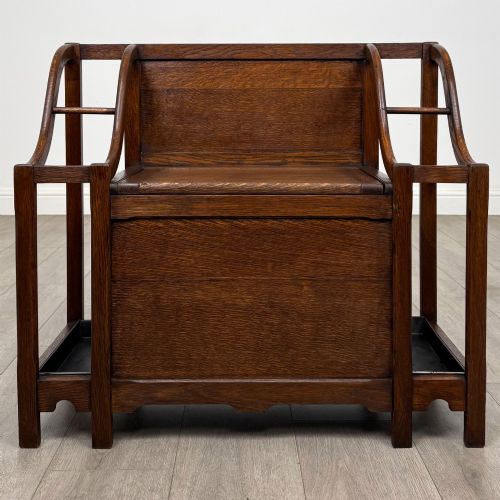
- A metal tray, often cast iron or brass, placed at the base of a stick stand to catch water from umbrellas and walking sticks. It protected wooden flooring from dampness.
Oak Hallway Furniture: Frequently Asked Questions
What is a box settle?
A box settle is a wooden bench featuring a high back and a hinged seat that lifts to reveal storage space underneath. These pieces originated in centuries past to provide seating by the entrance while keeping boots or blankets tucked away.
In a modern hallway, the enclosed base functions well for stowing shoes or parcels while maintaining a traditional aesthetic.
How do I distinguish an Edwardian hall stand from a Victorian one?
Victorian hall stands tend to feature heavier, darker carved oak with Gothic or Jacobean revival motifs and substantial cast iron hardware. Edwardian examples often display lighter golden oak tones, cleaner lines, and simpler Arts and Crafts influences.
Examining the mirror bevels, hook materials, and overall timber shade helps clarify the manufacturing era.
Were umbrella stands integrated into benches?
Many hall stands and benches combined seating with dedicated umbrella and stick holders, often flanked by metal drip trays at floor level. This multi-functional design allowed households to store wet weather gear directly beside the seat.
Such pieces are particularly common among late nineteenth- and early twentieth-century designs.
How do I care for antique oak hallway furniture?
Antique oak benefits from occasional waxing to nourish the timber and protect the polished surface from dry air and moisture. Placing pieces away from direct heat sources prevents the solid wood from splitting.
Regular dusting with a soft cloth preserves the carved details and hardware without stripping the patina.