



Brown Oak Hallstand
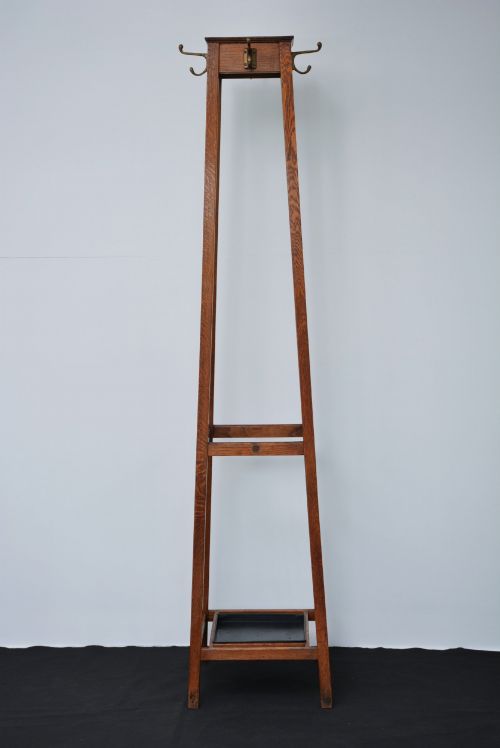
A brown oak hallstand brings warmth and practical utility to an entryway, offering a sturdy place for coats and umbrellas.
Brown Oak Hallstand
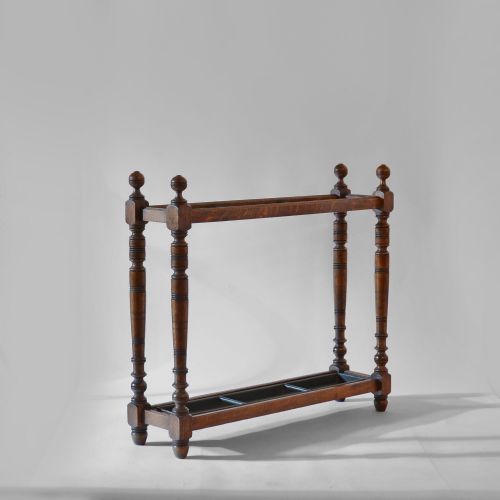
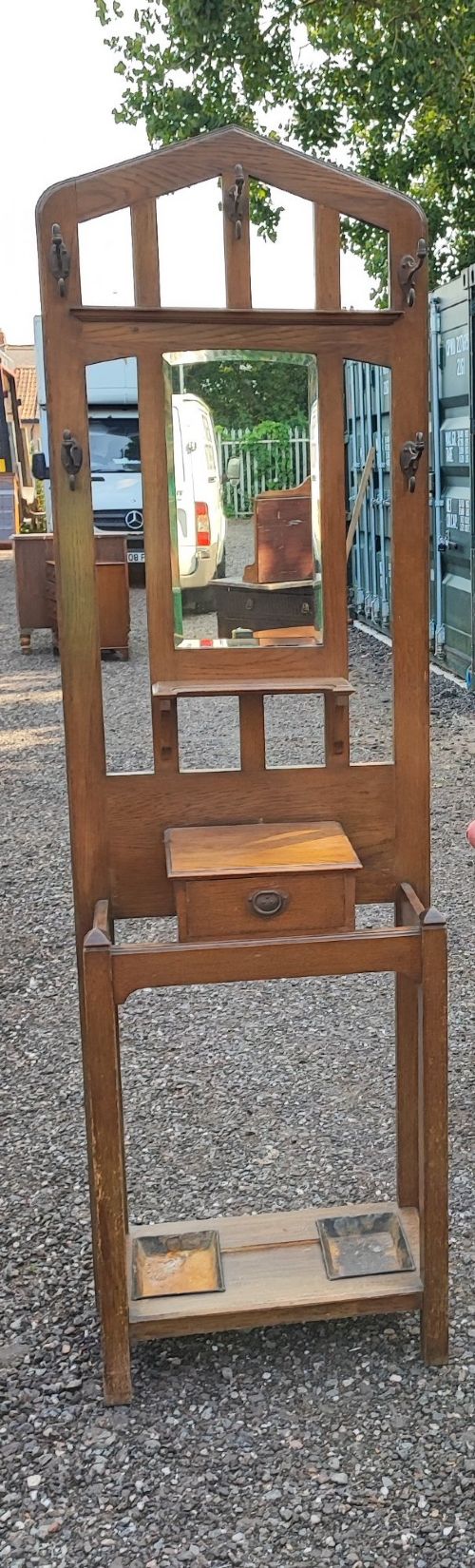
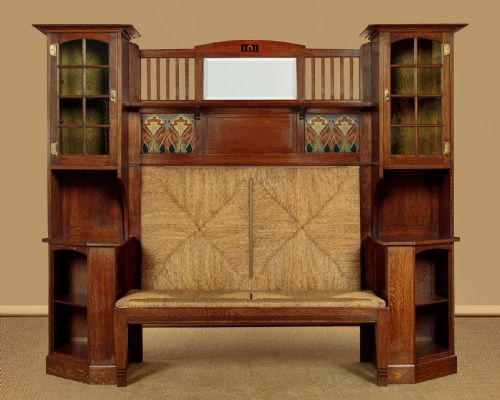
A brown oak hallstand combines a coat rack, umbrella stand and often a mirror into a single hallway piece. The examples on this page span the 19th Century, Victorian and Edwardian eras, through to the 1920s, 1930s and 1950s.
Forms range from wall mirrors and hall seats to large carved umbrella stands and industrial coat racks. Makers applied styles such as Arts and Crafts, Aesthetic Movement, Art Nouveau and Gothic Revival to the timber.
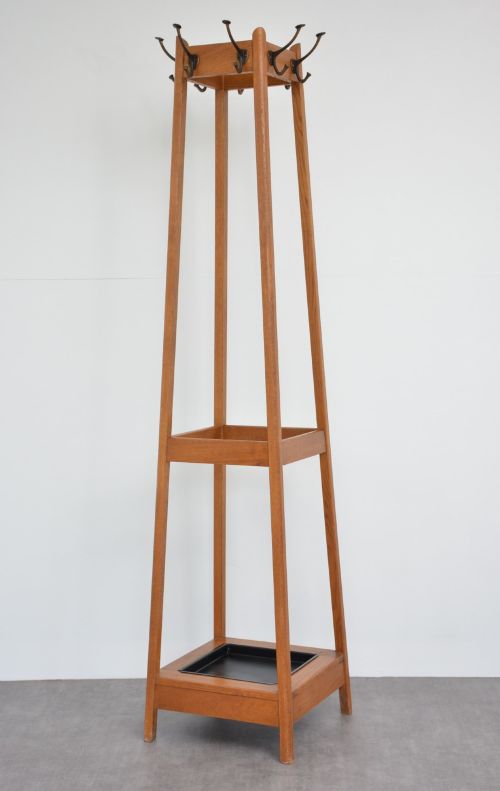
Most pieces you encounter here lean towards Victorian and Edwardian domestic designs or English Industrial interpretations. They utilise solid oak alongside metal, brass, glass and marble elements.
How they were made
Cabinetmakers worked primarily with solid oak, shaping the timber through traditional joinery and carving techniques. Many pieces feature integrated metal, brass or glass components for drip trays, coat hooks and mirrors.
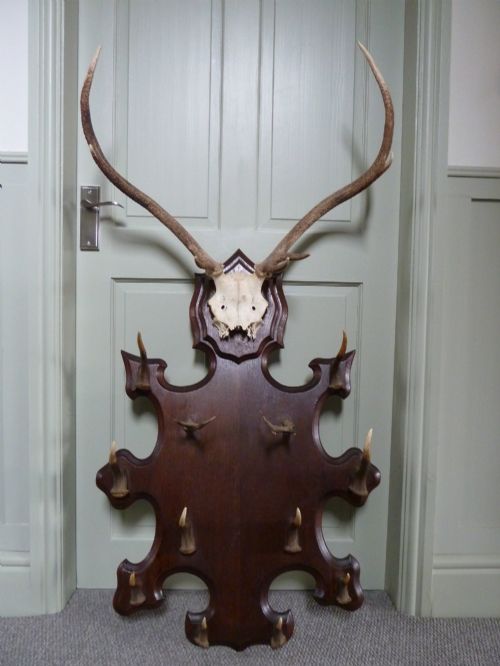
Decoration varies from the carved Greenman motifs and Flemish details of the 19th Century to the simpler, honest lines of Arts and Crafts workshops. Stag horn and bone details occasionally appear alongside brass fittings on country house examples.
Listings feature solid oak combined with brass, marble, glass, stag horn and bone across Victorian, Edwardian and industrial periods.
What varies in quality
Quality rests in the depth of the carving, the selection of the oak grain and the integration of functional elements like drip trays and mirrors. Robust construction separates everyday utility pieces from elaborately carved large proportions.
The sophistication of the hardware, such as cast brass hooks and original drip pans, distinguishes standard workshop production from signed pieces by makers like James Shoolbred or GW Evans.
Astrola·GW Evans·James Shoolbred
The Brown Oak Hallstand Glossary
- Hallstand
- A piece of hallway furniture designed to hold coats, hats and umbrellas. It frequently incorporates a central mirror and sometimes a bench seat.
- Arts and Crafts
- A design movement prioritising traditional craftsmanship and simple forms. It often uses plain oak surfaces with minimal, honest construction.
- Greenman
- A sculptural motif of a face carved from leaves and foliage. It appears frequently on late Victorian carved oak furniture.
- Aesthetic Movement
- A late 19th-century style focusing on visual and material beauty over narrative. Pieces in this style often feature clean lines and refined brass fittings.
Brown Oak Hallstand: Frequently Asked Questions
What is a brown oak hallstand used for?
A brown oak hallstand serves as a central entryway hub for hanging coats, storing walking sticks and placing umbrellas.
Many designs also include a mirror to check your appearance before leaving the house.
How do I date a hallstand?
Dating relies on stylistic clues, timber preparation and construction methods.
Victorian and 19th Century examples often feature heavy carving, whilst Edwardian and later 1930s or 1950s pieces lean towards simpler industrial or Arts and Crafts forms.
Are all hallstands made of solid oak?
The listings show a strong presence of solid oak, alongside mixed media constructions.
Pieces frequently incorporate metal, brass, glass, marble and occasionally stag horn or bone for hooks and trays.
Where should I place a hallstand in my home?
Hallstands are naturally suited to entrance halls, porches and boot rooms where coats and umbrellas are dropped off.
Their upright proportions make them ideal for narrow corridors without taking up excessive floor space.