


Oak Hall Furniture
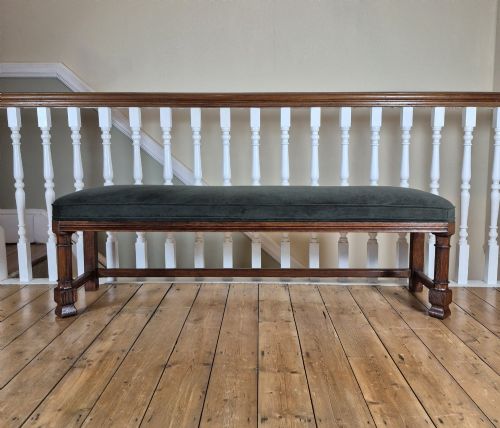
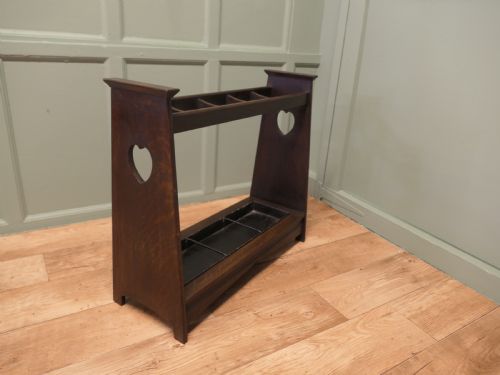
Oak hall furniture encompasses practical timber pieces designed for entryways, ranging from settles and benches to umbrella stands.
Oak Hall Furniture
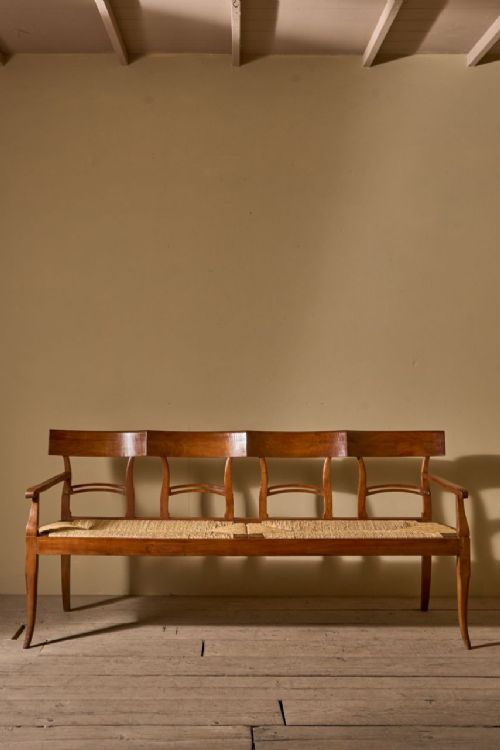
When you search for oak hall furniture, you encounter sturdy timber items intended for entryways and passages, spanning centuries of domestic design. The selection includes settles, benches, coat stands, and side tables constructed to endure daily domestic use. Pieces date from the seventeenth century through to the twentieth century, reflecting shifting tastes in domestic reception spaces.
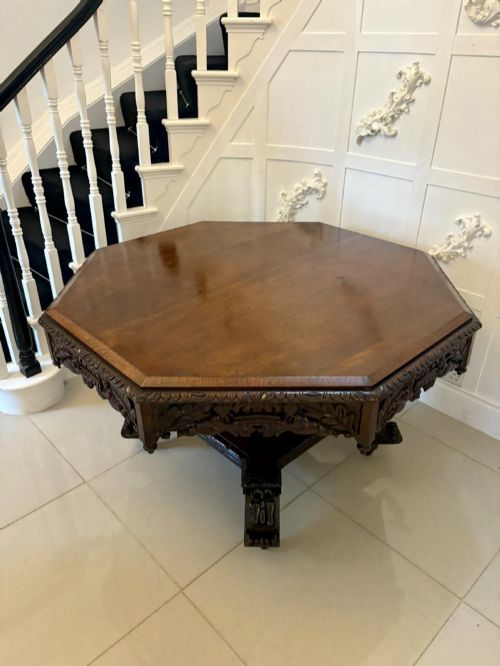
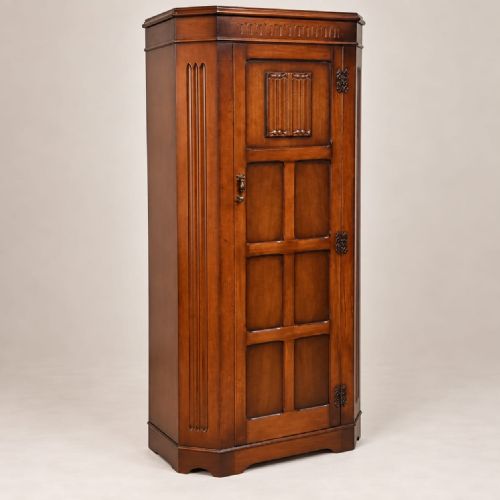
You are most likely to meet Victorian and Edwardian examples on this page, often bearing the influence of earlier periods. Revival movements heavily shape the inventory, with Jacobean, Gothic, and Arts and Crafts styles appearing frequently alongside simpler vernacular forms. These functional items provide storage, seating, and umbrella holders tailored for hallways and vestibules.
Materials and construction
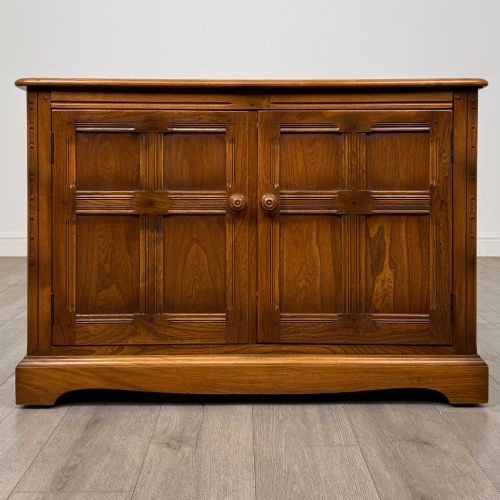
Joinery methods range from pegged mortise and tenon joints on eighteenth-century settles to machine-cut components on twentieth-century cupboards and side tables. Carving is common, spanning geometric Jacobean panels, Gothic trefoil motifs, and flowing Arts and Crafts plant forms. Timber selection varies from dark, heavily figured boards to lighter, waxed surfaces.
Several hall seats double as tables via folding tops, proving ancestors loved multi-tasking furniture just as much as we do.
Judging quality in oak hall furniture
The distinction between ordinary and superior pieces rests on the weight of the timber, the depth of the carving, and the integrity of the construction. Heavier boards and thicker panels indicate a more substantial commission, whereas lighter secondary woods or thin veneers suggest mass production. Crisp, hand-chiselled ornamentation stands apart from soft or mechanical surface decoration.
Proportion and architectural coherence dictate visual success, particularly in revival pieces that borrow heavily from Gothic or Jacobean vocabulary. Original hardware, such as wrought iron coat hooks and brass umbrella drip trays, elevates an item's integrity compared to replaced fittings. A harmonious relationship between form and function marks the superior examples in this category.
Liberty·GIllows
The Oak Hall Furniture Glossary
- Settle
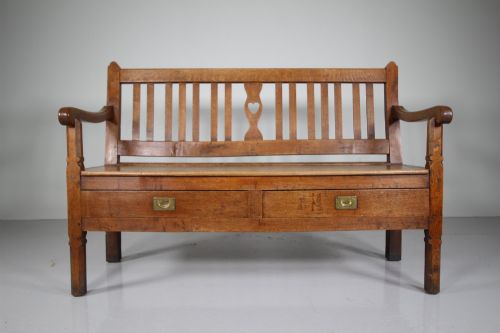
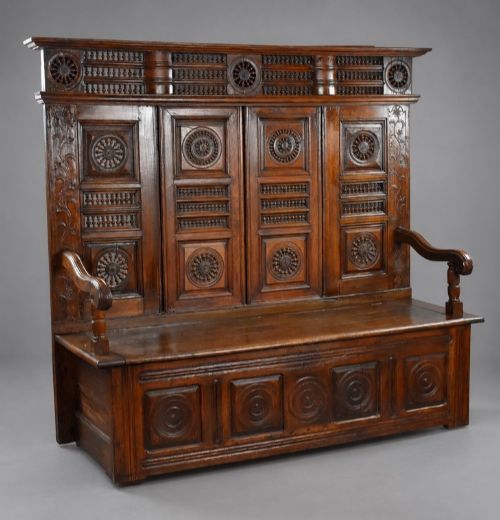
- A wooden bench with a high back, solid arms, and often a box seat beneath for storage. It historically kept draughts away from household entrants.
- Lowboy
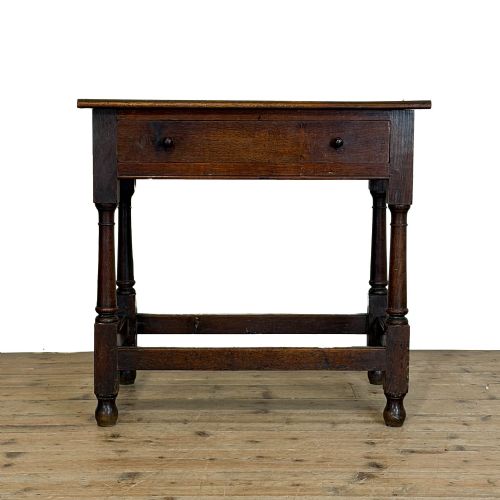
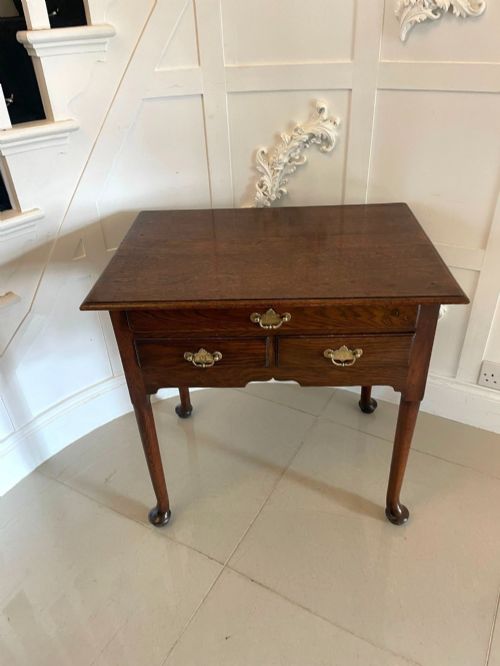
- A small side table with drawers, typically raised on four legs, originating in the late seventeenth or eighteenth century. It served various domestic utility functions.
- Monk's bench
- A convertible piece of furniture featuring a hinged top that folds down to transform the seat into a table. It represents a clever space-saving invention.
- Trefoil
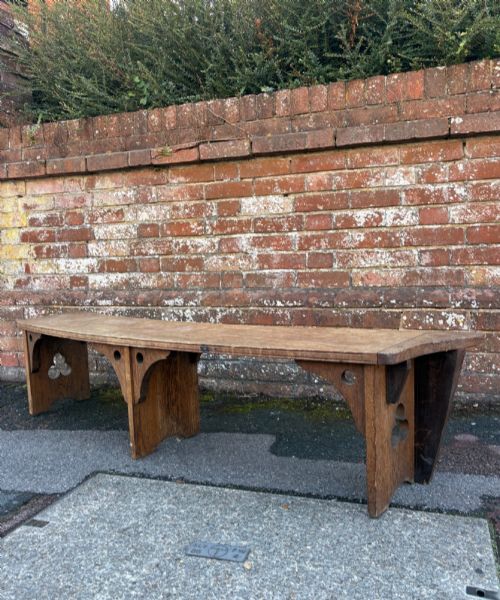
- A three-lobed decorative ornament resembling a clover leaf, commonly found carved into Gothic revival panels and supports. It defines specific ecclesiastical influences.
- Trestle
- A supporting framework consisting of a horizontal beam fixed to two splayed vertical legs. It provides sturdy support for benches and heavy tables.
Oak Hall Furniture: Frequently Asked Questions
What is an oak settle?
An oak settle is a traditional wooden bench featuring a high back and solid armrests, designed to block hallway draughts. Many incorporate a hinged lid providing concealed storage beneath the seat.
These pieces served as practical seating near the front door for removing boots and outerwear. Their robust timber construction ensured they withstood heavy daily use in busy entranceways.
Are coat stands usually oak?
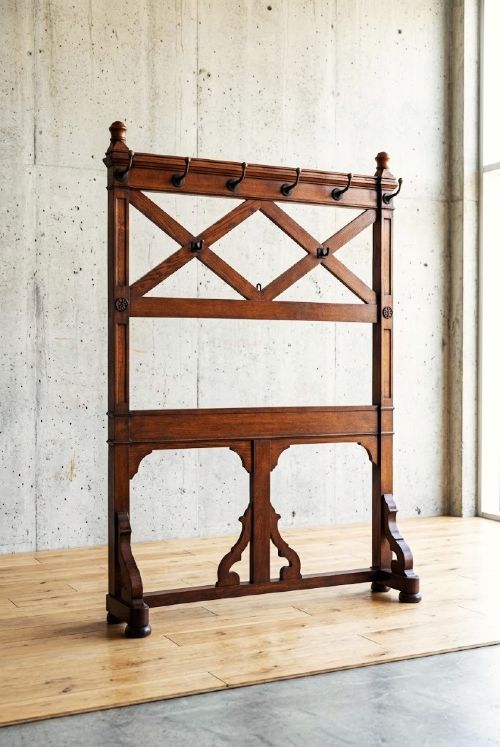
Coat stands on this page are predominantly constructed from solid oak or golden oak, complemented by iron or brass hooks. The durable nature of the wood made it ideal for supporting heavy winter garments.
Many examples combine umbrella rings and removable metal drip trays to manage wet weather gear. The inclusion of these metal elements helps date the piece alongside its timber joinery.
What is Jacobean revival furniture?
Jacobean revival furniture imitates the heavy, dark styles of the early seventeenth century, featuring geometric mouldings and turned spindle legs. Makers in the nineteenth and twentieth centuries resurrected these dense forms for grand domestic halls.
These items are characterised by symmetrical panels and deep relief carving. They offer a formal, historic aesthetic suited to traditional entranceways.