



Oak Haberdashery Drawers
Oak haberdashery drawers are heavy, functional storage units built for trade and sorting, prized today for their deep banks of compartments and rich timber grain.
Oak Haberdashery Drawers
When you search for oak haberdashery drawers, you encounter utilitarian furniture originally designed for shops, offices and drapers to organise small stock, fabrics and papers. These pieces span several decades from the late nineteenth century through to the mid twentieth century, including Edwardian examples and later Art Deco models.
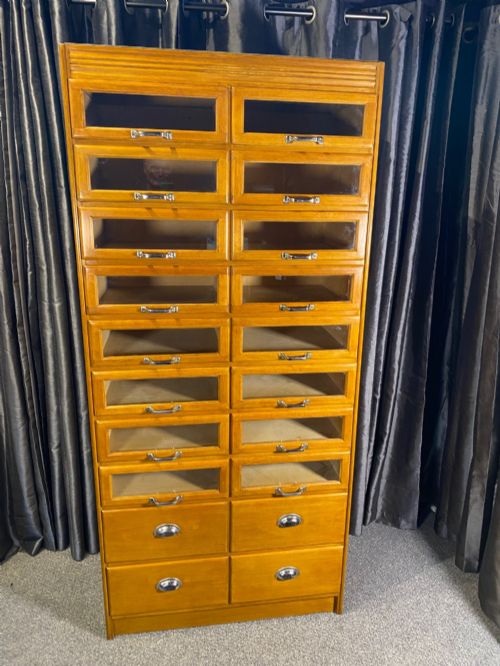
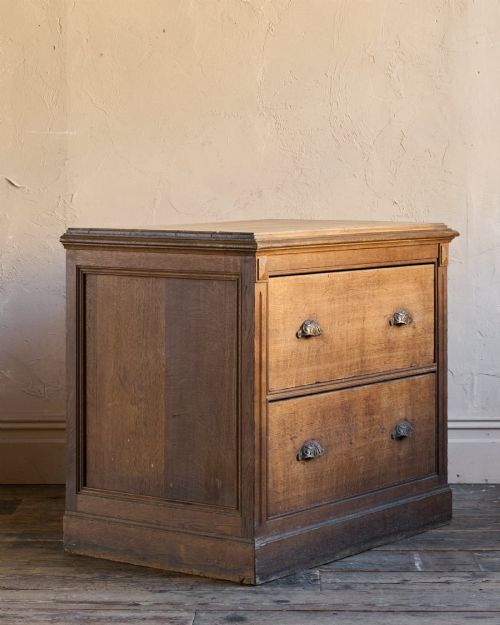
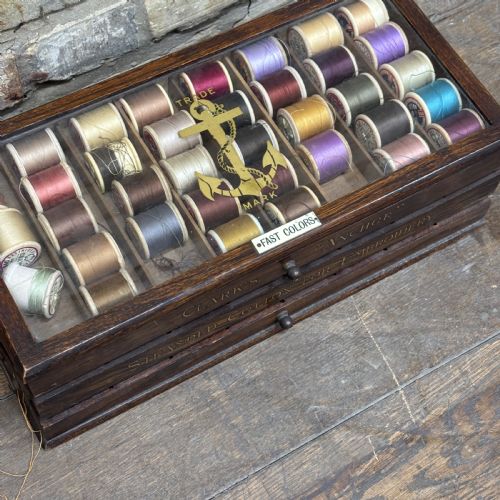
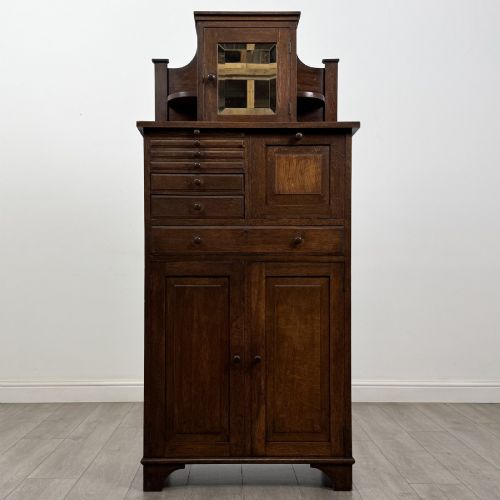
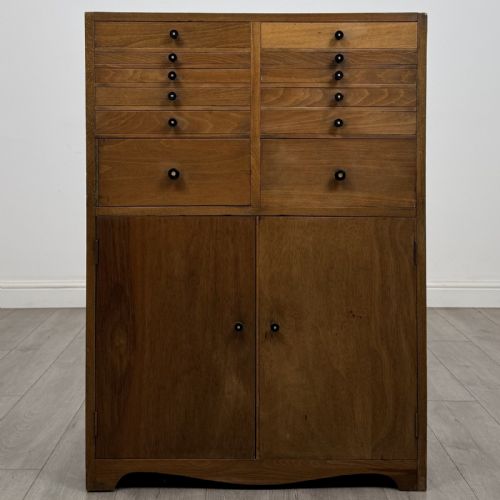
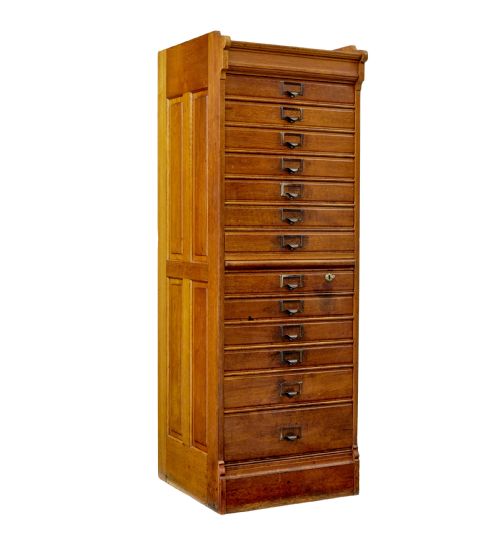
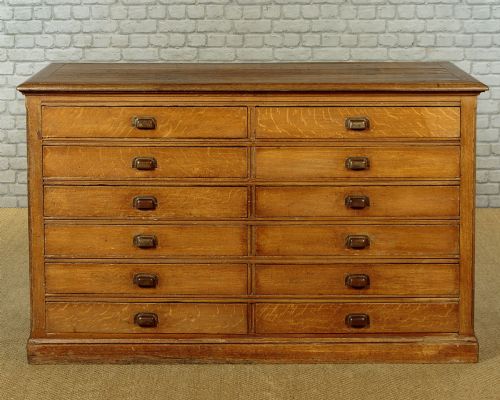
The inventory on this page ranges from large shop counters and multi-drawer banks to smaller desktop display boxes, filing chests and dental cabinets. You are most likely to meet solid oak constructions featuring numerous small drawers arranged in symmetrical grids.
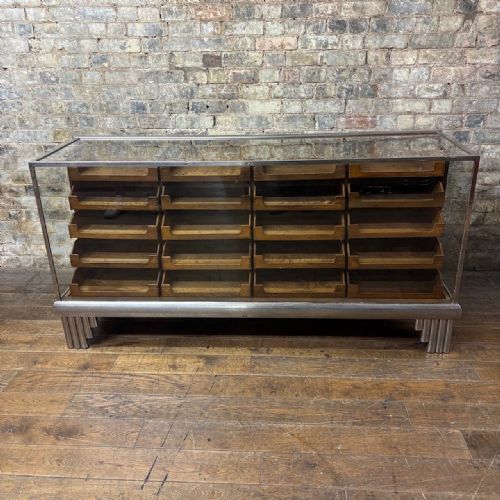
Origins vary between commercial store fittings, industrial office furniture and French country pieces, reflecting the practical demands of early twentieth century commerce. Each piece carries the distinct hallmarks of trade use, from brass hardware to glass fronts designed for public display.
Materials and construction methods
Makers built these cabinets predominantly from solid oak and stained hardwood, selecting timber for strength and durability under heavy daily use in retail and office environments. Brass and chrome hardware, including handles, label holders and catches, provide functional contrast and secure closure for the numerous drawers.
Glass panels feature in doors and display sections, allowing goods to be viewed while protected from dust. Cotton linings and specialised interior fittings occasionally survive in display boxes and drapers' tables, showing the original context of textile storage.
Oak Haberdashery Drawers Retail Price Guide 2026
Typical asking prices for oak haberdashery drawers among the pieces listed under this phrase on Sellingantiques today, from the lower quarter to the upper quarter. They describe what is for sale here now, not the wider market.
Listings feature pieces spanning from the 1880s through the 1940s, executed in oak, brass, glass, and chrome.
Assessing quality in multi-drawer furniture
Quality in these units rests primarily on the integrity of the timber framing and the precision of the drawer construction. Finer examples maintain smooth operation across dozens of individual compartments without binding or sagging.
The sophistication of the original commercial hardware, such as patented filing mechanisms and substantial brass pulls, distinguishes standard workshop furniture from superior retail counters and specialised dental or office cabinets.
Clark’s Anchor·Claudius Ash·Dudley & Co·Amberg’s Patent Cabinet
The Oak Haberdashery Drawers Glossary
- Haberdashery cabinet
- A multi-drawer storage unit originally used in drapery shops to store small sewing items, ribbons and buttons. These typically feature banks of shallow drawers, sometimes with glass fronts.
- Bank of drawers
- An arrangement of numerous drawers housed within a single large carcass. This configuration maximises vertical storage space while keeping contents sorted.
- Drapers table
- A long work table used in fabric shops for measuring and cutting cloth. These often incorporate lower shelves or banks of drawers for stock storage.
- Patent cabinet
- A specialised storage unit incorporating a proprietary mechanical filing system designed by inventors to improve office organisation. These often include drop-front drawers or internal sorting mechanisms.
- Dental cabinet
- A specialised medical storage unit featuring numerous small, shallow drawers for instruments and supplies. They share the multi-compartment utility valued by collectors of haberdashery.
Oak Haberdashery Drawers: Frequently Asked Questions
What were oak haberdashery drawers used for?
These cabinets served merchants, drapers and shopkeepers as efficient storage for small wares, threads, buttons and ribbons. The numerous shallow drawers kept varied stock organised and visible for retail customers.
In offices and surgeries, similar multi-drawer formats held documents, patient records and specialised tools. Their dense configuration of compartments made them indispensable for busy commercial environments.
How do I date an oak haberdashery cabinet?
Dating relies on examining construction techniques, timber selection and hardware styles. Pieces from the late nineteenth century often display heavier proportions and hand-cut dovetailing, while Edwardian and 1930s examples introduce commercial branding, chrome fittings and streamlined Art Deco lines.
Patent labels, manufacturer stamps and the presence of plate glass or early metal runners also help narrow down the decade of production. Commercial fixtures frequently reflect the modernising retail standards of their specific era.
How can I use these cabinets at home?
These units suit modern interiors as functional storage for small items, craft supplies, jewellery or office stationery. Their deep banks of drawers allow for thorough organisation in kitchens, studies or living spaces.
Larger shop counters and drapers tables function well as kitchen islands or console tables, providing surface area alongside internal storage. The varied drawer counts accommodate diverse household sorting needs.
Are all haberdashery drawers made of solid oak?
While oak is the predominant timber seen in these listings, construction often includes secondary hardwoods, stained timbers and internal elements of pine or plywood. The exterior display surfaces and drawer fronts typically showcase the prominent grain of oak.
Hardware elements incorporate brass, chrome, and glass to facilitate the commercial display and retrieval of goods. Material combinations varied depending on whether the piece was destined for a high-end drapery shop or a general office.