

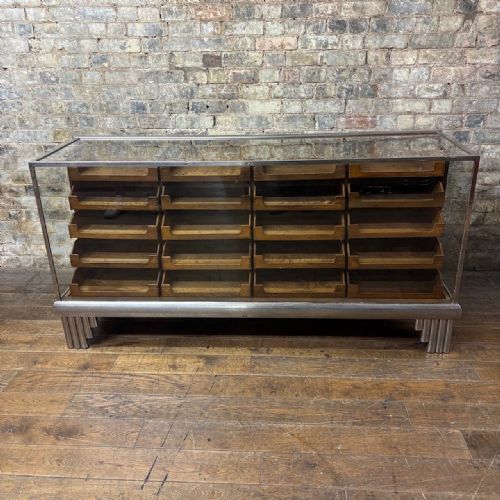


Commercial Oak Haberdashery Cabinet
These commercial oak haberdashery cabinet pieces are sturdy store fixtures that bring practical storage and rich period grain into a home.
Commercial Oak Haberdashery Cabinet
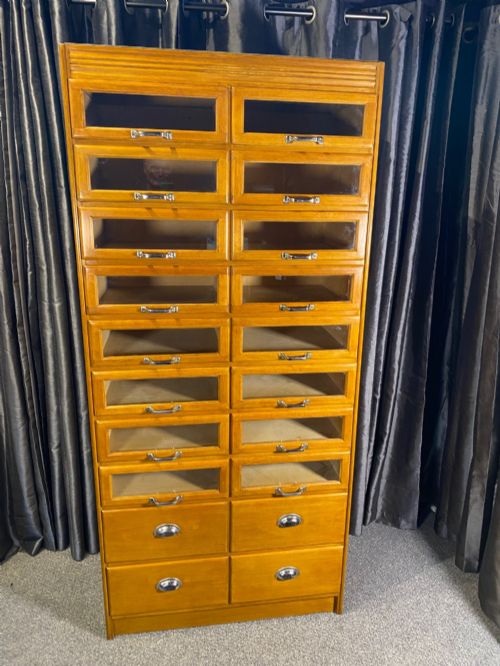
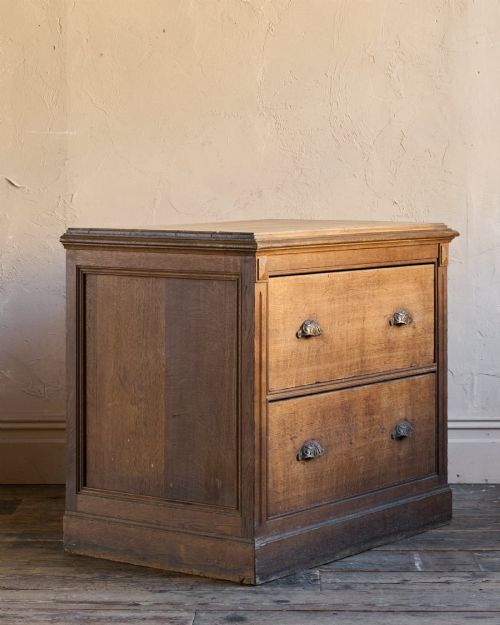
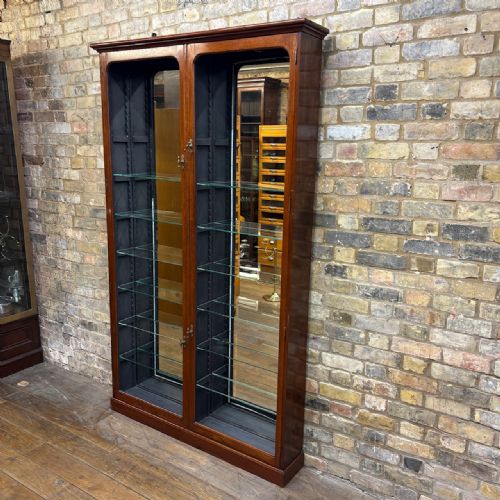
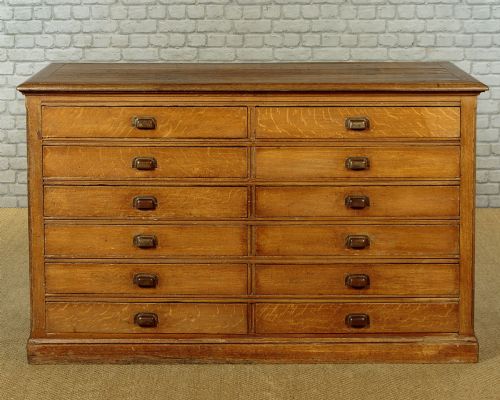
A commercial oak haberdashery cabinet takes many forms on this page, including banks of drawers, display counters, and tall shop fitting cabinets. Buyers seeking a commercial oak haberdashery cabinet will encounter pieces originating from the Victorian era, the Edwardian period, and through the 1920s, 1930s, and 1940s.
The objects stem from commercial shop interiors and trade use, designed to showcase and organise small wares behind glass and timber. Most examples seen here lean towards early twentieth-century commercial styling alongside Victorian commercial and Art Deco influences.
How they were made
Construction relies heavily on solid oak timber matched with glass panels for viewing contents, supported by brass and chrome metal hardware. Selected items incorporate mirrors and velvet linings to enhance the display of stored goods.
Joinery techniques serve heavy commercial demands, creating robust frames capable of withstanding daily retail handling and frequent drawer operation. The integration of patented mechanisms in specific filing variants demonstrates the functional ingenuity applied to trade furniture.
Commercial Oak Haberdashery Cabinet Retail Price Guide 2026
Typical asking prices for commercial oak haberdashery cabinet among the pieces listed under this phrase on Sellingantiques today, from the lower quarter to the upper quarter. They describe what is for sale here now, not the wider market.
Some counter display cabinets bear later sign writing for Frys Chocolate, adding a layer of confectionery history to the timber frame.
What varies in quality
Quality differences emerge in the selection of timber grain, the weight and finish of the metal fittings, and the complexity of the internal configuration. Superior examples display refined proportions and robust original cabinetry hardware rather than utilitarian replacements.
The sophistication of the glazing bars, the integrity of the original glass, and the precision of patent locking mechanisms or specialised drawer banks distinguish standard commercial stock from exceptional trade pieces.
Dudley & Co·Amberg
The Commercial Oak Haberdashery Cabinet Glossary
- Haberdashery cabinet
- A set of drawers or a display case originally designed for a shop selling small articles of sewing and dressmaking.
- Shop fitting
- Fixtures and furniture built or placed inside a retail premises for trading purposes.
- Bank of drawers
- A large assembly of numerous small or medium drawers arranged in a grid formation.
- Edwardian
- Relating to the reign of King Edward VII, spanning the start of the twentieth century up to the First World War.
- Patent cabinet
- A specialised storage unit protected by a formal industrial design or mechanical patent.
Commercial Oak Haberdashery Cabinet: Frequently Asked Questions
What is a commercial oak haberdashery cabinet?
A commercial oak haberdashery cabinet is a robust piece of shop furniture designed to store and display small retail goods. These units typically feature multiple shallow drawers and glazed compartments.
Originally built for nineteenth and early twentieth-century drapery and retail shops, they now serve as statement storage furniture in residential interiors.
How were these cabinets used?
Shopkeepers used these cabinets to keep small merchandise organised while allowing customers to view items through glass panels. The shallow drawers kept ribbons, buttons, and accessories neat and accessible.
In modern settings, people repurpose them to store collections, stationery, cutlery, or clothing items while displaying decorative objects on top.
How do I fit one in my home?
These cabinets suit living rooms, kitchens, or studies where their strong timber presence and numerous drawers provide practical storage. Placing them against a clear wall allows the grain and hardware to stand out.
Consider the depth and height of the piece before placement, as commercial shop counters and tall drawer banks require adequate floor space.
How do I date an oak cabinet?
Dating relies on observing construction methods, timber selection, hardware styles, and design characteristics such as Victorian or Art Deco influences. Specific dates mentioned in listings often derive from patent marks or documented shop history.
Comparing the type of brass or chrome handles and the presence of patent mechanisms also helps narrow down the decade of manufacture.