

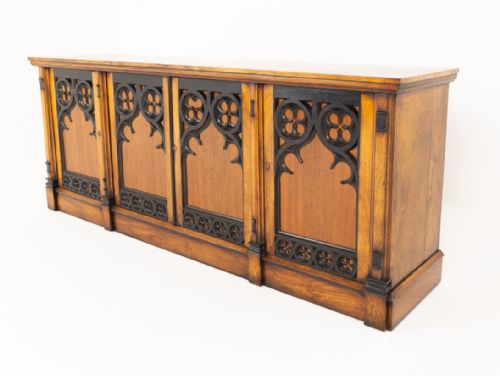

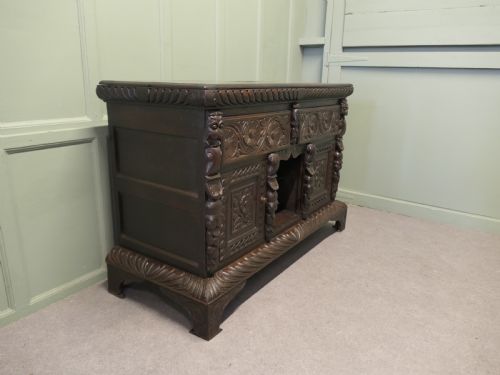
Oak Gothic Credenza
An oak gothic credenza brings heavy timber and pointed arches into a room, offering both storage and strong architectural character.
Oak Gothic Credenza
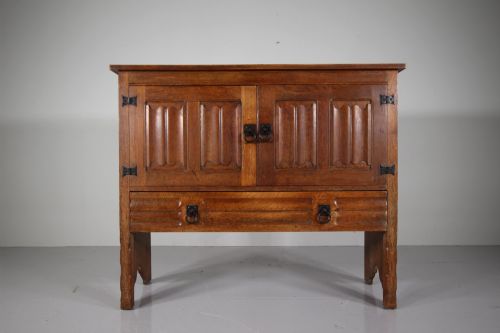
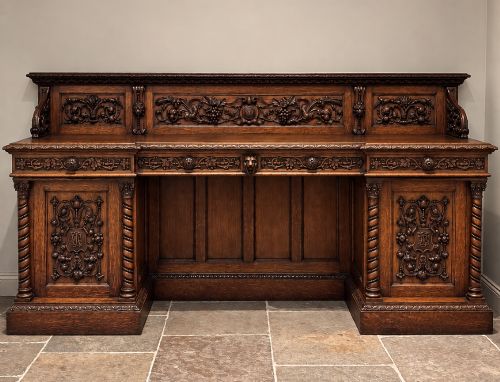
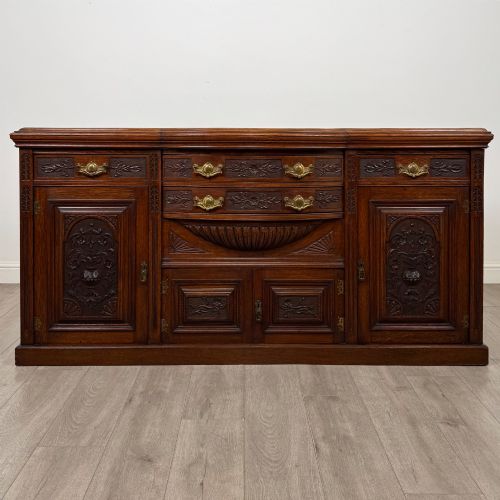
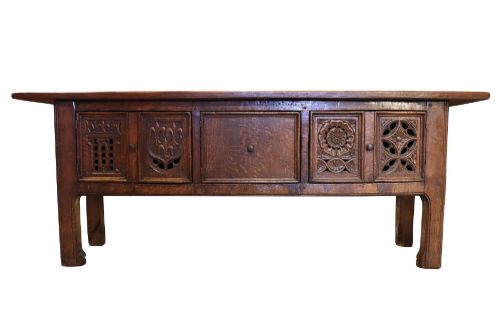
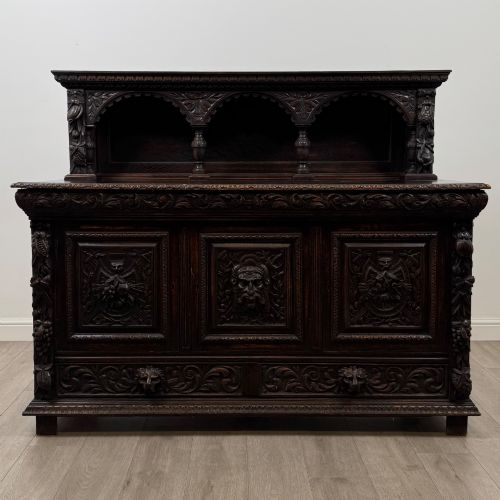
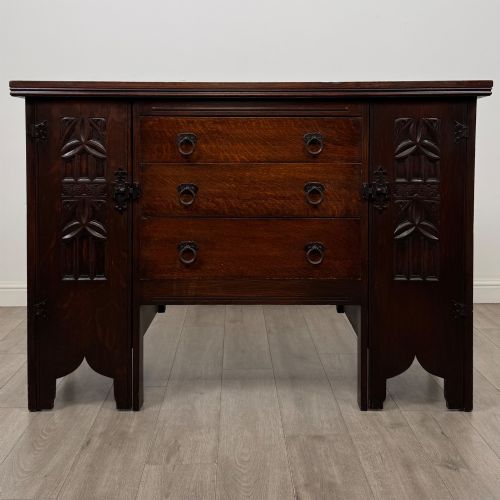
When collectors search for an oak gothic credenza, they encounter substantial storage furniture rooted in revivalist movements from the nineteenth century rather than medieval workshops. These pieces frequently appear as sideboards, dresser bases, and large cupboards carrying heavy architectural detail.
The versions most commonly met on this page date from the Victorian era and the later nineteenth century, though earlier examples stretch back to around eighteen hundred. Makers drew heavily on Tudor, Jacobean, and Strawberry Hill Gothic influences to shape heavy timber into monumental storage.
Forms range from narrow proportions to grand mirrored sideboards, often incorporating display cabinets and servers. The heavy construction serves as a focal point in a room, designed to anchor large dining spaces or halls.
Materials and construction
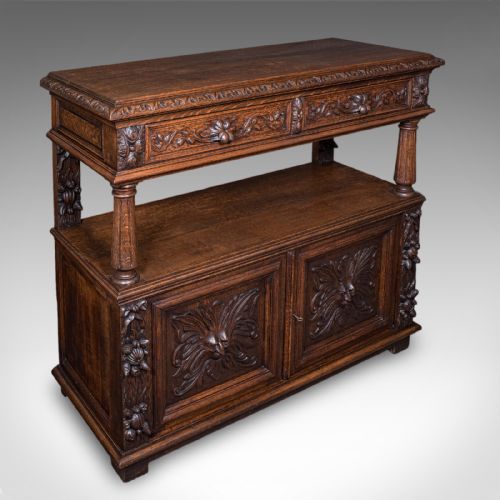
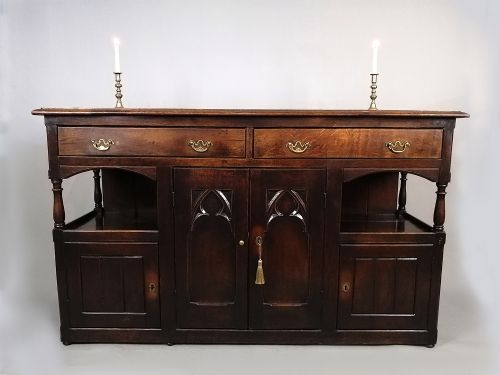
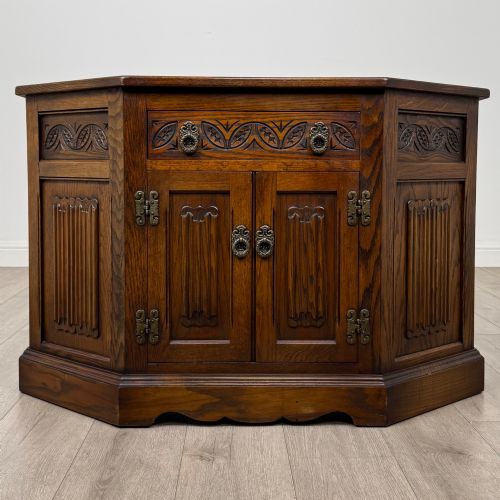
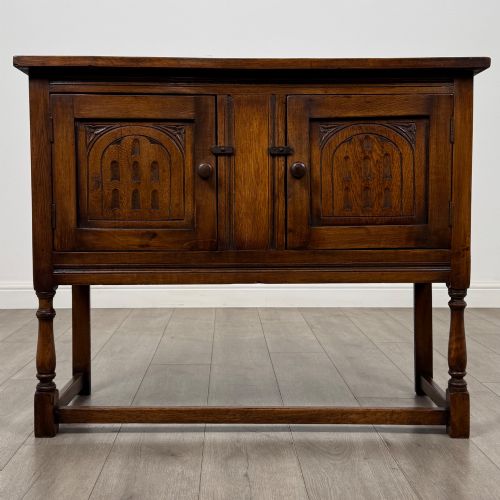
Solid oak provides the primary structural framework for these pieces, complemented occasionally by walnut and ebonised wood for contrast. Carpenters utilised traditional joinery alongside deep relief carving to execute tracery, linenfold panels, and Green Man motifs.
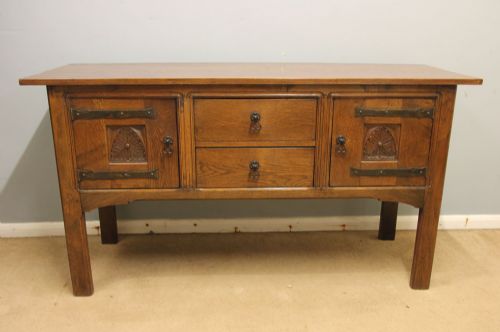
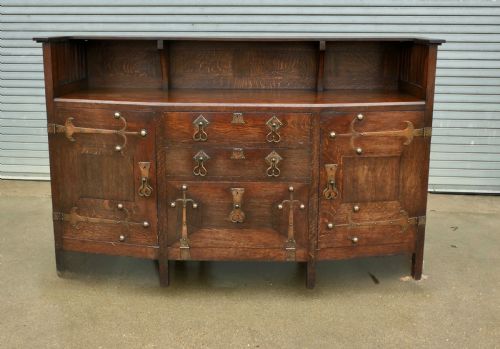
Metal fittings in brass, iron, copper, and wrought iron add functional strength to doors and drawers, forming strap hinges and drop handles. Glass panels appear in later display cabinets and bookcase sections, allowing visibility into upper compartments.
Listings here span the Victorian era, Edwardian period, and earlier nineteenth century, executed primarily in solid oak with occasional walnut.
Judging the work
Quality separates the pieces through the depth and clarity of the timber carving, particularly around panels and cornices. Heavily carved examples with crisp linenfold or tracery demonstrate superior workshop skill compared to mechanically stamped decoration.
Proportion and timber selection dictate the standing of a sideboard or cupboard. Well-figured oak combined with balanced architectural massing elevates a cabinet well above standard utilitarian storage.
Leonard Wyburd
The Oak Gothic Credenza Glossary
- Credenza
- A sideboard or cabinet used originally for displaying plate and storing food. The term applies broadly to heavy storage furniture with architectural fronts.
- Linenfold
- A style of carved wooden panelling resembling folded cloth. Cabinet makers utilised this motif extensively on cupboard doors.
- Tracery
- Openwork stone or woodwork patterns associated with Gothic architecture. Carvers translated these window designs into cabinet doors and panels.
- Green Man
- A sculptural motif of a human face emerging from or entwined with foliage. Carvers worked these figures into heavy oak sideboards and dresser bases.
- Strawberry Hill Gothic
- An early revival style inspired by Horace Walpole's villa. This aesthetic introduced lighter, theatrical Gothic ornament to furniture.
Oak Gothic Credenza: Frequently Asked Questions
What is an oak gothic credenza?
An oak gothic credenza is a heavy storage piece, typically a sideboard or cupboard, built with medieval architectural motifs during later revival periods. These cabinets combine practical storage with deep relief carving and pointed arch designs.
Most surviving examples date from the nineteenth century, reflecting the Victorian appetite for historical revivals. They serve as substantial focal points in dining rooms and halls.
How do I date these pieces?
Dating relies on examining the timber preparation, hardware, and specific revival style employed by the maker. Nineteenth-century pieces often display machine-sawn backing boards alongside hand-finished Gothic carving.
Comparing the hardware, such as iron or brass drop handles, helps narrow down the period. Stylistic cues like Strawberry Hill Gothic or Jacobean Revival further pinpoint the decade of manufacture.
Where were they used?
These large cabinets originally occupied grand dining rooms, halls, and libraries in Victorian and Edwardian homes. They held tableware, linen, and books while projecting status through their architectural weight.
Today, buyers place them in large living spaces or dining rooms where their deep timber tones and display surfaces can be fully appreciated.
How do I care for antique oak?
Antique oak benefits from stable room temperatures and protection from direct sunlight to prevent the timber from drying and splitting. Regular dusting with a dry, soft cloth maintains the finish without chemical buildup.
Applying a traditional wax polish occasionally preserves the moisture and lustre of the wood. Avoid placing these heavy pieces near active heat sources.