


Oak Geometric Moulding Chest
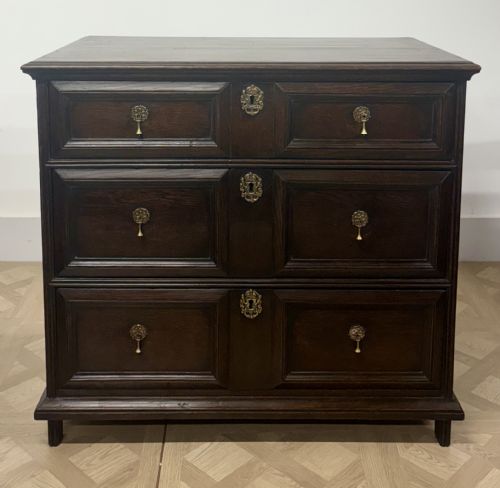
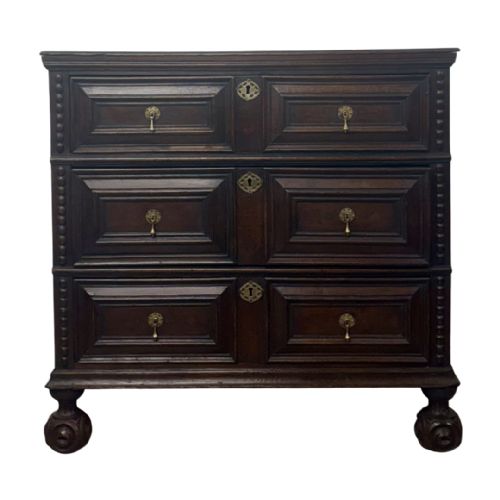
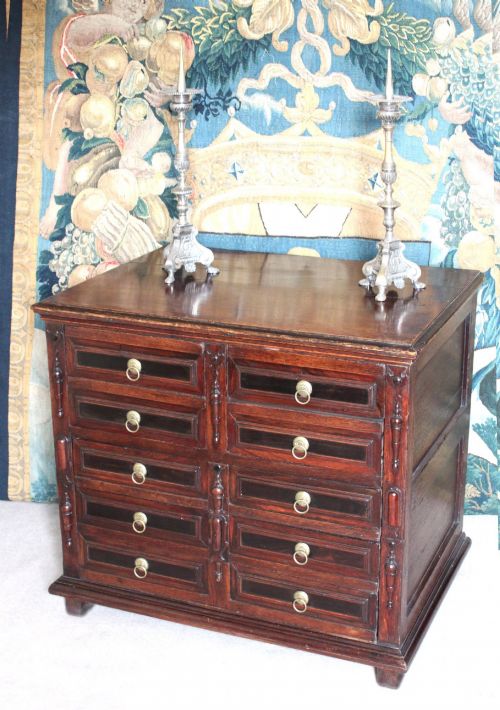
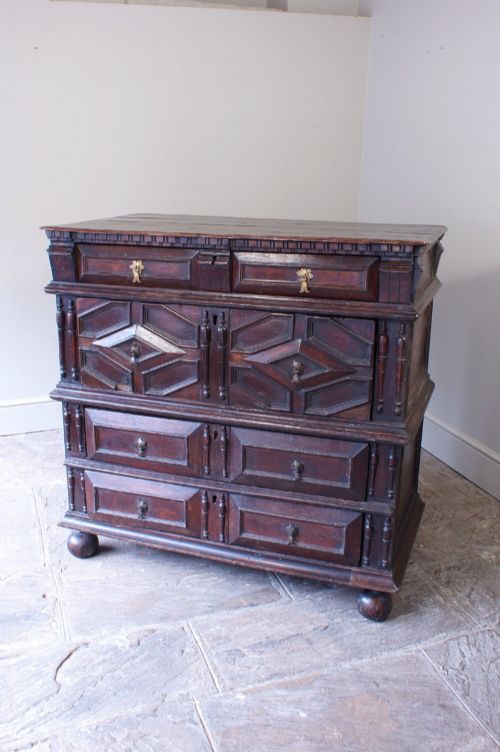
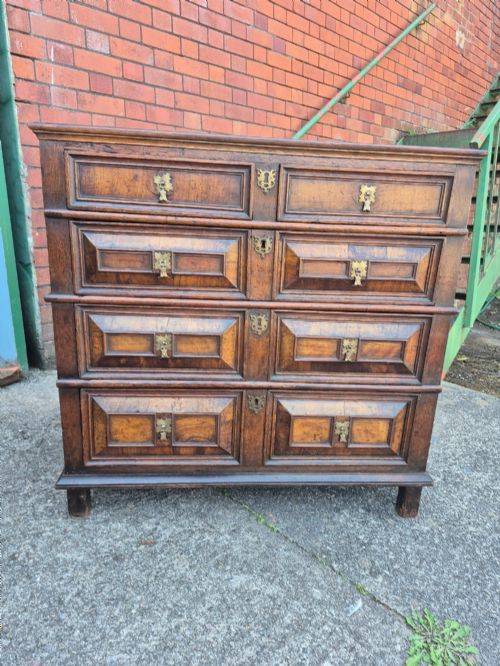
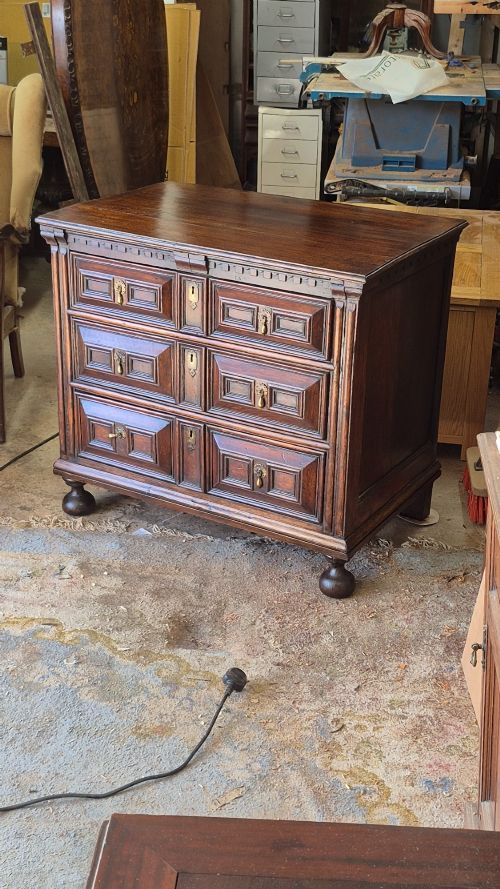
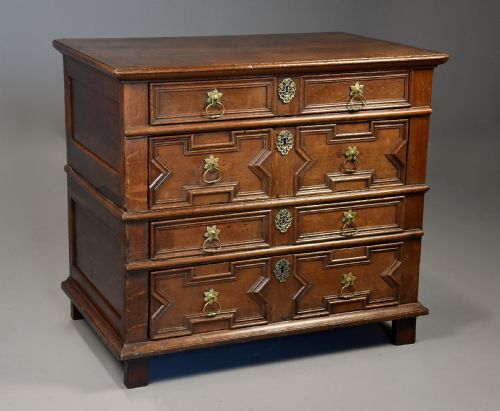
An oak geometric moulding chest delivers robust seventeenth-century character through sharply mitred drawer fronts and deep timber framing.
Oak Geometric Moulding Chest
When you search for an oak geometric moulding chest, you encounter sturdy storage pieces built primarily during the seventeenth century under Jacobean and Charles II influences. These chests typically feature multiple drawers arranged in rows, often constructed as two-part modules designed for easier transport.
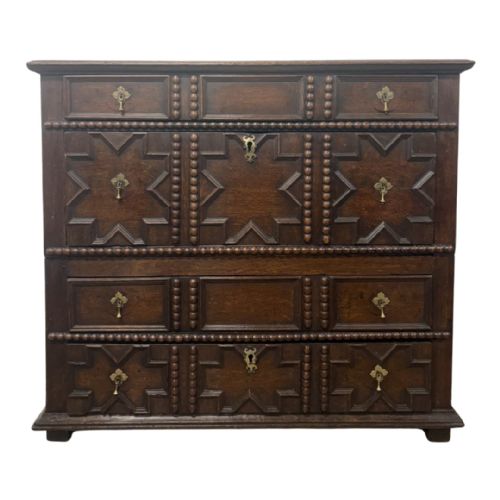
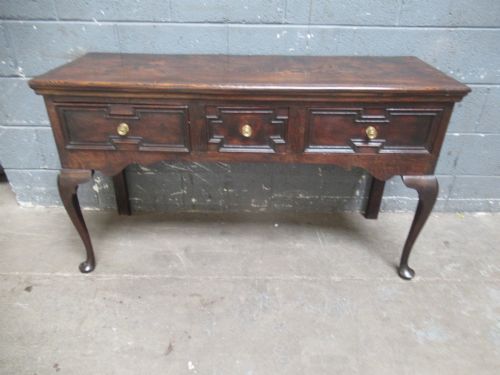
While many examples date from the 17th century and the Georgian era, you also find later revival interpretations from around 1900. The dominant form on this page remains the heavy timber chest of drawers displaying applied decorative mouldings across its facade.
How they were made
Joiners built these pieces using solid oak frames combined with secondary timbers such as walnut, fruitwood, and snakewood for decorative contrast. Panels were fitted into grooved framing to accommodate natural wood movement over centuries.
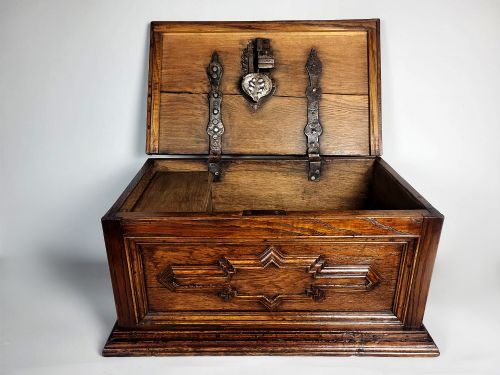
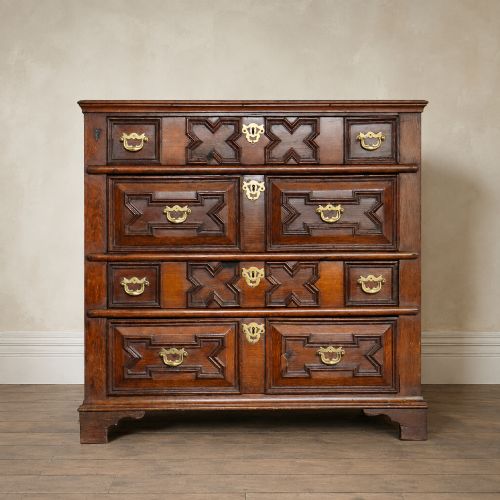
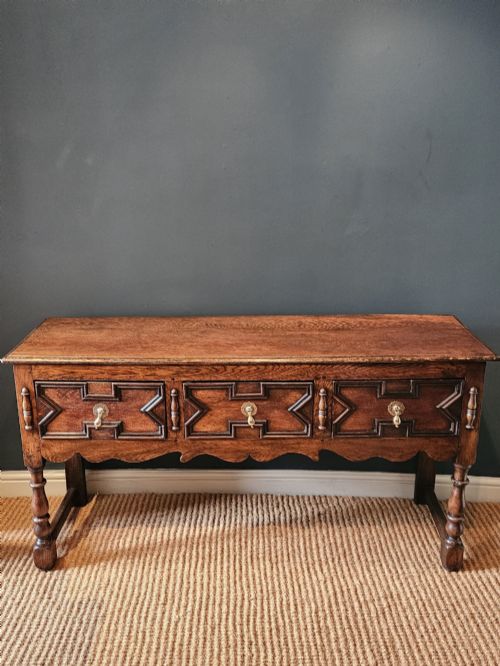
Mouldings were meticulously planed by hand, cut at mitred angles, and applied directly to the drawer fronts in geometric grids and repeating patterns. Craftsmen utilised iron and brass for locks, hinges, and drop handles, securing the framework with traditional pegged joints.
Several chests retain complex original steel locks designed to guard family linens from curious medieval mice and visiting relatives.
What varies in quality
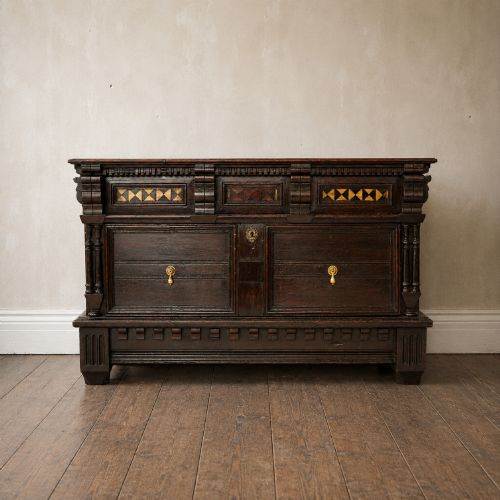
The sophistication of the applied geometric arrangement dictates much of the visual distinction across examples. Pieces featuring intricate multi-wood veneers, such as oyster cut walnut alongside primary oak, demand greater joinery skill.
Surface preservation significantly defines the standing of a piece, particularly where original brass hardware, complex steel locks, and unblemished timber patination remain intact. Later restorations or alterations to the base structure alter the historical integrity of the piece.
The Oak Geometric Moulding Chest Glossary
- Geometric moulding
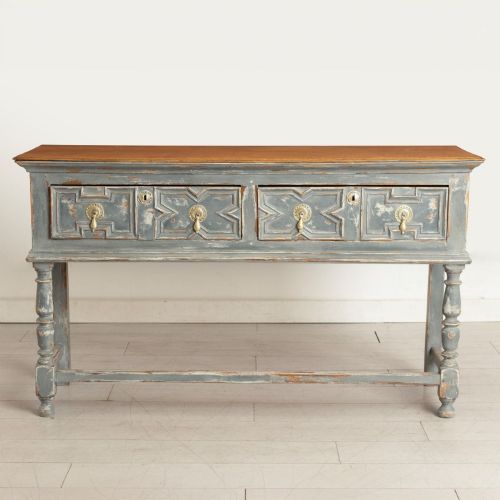
- Applied strips of wood cut with specific profiles and arranged in repeating rectangular or octagonal patterns on drawer fronts. This technique defined seventeenth-century case furniture decoration.
- Two-part chest
- A cabinet constructed as two distinct stacked sections, allowing easier relocation of heavy timber furniture. This format frequently appears in seventeenth-century pieces.
- Oyster veneer
- Thin circular or oval slices cut across small branches of walnut or fruitwood to reveal concentric growth rings. These sections were laid down in patterned arrangements.
- Patina
- The deep surface sheen and mellow colour developed by oak and secondary woods through decades of handling, light exposure, and wax application.
Oak Geometric Moulding Chest: Frequently Asked Questions
What periods do these chests come from?
The listings span primarily from the seventeenth century through the Georgian era, with some later revival pieces dating around nineteen hundred.
Craftsmen produced the core examples during the Jacobean and Charles II periods, while occasional items reflect Queen Anne and George I styles.
How were these chests used originally?
Households utilised these substantial pieces primarily for storing garments, household linens, and valuable personal belongings in bedchambers and parlours.
The sturdy construction and lockable drawers provided secure containment for textiles and documents in early domestic settings.
Are these chests made entirely of oak?
While oak serves as the primary structural and external timber, makers frequently incorporated secondary woods for decorative contrast and specialised details.
Surviving pieces record the use of walnut, fruitwood, snakewood, and paint alongside primary oak framing and drawer construction.
How do I spot a two-part chest?
A two-part chest is built as two separate stacked cabinet modules rather than a single continuous carcass from top to bottom.
This construction method made heavy seventeenth-century furniture significantly easier to move through narrow stairwells and historic doorways.