
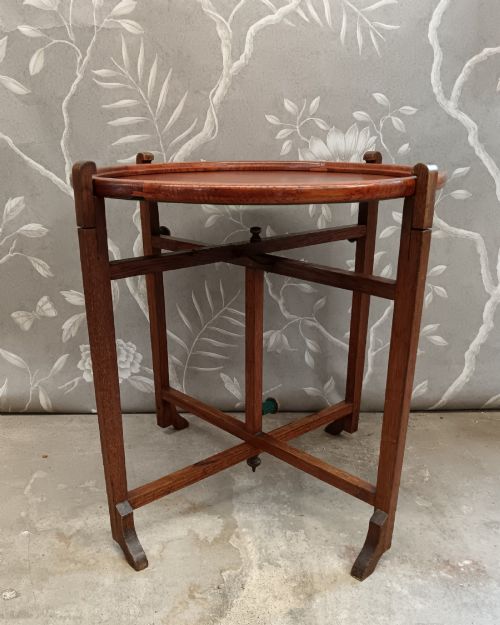
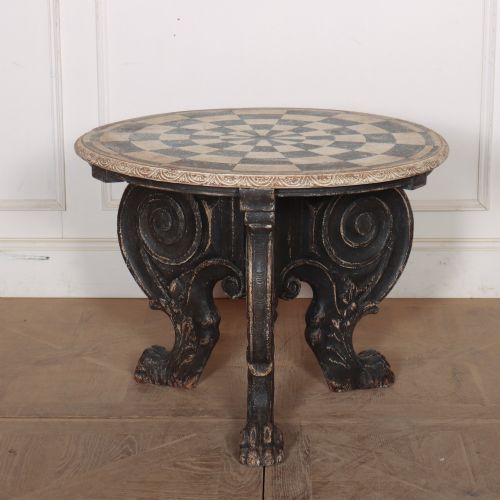


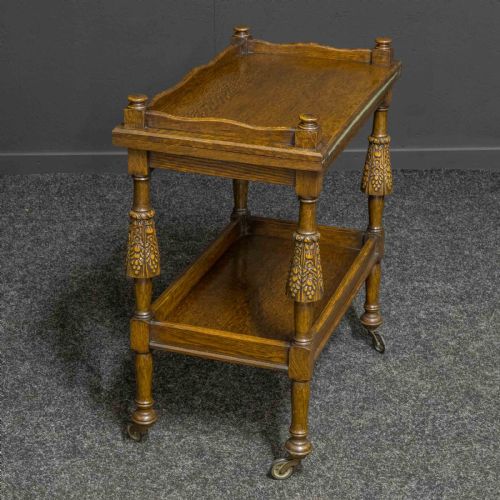
Oak Gaming Table
An oak gaming table brings functional ingenuity and tactile timber warmth to a room, offering clever folding tops and dedicated compartments for play.
Oak Gaming Table
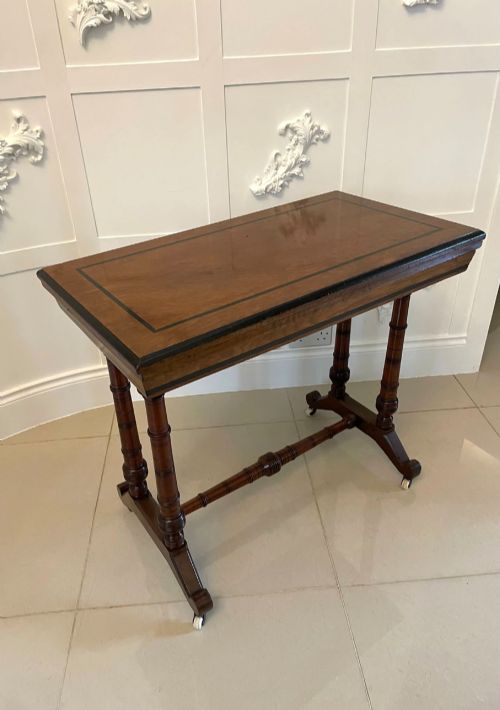
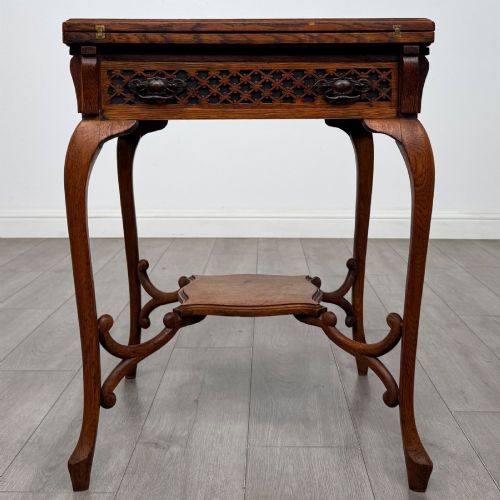
An oak gaming table is a piece of furniture designed specifically for leisure, combining sturdy timber construction with mechanisms for folding, reverting, or revealing playing surfaces. The examples you encounter on this page span several decades, originating from Victorian, Edwardian, and nineteenth-century workshops.
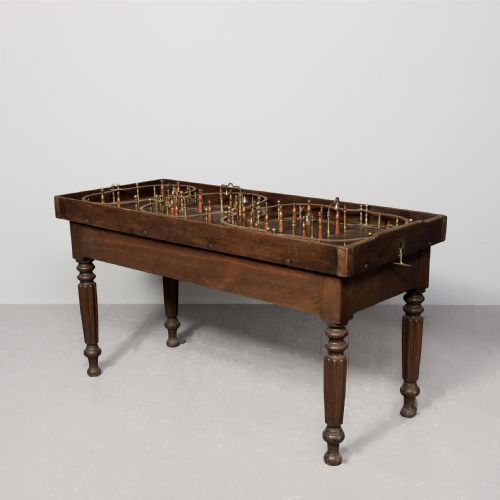
The forms vary considerably depending on the specific pastimes they served. You will find card tables with fold-over leaves, trifold handkerchief tables, compendiums, and even solid wood game blocks fashioned from tree trunks.
Makers utilised the robust nature of oak to create adaptable domestic furniture that transitioned easily from a side table or tea table into an active surface for cards, skittles, or board games.
Distinguishing quality
The standard of an oak gaming table rests on the ingenuity of its mechanism and the crispness of its woodwork. Smooth foldover hinges, well-fitted leaves, and solid timber framing distinguish superior examples from simpler utilitarian pieces.
Artistic ambition also sets pieces apart, such as those bearing the distinct design vocabulary of the Manchester School or makers like Shapland and Petter, where carved details and inlaid elements elevate the furniture beyond standard domestic use.
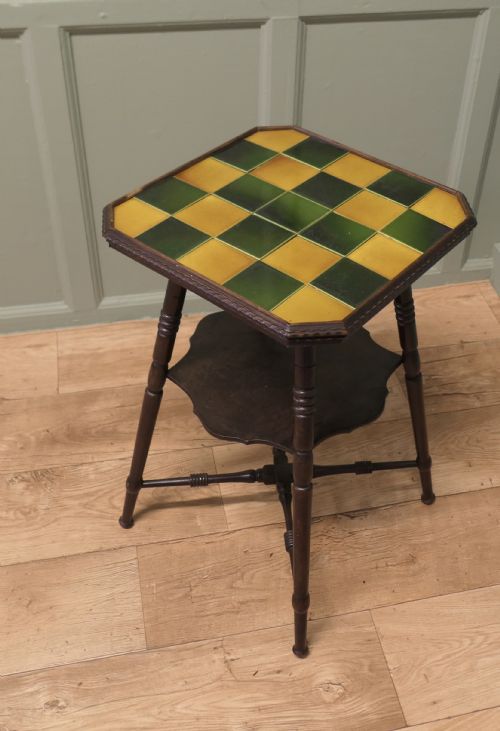
Listings feature oak combined with materials such as brass, ebony, iron, ceramic, baize, and cut crystal across various nineteenth and twentieth-century periods.
Shapland and Petter·William Trotter
The Oak Gaming Table Glossary
- Baize
- A coarse woolen material resembling felt, traditionally used to line the playing surfaces of card tables to cushion counters and quiet the shuffling of cards.
- Foldover table
- A dual-purpose table featuring a hinged top that opens out to double the surface area, frequently revealing a baize-lined interior for games.
- Games compendium
- A fitted box or cabinet containing multiple board games, card games, and accessories housed together in an organised arrangement.
- Handkerchief table
- A triangular occasional table with folding leaves that resemble a handkerchief laid flat, expanding into a square surface when opened.
- Trifold table
- A table with a top composed of three hinged sections that unfold to create a stable playing area from a compact footprint.
Oak Gaming Table: Frequently Asked Questions
What is an oak gaming table?
An oak gaming table is a specialised piece of antique furniture built to accommodate various pastimes, from card games to skittles. They often feature clever mechanisms like foldover tops or drop leaves.
These tables allowed Victorian and Edwardian households to integrate leisure furniture seamlessly into everyday sitting rooms without sacrificing domestic aesthetics.
How do foldover card tables work?
Foldover card tables utilise hinged wooden tops that swing open and rotate to rest upon an extended frame or swing leg. This mechanism doubles the available surface area.
When closed, the table functions as an occasional or side table, hiding the baize-lined interior from view.
What periods do these tables come from?
The tables seen here predominantly date from the nineteenth and early twentieth centuries. This includes Victorian, Edwardian, George IV, and Arts and Crafts eras.
Design styles shifted during these decades from formal revivalism to the handcrafted ideals of the Aesthetic Movement and Arts and Crafts workshops.
How do I care for antique oak furniture?
Antique oak benefits from stable room temperatures and protection from direct sunlight, which can dry out the timber and fade the finish. Regular dusting with a dry, soft cloth preserves the surface.
Avoid excessive moisture on wooden surfaces, particularly around baize inserts and brass hinges, to prevent warping or corrosion.