

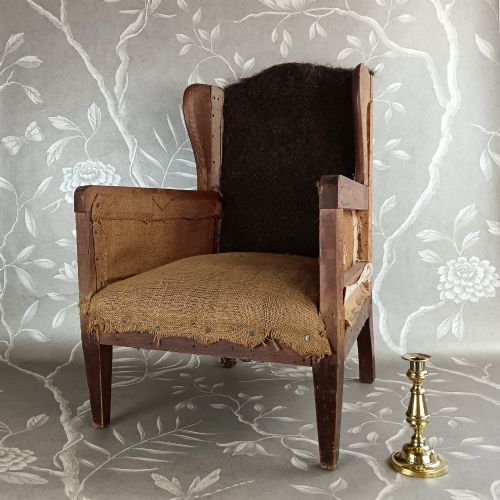
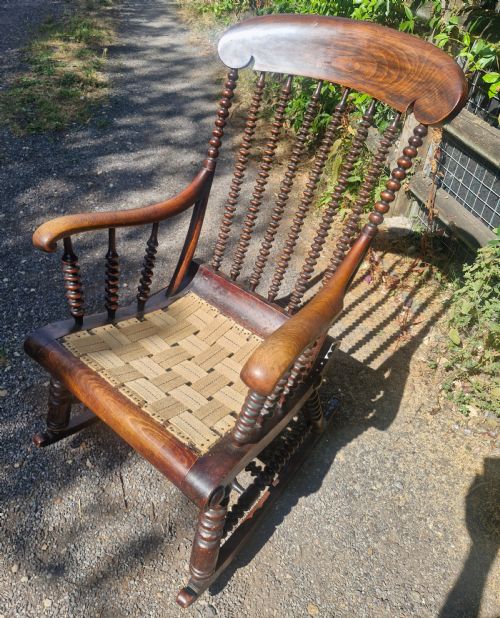
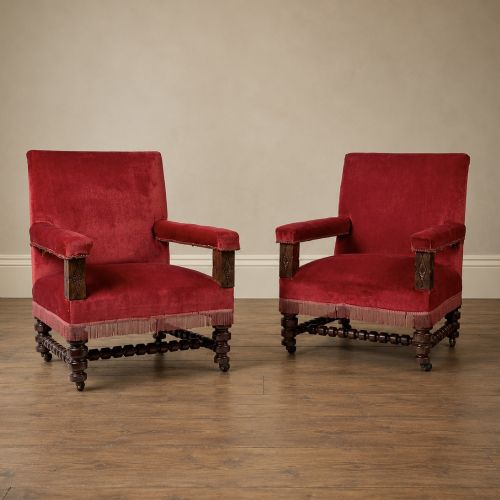
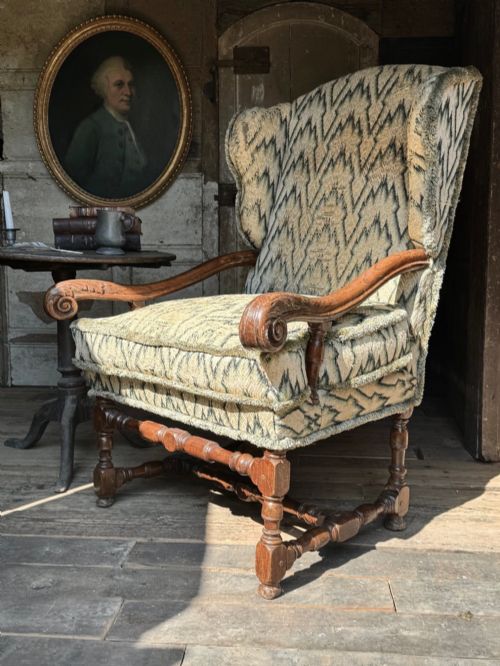


Oak Framed Armchair
An oak framed armchair brings sturdy timber construction and comfortable seating together, spanning centuries of domestic design from Gothic Revival seats to Edwardian reading chairs.
Oak Framed Armchair
When you search for an oak framed armchair, you enter a diverse landscape of seating that stretches from mid-seventeenth-century wainscot forms to early twentieth-century library and desk chairs. The versions you are most likely to meet on this page date predominantly from the Victorian and Edwardian eras, alongside pieces from the 1920s and 1930s that adapt earlier styles.
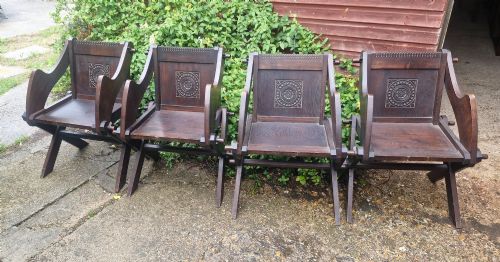
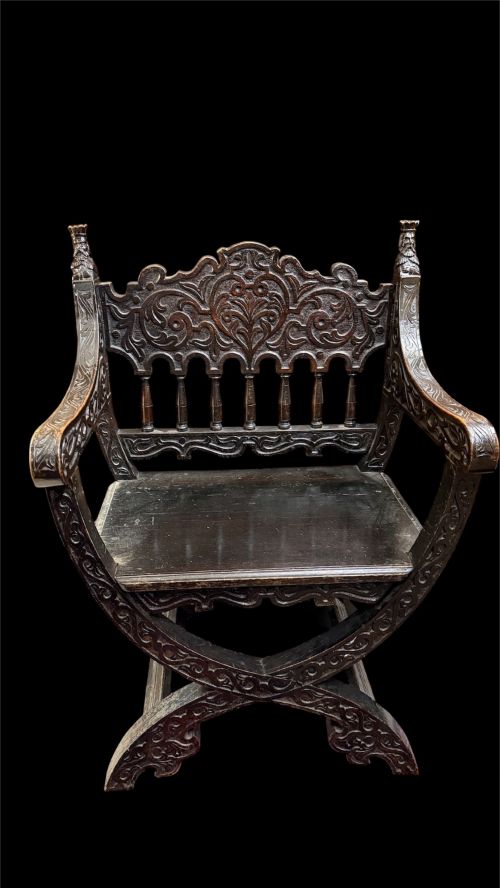
The category encompasses heavy, carved library armchairs, ecclesiastical Glastonbury designs with folding X-frames, and upholstered club or wingback chairs built for heavy domestic use. Regional variations appear alongside distinct revival styles, including Gothic, Jacobean, and Renaissance revivals executed in solid British and European timber.
Construction and Materials
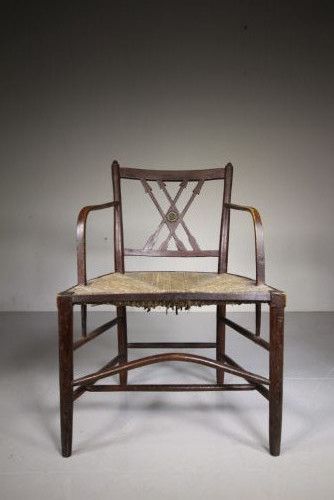
The primary structural element across these pieces is solid oak, utilised for visible frames, arms, and stretchers that provide enduring physical support. This heavy timber framework is frequently combined with traditional upholstery materials such as leather, velvet, woven textiles, and rush seating.
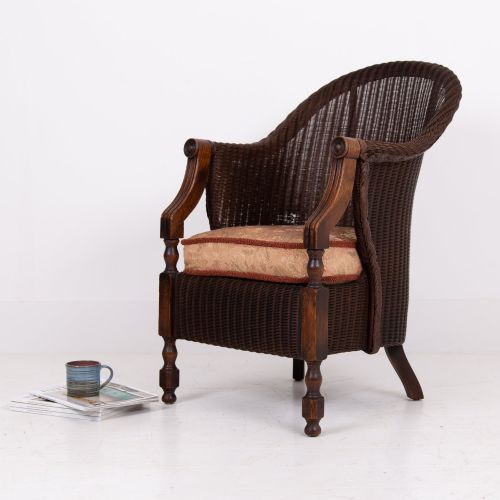
Makers integrated supporting hardware including brass studs and metal fittings, while specialised variants incorporated materials like Lloyd Loom wicker or carved bentwood elements. Joinery relied heavily on traditional mortise and tenon techniques, creating rigid skeletons designed to withstand decades of daily occupation.
The listings here incorporate timber frames spanning from the mid-seventeenth century through the Edwardian era and into the 1930s.
Evaluating Quality and Execution
The distinction between ordinary and superior pieces rests upon the crispness of timber carving, the integrity of the frame's joinery, and the proportion of the design. Earlier seventeenth and eighteenth-century examples rely on deeply hand-carved ornamentation and patinated timber surfaces that reflect decades of handling.
In later Victorian and Edwardian examples, quality is demonstrated by heavy gauge timber framing, substantial leather or velvet upholstery execution, and robust mechanical elements such as swivel actions or folding X-frame mechanisms that operate smoothly without structural play.
Gillows of Lancaster·Morris & Co
The Oak Framed Armchair Glossary
- Wainscot armchair
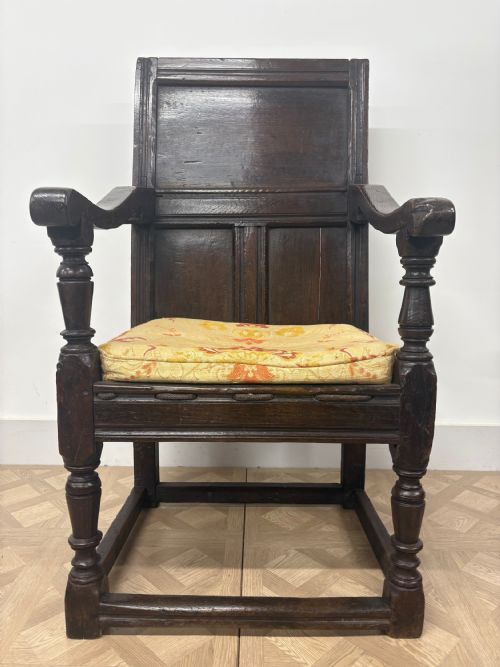
- A heavy, solid wood chair from the seventeenth century featuring panelled backs and turned supports. These represent some of the earliest forms found in domestic interiors.
- Glastonbury chair
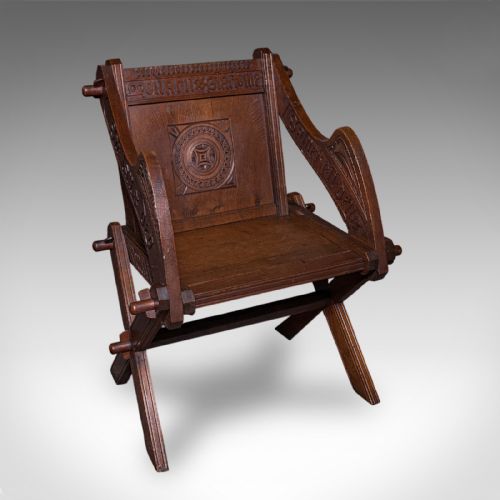
- A distinctive folding armchair with intersecting X-form legs and a sloping wooden back, often associated with Gothic Revival designs of the Victorian period.
- Wingback armchair
- A seating form featuring protective side panels designed to shield the occupant from drafts. They commonly appear upholstered in heavy leather or textile finishes.
- Bergere
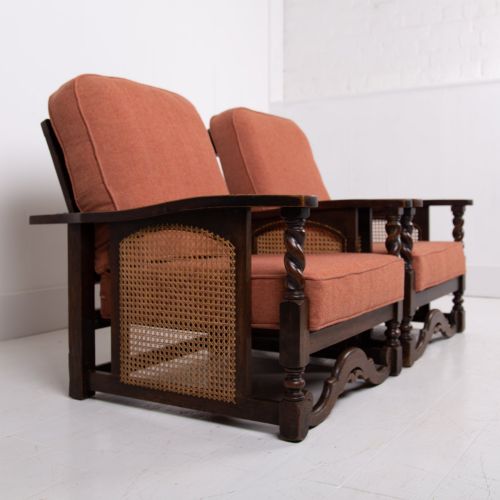
- An enclosed upholstered armchair with exposed wooden framing and woven cane panels along the sides and back. This French-influenced style gained popularity in various nineteenth and twentieth-century iterations.
- X-frame
- A structural arrangement where intersecting diagonal legs support the seat, seen in curule, Dante, and Glastonbury seating forms. This geometry provides inherent strength and occasional folding capabilities.
Oak Framed Armchair: Frequently Asked Questions
How do I identify a Victorian oak armchair?
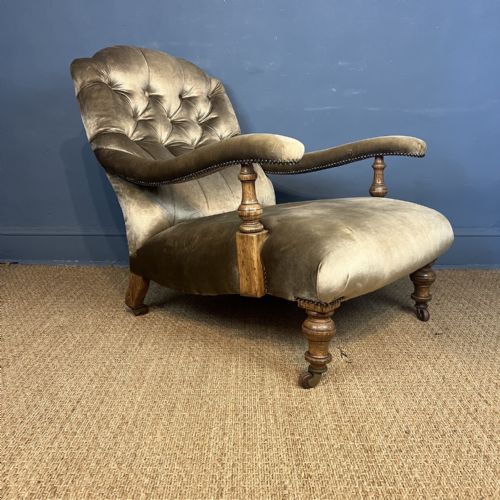
Victorian examples often display heavy carved ornamentation, dark stained timber finishes, and deep buttoned upholstery in leather or velvet. They frequently reflect Gothic Revival or Renaissance revival influences through architectural mouldings and turned structural members.
Look for period hardware, such as brass castors on the legs and traditional webbing beneath the seat cushions, which help distinguish nineteenth-century production methods from later reproductions.
What is a Glastonbury chair?
A Glastonbury chair is an ecclesiastical-style armchair characterised by its folding X-frame base, sloping wooden panel back, and broad armrests. Originating from medieval designs, they saw a significant revival during the Victorian era.
These chairs are typically constructed entirely of solid oak, often featuring carved inscriptions or ecclesiastical motifs along the crest rail and seat frame.
Are these chairs suitable for daily use?
Most oak framed armchairs from the Victorian period onwards are built with robust timber frames designed for sustained domestic occupation. Library chairs, desk chairs, and club armchairs offer sturdy structural support suited to contemporary living spaces.
Upholstered components may have been updated with modern interior padding and new fabric or leather covers while retaining the historic wooden framework beneath.
How do I care for leather upholstery on oak?
Leather upholstery on antique armchairs benefits from regular dusting and occasional treatment with appropriate conditioning creams to prevent the hide from drying out. Maintaining stable indoor humidity levels protects both the leather and the surrounding oak timber frame.
Avoid placing these chairs in direct sunlight or near heat sources, which can cause the timber to warp and the leather or fabric coverings to fade over time.