
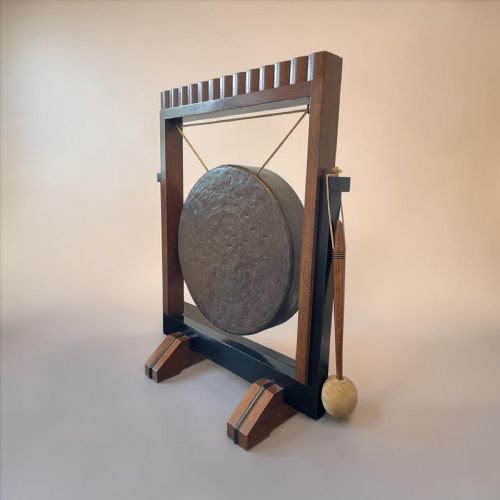
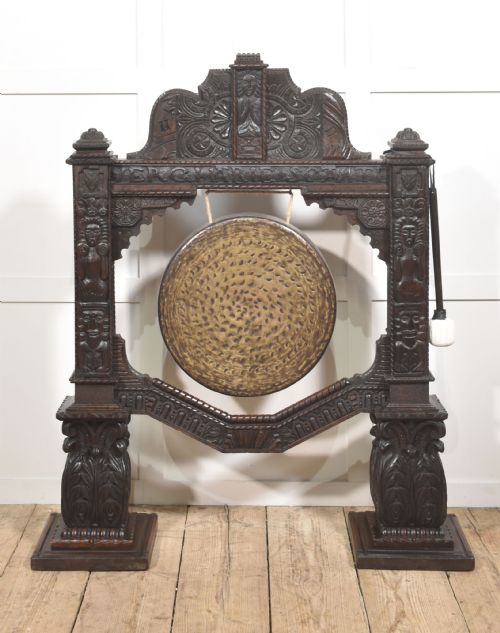


Oak Floor Standing Gong
An oak floor standing gong brings a resonant, historic tone to a room, combining solid timber frames with striking metal resonance.
Oak Floor Standing Gong
An oak floor standing gong serves as both a striking musical instrument and a substantial piece of interior furniture. These pieces combine substantial timber frames with suspended metal discs, traditionally used to announce meals in large country houses.
The versions met most frequently on this page date from the nineteenth and early twentieth centuries, spanning periods from Victorian Gothic Revival through to Art Deco and Edwardian designs. Forms range from simple framed stands to monumental carved structures featuring decorative details such as Green Man motifs.
Makers utilised sturdy hardwoods to support heavy bronze or brass discs, creating imposing architectural statements that anchor a hallway or reception room. The selection encompasses both utilitarian country house examples and more elaborate Gothic or revivalist interpretations.
How they were made
Makers constructed the primary frameworks from solid oak, utilising traditional joinery techniques to ensure the upright supports could bear the heavy weight of a suspended metal disc. Carved elements, whether simple chamfering or elaborate Gothic revival tracery, were worked directly into the timber frame.
The hanging mechanism relied on durable materials such as cord, rope, leather, or felt to suspend the bronze or brass gong securely while allowing the metal to vibrate freely when struck. Metal components combined cast or beaten bronze and brass plates paired with dedicated strikers.
One notable variant replaces the traditional metal disc entirely with an oak-cased glockenspiel for domestic musicians.
What varies in quality
The distinction between standard examples and superior pieces rests on the depth of the timber carving and the architectural ambition of the frame. Monumental or country house proportions command attention through heavier scantlings of oak and more sophisticated stylistic detailing.
Quality also manifests in the integration of materials, where robust leather or cord suspensions and heavy cast bronze or brass gongs produce a superior acoustic resonance compared to lighter, utilitarian substitutes.
The Oak Floor Standing Gong Glossary
- Gothic Revival
- A nineteenth-century design movement drawing inspiration from medieval architecture, featuring pointed arches, tracery, and heavy carved oak. This style appears frequently on floor standing gongs from the Victorian era.
- Arts and Crafts
- A design movement prioritising traditional craftsmanship and simple, honest construction using natural materials like solid oak. Pieces from this tradition avoid excessive ornamentation in favour of structural clarity.
- Bronze
- An alloy of copper and tin traditionally used for the striking disc of a gong to produce a deep, resonant tone. Bronze plates vary in thickness and metal composition.
- Glockenspiel
- A percussion instrument consisting of tuned metal bars, occasionally housed in an oak frame alongside standard floor standing gongs. These pieces offer an alternative musical mechanism within a similar timber casing.
Oak Floor Standing Gong: Frequently Asked Questions
How were floor standing gongs used?
These gongs were positioned in hallways or reception areas of large country houses to summon household members and guests to dinner. Striking the suspended metal plate produced a loud, resonant tone that carried across multiple rooms.
Beyond domestic summoning, they served as imposing decorative furniture that demonstrated the household's taste and status through elaborate woodwork and polished metal.
What periods do these gongs date from?
The available pieces predominantly date from the nineteenth century through the early twentieth century, encompassing the Victorian era, Edwardian period, and up to the nineteen-thirties.
Stylistic markers such as Gothic revival tracery or clean Art Deco lines help identify the specific era of manufacture alongside recorded period evidence.
What materials make up the frame?
Oak forms the primary structural material for the uprights, bases, and suspension beams across all listed examples. This dense hardwood provided the necessary strength to support heavy metal components.
Additional materials include brass and bronze for the gongs themselves, while cord, rope, leather, and felt were utilised for hanging suspensions and striker attachments.
How do I live with an oak gong?
An oak floor standing gong requires adequate floor space to serve as a focal point in a hallway, landing, or large living room. The heavy timber frame needs a stable surface and careful placement away from direct heat sources to protect the wood.
Maintenance involves occasional dusting of the carved oak and gentle cleaning of the metal disc to preserve its finish without dampening the natural acoustic resonance.