
Oak Farmhouse Dining Chairs
Oak farmhouse dining chairs bring robust vernacular craft and honest utility to a modern interior, offering daily seating rooted in centuries of country joinery.
Oak Farmhouse Dining Chairs
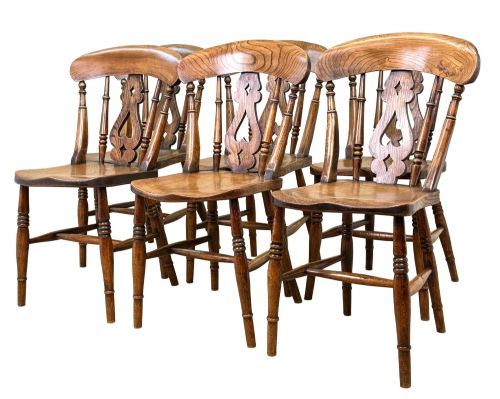
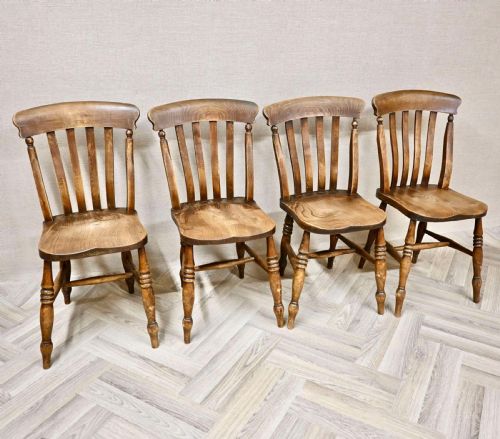
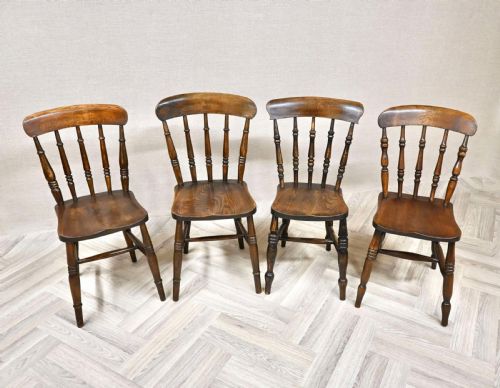
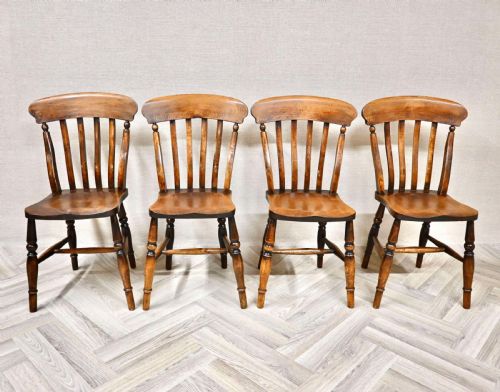
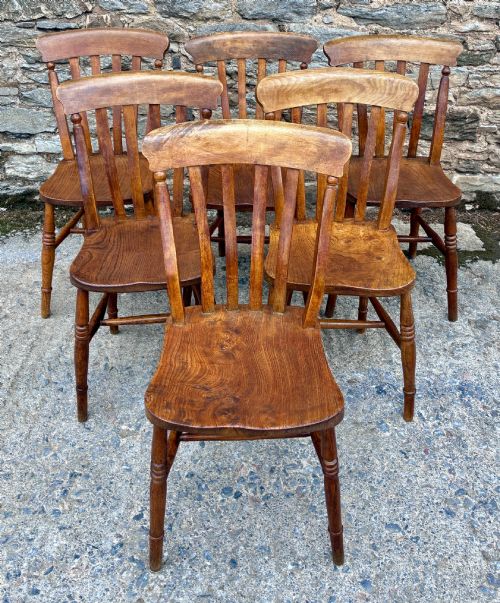
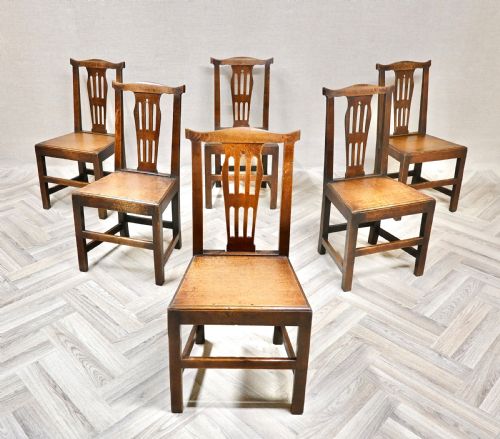
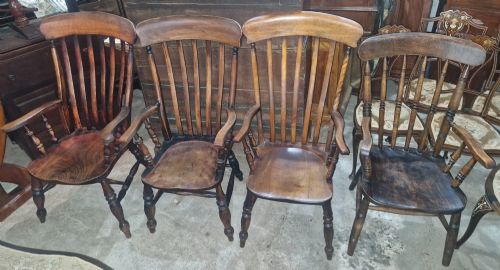
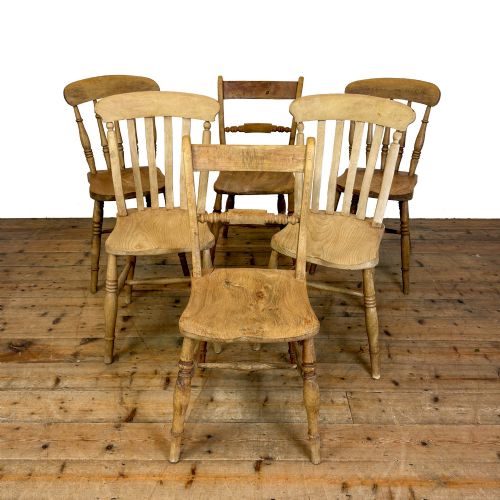
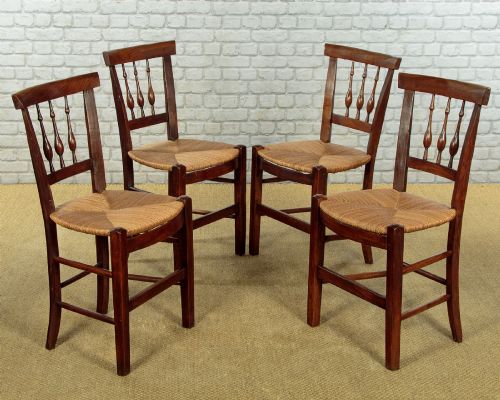
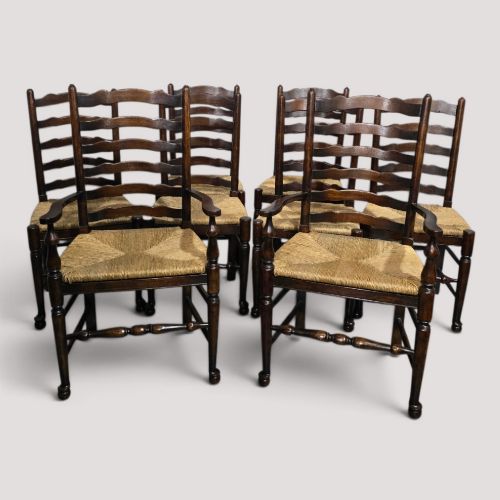
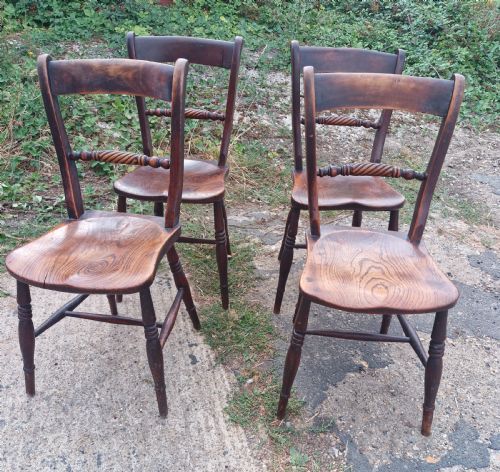
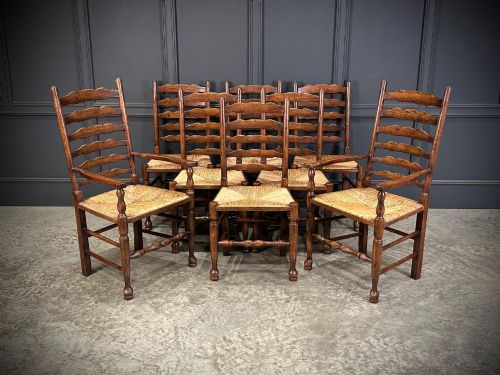
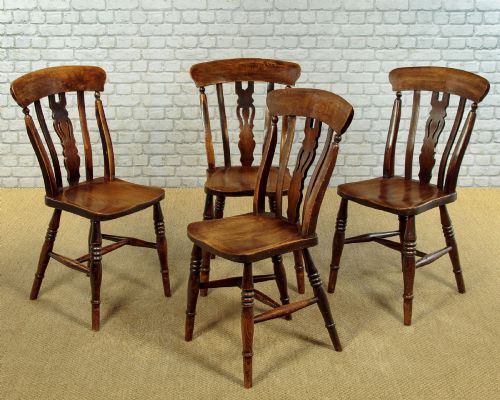
When looking for oak farmhouse dining chairs, you will encounter sturdy vernacular seating originating largely from the nineteenth century, alongside earlier Georgian and later 1900 examples. The most common variations on this page are stick-back Windsor forms and tall ladder-back chairs designed for long kitchen tables.
Makers working in regional pockets across England and Wales utilised local timber traditions, producing sturdy seating forms that range from simple kitchen pairs to matched sets of six or eight. These pieces reflect everyday domestic utility rather than formal court furniture, making them resilient choices for modern dining rooms.
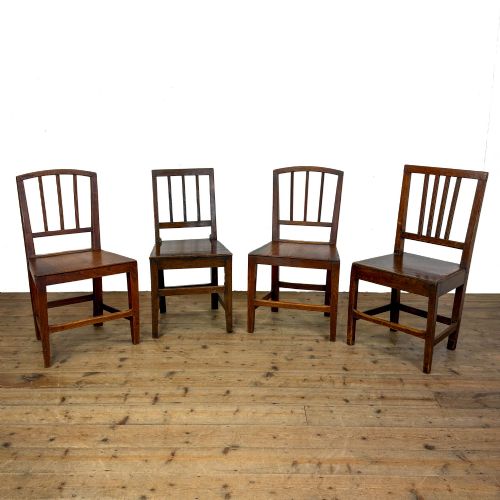
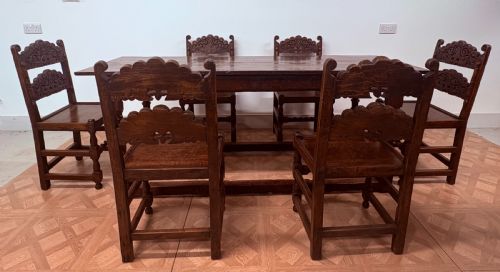
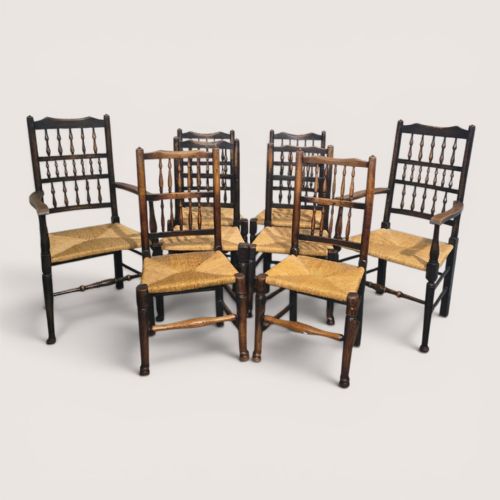
The inventory leans heavily towards vernacular country seating shaped by regional traditions, including Lancashire and Welsh designs. Buyers frequently find harlequin sets gathered together over time, pairing similar proportions and wood tones around a single table.
Materials and construction
Makers combined solid oak frames with complementary native timbers such as elm, ash, and fruitwood, selecting each wood for its specific structural strength. Seats were often carved from single elm planks or woven from natural rush and cane to provide flexible support.
Traditional joinery relied on pegged mortise and tenon joints for ladder-back frames, whilst Windsor chairs utilised turned spindles wedged securely into solid wooden seats. This honest construction method allowed chairs to withstand heavy daily use without metal fasteners.
Listings feature oak, elm, ash, and beech, demonstrating the heavy reliance on native British hardwoods across the nineteenth century.
Judging quality in country chairs
Quality rests in the integrity of the timber and the balance of the proportions, particularly in the thinning of Windsor bows and the tapering of spindle turnings. Superior sets display uniform wear and consistent turning details across every chair, showing they were made together rather than hastily assembled later.
The comfort and structural survival of rush or cane seats depend entirely on the tightness of the original weaving and the dry preservation of the underframe. Chairs retaining their original patinated timber surfaces without excessive sanding command greater appreciation from collectors.
Worksop Allsop
The Oak Farmhouse Dining Chairs Glossary
- Windsor
- A traditional chair construction featuring turned spindles and legs fitted directly into a thick sculpted wooden seat. This design provides sturdy everyday support through a rigid undercarriage.
- Ladder-back
- A chair style featuring horizontal slats or rails arched between two upright rear posts. These backs often accommodated woven rush seating.
- Harlequin set
- A collection of dining chairs sharing similar styles, periods, or materials, gathered together to form a matched group around a table. Such sets display subtle variations in turning and timber tone.
- Rush seat
- A seating surface woven from dried marsh plants twisted into cords and wrapped around a wooden frame. This technique yields a resilient and supportive platform.
- Lathback
- A variant of the Windsor chair featuring a vertical wooden splat running up the centre of the stick back. It offers reinforced back support for kitchen dining.
Oak Farmhouse Dining Chairs: Frequently Asked Questions
How do I date an oak farmhouse chair?
Dating relies upon observing tool marks, timber shrinkage, and construction methods such as hand-turned spindles versus machine-lathe work. Earlier eighteenth-century examples exhibit vernacular regional traits, whereas nineteenth-century pieces often show standardised Windsor or ladder-back forms.
Examining the underside of the seat often reveals the age through the type of adze marks or auger holes used by the maker. Comparing the wear patterns on the footings also helps confirm the period of daily use.
Are ladder-back chairs comfortable for dining?
Ladder-backs provide upright support suitable for long meals, especially when paired with woven rush or cane seats that offer gentle give. Adding loose cushions can adjust the height and softness without altering the chair frame.
The rake of the back posts and the height of the horizontal slats determine how comfortably the chair supports the spine during extended sitting. Most country ladder-backs were built with a slight backward tilt for ergonomic ease.
How should I care for antique oak chairs?
Maintain antique oak chairs by keeping them away from direct heat sources and sudden humidity shifts that can cause timber to split or joints to loosen. Regular dusting with a dry cloth preserves the finish without building up heavy wax residues.
Applying a light coat of natural beeswax periodically helps nourish dry timber and maintains the soft historic sheen. Avoid harsh chemical cleaners that strip the aged patina from the wood.