


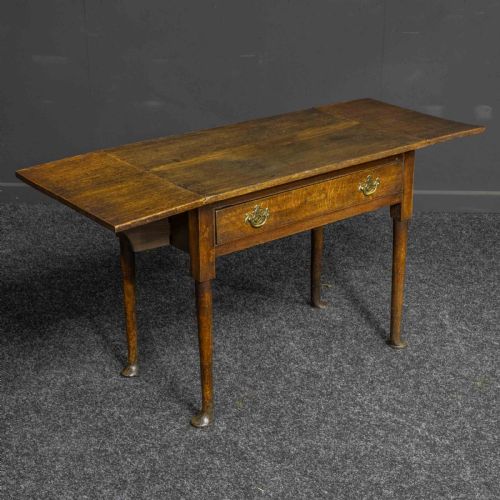

Oak Drop Leaf Console
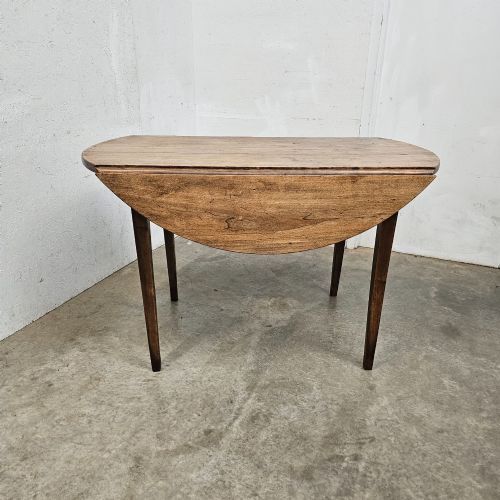
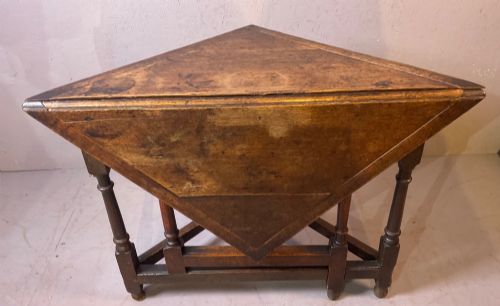
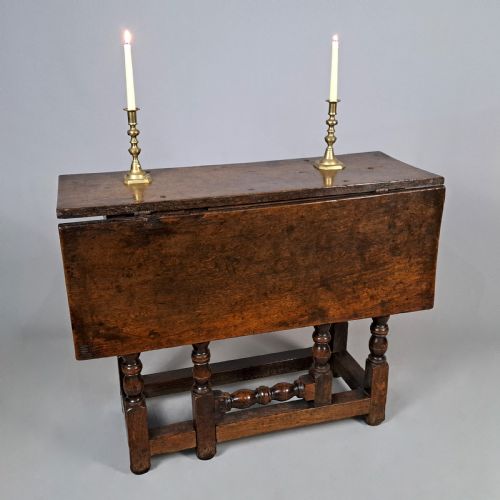
These oak drop leaf console pieces combine folding versatility with sturdy timber construction, offering a practical surface for period interiors.
Oak Drop Leaf Console
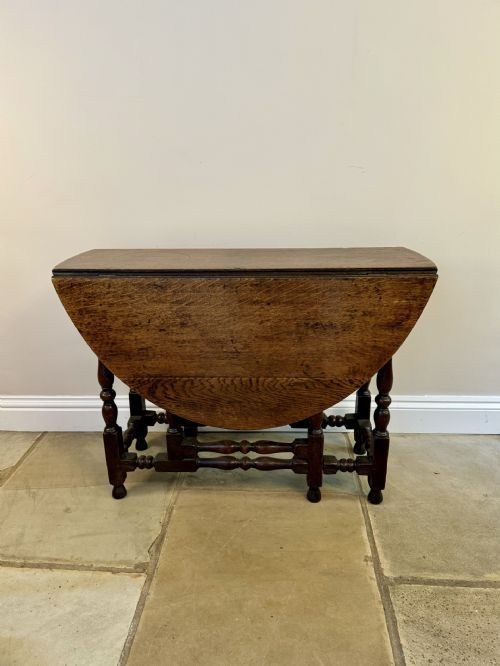
An oak drop leaf console brings together timber folding tables and side tables spanning centuries of British and continental cabinetmaking. When you search for an oak drop leaf console, you encounter forms ranging from compact side tables to dining tables and gateleg variants designed to save space.
The examples on this page cover periods from the seventeenth century through the Victorian era up to the early twentieth century. You will find styles including Georgian, Jacobean, Charles II, Arts and Crafts, and French Country represented across these items.
Materials and construction
Makers built these tables primarily from solid oak, sometimes combining fruitwood or pine for secondary framing and internal elements. Metal components appear as brass or iron hinges, brackets, and catches that support the folding leaves.
Several tables here double as spacesavers, proving our ancestors worried about square footage just as much as we do.
Judging quality in oak furniture
Quality rests on the depth of the timber's grain, the richness of the natural colour, and the integrity of the folding mechanism. Finer examples display careful selection of solid oak boards that have aged with harmonious tone.
Construction resilience distinguishes everyday utilitarian items from more ambitious cabinet work. The smoothness of the drop leaf action and the stability of the legs when extended show the maker's original skill.
The Oak Drop Leaf Console Glossary
- Drop-leaf table
- A table with a fixed centre section and hinged flaps that fold down when not in use. This design allows the furniture to expand or contract depending on space requirements.
- Gateleg table
- A table featuring hinged legs that swing out like a gate to support the raised leaves. It provides robust support for the extended top.
- Credence table
- A form of side table, often associated with seventeenth-century design, featuring folding top sections supported on a framework. These tables historically served ecclesiastical or domestic display functions.
- Sofa table
- A narrow occasional table traditionally placed in front of a sofa or against a wall. Examples in oak offer sturdy surfaces with drop leaves for extended reach.
Oak Drop Leaf Console: Frequently Asked Questions
How do I use a drop leaf console daily?
Keep the leaves dropped against the wall to use the piece as a narrow console for lamps or decorative objects. Raise one or both flaps whenever you need extra surface area for dining or working.
Ensure the folding supports are properly engaged beneath the leaves before placing heavy items on the extended sections. Regular placement away from direct heat sources protects the timber joints.
Where should I place these tables at home?
These tables suit hallways, living rooms, and dining spaces where floor area shifts throughout the day. Their narrow profile when folded makes them ideal for tight corridors or behind seating.
Position them against interior walls to highlight the grain of the oak and the character of the turned or carved legs. Avoid damp walls or conservatory environments that cause timber to warp.
How do I distinguish seventeenth-century styles?
Seventeenth-century and Charles II pieces often display heavier framing, distinct turning on the legs, and occasionally carved decoration. They utilise solid oak throughout and reflect seventeenth-century English joinery traditions.
Later Victorian and twentieth-century interpretations may replicate these historic forms while using machine-assisted cutting or lighter secondary timbers. Examine the underside and drawer construction for clues to the period.
What maintenance does solid oak require?
Dust the timber regularly with a soft, dry cloth to prevent grit accumulation in the grain and carved recesses. Apply traditional beeswax periodically to nourish the surface and maintain the natural lustre of the oak.
Keep liquids away from unsealed surfaces and use coasters beneath glasses or vases. Stable room humidity prevents the solid timber from splitting or bowing over time.