
Oak Dresser Storage Cabinet
An oak dresser storage cabinet provides enduring utility and grounded charm, spanning centuries of craftsmanship from provincial kitchens to formal dining rooms.
Oak Dresser Storage Cabinet
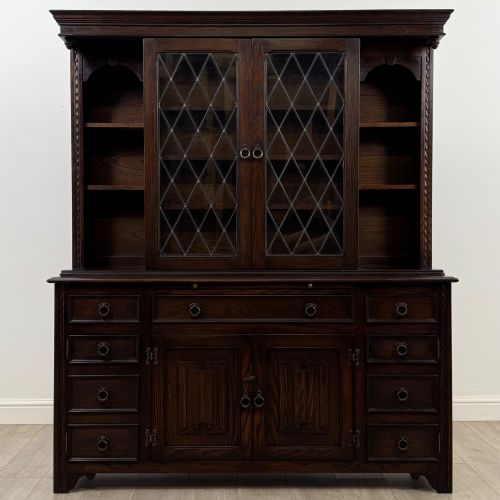
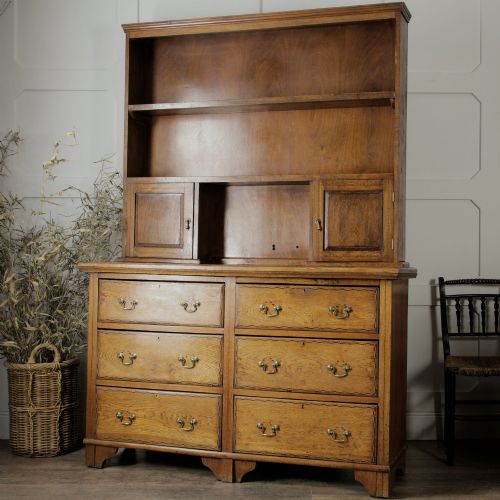
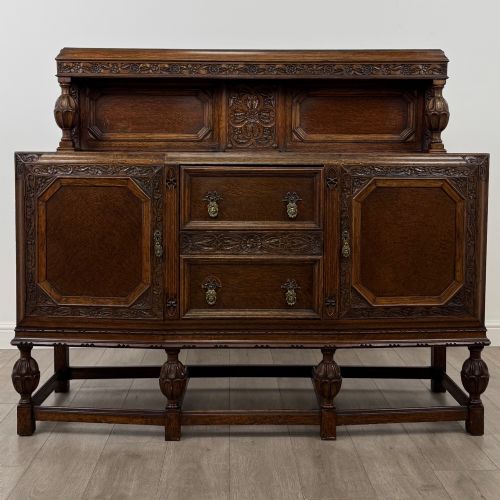
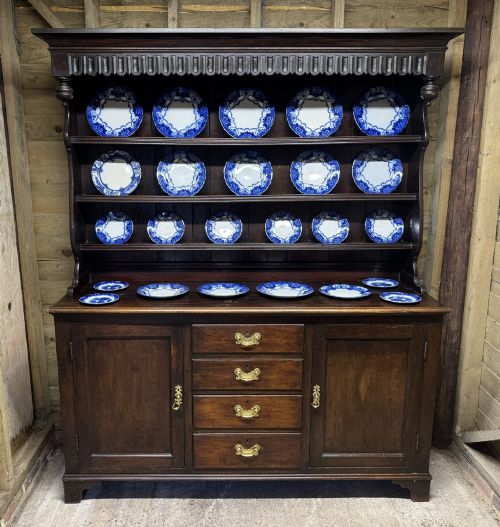
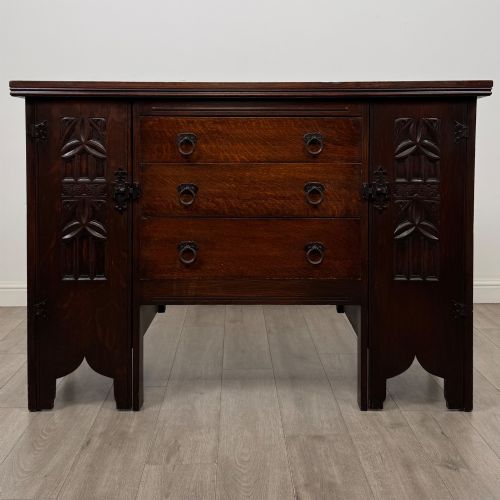
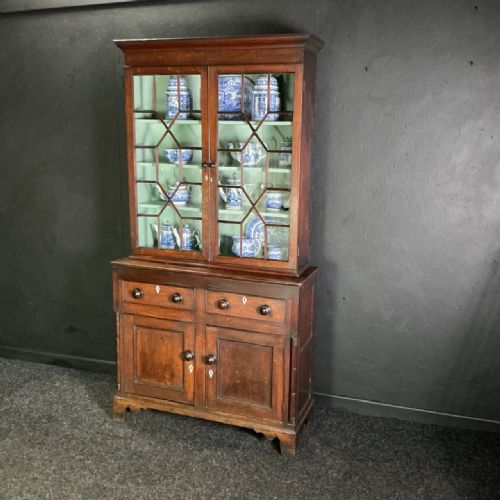
An oak dresser storage cabinet encompasses a wide array of functional domestic furniture designed for organisation and display. Buyers seeking this category encounter diverse forms, ranging from Welsh dressers with open plate racks to robust sideboard bases and tall cupboards.
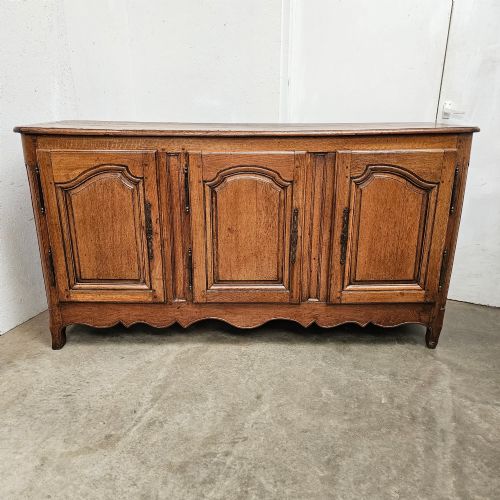
The pieces documented here stretch from the seventeenth century through the Georgian and Victorian eras into the twentieth century, including Edwardian and Art Deco interpretations. English country workshops, French provincial makers, and Cotswold School designers all contributed to this rich lineage of storage furniture.
Materials and Construction Techniques
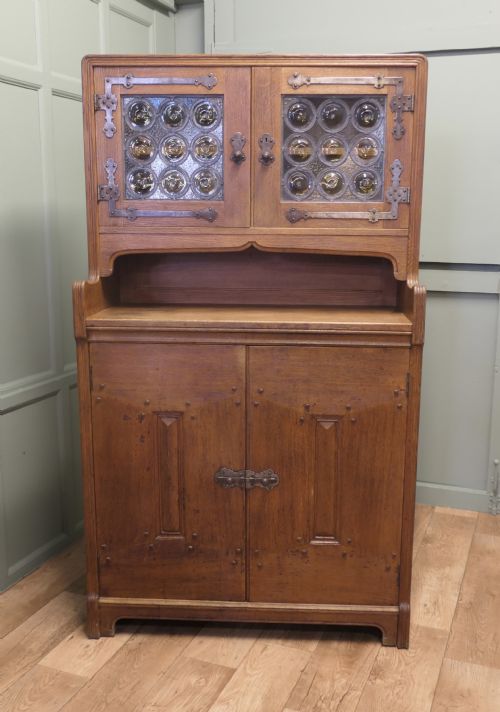
The primary material across these listings is solid oak, complemented by occasional uses of figured elm, fruit wood, and mahogany. Workshops utilised brass for handles and escutcheons, alongside glass for display panels and iron or metal hardware for structural reinforcement.
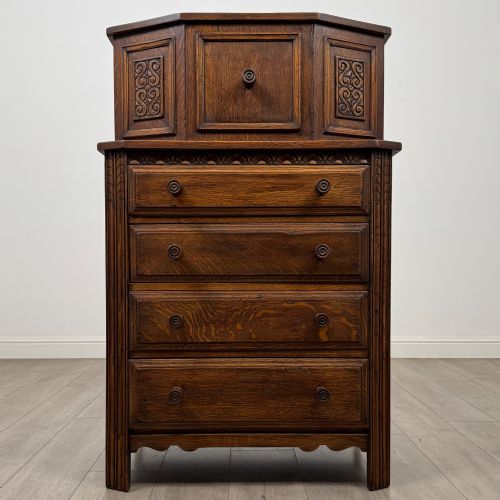
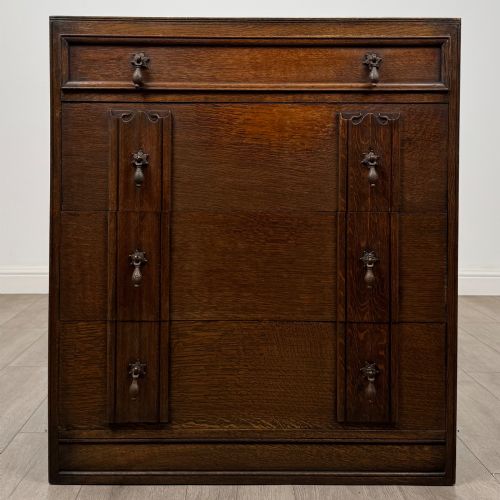
Construction methods vary from traditional seventeenth-century joinery with geometric mouldings to early twentieth-century limed oak finishes and Cotswold School assembly. Makers employed linenfold carving, panelled doors, and breakfront drawer construction to achieve both durability and visual depth.
Materials documented across these cabinets include solid oak, limed oak, brass hardware, glass panels, and supplementary fruitwood and mahogany.
Assessing Quality and Execution
Quality in an oak dresser storage cabinet resides in the selection of timber and the crispness of carved details. Superior examples exhibit tightly grained solid oak, balanced proportions, and well-executed joinery that withstands centuries of daily use.
The distinction between standard domestic items and finer pieces often lies in secondary woods, the execution of applied mouldings, and original hardware. Pieces bearing maker stamps or attributed to specific design movements command attention for their documented provenance and refined aesthetic cohesion.
Liberty·Heals of London·Peter Waals
The Oak Dresser Storage Cabinet Glossary
- Dresser base
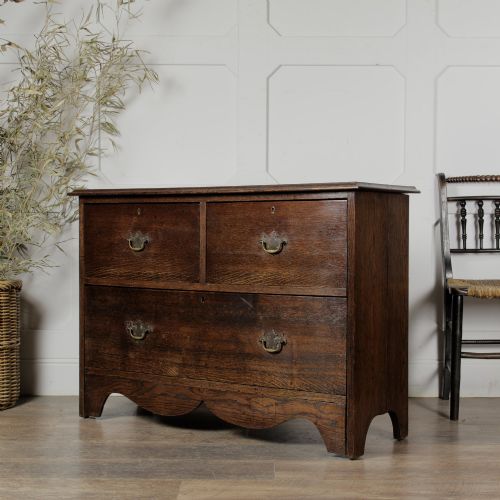
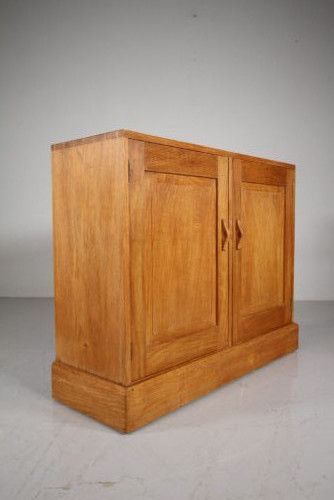
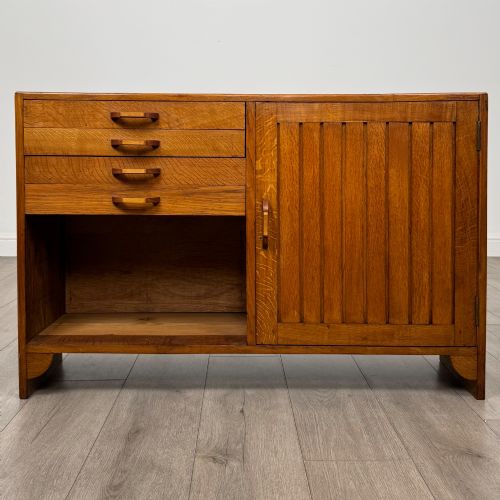
- A low sideboard or cabinet featuring drawers and cupboards, traditionally used for food preparation and storage before plate racks were added above. These versatile pieces function well in modern hallways and living rooms.
- Limed oak
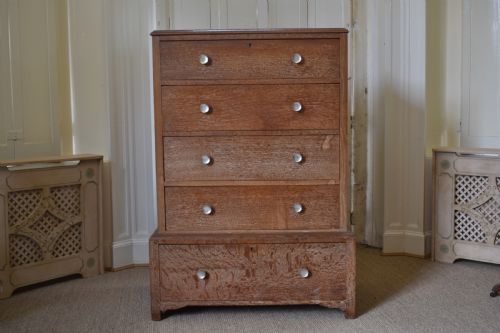
- A finish created by applying a white or pale pigment to oak to highlight the open grain pattern. This technique gained popularity during the early twentieth century, particularly within Art Deco and modern design movements.
- Court cupboard
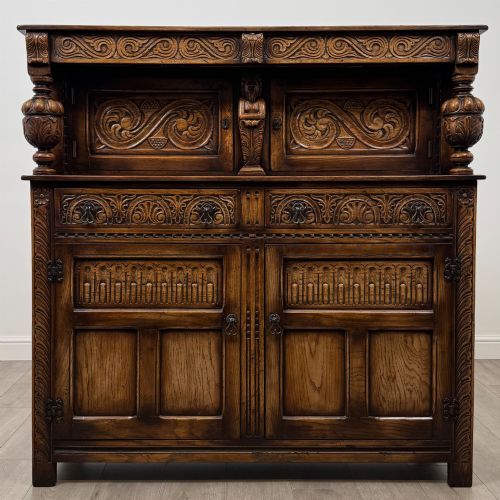
- A traditional enclosed piece of furniture with a recessed upper section supported by pillars. Originating in earlier centuries, these substantial cabinets served to display plate and store valuables.
- Linenfold
- A style of carved wooden panelling that resembles folded fabric, commonly seen on Tudor and revival furniture. This decorative motif adds texture and vertical emphasis to cabinet doors.
- Breakfront
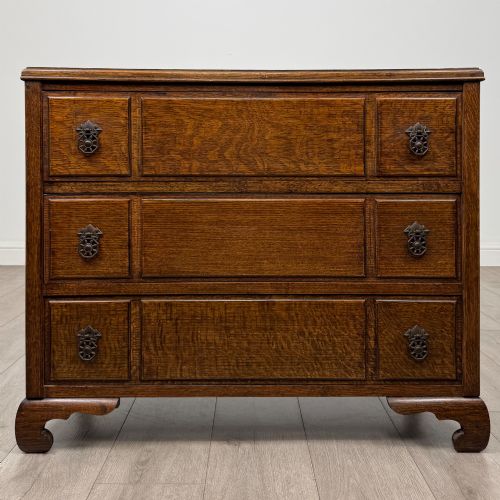
- A furniture facade where the central section projects forward from the flanking outer sections. This architectural arrangement creates depth and breaks up the linear profile of large sideboards and chests.
Oak Dresser Storage Cabinet: Frequently Asked Questions
How do I date an oak storage cabinet?
Dating relies on examining construction methods, hardware, and decorative motifs such as linenfold carving or geometric mouldings. Earlier pieces from the seventeenth and eighteenth centuries often display hand-cut joinery and pegged joints.
Later Edwardian and twentieth-century examples incorporate machine-planed timber and different finishing techniques like liming. Comparing the secondary woods and overall proportions against known stylistic periods helps narrow the manufacture date.
Where should I place a dresser base?
A dresser base fits well in a dining room, kitchen, or hallway where surface space and closed storage are both required. Their shallow depth allows them to sit comfortably in narrow circulation spaces without blocking pathways.
In living areas, these cabinets provide a sturdy surface for lamps and decorative objects while housing tableware or media equipment behind solid doors.
What is the difference between a Welsh dresser and a sideboard?
A Welsh dresser traditionally combines a lower storage cabinet with an upper open shelving rack designed for displaying ceramics. This dual structure served both utilitarian and display purposes in traditional homes.
In contrast, a sideboard or dresser base consists solely of the lower storage unit featuring drawers and cupboards. Sideboards offer a flat top surface without the vertical plate rack.
How do I care for antique oak furniture?
Antique oak benefits from consistent indoor humidity levels and protection from direct sunlight to prevent the timber from drying out or splitting. Dusting with a soft, dry cloth maintains the surface without building up residue.
Applying a traditional beeswax polish occasionally nourishes the grain and enhances the natural lustre of the wood. Avoid silicone-based sprays that can penetrate the pores and damage historic finishes.