
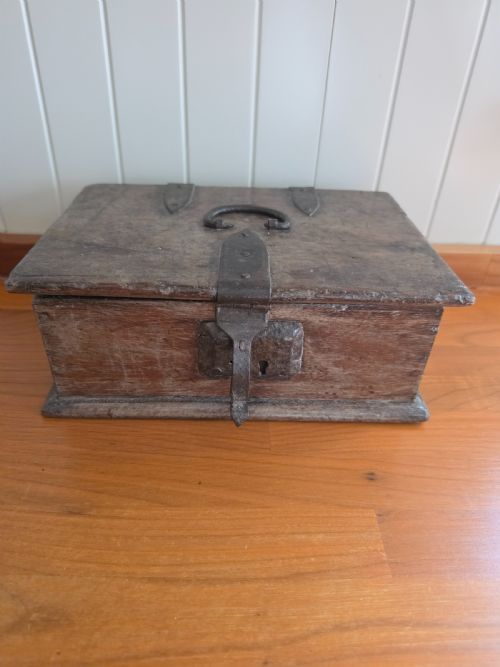
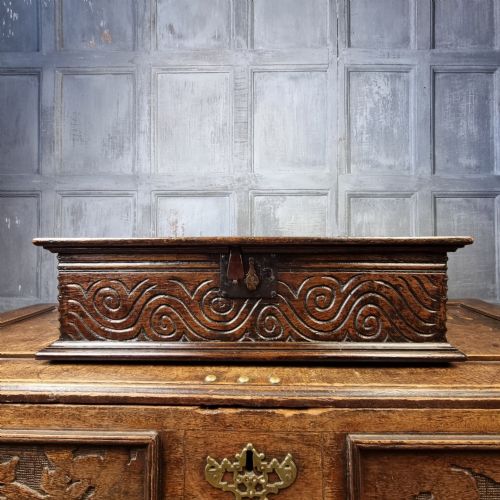


Oak Document Box
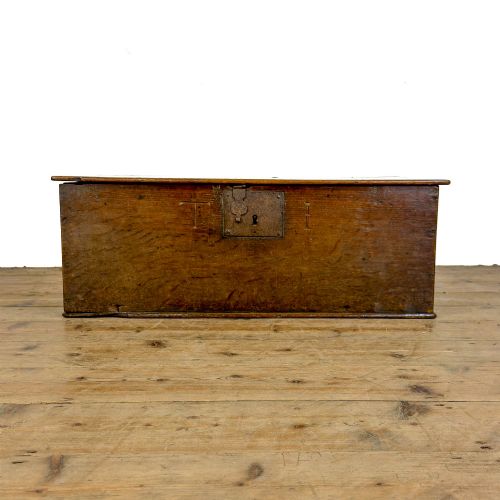
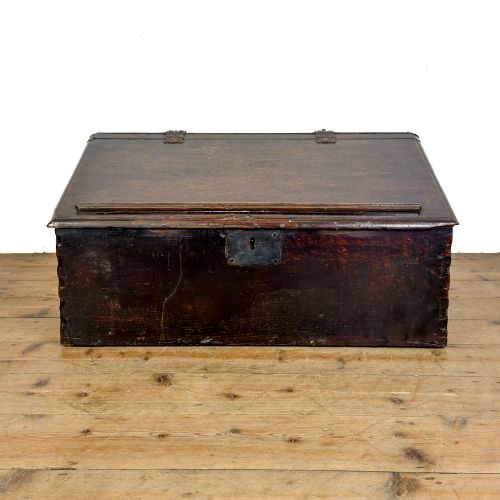
An oak document box is a sturdy wooden receptacle designed to hold papers and valuables, combining utility with centuries of traditional craftsmanship.
Oak Document Box
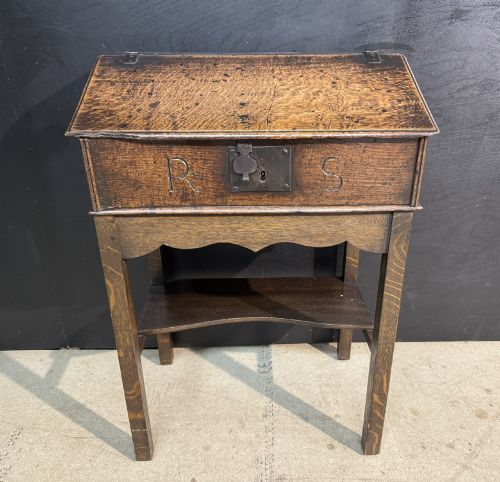
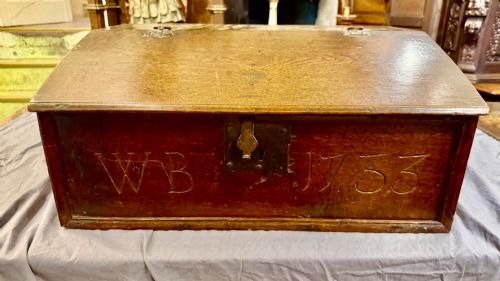
An oak document box serves as a utilitarian container built to protect letters, deeds, and valuable papers from damage. When exploring an oak document box, one frequently encounters early forms ranging from sixteenth century travelling strong boxes to seventeenth century Bible boxes and slant front writing slopes.
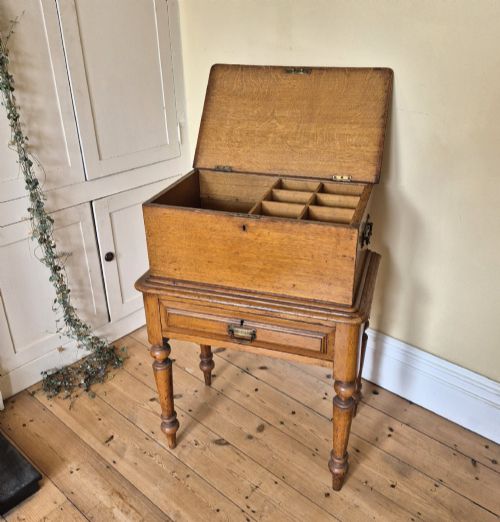
These vessels appear in various formats including desk boxes, stationery cabinets, and deed boxes originating across English, French, and Swedish workshops. Examples span multiple centuries, showing evolution from plain seventeenth century utility items to more ornate Victorian presentation pieces and Edwardian letter boxes.
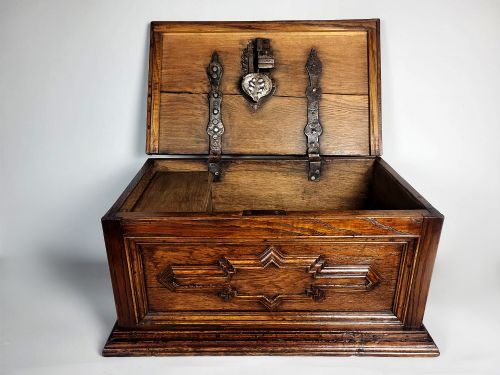
Buyers often meet pieces featuring hinged lids, internal drawers, and complex original steel locks designed for security. The selection demonstrates how these items transitioned from practical clerical tools to decorative desk top accessories.
How they were made
Makers constructed these boxes primarily using solid oak timber, frequently complemented by chestnut or pollard oak for distinct grain patterns. Joinery relied on traditional methods suited to rigid panels, ensuring the wooden structure remained stable over centuries of daily use.
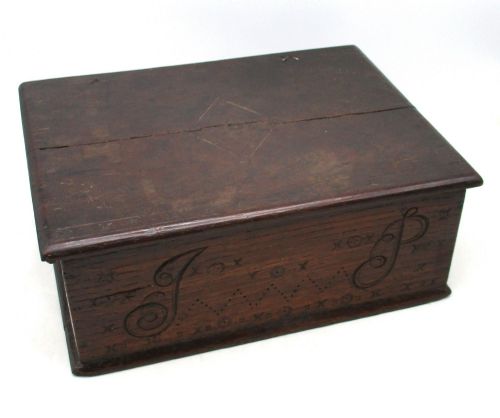
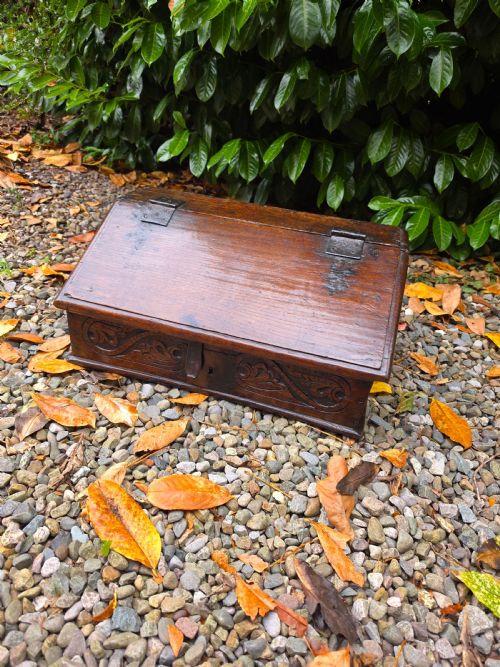
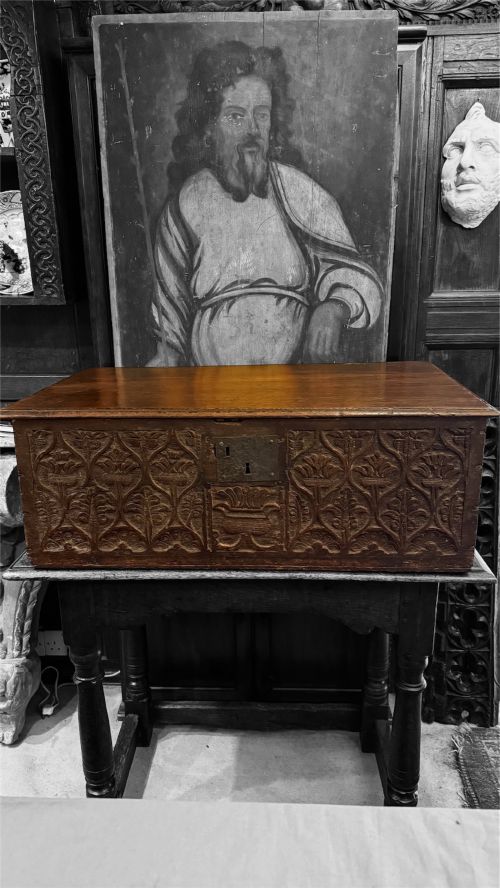
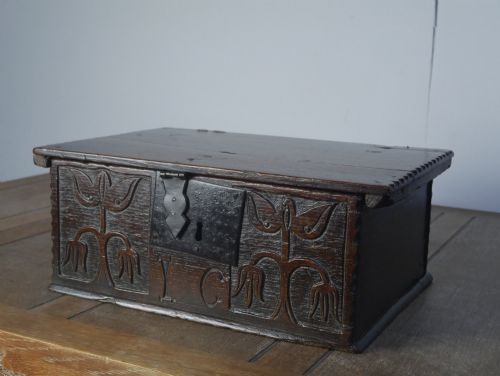
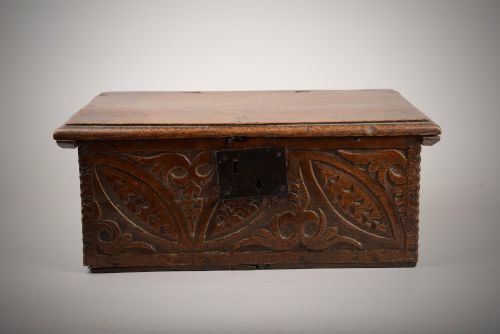
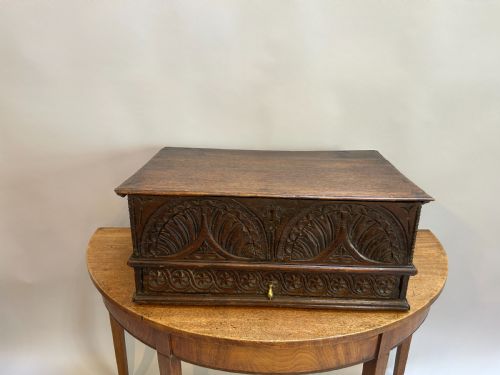
Metal components played a critical role in construction, incorporating brass hinges, iron brackets, and complex steel locks. Selected pieces display surface decoration including hand applied pigment, holly and bog oak inlay, or carved gothic and geometric motifs.
Listings feature examples from the 16th century through the Edwardian period, utilising oak, iron, brass, and chestnut.
What varies in quality
The degree of refinement in surface carving and inlay work distinguishes standard utility containers from superior examples. Boxes adorned with intricate geometric patterns, holly and bog oak inlay, or detailed ecclesiastical carving represent the higher tier of craftsmanship.
The survival of original hardware such as complex steel locks, keys, and internal secret drawers elevates the standing of a piece. Superior execution in the timber joinery and the preservation of original patination indicate an object handled with care through its history.
The Oak Document Box Glossary
- Bible box
- A desk top box originally built to hold a large family Bible and related religious texts. These pieces often feature a sloping lid that doubled as a reading or writing surface.
- Writing slope
- A box with an angled top designed to provide a comfortable surface for penning letters. Opening the lid typically reveals internal compartments for inkwells and paper.
- Deed box
- A secure container utilised for storing legal documents, land indentures, and title deeds. They frequently incorporate robust iron or steel locking mechanisms to protect sensitive papers.
- Strong box
- A heavily reinforced storage container built for maximum security of valuables and currency. These items rely on thick timber boards and complex internal locking systems.
- Cartouche
- An ornamental tablet or panel frame, often resembling a rolled up piece of parchment. Carvers utilised this motif on box fronts to display initials, dates, or family crests.
Oak Document Box: Frequently Asked Questions
What is an oak document box used for?
These boxes provided secure storage for important papers, letters, and deeds in homes, offices, and religious institutions. Their robust construction kept contents safe from dampness and unauthorised access.
Over time, forms evolved to accommodate stationery, correspondence, and writing materials on desks. Today, they serve both as decorative storage and as historical artefacts for collectors of early woodwork.
How do I date an antique oak box?
Dating relies on examining the construction methods, joinery techniques, and hardware style present on the piece. Seventeenth century examples often display hand-split boards, pegged joints, and simple iron hinges.
Later Victorian and Edwardian boxes introduce machine-cut timber, brass fittings, and more varied internal compartments. Consulting the specific style markers, such as Jacobean carving or Edwardian inlay, helps narrow the period of creation.
What is the difference between a Bible box and a document box?
A Bible box was specifically designed to store large religious volumes, featuring dimensions tailored to liturgical books. The lids frequently slope to accommodate reading or writing directly on the box.
Document boxes generally focus on flat or slightly domed lids suited for stacked papers and legal parchments. Both forms overlap significantly in period construction and internal layout, often sharing similar lock mechanisms.
Are these boxes made entirely of solid oak?
Most pieces utilise solid oak for the primary carcase, lid, and base panels due to the wood's durability. Some regional or later examples incorporate secondary timbers like chestnut or pine for internal partitions and drawer bases.
Decorative elements may introduce contrasting materials such as holly and bog oak for inlay work. Metal components like brass key escutcheons and steel locks are standard across the majority of surviving examples.
How should I care for an antique wooden box?
Maintain a stable indoor environment away from direct sunlight and extreme humidity fluctuations to prevent the oak from splitting. Apply a microcrystalline wax periodically to nourish the wood surface and preserve the historic finish.
Avoid harsh chemical cleaners or excessive moisture when dusting the exterior and internal compartments. Gentle cleaning with a soft, dry cloth protects both the timber patination and any delicate metal fittings.