


Oak Dining Bench
An oak dining bench brings sturdy character to the home, grounding a room with solid timber built for daily gathering.

What these oak dining benches are
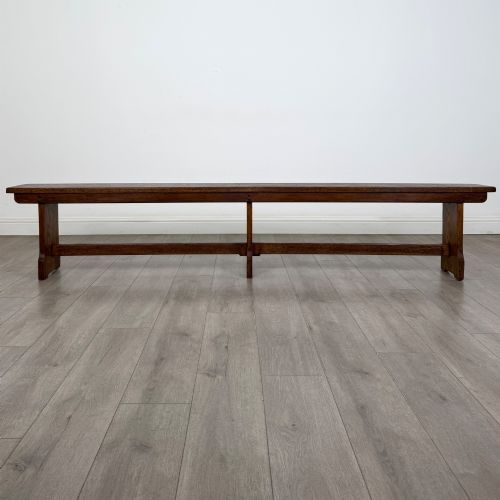
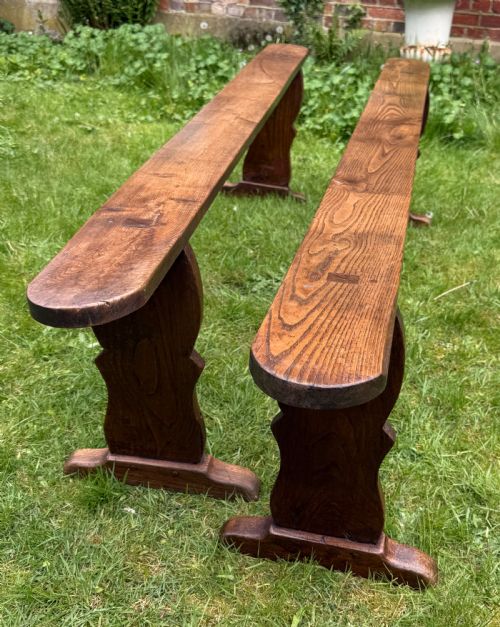
An oak dining bench represents a utilitarian seating form shaped by centuries of farmhouse, tavern and hall use. The pieces gathered here span the eighteenth century, the nineteenth century and the early twentieth century, offering robust seating designed to sit alongside large tables.
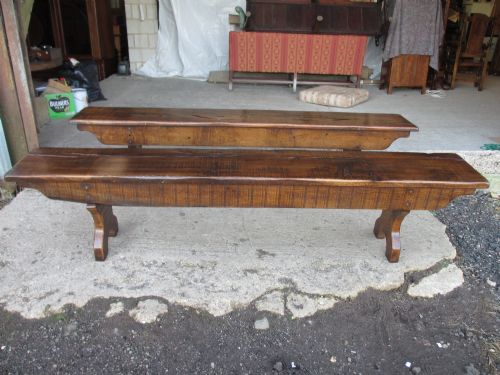
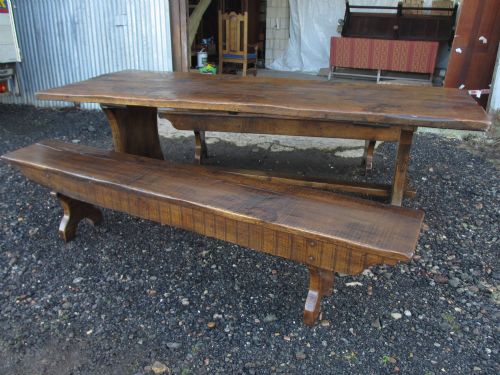
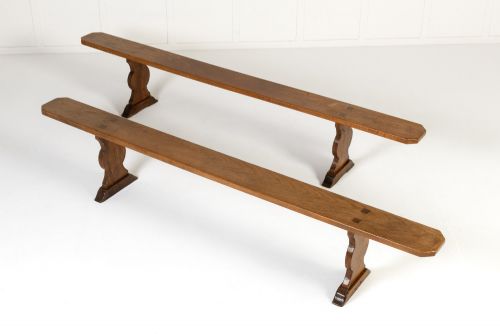
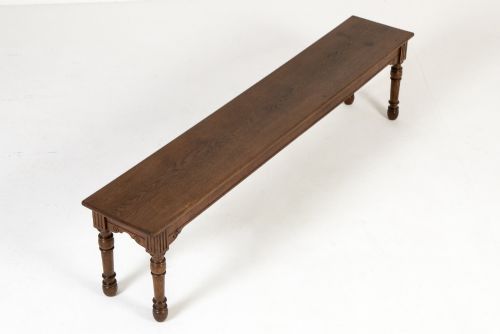
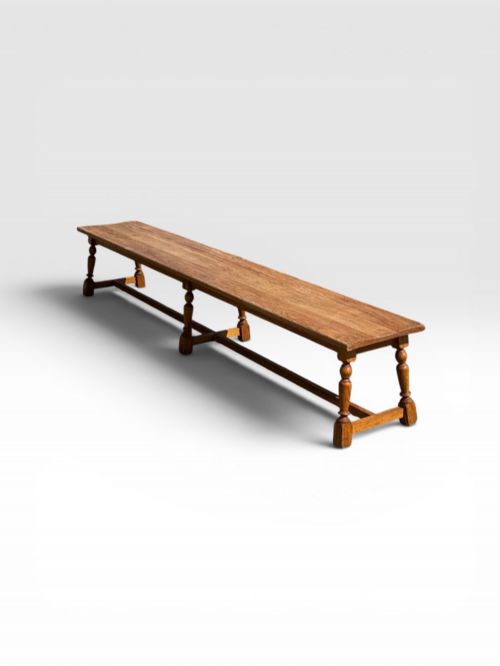
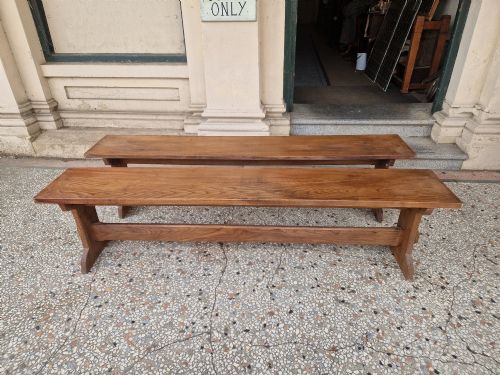
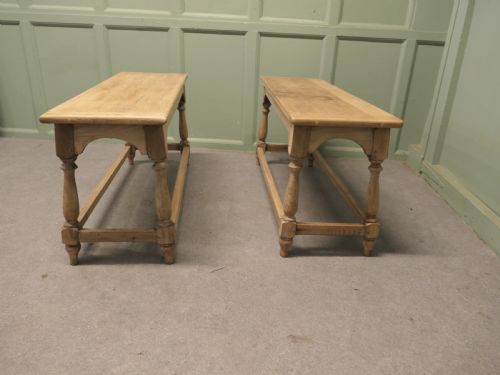
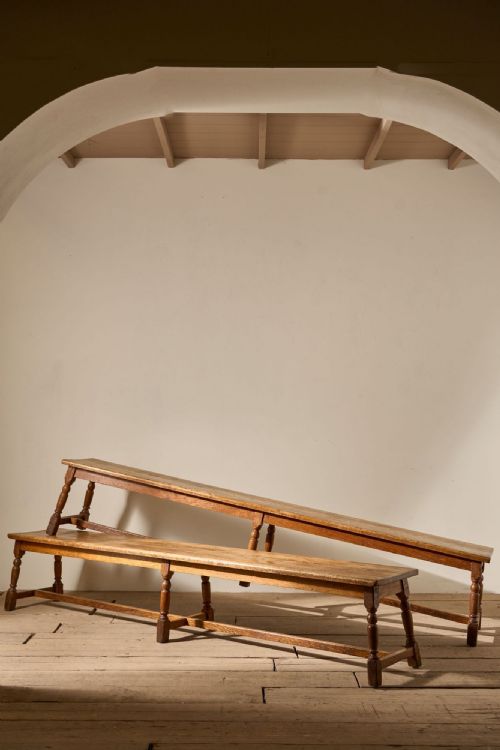
Most examples you encounter on this page belong to the nineteenth century or the Victorian era, alongside rustic farmhouse and country variants. Alongside single long boards reaching up to nine feet, you find matched pairs suited to flanking either side of a refectory table.
Origins stretch across English, Welsh and French traditions, encompassing provincial country workshops and ecclesiastical provenance such as Bishopthorpe Palace. Forms vary from simple slab-ended tavern seats to panelled hall benches built with elm secondary timbers.
How they were made
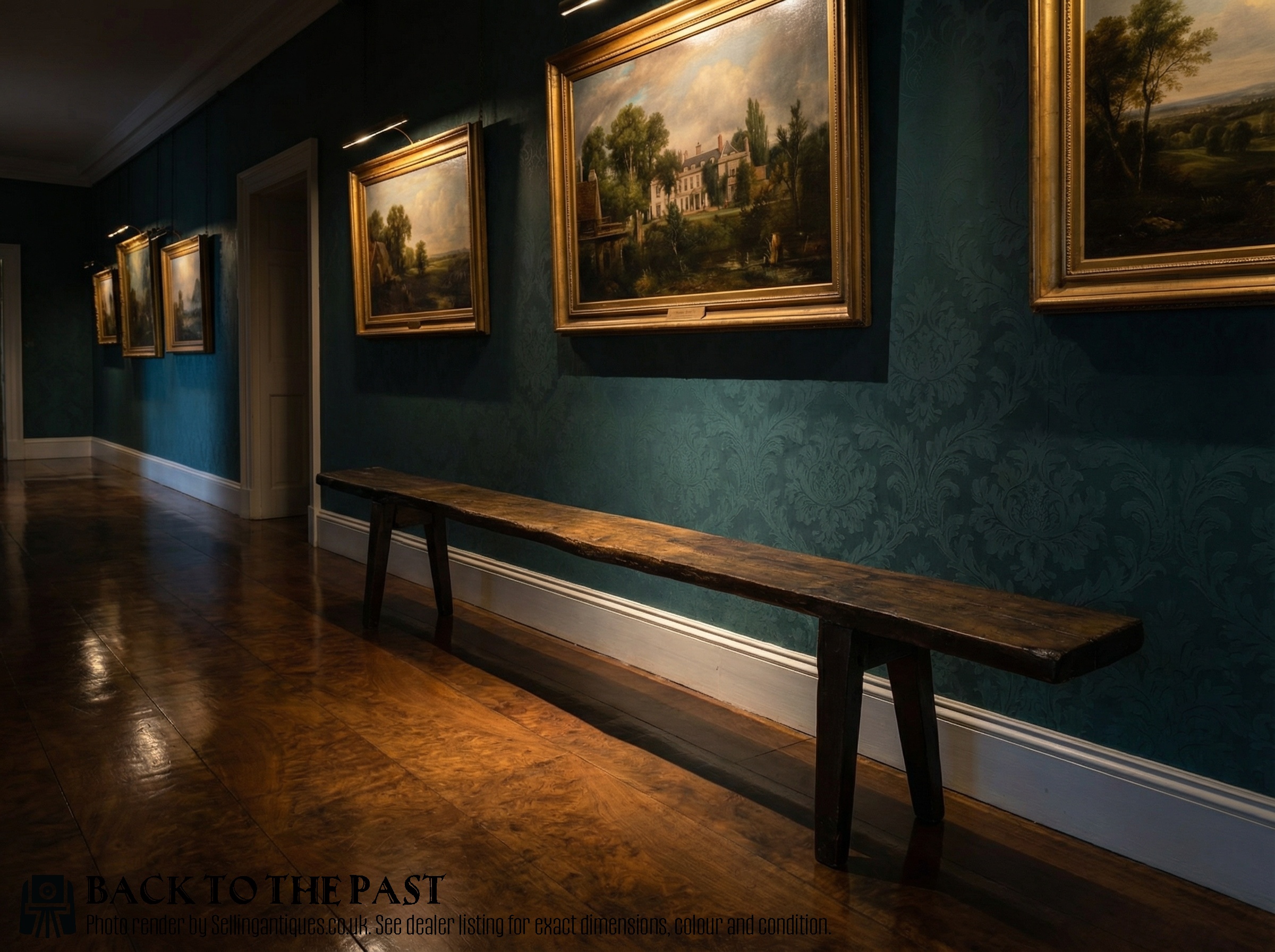
Construction relies entirely on solid oak, frequently paired with elm in traditional regional seating. Timbers were hand-selected for density and strength, often yielding thick top boards capable of withstanding heavy domestic or commercial wear over generations.
Joinery techniques display traditional pegging and mortise and tenon construction, securing sturdy legs directly to the underside of the seat. Surface finishes range from naturally bleached patinas developed through French traditions to dark, waxed tavern surfaces.
Retail Price Guide 2026
Typical UK retail prices for oak dining bench, calculated from the Sellingantiques database of over a million retail prices indexed since 2003. This retail price guide relies exclusively on Sellingantiques data; no external sources or auction records are used, so the figures do not describe the wider market.
Listings feature solid oak across eighteenth-century, nineteenth-century and nineteen-twenty periods.
What varies in quality
Quality rests in the integrity of the timber selection and the proportion of the board length relative to its depth. Single-piece top planks spanning substantial lengths without excessive warping command greater appreciation among collectors.
The degree of honest wear and historical patination dictates visual appeal, distinguishing honest utilitarian history from later alterations. Original surface finishes untouched by aggressive modern sanding retain the tactile depth valued in antique seating.
The Oak Dining Bench Glossary
- Refectory table
- A long dining table traditionally used in monasteries and large halls, frequently paired with long benches.
- Patina
- The surface sheen and colour developed over decades of use, handling and polishing.
- Mortise and tenon
- A traditional woodworking joint where a projecting tongue fits snugly into a matching cavity.
- Elm
- A durable hardwood often utilised for seat boards in traditional bench construction due to its resistance to splitting.
Frequently Asked Questions
How do I choose the right length?
Measure the span of your table and allow sufficient clearance at each end for guests to slide in comfortably. Longer examples work best when matched with substantial refectory or tavern tables.
Consider whether you prefer a single continuous board or a matched pair to divide the seating arrangement along the table sides.
Can I use these benches daily?
Solid timber construction makes these pieces exceptionally durable for everyday family meals and gatherings. Their original utilitarian purpose was heavy daily use in farmhouses and halls.
Routine care simply involves gentle cleaning and occasional waxing to nourish the historic oak surfaces.
Are pairs harder to find than singles?
Matched pairs originating from the same workshop or setting appear less frequently than single tavern or hall benches. They often originate from French provincial contexts or institutional spaces.
Single long boards dominate the eighteenth-century Welsh and English country listings.
How do I distinguish regional styles?
French provincial examples often display lighter bleached oak finishes and softer provincial turning. English and Welsh country pieces lean toward heavier proportions and darker patinas.
Minor variations in leg turnings and edge moulding provide clues to the specific domestic or institutional origin.