
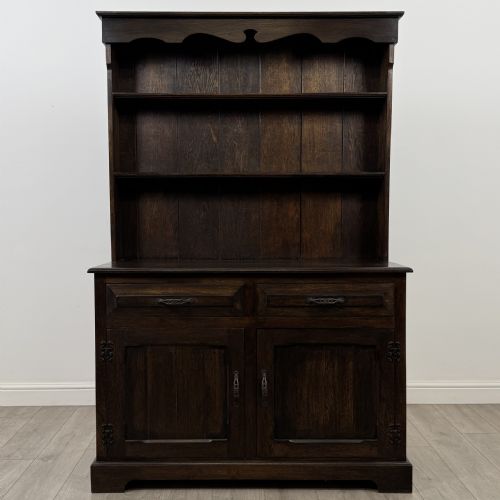
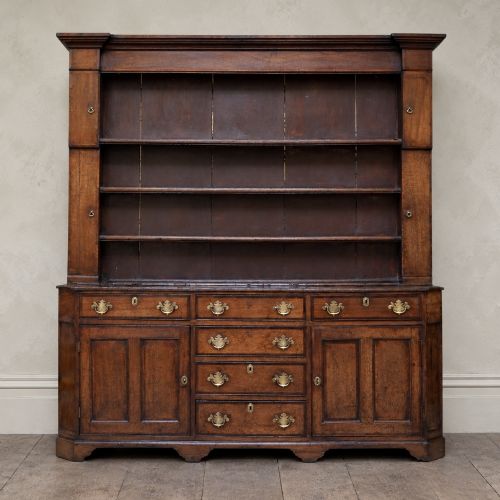

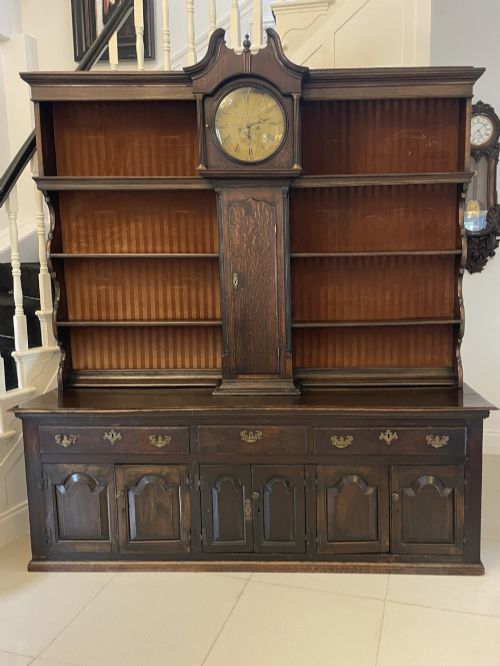
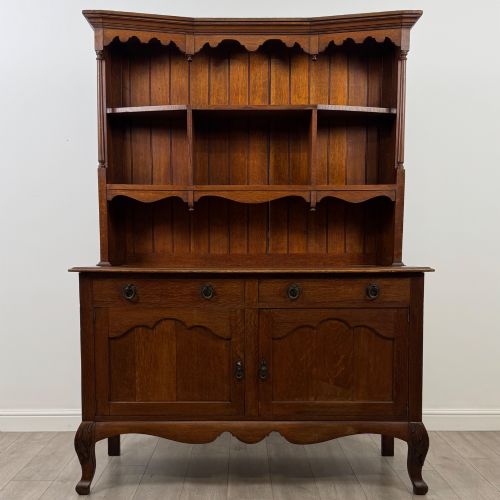
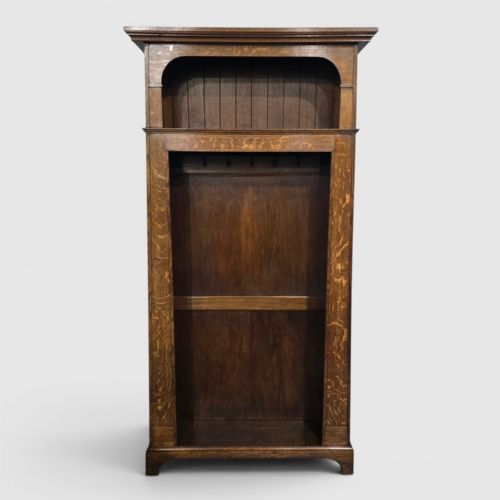
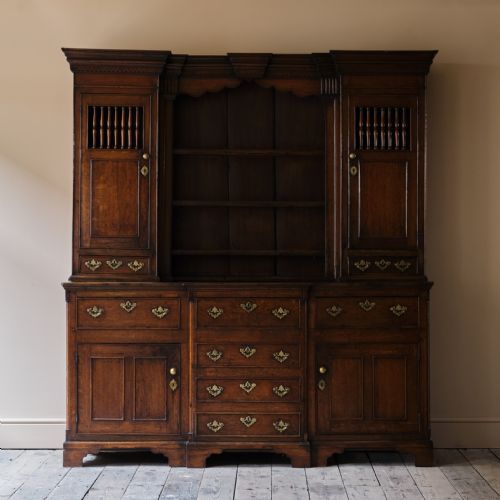
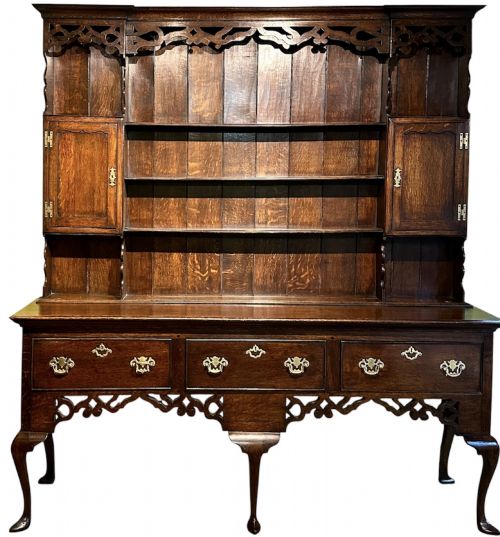
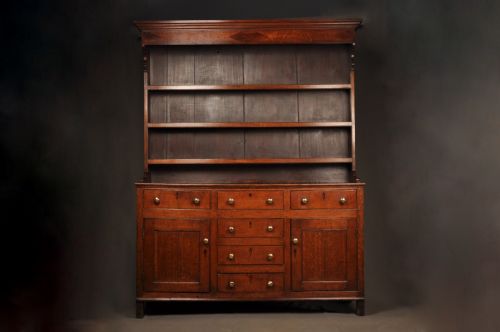

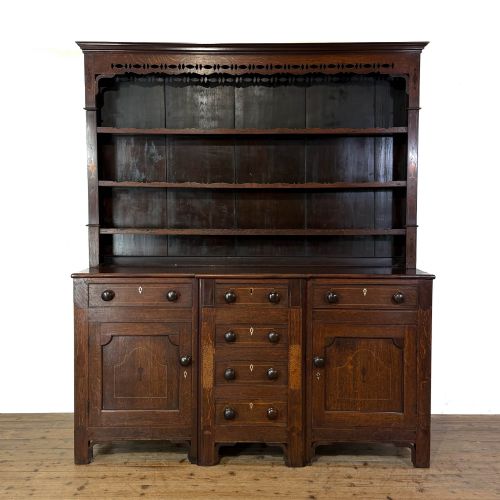

Oak Cupboard with Rack
An oak cupboard with rack brings sturdy timber and practical display space straight into a room, joining traditional storage with open shelving for everyday use.

Oak Cupboard with Rack
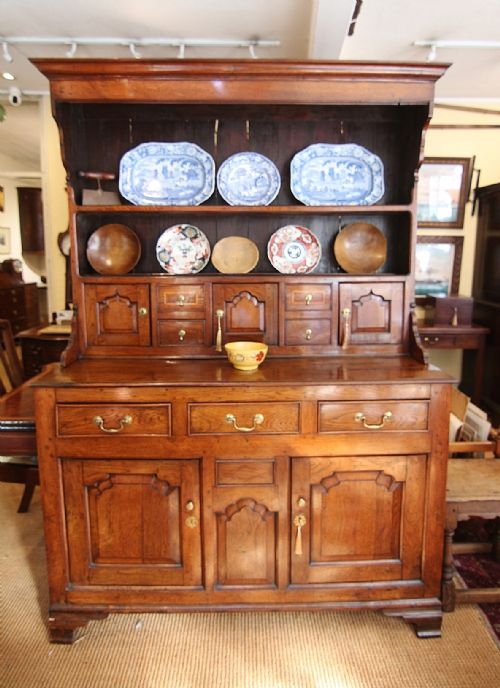
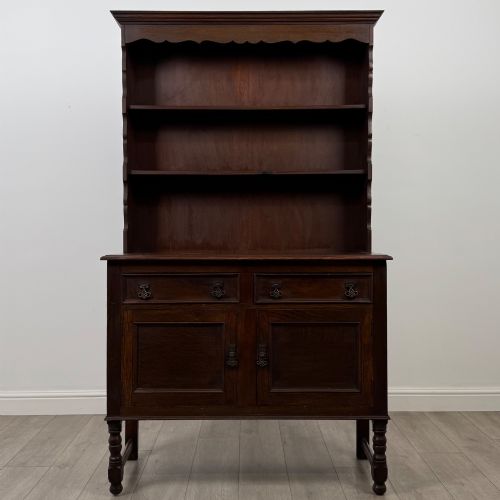
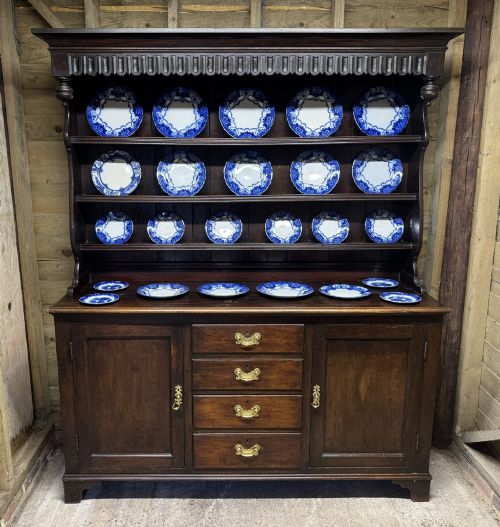
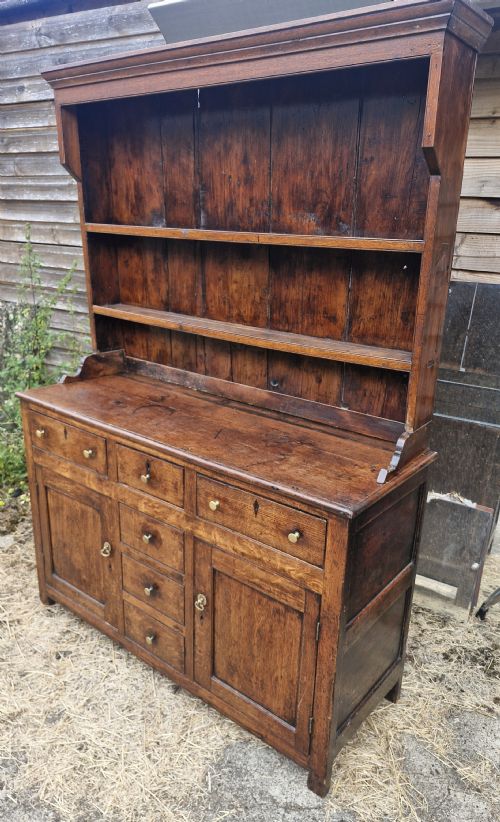
An oak cupboard with rack is fundamentally a dual-purpose timber article combining a lower enclosed base with an upper plate shelf structure. These pieces appear frequently as dressers from eighteenth and nineteenth century periods, carrying regional traits from Wales, the West Country, and broader English farmhouses.
Regional vernacular traditions shape the appearance, resulting in variants such as North Wales dressers, South Wales Talwrn pieces, and English country examples. Dating spans from the mid eighteenth century through the Edwardian era and into the early twentieth century.
What varies in quality
The calibre of an oak cupboard with rack rests upon the selection of the timber and the integrity of the original construction. Pieces exhibiting straight-grained native oak with deep, natural patination command greater appreciation than later, heavily restored equivalents.
Proportion and regional character also dictate distinction, where crisp hand-carved detailing and untouched brass fittings elevate an example above standard utility furniture. The harmonious relationship between the upper rack and the lower cupboard base remains a central indicator of cohesive design.
Listings span eighteenth-century Georgian eras through the Edwardian period, utilising primary oak alongside elm, pine, and fruitwood.
The Oak Cupboard with Rack Glossary
- Potboard
- An open slatted lower shelf fitted beneath a dresser base. This platform traditionally held pots and heavy kitchen utensils.
- Rack
- The upper tiered shelving unit attached to the top of the cupboard base. It is designed specifically for displaying plates and ceramic wares upright.
- Breakfront
- A cabinet front where the central section projects forward past the flanking sides. This layout introduces architectural depth to the piece.
- Vernacular
- Regional domestic architecture and furniture shaped by local materials and traditional building habits rather than high-style metropolitan fashion.
- Patination
- The surface sheen and colour acquired by wood through age, handling, and wax polishing over many decades.
Oak Cupboard with Rack: Frequently Asked Questions
What is a Welsh dresser?
A Welsh dresser is a traditional two-part timber storage unit featuring an enclosed lower cupboard or drawer base paired with an open upper plate rack.
These regional pieces originated in Welsh farmhouses and kitchens, serving both food preparation tasks and the display of prized ceramic collections.
How do I date an oak dresser?
Dating relies on examining construction marks, timber characteristics, hardware types, and overall stylistic vernacular. Eighteenth-century examples typically feature hand-cut peg joinery and heavier native oak boards, whereas Edwardian and later revivals display more uniform machine sawing.
Secondary woods inside drawers and the presence of original brass pulls or backboards also help establish the chronological period.
Can I use the rack for heavy plates?
The upper racks are structurally engineered to hold standard ceramic plates and platters safely within their slotted grooves. Most historical racks include integrated plate rails or retaining lips to prevent sliding during daily use.
Ensuring the rack is securely anchored to the lower cupboard base and wall provides stability for heavier earthenware collections.
What is a potboard base?
A potboard base replaces standard solid cupboard doors with an open slatted shelf positioned near the floor. This open platform allowed damp kitchen pottery and heavy pots to air dry properly after washing.
Today, collectors value potboard bases for the airy visual balance they bring to the lower half of the furniture.