


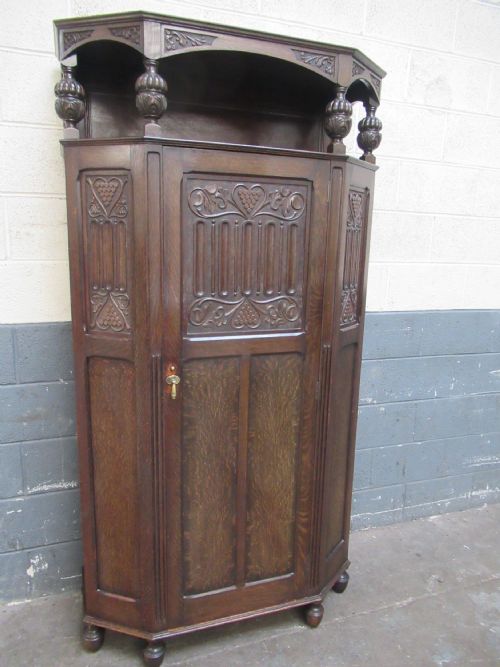


Oak Corner Stand
An oak corner stand provides practical storage and display while making clever use of unused interior angles in a room.
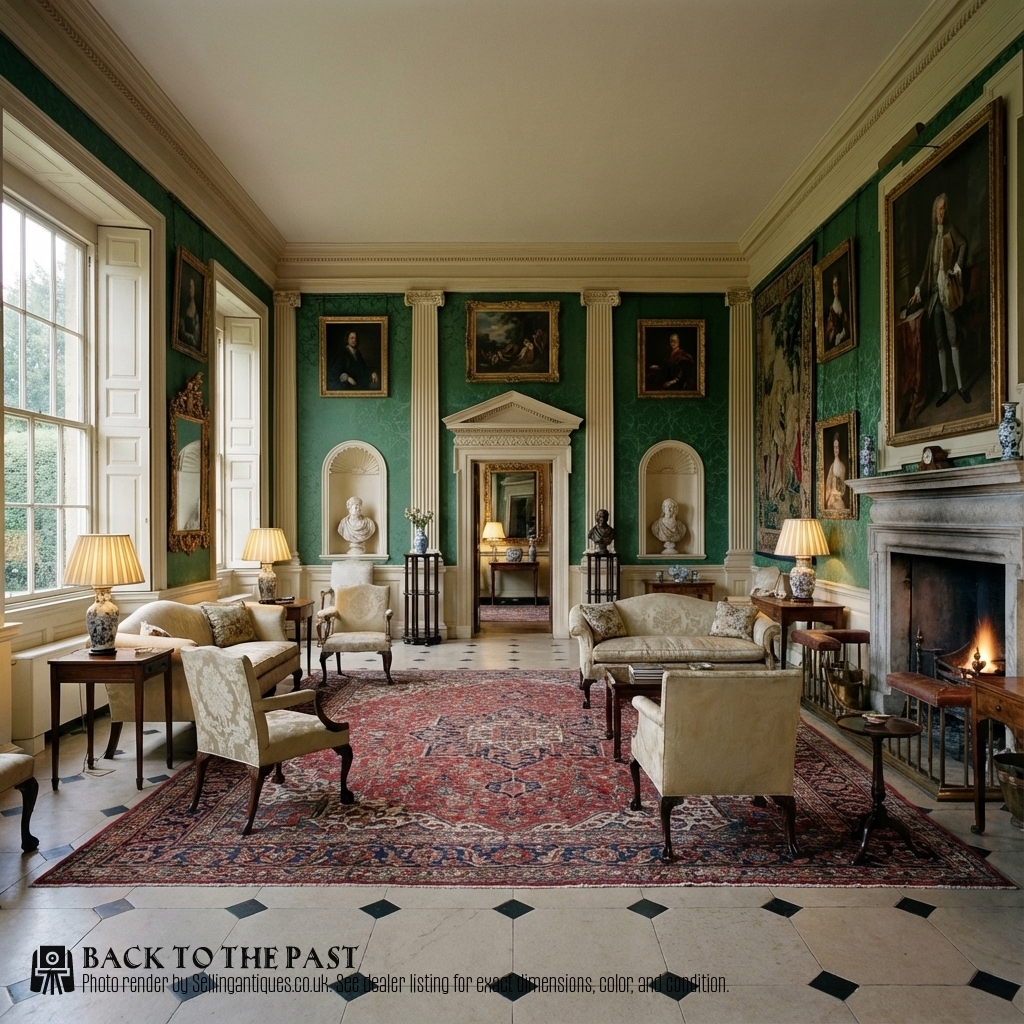
Oak Corner Stand
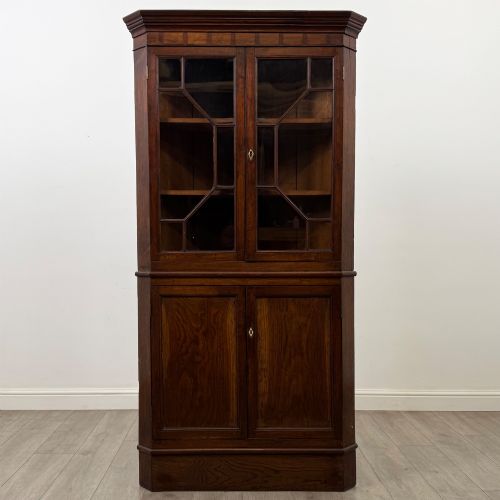
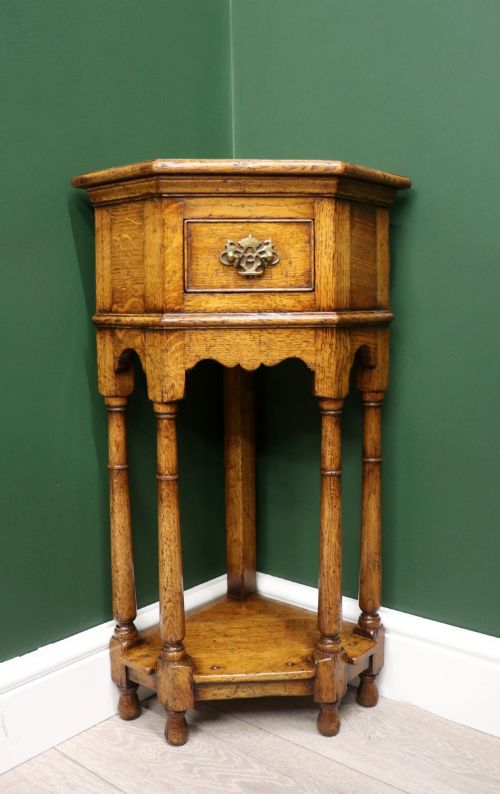
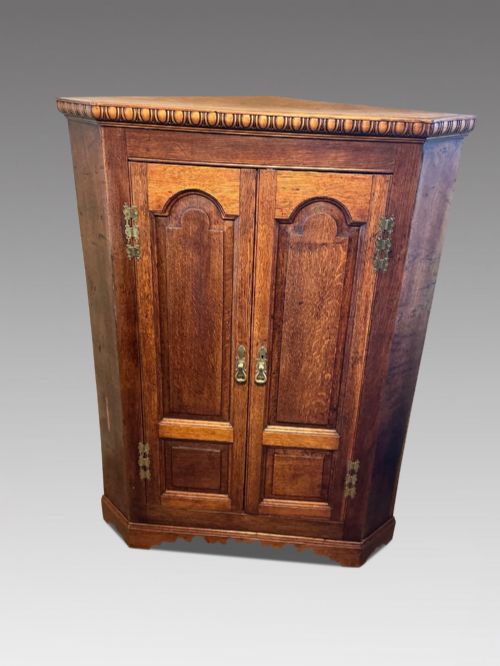
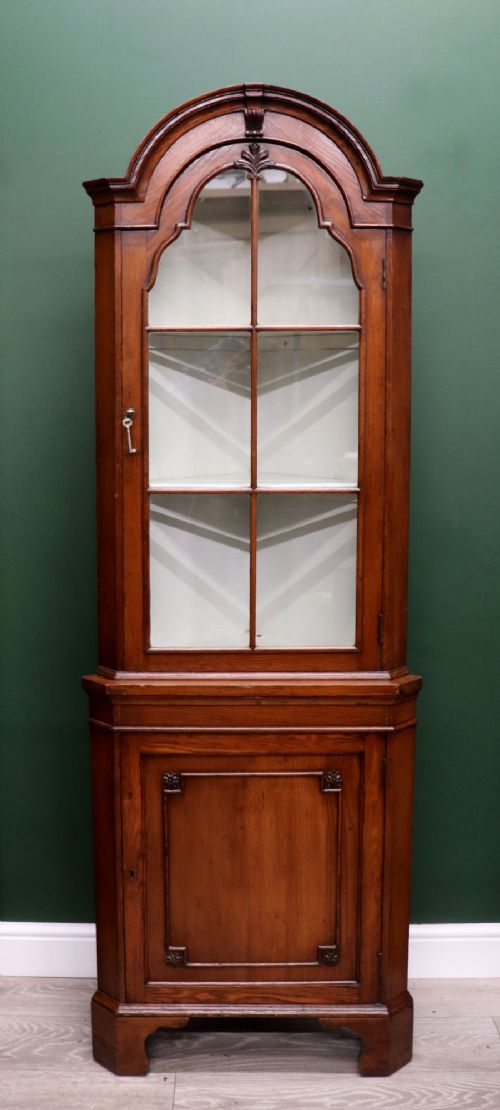
An oak corner stand encompasses a variety of triangular and angled furniture forms designed to fit snugly into room junctions, primarily taking the shape of floor-standing or hanging cupboards, cabinets, and occasional tables. Buyers seeking an oak corner stand will frequently encounter Georgian pieces, alongside later 19th-century Victorian and Arts and Crafts interpretations.
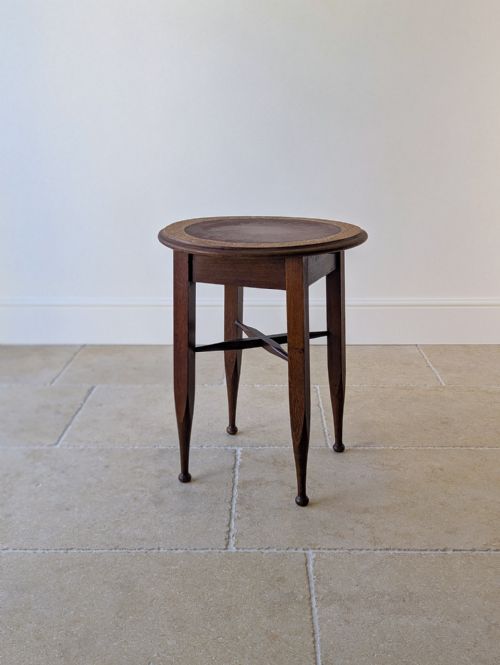
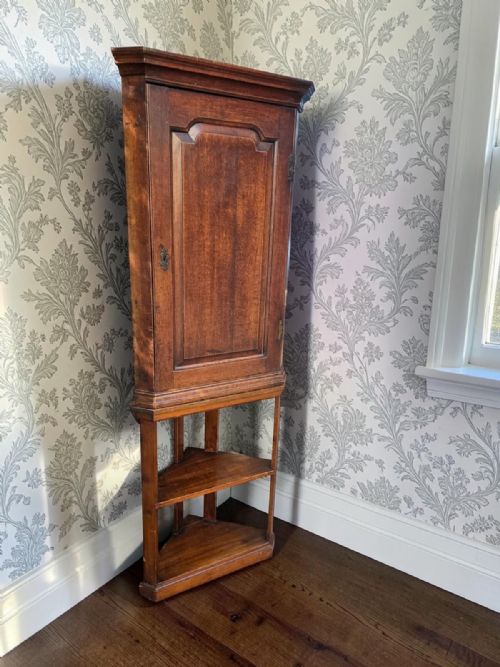
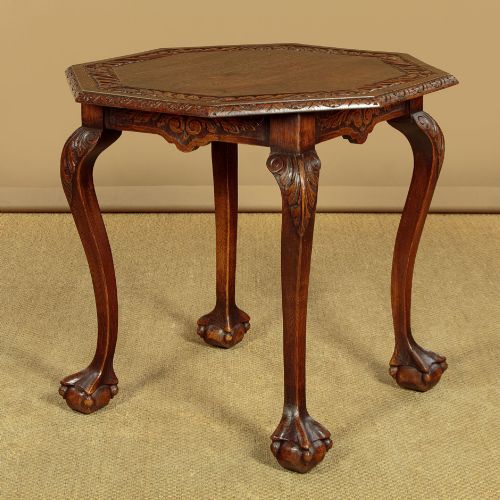
The selection ranges from simple single-door hanging units to substantial two-part floor-standing cupboards with glazed or panelled doors. Alongside traditional storage cabinets, the category includes specialised forms such as stick stands, plant stands, and occasional tables designed for angular spaces.
How they were made
Cabinet makers relied primarily on solid oak, frequently augmented with secondary timbers like pine or mahogany, utilising sturdy panelled construction to ensure stability in large floor-standing units. Joinery techniques such as mortise and tenon frames accommodated the specialised angles required for pieces meant to sit flush against intersecting walls.
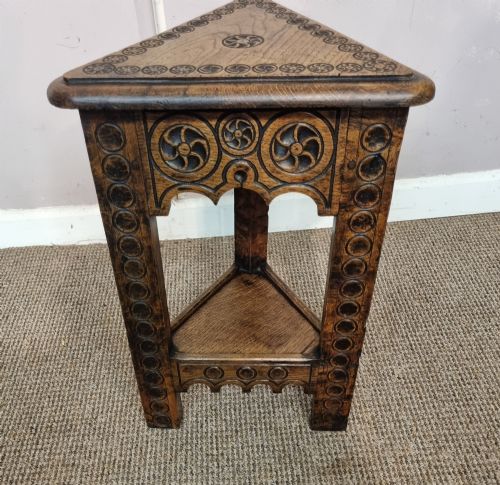
Surface ornamentation involved traditional methods including hand carving, panel moulding, and occasional fruitwood inlay or limed finishes. Metal elements like brass hinges, copper fittings, and iron hardware were integrated functionally to secure doors and support structural framing.
Several corner stands doubled as discreet spots for hiding tea caddies when tax collectors came knocking.
What varies in quality
The standard of craftsmanship shows in the precision of the angled joinery and the selection of the timber grain, with superior examples exhibiting carefully matched panels and robust structural integrity. Finer pieces often feature considered decorative details such as fielded panels, subtle carved mouldings, and well-preserved original hardware.
Proportion and scale distinguish different tiers of manufacture, ranging from utilitarian country workshop pieces to ambitious urban cabinet work. The handling of cornices, base plinths, and door fit indicates the level of care invested by the original maker.
Heals
The Oak Corner Stand Glossary
- Corner cupboard
- A cabinet specifically constructed with a triangular cross-section to fit into the corner of a room. These units can be wall-mounted or rest directly on the floor.
- Two-part
- A tall cabinet built in distinct upper and lower sections to facilitate transport and placement. This construction is common in large Georgian standing cupboards.
- Fielded panel
- A wooden panel with bevelled edges that fit into a grooved frame, allowing the wood to expand and contract with humidity changes. It adds depth and visual interest to cabinet doors.
- Stick stand
- A specialised piece of hall furniture designed to hold umbrellas and walking sticks, often incorporating a metal or ceramic drip tray at the base.
- Etagere
- A set of open shelves for displaying small objects, sometimes adapted for corner placements in later stylistic periods.
Oak Corner Stand: Frequently Asked Questions
What is the difference between a hanging and a floor standing corner cupboard?
Hanging corner cupboards are smaller units equipped with brackets or fixing points to be secured directly to the wall at eye level or above other furniture. Floor standing versions rest independently on the ground, often featuring a base cabinet combined with an upper display section.
Floor standing models provide substantially more storage capacity and frequently incorporate full-height doors or multi-part construction. Hanging variants offer a lighter visual footprint and suit rooms where floor space is limited.
How do I date an antique oak corner stand?
Dating relies on examining construction methods, timber selection, and stylistic details such as mouldings and hardware. Eighteenth-century examples often feature hand-cut joints, pegged frame construction, and fielded panels specific to the Georgian era.
Later Victorian and Edwardian pieces introduce machine-sawn components, different hinge types, and stylistic revivals like Arts and Crafts or Gothic motifs. Comparing the timber patination and backboards helps confirm the period of manufacture.
Where should I place a corner stand in my home?
These pieces fit naturally into empty room intersections, hallways, and dining spaces where standard rectangular furniture leaves awkward gaps. Tall standing models anchor empty wall junctions effectively while utilising vertical volume.
Smaller tables or stick stands suit entrance hallways, providing a functional surface or umbrella storage without obstructing walkways. Their angled geometry draws the eye into neglected zones of a room.
How should I care for antique oak furniture?
Maintain antique oak by keeping it away from direct heat sources and drastic humidity shifts that can cause timber to split. Regular dusting with a soft, dry cloth preserves the finish without building up greasy residues.
Occasional application of traditional beeswax helps nourish the wood grain and protect the surface. Avoid using modern silicone sprays or harsh chemical cleaners that can permanently damage the aged patina.