


Oak Corner Locker
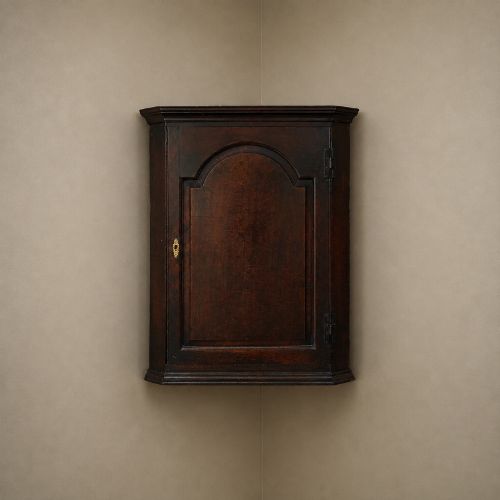
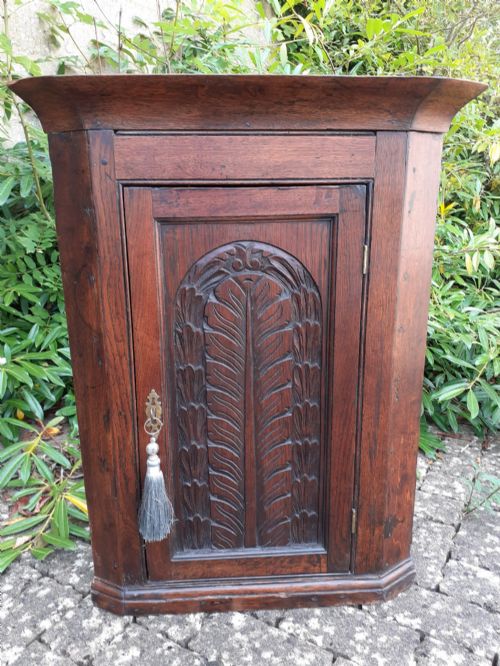
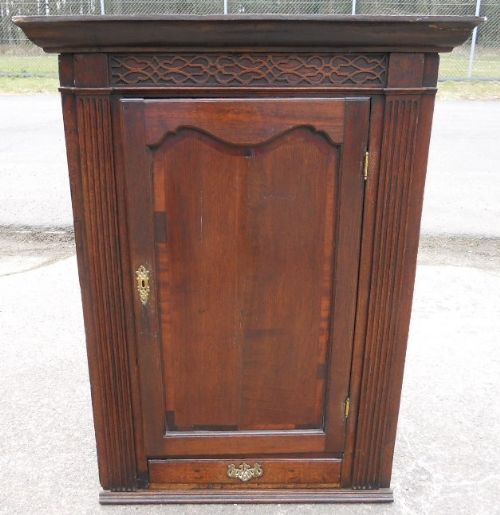
These oak corner lockers are sturdy space-saving wall and cabinet pieces that bring rich grain and period character to otherwise awkward rooms.
Oak Corner Locker
When buyers search for an oak corner locker, they are looking for timber storage designed to fit neatly into the ninety-degree junction of two walls. The examples on this page span the Georgian, eighteenth century, and Victorian periods, alongside specific revivals like Chippendale Revival.
The versions most commonly met are wall-hanging corner cupboards and bow front corner cabinets constructed from solid oak. Pieces hail from regional origins including Wales and England, often reflecting country workshop traditions rather than urban formality.
Forms range from compact small hanging cupboards to larger two door models. These pieces served historically to store provisions, glassware, or valuables while utilising dead space in domestic interiors.
How they were made
Construction relies heavily on solid oak boards assembled to form sturdy triangular or angled bodies capable of sustaining wall suspension. Cabinet makers utilised traditional joinery methods to frame the doors and secure the internal shelving.
Brass fittings such as H-hinges, escutcheons, and working locks frequently accompany the timber work. Secondary woods or mahogany accents occasionally appear alongside the primary oak construction.
Many an eighteenth-century corner cupboard still retains the faint, stubborn scent of old pipe tobacco and beeswax locked inside its dark corners for centuries.
What varies in quality
Quality rests in the richness of the oak grain and the crispness of any period detailing, such as carved mouldings or fielded panel doors. The calibre of the original brass hardware and the integrity of the cabinet construction also distinguish finer examples.
Proportion and scale dictate the visual success of the piece, with smaller country cupboards offering distinct charm compared to grander two-door cabinets. The preservation of untouched surface patination elevates a piece far above heavily stripped or overly restored alternatives.
The Oak Corner Locker Glossary
- Bow front
- A cabinet front that curves outwards in a convex arc. This shape softens the hard angles typical of traditional corner furniture.
- H-hinge
- A surface-mounted hinge shaped like the letter H, commonly found on eighteenth-century cabinet doors. These provide both structural support and decorative contrast.
- Fielded panel
- A wooden panel with bevelled edges that fit into a recessed groove within a frame. This technique allows the timber to expand and contract with humidity changes.
- Escutcheon
- A protective plate surrounding a keyhole. It shields the surrounding wood from wear caused by the key.
Oak Corner Locker: Frequently Asked Questions
How do I hang a wall cupboard?
Wall-hanging oak corner lockers require secure fixing to solid masonry or properly located timber studs due to their substantial weight. Professional installation using heavy-duty brackets ensures the cabinet remains safely supported.
Once mounted securely, the internal shelves can be loaded with everyday items or display pieces without placing undue strain on the historic structure.
Were these made for kitchens?
These cabinets served multiple domestic functions across eighteenth-century and Georgian households, appearing in parlours, dining rooms, and kitchens alike. They kept dry goods, ceramics, and small valuables secure and out of the way.
Their triangular footprint allowed families to maximise storage in smaller rooms without cluttering floor space.
How do I date an oak cupboard?
Dating relies on examining construction techniques, hardware types, and timber characteristics. Eighteenth-century and Georgian pieces often feature hand-cut joints, pegged frames, and wrought iron or brass H-hinges.
Later Victorian interpretations, including Chippendale Revival pieces, typically display machine-sawn elements and different secondary woods.