

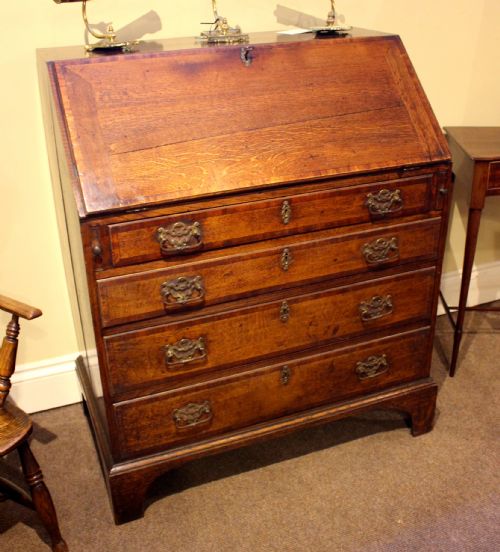


Oak Chest of Drawers Desk
An oak chest of drawers desk combines storage and a writing surface, bringing sturdy timber and practical compartments into daily use.
Oak Chest of Drawers Desk
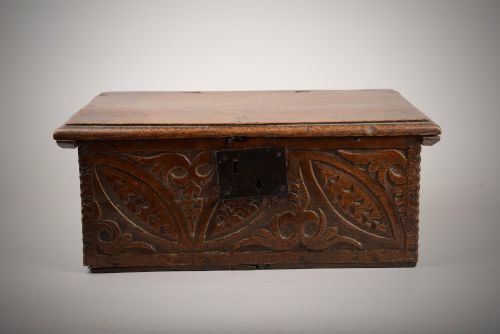
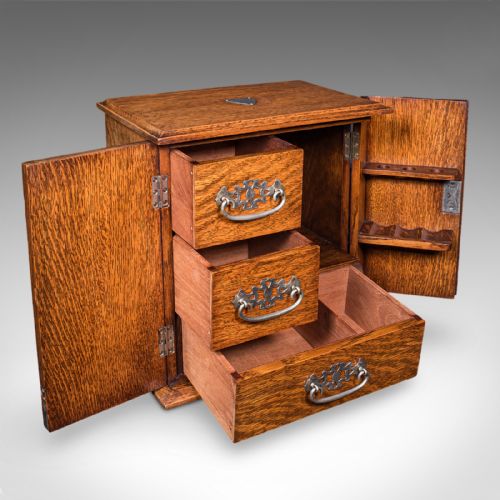
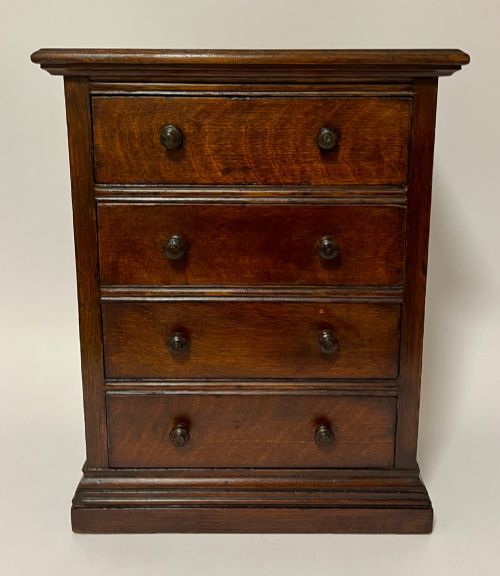
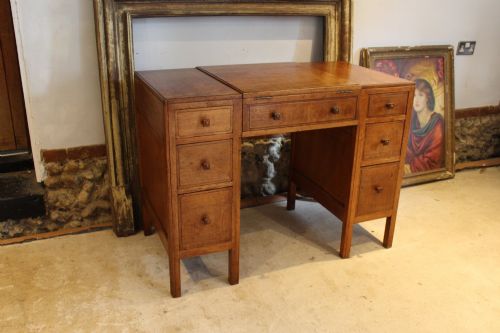
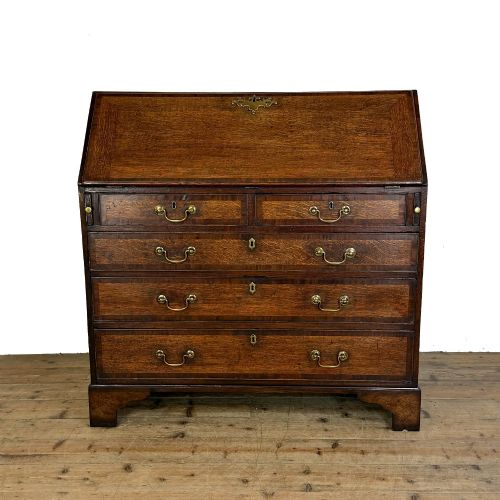
When you search for an oak chest of drawers desk, you look at pieces that blend storage with a writing surface, drawing heavily on Georgian and Edwardian forms. The pieces met most often on this page include writing bureaux, fall-front desks, and fitted chests containing internal drawers or compartments.
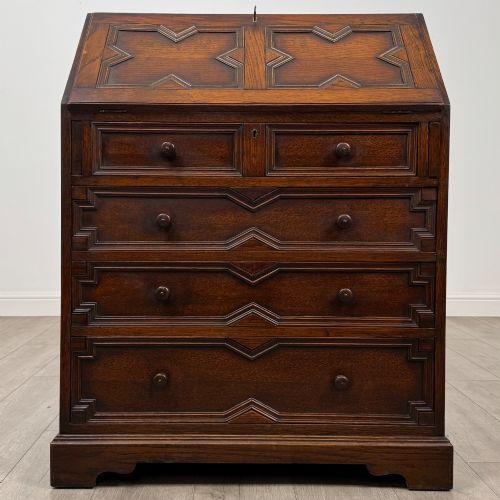
The evidence spans the eighteenth century through to the 1930s, incorporating styles like Jacobean Revival and Arts and Crafts alongside standard Georgian formats. Bureau bookcases, lowboys, and miniature tabletop chests also appear, showing how versatile the timber framework proved for various writing and filing tasks.
What varies in quality
The standard of timber selection and the crispness of carved detailing set the better examples apart, particularly where panels show deliberate figuring or regional Welsh and English carving traditions. Construction integrity in the drawer linings and writing flaps dictates how well a piece handles regular daily operation.
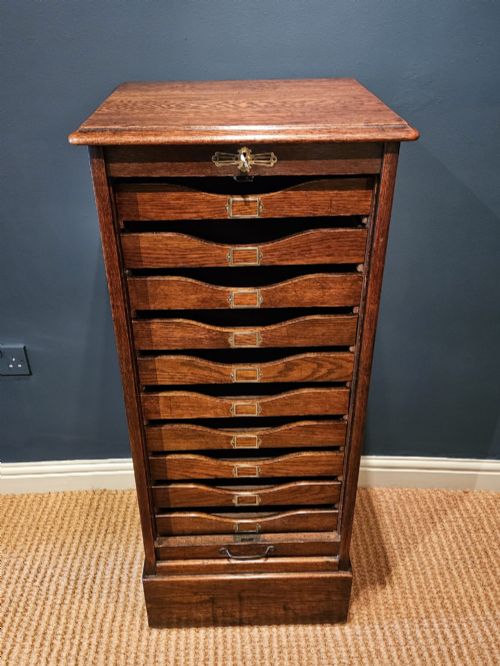
Design complexity also defines the range, moving from simple miniature chests to elaborate bureau bookcases, tallboys, and fitted secretaire presses with period brass hardware. The integration of specialised components like tambour fronts or concealed compartments elevates the execution.
Listings feature oak combined with brass, glass, and leather across periods ranging from the seventeenth century through to the 1930s.
Heal & Sons·Shapland and Petter·Wright & Hunter of Belfast·Roberson & Co·Amberg
The Oak Chest of Drawers Desk Glossary
- Bureau
- A writing desk with a sloping hinged lid that covers a set of internal pigeonholes and small drawers. This form is central to many oak writing pieces.
- Secretaire
- A piece of furniture containing a drawer or compartment configured for writing, often disguised as a standard drawer within a larger chest.
- Lowboy
- A small low table with drawers, frequently used as a dressing table or writing stand in eighteenth-century interiors.
- Tambour
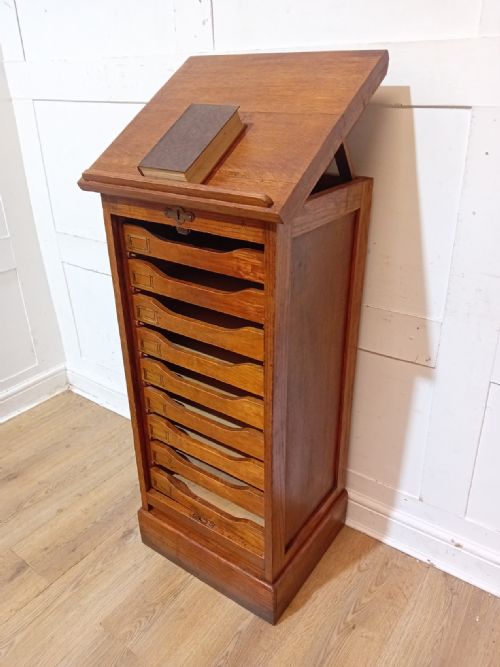
- A flexible shutter made of narrow strips of wood glued to canvas, sliding in grooves to enclose the front of a filing cabinet or desk.
- Linenfold
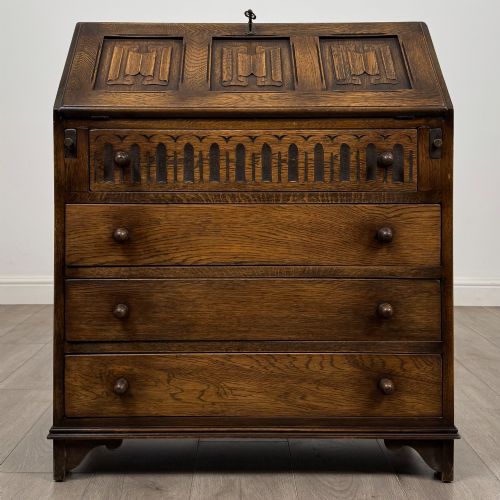
- A style of wood carving representing folded linen, commonly found on panels of early twentieth-century revival pieces.
Oak Chest of Drawers Desk: Frequently Asked Questions
What is a bureau bookcase?
A bureau bookcase combines a sloping writing flap and internal drawers at the lower level with glazed or panelled shelving doors above. This format provided both a working surface and enclosed display space for books.
Such pieces utilise the height of the room efficiently, appearing primarily in Georgian and later revival periods using solid oak construction.
How do I use a fall-front desk?
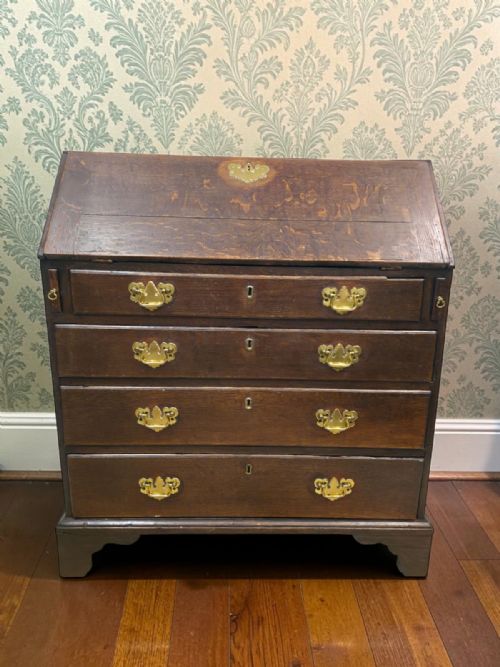
The fall-front writing flap hinges downward to rest in a horizontal position supported by side lopers, revealing a tiered interior of small drawers and pigeonholes. This creates a dedicated writing area that can be concealed when not in use.
Users typically keep stationery within the internal compartments, closing the heavy oak flap to tidy the room after writing.
What distinguishes a lowboy from a chest?
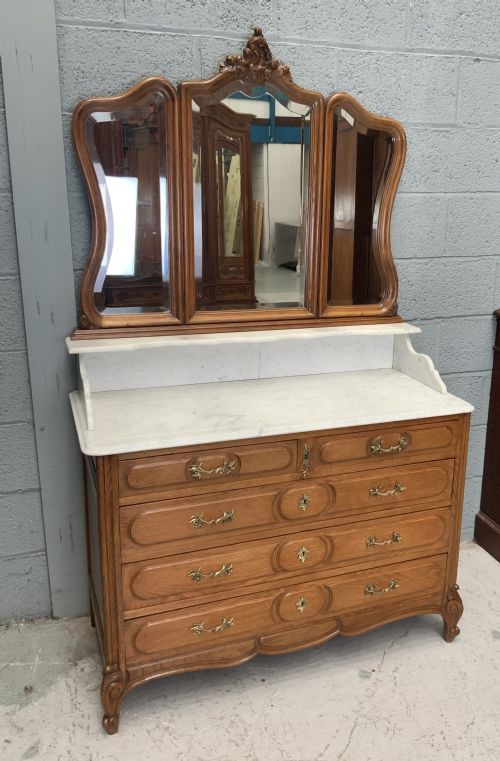
A lowboy stands on relatively tall legs with one or more rows of drawers beneath the working surface, functioning as a compact table. A chest of drawers rests closer to the floor with stacked drawers occupying the full height of the carcass.
Lowboys often double as dressing tables or small writing stands rather than heavy storage repositories.
How do I date an oak bureau?
Dating relies on observing construction methods, handle hardware, timber thickness, and stylistic motifs such as bracket feet or linenfold carving. Eighteenth-century examples often feature hand-dovetailed drawer linings and simpler structural bracing.
Later Edwardian and 1920s revival pieces adopt machine-sawn elements and specific period revival styles that contrast with genuine Georgian joinery.