


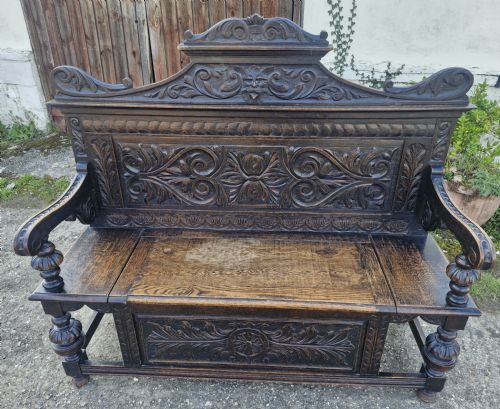


Oak Chest Bench
An oak chest bench combines heavy timber storage with a seat, offering practical utility and period character for a hallway or living space.
Oak Chest Bench
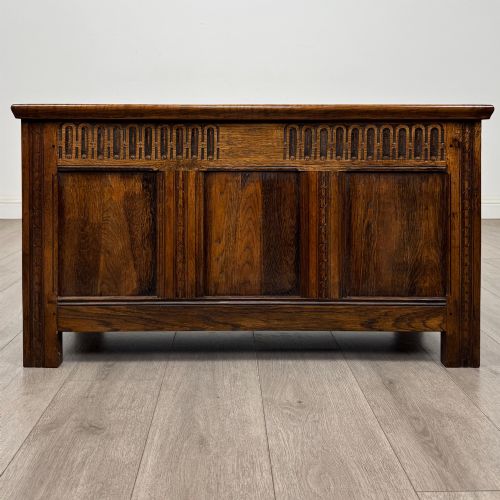
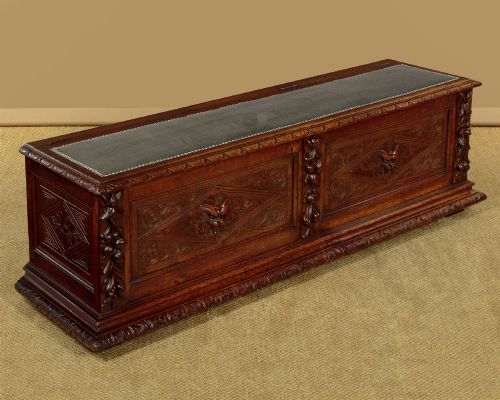
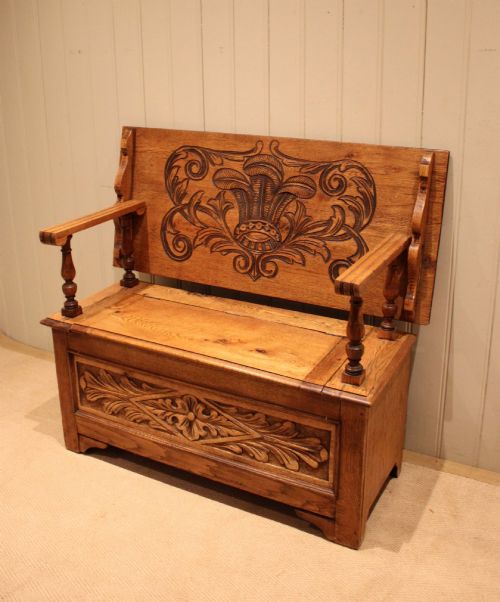
When you search for an oak chest bench, you encounter a versatile hybrid of furniture that serves simultaneously as a storage receptacle and a seat. These pieces take various forms across the listings, appearing as settles, monks benches, blanket chests, coffers, and mule chests.
The versions most commonly met span from the 16th century through the Victorian era and into the early 20th century, encompassing revival styles like Jacobean, Gothic, and Renaissance Revival. They function naturally in entrance halls and large rooms, providing concealed space for blankets or belongings beneath a solid wooden lid or hinged back.
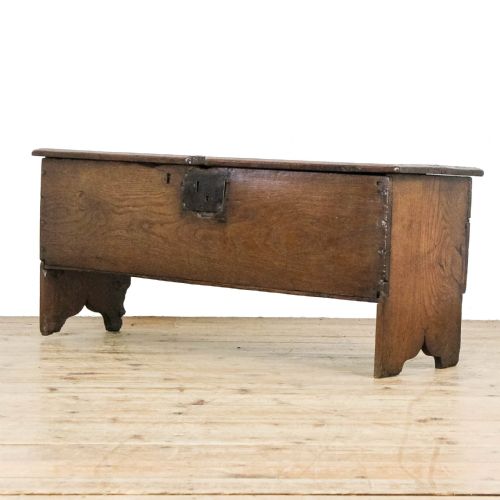
Makers and carpenters constructed these items to endure heavy daily use, resulting in sturdy proportions and practical designs. Whether structured as a simple six-plank box or an elaborate carved settle with arms, each piece reflects the domestic requirements of its period.
What varies in quality
The calibre of an oak chest bench depends heavily on the depth and crispness of the carving, alongside the quality of the timber selection. Finer examples display carefully chosen grain patterns and deeply undercut relief work executed by skilled hands.
Structural integrity and the retention of original components, such as hinges, boards, and fixings, dictate the standing of a piece within its period. Pieces featuring well-proportioned linenfold or figurative panels generally reflect a higher standard of original craftsmanship.
Proportion and age also influence distinction, where untouched surfaces with good patination outweigh heavily altered or overly restored alternatives. The integration of the seat and chest elements reveals the maker's original design intent and execution skill.
Listings feature oak chest benches spanning from the sixteenth century through the Edwardian period, incorporating materials like iron, brass, and leather.
Lambs Manchester
The Oak Chest Bench Glossary
- Monks bench
- A convertible piece of furniture featuring a pivoting back that folds down over the arms to transform a chest into a table or bench.
- Settle
- A wooden wooden bench with a high back, solid arms, and often a storage compartment beneath the seat to block cold draughts.
- Mule chest
- A traditional chest fitted with one or more drawers at the base beneath the main storage compartment.
- Coffer
- A heavy wooden box with a hinged lid, traditionally used for storing valuables, textiles, or documents.
- Six-plank chest
- An early form of chest constructed from six principal boards joined at the edges, representing a simple method of cabinet making.
- Green Man
- A sculptural architectural ornament depicting a human face surrounded by or sprouting from foliage, frequently carved into woodwork.
Oak Chest Bench: Frequently Asked Questions
What is an oak chest bench used for?
These pieces serve a dual purpose as both a seating option and a concealed storage compartment for household items.
They sit particularly well in hallways, boot rooms, or large living spaces where blankets, shoes, or belongings require tidying away.
How do I tell an 18th-century piece from a Victorian revival?
Earlier 18th-century examples tend to exhibit simpler, hand- joined construction with natural timber patination developed over long periods of use.
Victorian revival pieces often feature heavier, deeper machine or hand carving influenced by Gothic or Elizabethan styles, alongside different interior construction methods.
Are monks benches comfortable to sit on?
Monks benches are constructed entirely from solid timber without built-in upholstery, offering a firm and upright seating experience.
Owners frequently add loose textile cushions or pads to the wooden seat base for extra comfort during extended periods.
How should I care for antique oak furniture?
Maintain the timber by keeping it away from direct heat sources and extreme humidity fluctuations to prevent the oak from splitting.
Apply a traditional beeswax polish occasionally to nourish the surface and preserve the natural lustre of the grain.