

Oak Carved Side Chairs
Oak carved side chairs bring sturdy architectural presence and historic ornament to an interior, shaped from solid timber through centuries of revival styles.
Oak Carved Side Chairs
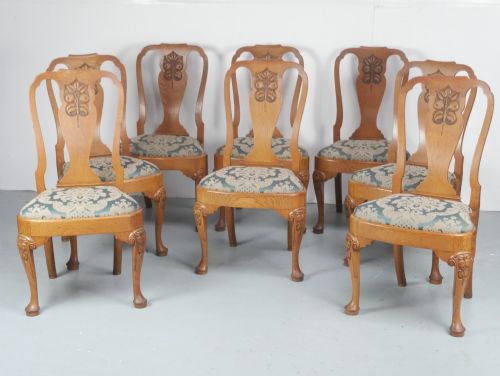
When you search for oak carved side chairs, you are looking at sturdy wooden seating designed without armrests for dining tables, hallways, and occasional use. The pieces found here span from the eighteenth century through the Victorian era and into the early twentieth century, reflecting enduring interest in historic aesthetics.
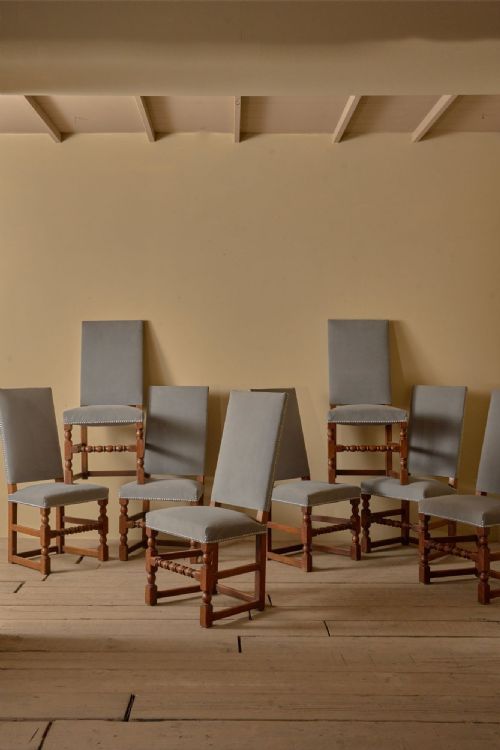
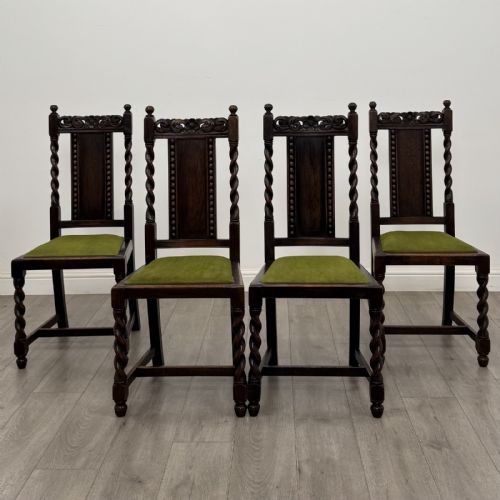
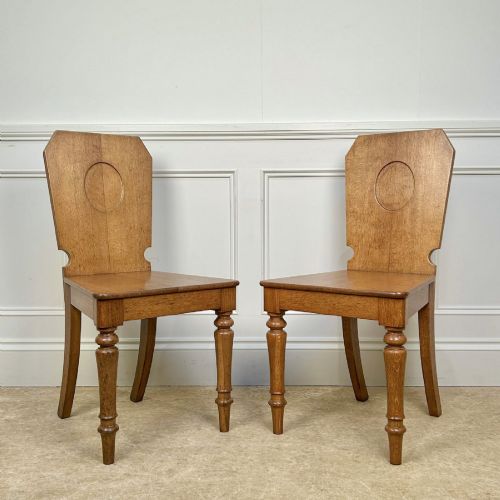
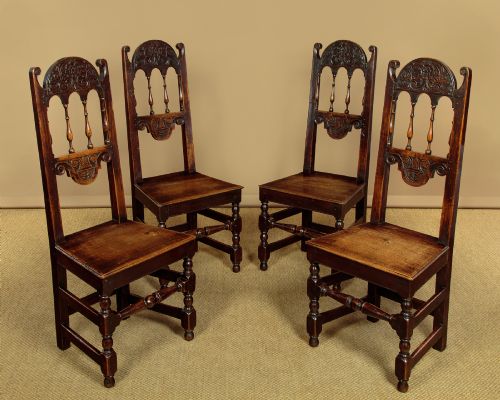
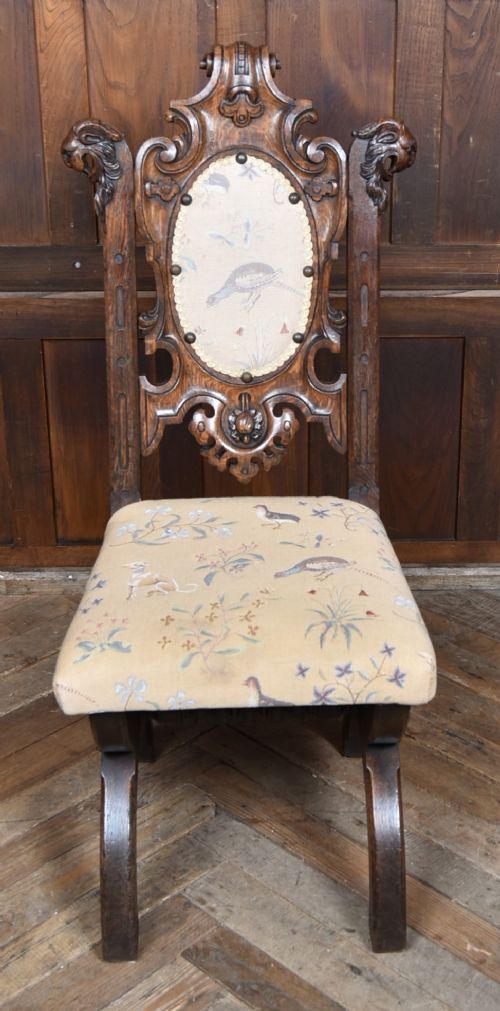
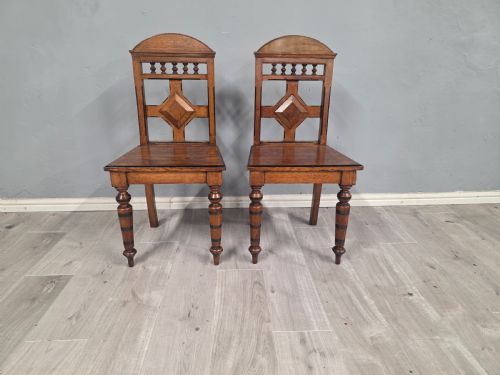
You are most likely to meet revival pieces on this page, particularly Jacobean and Gothic styles executed in solid oak during the nineteenth and early twentieth centuries. These chairs frequently appear in matched sets or pairs, alongside individual hall chairs bearing armorial panels or geometric relief work.
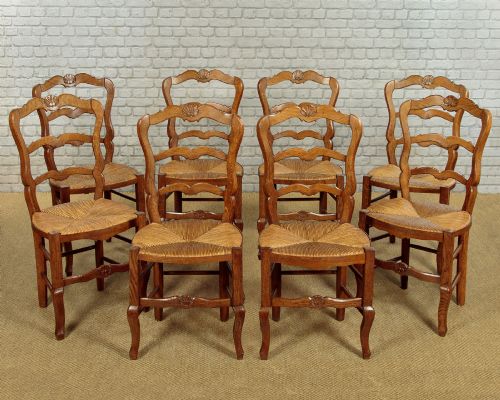
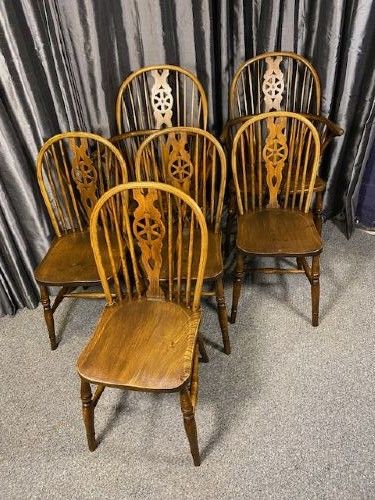
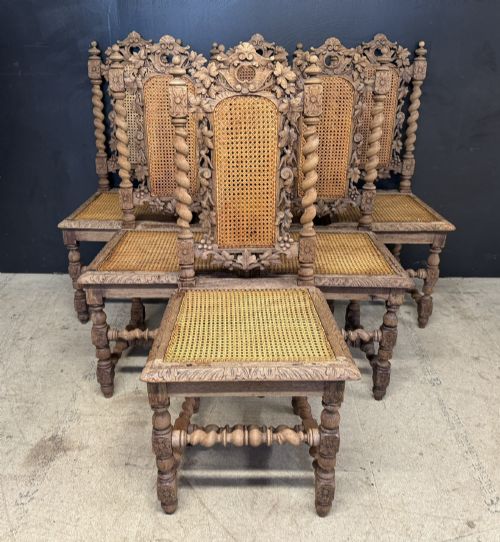
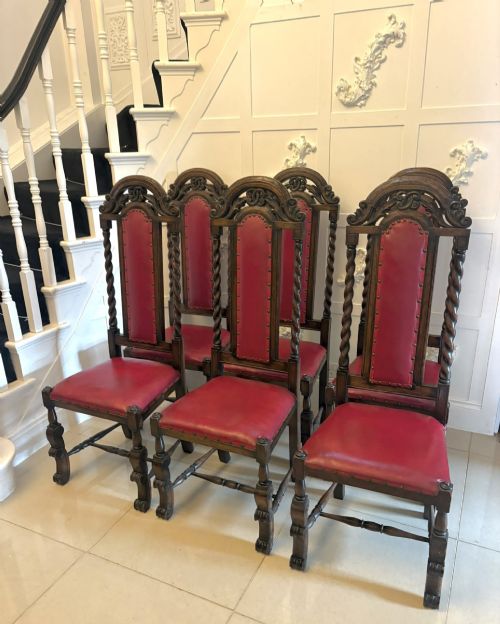
The forms range from high-backed dining seats to upright hall chairs and regional vernacular designs. Makers drew inspiration from seventeenth-century joinery, translating deep relief carving, turned stretchers, and panelled backs into domestic seating for period homes.
Materials and Construction
The primary material is solid oak, selected for its density and distinct grain, often complemented by secondary woods and structural elements in elm or fruitwood. Workshops utilised traditional mortise and tenon joinery to construct frames capable of withstanding heavy daily use over generations.
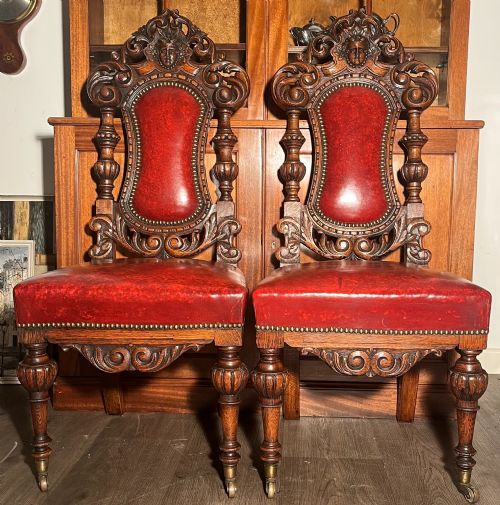
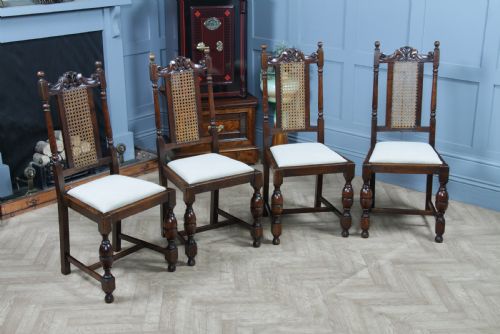
Carving was executed by hand, employing gouges and chisels to create strapwork, foliage, and geometric patterns directly into the solid timber. Where seats or backs incorporate softer elements, makers integrated cane, leather, velvet, or woven rush into the rigid wooden framework.
Oak Carved Side Chairs Retail Price Guide 2026
Typical asking prices for oak carved side chairs among the pieces listed under this phrase on Sellingantiques today, from the lower quarter to the upper quarter. They describe what is for sale here now, not the wider market.
Some nineteenth-century makers produced heavy baronial chairs seemingly designed for medieval kings rather than Victorian parlours.
Assessing Quality and Execution
The distinction between ordinary production and superior work lies in the depth and crispness of the carving, where master hands achieved sharp relief and balanced symmetry. Lesser examples rely on shallow mechanical stamping or hasty surface decoration that lacks dimensional clarity.
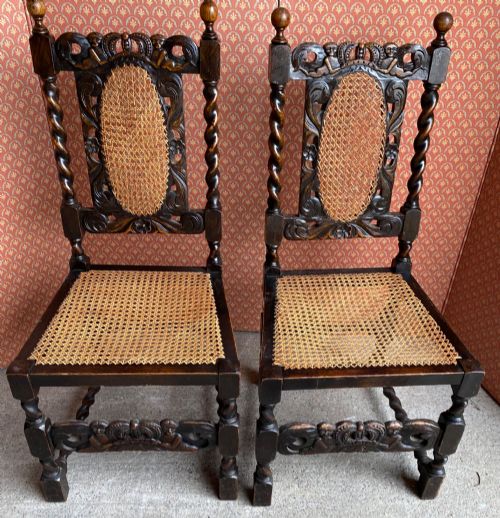
Structural integrity separates robust survivors from compromised pieces, visible in the tightness of joints and the selection of quarter-sawn timber that resisted warping. The proportion of the turnings, such as barley twists or balusters, dictates the visual harmony of the finished seat.
Holland and Sons·M. D. Miller and Sons
The Oak Carved Side Chairs Glossary
- Sgabello
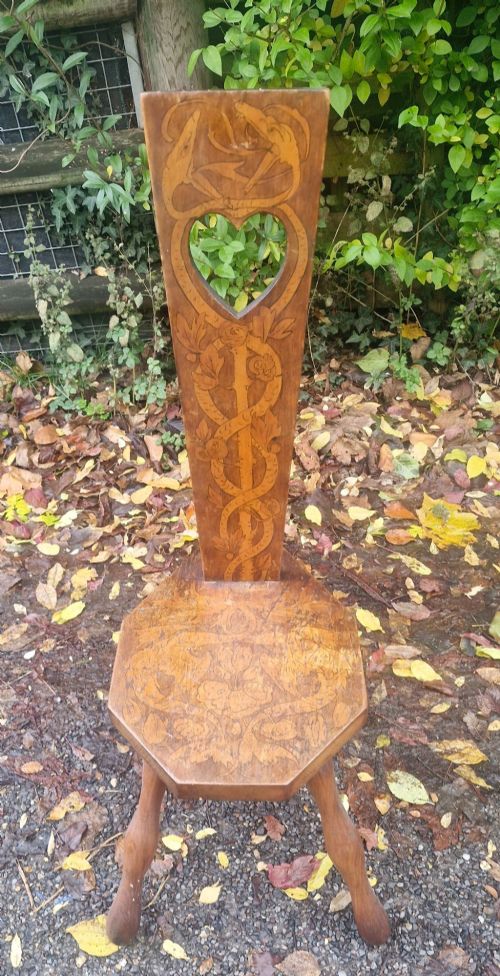
- A light wooden chair with a high back and solid trestle supports instead of conventional legs. This Italian Renaissance form appeared in nineteenth-century revival iterations for hallways.
- Jacobean Revival
- A nineteenth-century design movement copying seventeenth-century English furniture forms. These pieces utilise dark oak, geometric mouldings, and deep panel carving.
- Barley Twist
- A turned wooden furniture leg or stretcher resembling a spiral rope. Craftsmen shaped these elements on a lathe during the seventeenth century and again in later revival periods.
- Hall Chair
- A tall, rigid wooden seat placed in an entrance hall for brief use. They often feature carved crests, painted armorials, or solid panel backs rather than upholstery.
- Gothic Revival
- An architectural and decorative style drawing on medieval ecclesiastical motifs. Chairs in this manner display pointed arches, tracery, and high, imposing backrests.
Oak Carved Side Chairs: Frequently Asked Questions
How do I date an oak carved side chair?
Dating relies on examining the construction methods, tool marks left by the maker, and the specific characteristics of the revival style applied. Earlier pieces display hand-riven timber and pegged joinery, whereas later revival examples often show machine-sawn components.
Hardware, wear patterns, and the ageing of the oak surface provide further clues to chronological origin. Comparing the decorative motifs against documented periods helps narrow down the decade of manufacture.
Are these chairs suitable for daily dining?
Most antique oak chairs are structurally robust enough for regular dining use, provided the joints remain tight and stable. Solid timber frames handle daily seating well, though period upholstery or cane panels may require careful treatment.
Adding discreet protective pads to the feet prevents friction on modern flooring. Regular inspection of the stretcher joints ensures the chair remains safe for guests.
How should I clean carved oak surfaces?
Maintenance involves dusting with a soft, dry cloth to prevent dirt accumulation within the recesses of the carving. Avoid modern liquid polishes containing silicones, which can build up a hazy film over the historic finish.
Applying a traditional beeswax occasionally nourishes the timber and maintains a natural sheen. Keeping the chair away from direct heat sources prevents the oak from drying and splitting.
What is the difference between a side chair and a hall chair?
A side chair is generally designed for dining tables or occasional placement around a room, often featuring padded seats or upholstered backs for comfort. They prioritise ergonomic proportion for sitting over extended periods.
By contrast, a hall chair is typically all-wood with a rigid, upright posture meant for temporary waiting. These pieces double as decorative statements in entrance spaces with carved crests or painted armorials.