

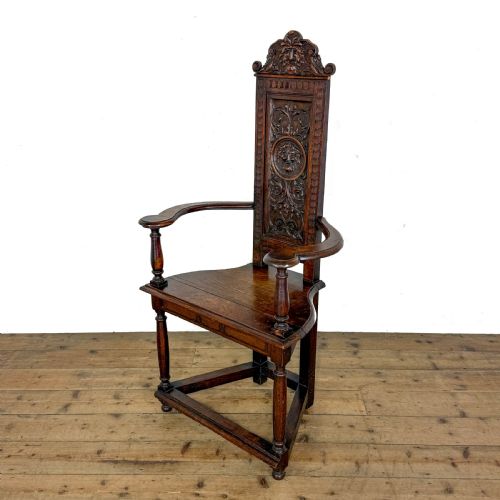


Renaissance Revival Oak Chairs
Renaissance revival oak chairs combine heavy architectural carving with sturdy framing, offering robust seating rooted in historical design traditions.
Renaissance Revival Oak Chairs
Renaissance revival oak chairs encompass dining chairs, armchairs, hall chairs, and benches originating across the nineteenth and early twentieth centuries. These seating options draw heavily on historical motifs, often presenting robust proportions and substantial timber frames.
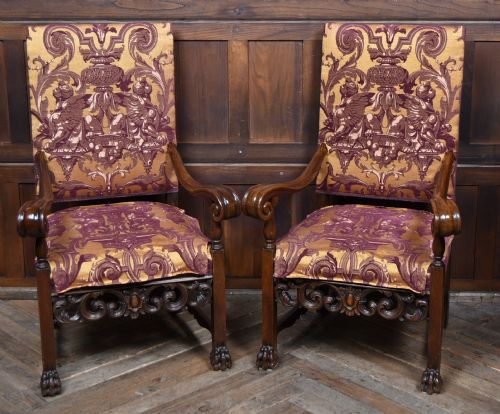
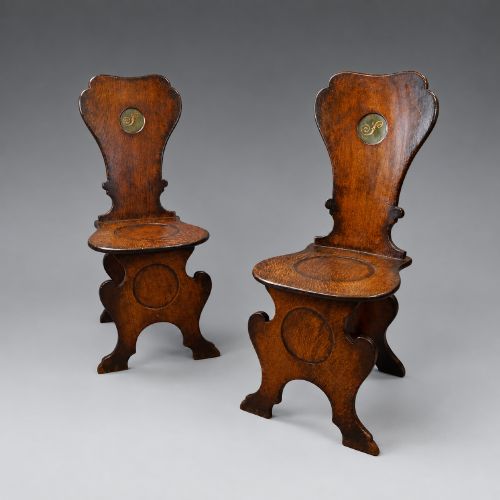
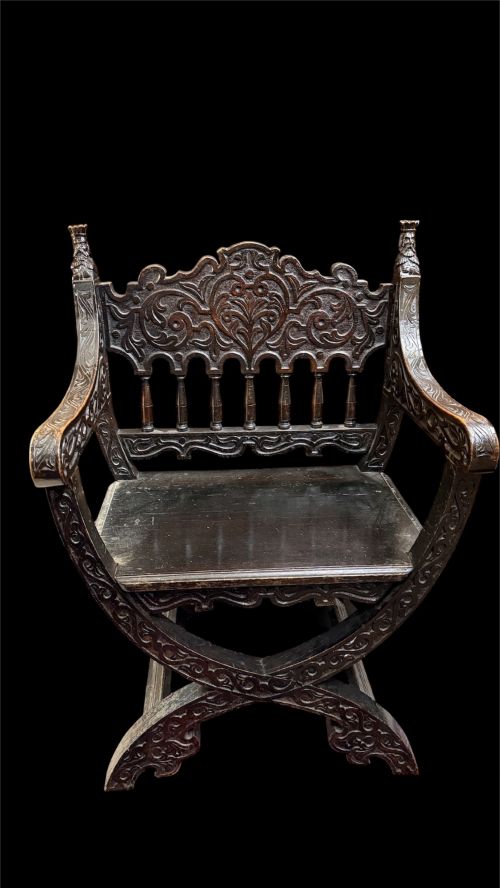
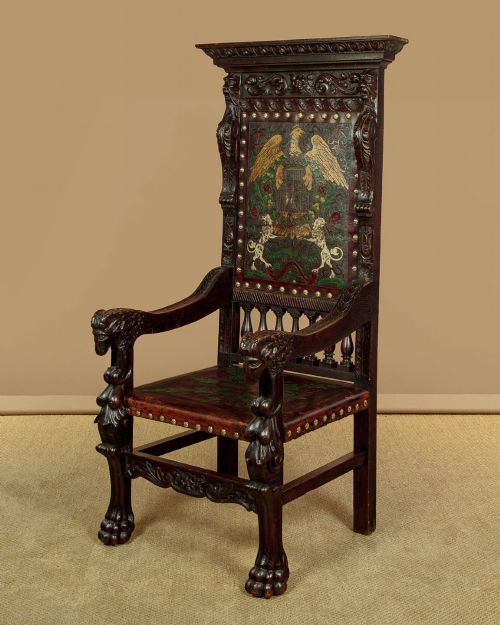
The selections available here span diverse regional interpretations including French, Italian, and Austro-Hungarian pieces alongside Victorian variations. Forms range from simple side chairs to elaborate throne chairs, sgabello hall chairs, and X-frame Dante chairs.
Makers utilised solid oak predominantly, incorporating secondary materials such as leather, fabric, cane, and brass hardware to complete the seating structures. Pieces dated between eighteen sixty and nineteen thirty demonstrate enduring interest in historical revivalism.
How they were made
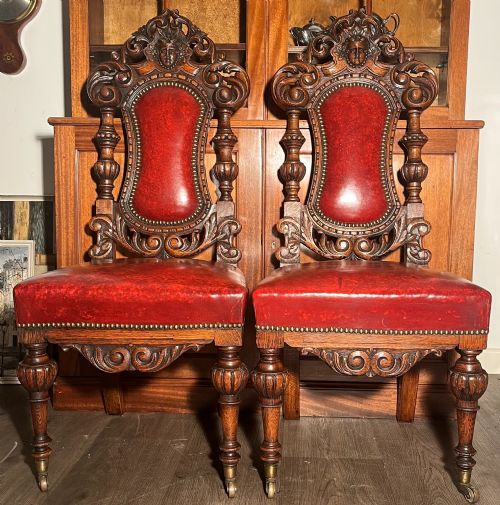
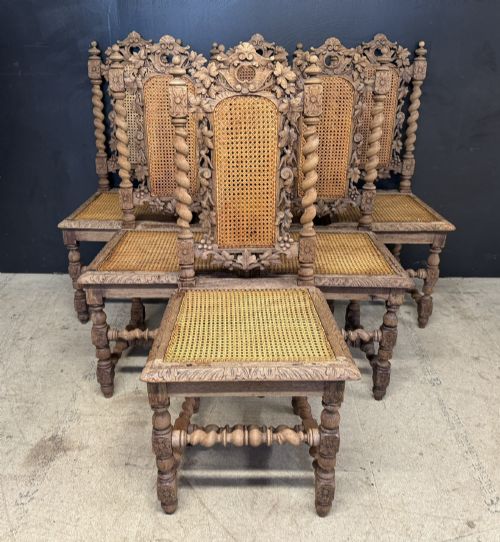
Makers constructed these chairs primarily using solid oak timbers, joining components through traditional woodworking methods to ensure structural stability. Frames frequently exhibit deep relief carving depicting foliage, scrolls, and heraldic figures characteristic of historical revivals.
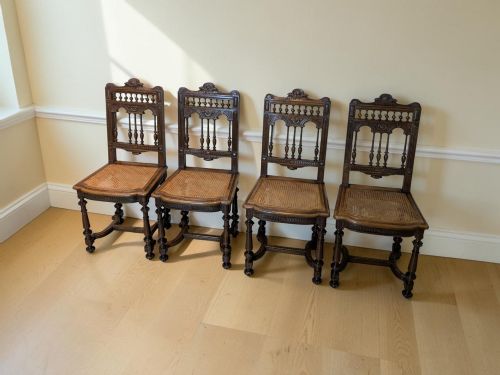
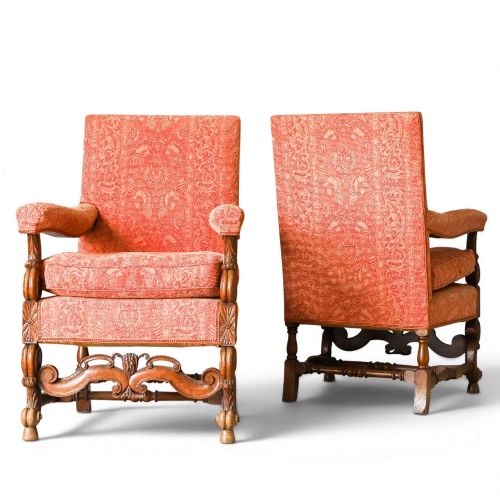
Upholstered elements rely on leather, textile, or fabric panels secured to the wooden frameworks, sometimes enhanced with decorative brass studs. Certain examples utilise cane or rattan inserts within the backrests and seats to provide textural contrast against the dark timber.
Renaissance Revival Oak Chairs Retail Price Guide 2026
Typical asking prices for renaissance revival oak chairs among the pieces listed under this phrase on Sellingantiques today, from the lower quarter to the upper quarter. They describe what is for sale here now, not the wider market.
Some chairs sport leather so thick it puts modern briefcases to shame.
What varies in quality
The depth and crispness of the hand carving distinguish superior examples from simpler production pieces, revealing the artisan's control over the oak. Relief work that retains sharp contours and intricate detailing indicates higher workmanship than soft or shallow moulding.
The selection of timber grain and the integrity of structural joinery determine the overall durability and visual presence of each chair. Consistency in period materials, such as heavy leather and solid oak components throughout the frame, elevates the standing of individual items.
The Renaissance Revival Oak Chairs Glossary
- Sgabello
- A Renaissance chair type featuring a wooden seat supported by solid trestle planks rather than conventional legs. These pieces typically display ornate carving along the high backrest and front support.
- Caquetoire
- A sixteenth-century style conversational armchair characterised by a trapezoidal seat and a tall, narrow backrest. The design allows sitters to converse easily while wearing wide garments.
- Dante chair
- An X-frame folding chair modelled on medieval and Renaissance curule forms, often constructed with intersecting wooden curved slats. These chairs usually feature upholstered sling seats and backrests.
- Throne chair
- An imposing armchair with an elevated backrest and substantial arm supports, designed to project authority. Such pieces often incorporate heavy architectural carving and upholstered panels.
Renaissance Revival Oak Chairs: Frequently Asked Questions
What defines a renaissance revival oak chair?
These chairs combine nineteenth-century manufacturing techniques with decorative vocabularies borrowed from sixteenth and seventeenth-century European design. They rely on solid oak timber and feature prominent carved details.
Common forms include high-backed armchairs, dining sets, and rigid hall chairs intended to make a strong visual statement in domestic interiors.
How do I identify different regional styles?
French and Italian interpretations often display exuberant figural carvings and scrollwork, whereas Austro-Hungarian examples utilise distinct structural frames like the X-shape curule. Examining the specific motifs helps determine the geographical origin.
Local cabinetmakers adapted historical patterns to suit contemporary nineteenth-century domestic tastes while retaining traditional timber construction methods.
Where were these chairs used historically?
Hall chairs and benches stood in entranceways to impress visitors, while heavy armchairs occupied libraries, studies, and formal reception rooms. Dining chairs furnished large dining spaces.
Their substantial weight and imposing appearance suited the grand interior decorative schemes popular during the Victorian era.
Can these chairs be used daily?
Solid oak construction provides exceptional durability, allowing these chairs to withstand regular seating use in modern settings. Checking the frame stability ensures safe daily integration.
Upholstered components like leather or fabric may require occasional maintenance or re-securing depending on their condition and age.