

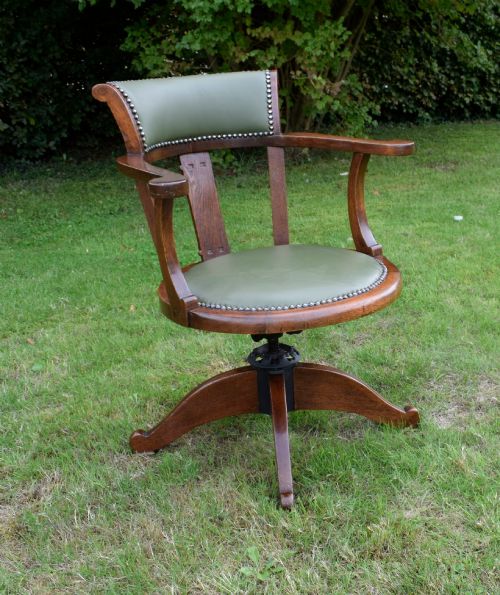
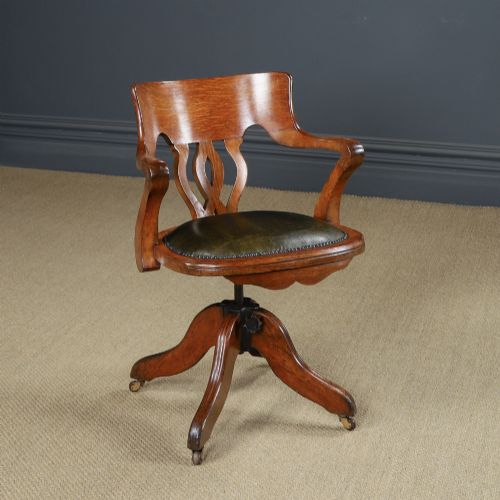
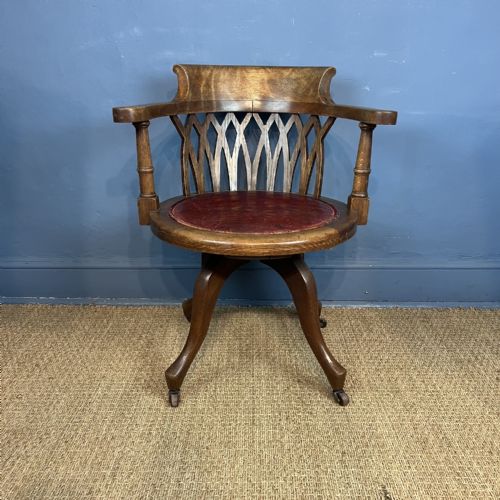
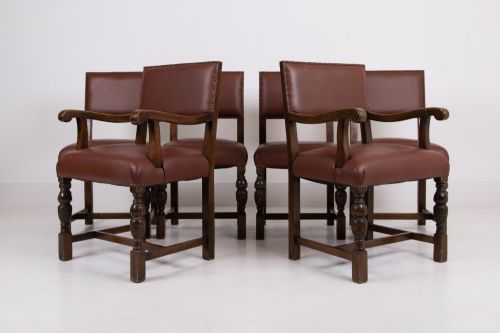
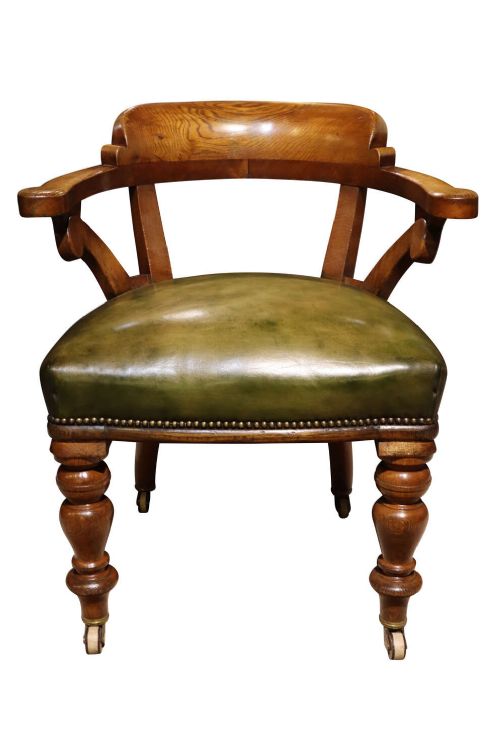
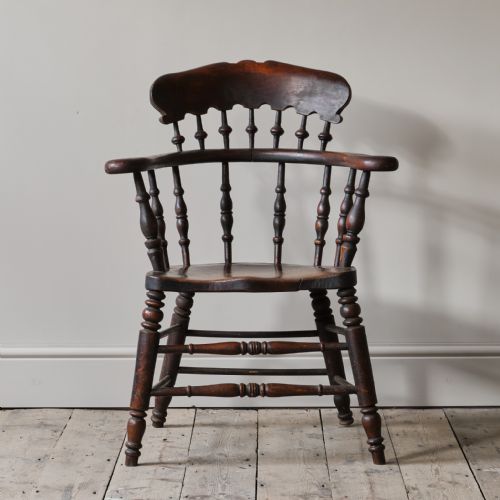
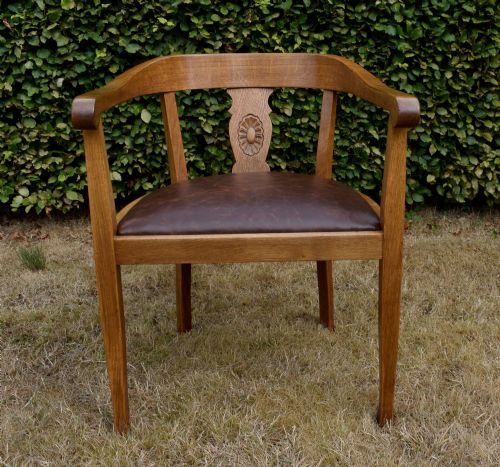
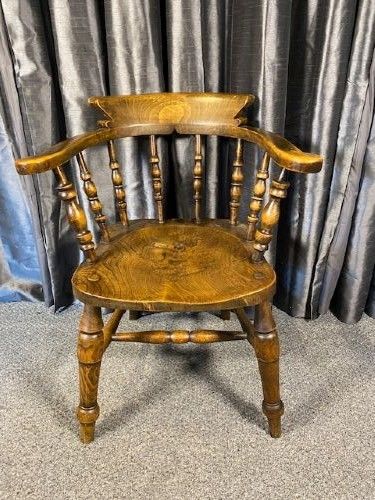
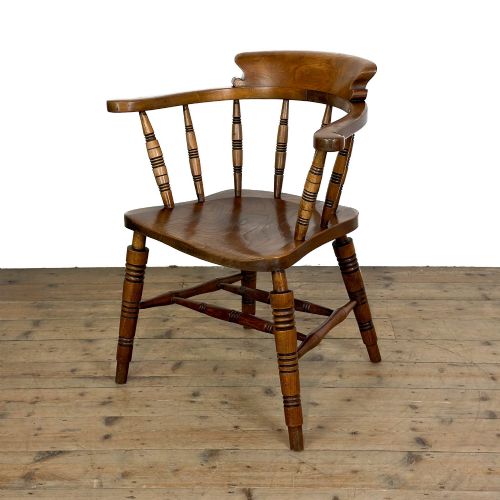
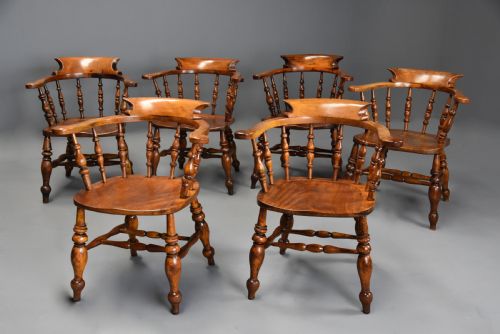
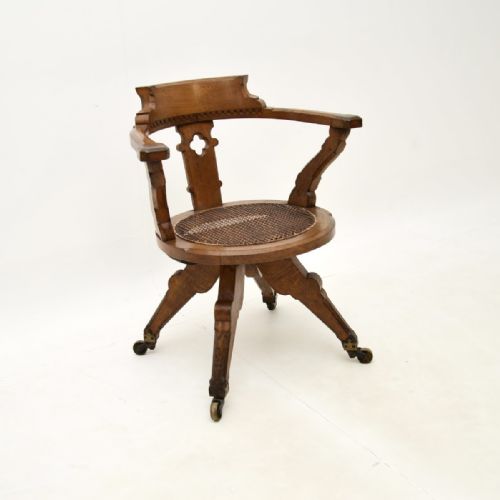
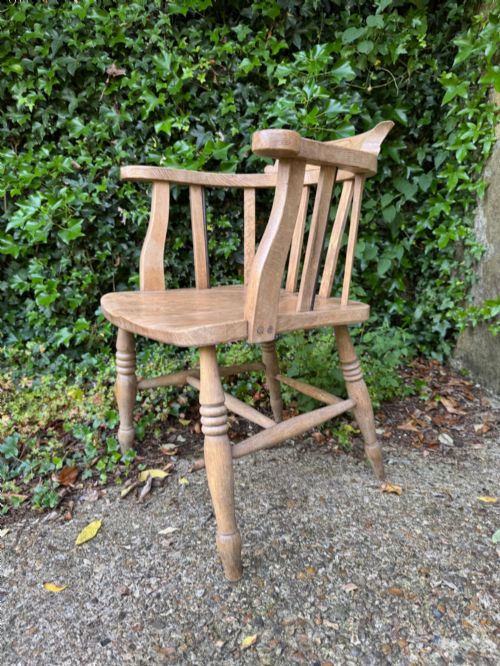
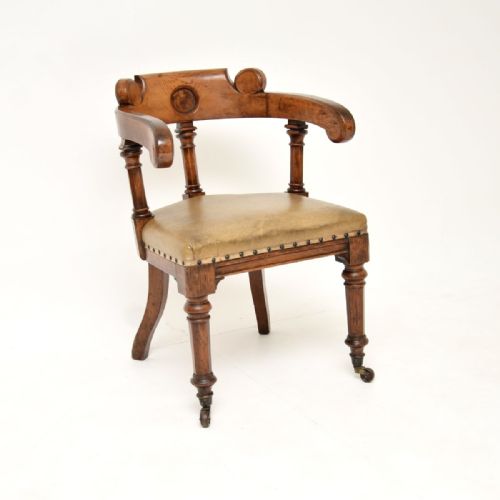
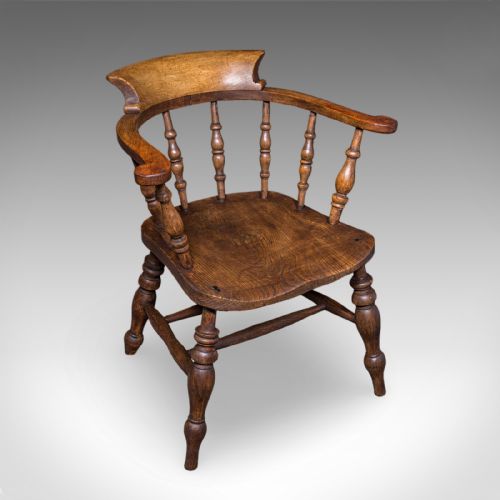
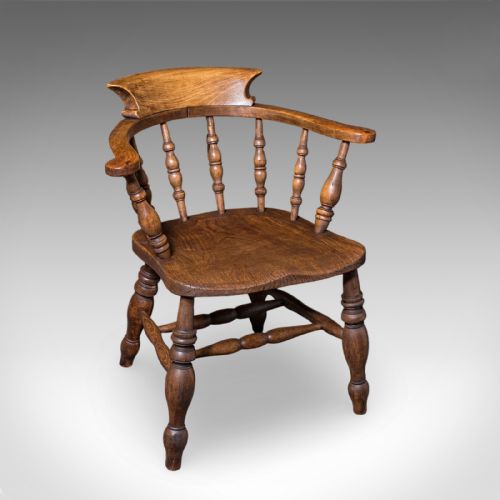
Oak Captains Chair
When you want an oak captains chair, you are seeking a sturdy revolving or low-backed elbow seat designed for long hours at a desk or library table.
How they were made
Construction relies heavily on solid oak for the primary frame and spindle backrests, often combined with secondary woods such as elm, beech, or ash for seats and structural bends. Carpenters shaped these timbers using traditional steam-bending techniques to create the characteristic continuous curved arm and back rails.
Upholstered variants incorporate supple leather fixed with brass studs over padded seats, whilst swivel office versions integrate iron and cast-iron revolving mechanisms allowing rotation and tilt functions. Joinery typically employs pegged mortise and tenon joints to withstand the rotational stress of daily office use.
What varies in quality
The distinction between standard commercial seating and exceptional examples lies in the weight of the timber and the complexity of the mechanism. Golden oak variants with rich patination and thick, hand-stitched leather command attention over utilitarian workshop chairs.
Engineering integrity within the revolving and tilting iron components dictates durability, where smooth, silent rotation separates high-grade office iterations from rigid or wobbly frames. Furthermore, original matching sets of four or more surviving in uncompromised condition represent a superior tier compared to single assembled survivors.
Oak Captains Chair Retail Price Guide 2026
Typical asking prices for oak captains chair among the pieces listed under this phrase on Sellingantiques today, from the lower quarter to the upper quarter. They describe what is for sale here now, not the wider market.
One revolving model arrived equipped for life afloat as a designated ship's cockpit chair.
Alfred Allen Furnishing Expert·Shannon Company·S&H Jewell
The Oak Captains Chair Glossary
- Smoker's bow
- A low-backed Windsor-style armchair with a rounded wooden back rail, commonly associated with nineteenth-century country houses and public rooms. This form shares close roots with traditional captains chairs.
- Swivel mechanism
- The under-seat iron and brass apparatus enabling rotation and sometimes tilting. These metal components are crucial for dating late nineteenth and early twentieth-century office chairs.
- Bergere
- A closed-arm upholstered chair featuring cane or woven panels within the wooden frame. This technique occasionally appears on turn-of-the-century revolving seats.
- Gothic Revival
- A nineteenth-century architectural and decorative style characterised by pointed arches and heavy ecclesiastical motifs. Chairs from this movement display pronounced linen-fold carving or structural geometric panels.
- Horseshoe chair
- An armchair featuring a continuous curved backrest shaped like a horseshoe to support the arms and spine. This profile defines many classic library and desk models.
Oak Captains Chair: Frequently Asked Questions
What is a captains chair?
A captains chair is a sturdy wooden armchair with a low, curved back rail designed to fit comfortably beneath a desk or table.
Originally utilised in maritime settings and captain's cabins, the form evolved into a staple for Victorian and Edwardian offices, libraries, and studies.
How do I date an oak chair?
Dating relies on examining the joinery, timber selection, and mechanical hardware beneath the seat. Victorian pieces often display heavier golden oak and hand-turned spindles, whilst Edwardian versions frequently integrate iron swivel and tilt mechanisms.
Archival listings show production spanning the mid-nineteenth century through the 1920s, with distinct shifts from country Windsor forms to mechanical office furniture.
Were these chairs used on ships?
Certain specialised variants were manufactured specifically for maritime use, including revolving chairs utilised on passenger vessels and naval ships. These pieces feature weighted or bolted bases designed to maintain stability during ocean transit.
Standard iterations served primarily in land-based offices, banks, and domestic libraries rather than vessels.
How do I care for leather upholstery?
Leather seats require regular dusting and occasional treatment with appropriate conditioning balms to prevent the natural hide from drying and cracking over time. Maintaining a stable room humidity protects both the leather and the underlying oak frame from environmental stress.
Avoid placing antique seating in direct sunlight or beside active heating sources.