
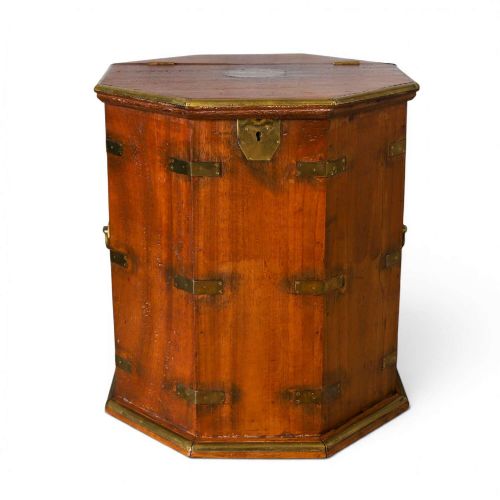


Oak Campaign Trunk
An oak campaign trunk is a robust portable container built for travel, offering utilitarian storage and distinct historical character for modern interiors.
Oak Campaign Trunk
When you search for an oak campaign trunk, you encounter sturdy timber storage chests originally constructed for military officers, regiments, and long-distance travel. The pieces available span periods from the Georgian era through the Victorian epoch and into the early twentieth century.
The primary forms you meet include silver chests, fitted travel trunks, and reinforced storage boxes designed to withstand rough transit by sea and land. These examples frequently display the heavy build of nineteenth-century craftsmanship adapted for colonial service or maritime shipping.
Originating largely from British military and domestic contexts, these trunks combine practical utility with robust timber construction. They serve today as functional coffee tables, blanket boxes, or statement storage pieces in contemporary living spaces.
Materials and construction methods
The foundational material across these listings is solid oak, selected for its density and durability under harsh travel conditions. Makers frequently supplemented the timber bodies with external protective elements.
Iron, brass, and steel bindings reinforce the corners and edges to prevent structural splitting during transit. These metal bands and straps are secured with numerous heavy-duty screws or rivets, framing the timber panels securely.
Additional internal linings of painted surfaces or canvas appear in specific examples to protect contents from moisture. Flush-fitting brass handles and recessed hardware allow the trunks to pack tightly into cargo holds without snagging.
Listings feature 19th-century and Victorian oak campaign trunks constructed with iron, brass, and steel bindings.
Differentiating quality and provenance
Quality in an oak campaign trunk rests upon the integrity of the original hardware and the preservation of internal fittings. Trunks retaining original brass mounts, maker inscriptions, and fitted compartmentalised interiors stand apart from altered examples.
The gauge of the metal banding and the precision of the dovetail joinery in the oak panels indicate the original purpose and tier of manufacture. Pieces associated with specific regiments or named makers carry a documentary layer that elevates their standing.
Elkington·H D Dean·69th Regiment·Highland Light Infantry
The Oak Campaign Trunk Glossary
- Campaign chest
- A portable set of drawers or a trunk built in sections or reinforced for military transportation. These items were designed to dismantle or withstand frequent journeys.
- Silver chest
- A heavy storage box specifically lined to protect valuable silverware during transport. They usually feature robust iron or steel banding and secure locking mechanisms.
- Steamer trunk
- A luggage piece sized to fit in the cabin or hold of a steamship. They date predominantly from the late nineteenth and early twentieth centuries.
- Strapwork
- Metal bands affixed to the exterior of a trunk for structural reinforcement. These bands protect the wooden edges and corners from heavy impacts.
- Flush handle
- A metal handle set into a recess so it does not project beyond the surface of the trunk. This prevents snagging during loading and transport.
Oak Campaign Trunk: Frequently Asked Questions
What is an oak campaign trunk?
An oak campaign trunk is a heavy-duty wooden box reinforced with metal bands, built to transport an officer's possessions during military campaigns or long journeys.
These pieces use dense oak timbers and protective brass or iron hardware to survive rough handling on ships and wagons.
How were these trunks used?
Officers and travellers used them to pack uniforms, silver, and personal equipment securely while on the move. The sturdy construction protected contents from weather and transit damage.
Today, they function well as living room storage tables or statement accent pieces in a home.
How do I date a campaign trunk?
Dating relies on examining the construction methods, the style of the metal hardware, and any visible maker inscriptions or regimental stamps. Victorian examples often feature heavy iron banding and brass flush handles.
Earlier Georgian or later twentieth-century pieces display subtle shifts in timber thickness and fastening techniques.
Are these trunks waterproof?
While solid oak and metal bindings offer significant protection against moisture and rain, historic trunks are not hermetically sealed. Canvas linings and painted interiors helped deter damp conditions during sea voyages.
Modern placement should avoid damp environments to preserve the historic wood and iron.