


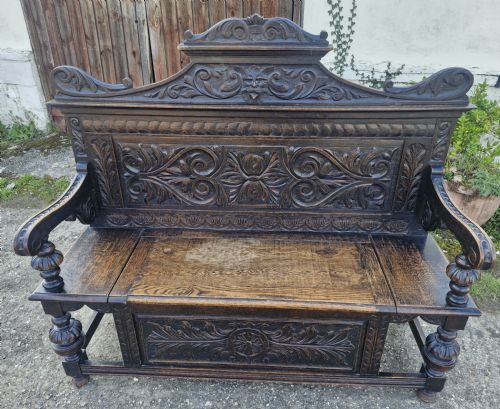


Victorian Oak Blanket Box
A victorian oak blanket box brings sturdy domestic storage into a room, fashioned from dense timber that absorbs generations of handling.
Victorian Oak Blanket Box
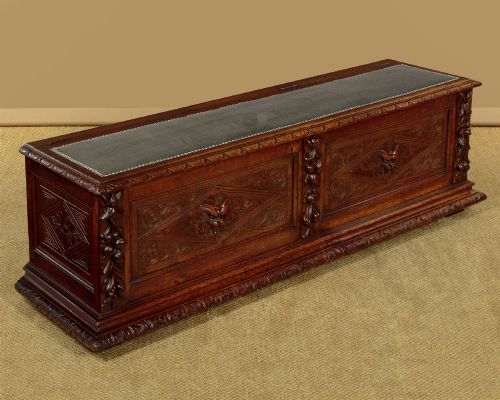
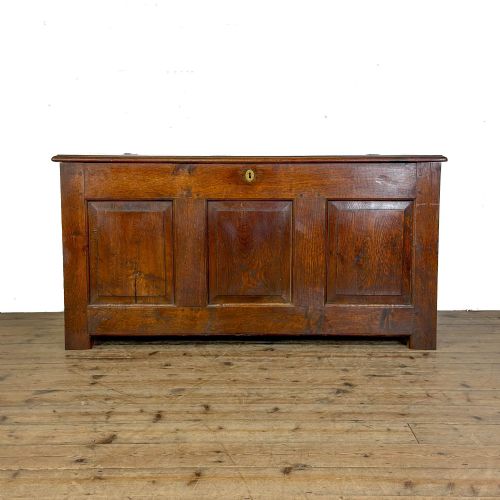
A victorian oak blanket box serves as a robust receptacle for textiles and household goods, appearing frequently across the nineteenth century in various configurations. The pieces on this page span plain country storage trunks, heavily carved coffers, and iron-bound silver chests.
Makers produced these items to endure rigorous daily use and long-distance travel, employing durable wood alongside protective metal bands and brass mounts. Many examples reflect revivalist tastes, drawing on Jacobean, Gothic, and Baroque motifs applied to standard rectangular forms.
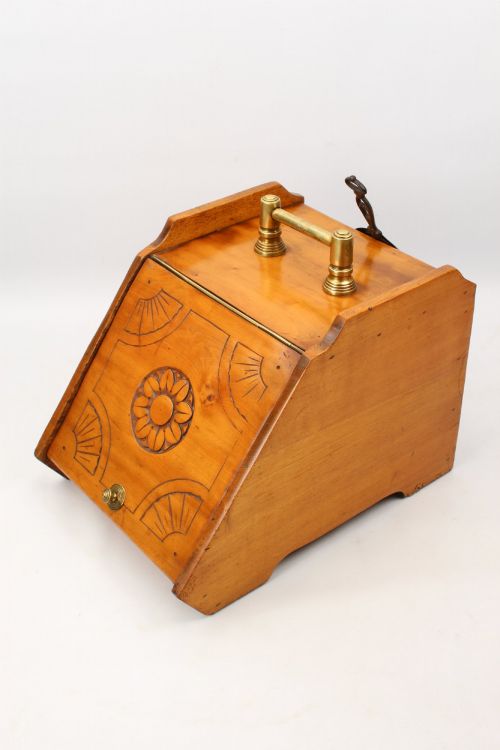
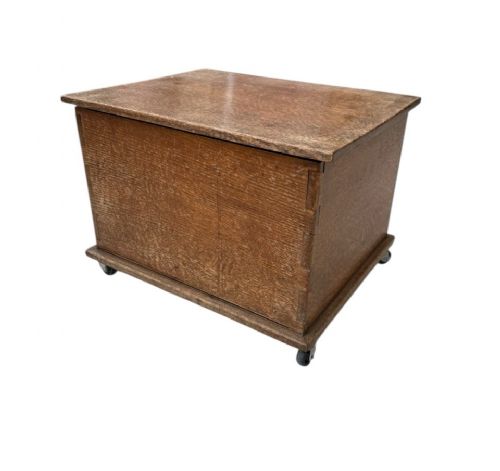
Beyond basic domestic storage, related utility items such as hall benches, slipper boxes, and campaign chests frequently appear in this category. These variants share the primary timber and construction methods of the standard blanket box while adapting the interior for specialised service.
How They Were Made
Cabinet makers constructed these boxes primarily from solid oak, sometimes reinforced with internal pine or secondary hardwoods to manage weight and cost. Exterior surfaces frequently display hand-carved panels, linen-fold patterns, or Green Man motifs depending on the prevailing regional style.
To withstand heavy transit, workshops fitted corners and lids with iron, steel, or brass banding secured by numerous countersunk screws or rivets. Leather handles, canvas coverings, and painted finishes also appear on travelling trunks designed for military or commercial conveyance.
Listings demonstrate that nineteenth century oak blanket boxes frequently incorporate iron banding and brass mounts for transport durability.
What Varies in Quality
The sophistication of the timber preparation and joinery sets individual pieces apart, ranging from rustic country workshop output to refined retailer-commissioned furniture. Superior examples utilise thick, quarter-sawn oak boards that resist warping and display pronounced medullary rays.
Hardware execution and interior fitting mark the distinction between standard storage and luxury transport boxes. Original cast iron straps, working brass locks, stamped retailer inscriptions, and intact partitioned velvet linings elevate the standing of a piece significantly.
Elkington·H D Dean
The Victorian Oak Blanket Box Glossary
- Coffer
- A heavy wooden chest traditionally used for storing valuables, linens, or documents. Early examples often feature hinged lids and boarded construction.
- Campaign chest
- A modular piece of furniture designed for military officers on active service, typically split into sections with recessed brass handles for transport.
- Mule chest
- A storage chest featuring one or more drawers beneath the main internal compartment. This form bridges the gap between the simple coffer and the modern chest of drawers.
- Silver chest
- A heavy travelling trunk lined with baize or velvet and fitted with specific compartments for flatware and holloware. These are heavily bound in iron or steel for security.
- Linen fold
- A carved wood panel ornamentation resembling folded linen cloth. This motif gained popularity in medieval and Gothic revival furniture.
Victorian Oak Blanket Box: Frequently Asked Questions
What was a blanket box used for originally?
These chests served primarily to protect household textiles, woolens, and bed linens from dampness, dust, and moths in unheated rooms. Families kept them at the foot of beds or in hallways for immediate access to extra covers.
Over time, many households adapted them for storing seasonal clothing, family documents, or silver service items when travelling. Their robust construction meant they doubled as extra seating or tables in smaller quarters.
How do I spot a replacement lid?
Examine the grain direction, timber colour, and wear patterns on the top board relative to the sides and base of the box. Replacement lids often utilise mismatched oak planks or lack the accumulated surface patina found on the lower sections.
Check the hinge mechanism and screw holes for signs of multiple rehangings. Original lids typically feature period-appropriate butterfly hinges or strap hinges that match the internal wear.
Are iron-bound boxes meant for travel?
Iron and steel banding was added to reinforce heavy timber trunks against the impacts of shipping, railway transit, and military deployment. These metal straps kept the corners secure when loaded onto carriages or cargo holds.
Many of these metal-bound pieces also feature robust carrying handles and reinforced lock plates designed to deter theft during long journeys.
How should I care for an oak chest?
Keep the timber away from direct heat sources and dramatic humidity fluctuations to prevent the oak from splitting or warping. Feed the dry wood occasionally with a traditional beeswax polish to maintain the surface finish.
Avoid using modern silicone sprays or heavy liquid cleaners, which can penetrate open oak pores and degrade the natural patina built up over decades.