


Oak Campaign Box
An oak campaign box is a portable piece of military furniture built for officers on the move, combining robust timber with secure metal fittings.
Oak Campaign Box
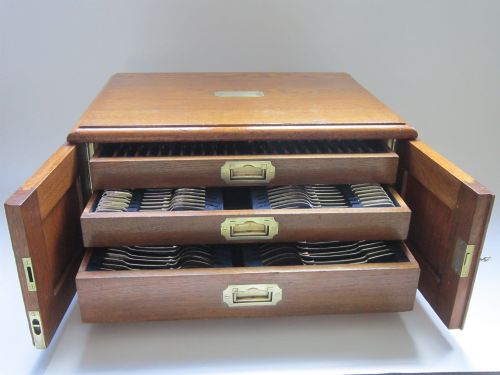
An oak campaign box serves as a portable storage unit designed for officers and travellers during the nineteenth century and subsequent periods. These pieces range from substantial silver chests and travel trunks to smaller writing slopes, cigar humidors, and desktop document boxes.
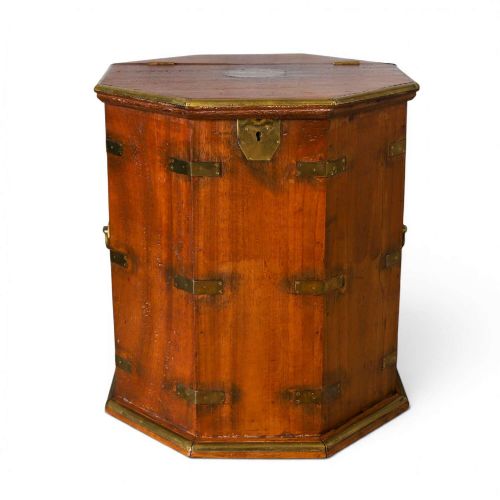
The versions most frequently met on this page date from the Victorian era and the broader nineteenth century, constructed with practical transport in mind. They often feature inset brass or iron handles and reinforced corners to withstand the rigours of military service and maritime shipping.
Makers utilised durable hardwoods like oak, sometimes enhanced by pollard figuring, alongside protective metal bands to ensure the contents survived long journeys. Many examples retain original inscriptions, regimental arms, or interior velvet linings that hint at their precise historical deployment.
Materials and Construction
Makers constructed these boxes primarily from solid oak, selected for its density and strength, occasionally employing pine or teak for internal components. Structural integrity relied on robust dovetail joints and heavy iron or brass banding secured with numerous screws to protect against impacts during transit.
Hardware played a functional role, with brass corners, strap hinges, and flush-fitting drop handles ensuring nothing snagged during loading. Interiors often incorporated velvet or baize linings, alongside fitted compartments for silverware, stationery, or writing implements.
Listings feature oak campaign boxes spanning the eighteenth century through to 1910, encompassing travel trunks, writing slopes, and silver chests.
Distinctions in Quality
Quality rests upon the calibre of the hardware and the precision of the joinery rather than mere scale. Superior pieces display heavy brass or cast iron mounts firmly sunk into the timber, flush with the surface, alongside fully operational locks complete with original keys.
The selection of the wood itself distinguishes finer examples, particularly those utilising figured pollard oak or possessing documented regimental associations and presentation inscriptions. Simpler utility trunks rely on plain timber and iron bindings meant strictly for heavy transport rather than officer quarters.
Army And Navy·Elkington·H D Dean
The Oak Campaign Box Glossary
- Campaign chest
- A piece of furniture built in sections or fitted for transport by military officers on active service. These units typically feature recessed brass handles to prevent damage during movement.
- Writing slope
- A portable box with an angled, hinged writing surface that lifts to reveal storage for paper and ink. Victorian examples often incorporate secret drawers and velvet-lined ledges.
- Silver chest
- A heavy storage trunk reinforced with iron or brass bands, designed to transport valuable tableware securely. Interiors frequently feature baize-lined trays moulded to specific cutlery patterns.
- Specimen case
- A small cabinet or box housing specialised collections of natural history or artefacts. These feature multiple shallow drawers tailored for careful organisation.
- Brass bound
- A construction method where corners and edges are reinforced with brass plates and straps. This protected the timber frame from the knocks of frequent travel.
Oak Campaign Box: Frequently Asked Questions
What is an oak campaign box?
An oak campaign box is a sturdy storage container built for military officers and travellers during the nineteenth century. These portable units were designed to protect valuables, documents, or tableware during arduous journeys.
They utilise dense oak timbers reinforced with brass or iron bands to withstand frequent loading and transport. Many surviving examples bear regimental inscriptions or specific hardware linked to their military origins.
How were campaign boxes used?
Officers used these boxes to transport essential personal items, uniforms, and equipment while on active service or colonial posting. Smaller variants served as portable desks or designated storage for silverware and stationery.
The fitted interiors kept contents secure and organised during rough transit by sea or rail. Flush-fitting handles and reinforced corners ensured the boxes remained practical in cramped quarters.
How do I date a campaign box?
Dating relies on construction methods, brasswork styles, and any accompanying documentation or original inscriptions. Pieces from the early nineteenth century often feature simpler iron bindings, while Victorian versions frequently employ extensive brass mounts.
Maker plaques, stamped registry marks, and dated presentation inscriptions provide the most precise chronological indicators. The style of the lock mechanism also helps place the box within a specific decade.
Are these boxes waterproof?
While tightly joined timber and metal banding offered good protection against rain and spray, these chests were not hermetically sealed. They were built to endure harsh weather conditions during military campaigns rather than prolonged immersion.
The robust construction successfully kept out dust, moisture, and rough handling during standard military transport.
How do I care for an antique oak box?
Maintain the wood by applying occasional light wax to nourish the grain and preserve the finish. Avoid placing the box near direct heat sources or in overly dry environments that could cause the oak to split.
Protect the brass or iron hardware with gentle dusting, leaving natural patina intact rather than using abrasive metal polishes.