
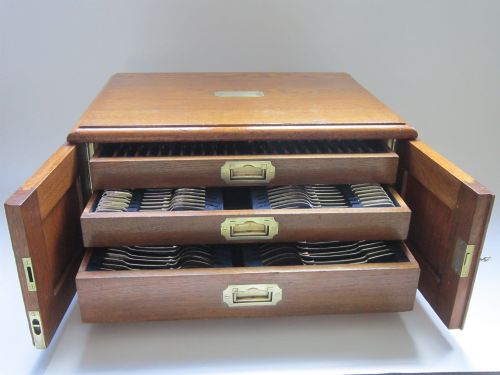
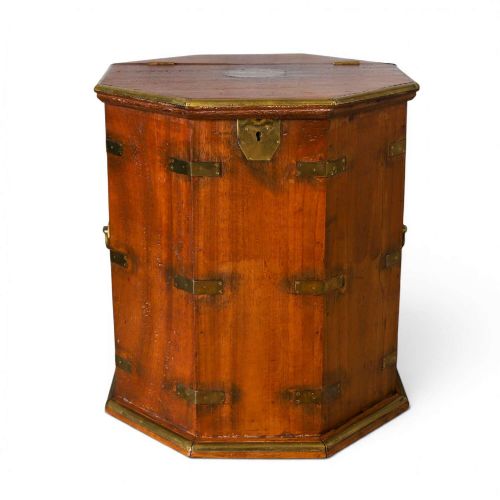


Victorian Campaign Chest Oak
A victorian campaign chest oak piece offers robust timber construction built for travel, combining fitted drawers and metal mounts to serve military life on the move.
Victorian Campaign Chest Oak
A victorian campaign chest oak piece brings together the sturdy storage of nineteenth-century military life and the durability of domestic timber. Buyers searching for a victorian campaign chest oak encounter functional forms such as split chests of drawers, silver chests, travelling trunks, and fitted specimen cases.
The pieces on this page span the nineteenth century, including specific dates from the eighteen-fifties, sixties, seventies, and eighties, alongside broader Victorian and military campaign styles. Many items carry specific regimental connections or inscriptions, reflecting their origins in service use.
Forms range from large iron-bound shipping trunks and silver boxes to compact gentleman's sporran chests, desk-top boxes, and secretaire chests of drawers. This variety reflects the diverse storage needs of officers and travellers during the period.
Distinctions in quality
Quality in these pieces rests on the integrity of the original construction, the presence of matching brass or iron mounts, and the survival of interior fittings. Pieces by recorded makers or those retaining legible regimental inscriptions hold distinct documentary interest.
The degree of wear shows in the timber and metalwork, distinguishing items subjected to heavy field service from those kept in domestic or officer quarters. Original linings, working locks, and untouched surfaces elevate individual examples.
The inventory includes items linked to the Boer War, the 69th Regiment, and the Highland Light Infantry.
Elkington·H D Dean
The Victorian Campaign Chest Oak Glossary
- Campaign chest
- A modular chest of drawers designed to split into sections for ease of transport during military deployment. These units usually feature recessed brass handles and corner brackets to prevent snagging.
- Silver chest
- A heavy storage trunk lined for cutlery or plate, constructed from thick oak and heavily banded in iron or steel. They protected valuable silver service during transit.
- Secretaire chest
- A chest of drawers incorporating a fitted writing drawer with small compartments and a fold-down desk surface. This allowed officers to manage correspondence in the field.
- Specimen case
- A small cabinet or chest intended for storing natural history samples or small collectibles rather than clothing. They contain neat internal drawers suited to delicate items.
- Fiddle pattern
- A traditional nineteenth-century flatware silhouette with a slender stem widening toward a cleft top. It appears frequently in fitted canteens from the period.
Victorian Campaign Chest Oak: Frequently Asked Questions
What is a campaign chest?
A campaign chest is a modular storage unit made in two or more stacking sections, designed for easy dismantling and transport by military officers on the move.
These pieces feature flush brass handles and protected corners to withstand rough handling during nineteenth-century journeys.
Why are these chests made of oak?
Oak provided the dense, resilient structural strength required for heavy travel and colonial service during the Victorian era.
Its natural durability made it the preferred timber for safeguarding valuable silver, documents, and personal equipment.
How do I identify a military chest?
Military chests typically display split-carcase construction, brass corner brackets, recessed drawer pulls, and carrying handles on the sides.
Many examples also bear regimental inscriptions, brass presentation plaques, or heavy iron banding for shipping.
What is a silver chest?
A silver chest is a heavily reinforced oak storage box fitted internally for holding plate, cutlery, or service silver.
They utilise robust iron or steel bindings and sturdy lifting handles to secure heavy loads during transport.
How should I care for an oak chest?
Keep the timber away from direct heat sources and sudden humidity changes to prevent the oak and metal mounts from shifting.
Apply a traditional wax polish occasionally to feed the wood and maintain the natural lustre of the surface.