

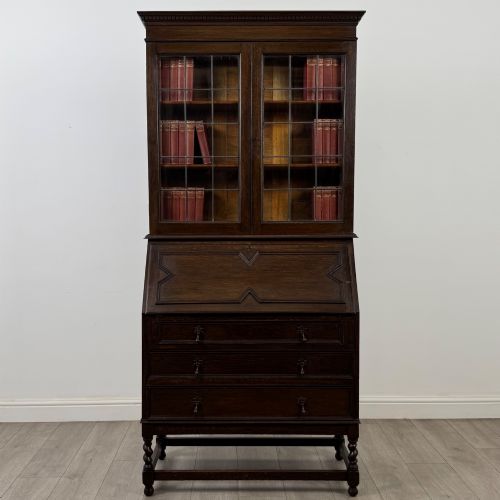
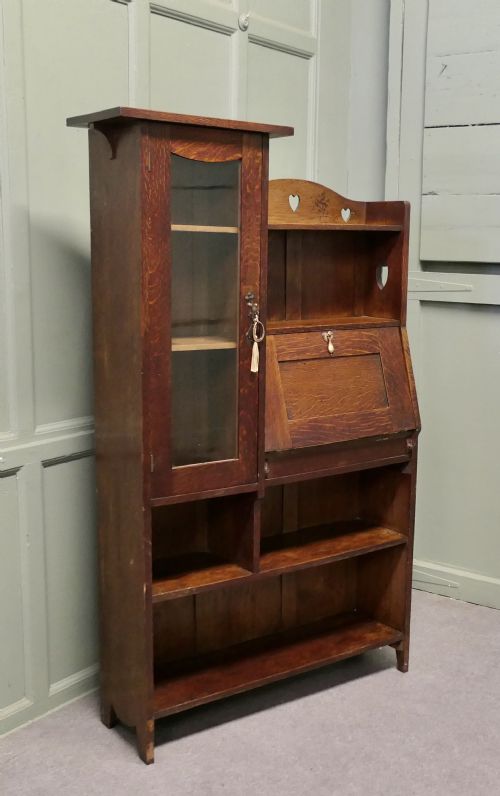


Oak Bureau with Bookcase
An oak bureau with bookcase combines a drop-front writing slope and enclosed shelving, offering sturdy practicality and classic storage for home studies.
Oak Bureau with Bookcase
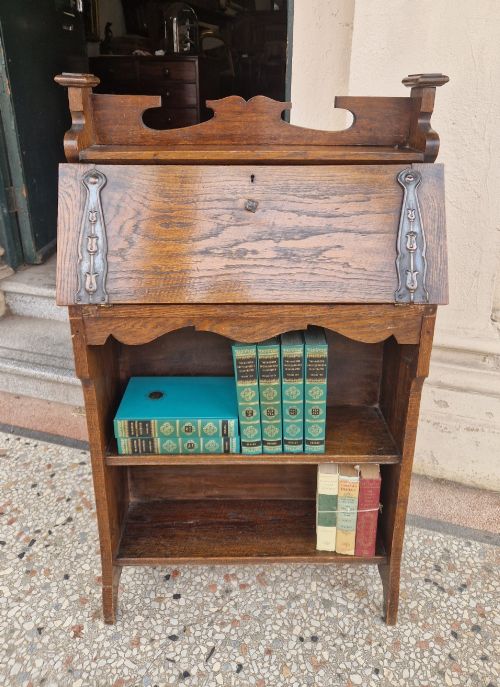
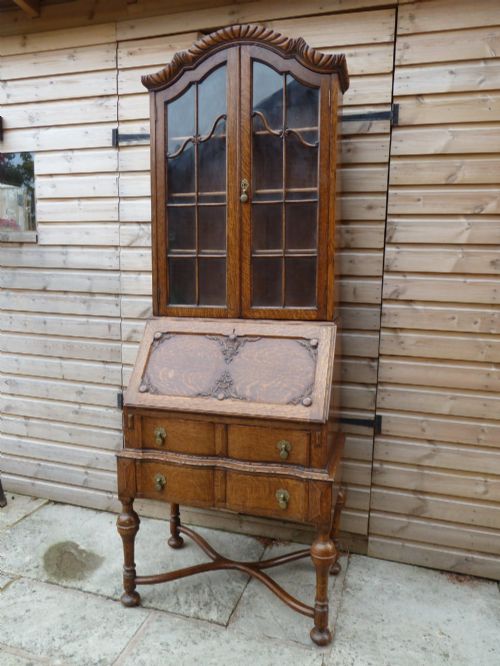
An oak bureau with bookcase is a dual-purpose piece of furniture that unites a slope-front writing desk with an upper shelving unit for books and papers. These combinations appear across multiple periods, including the eighteenth century, Georgian era, Edwardian period, and the nineteen-twenties.
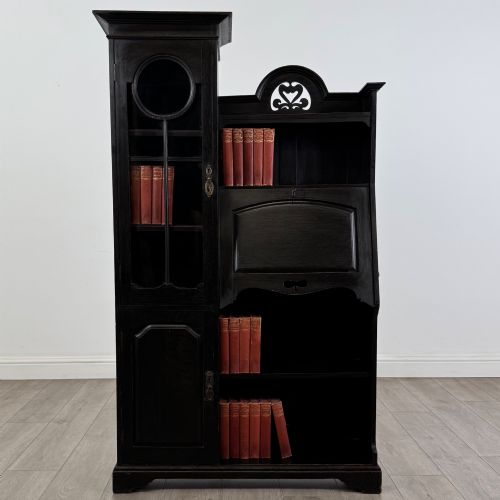
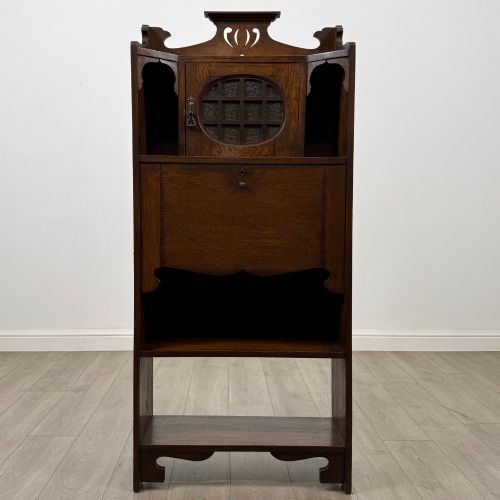
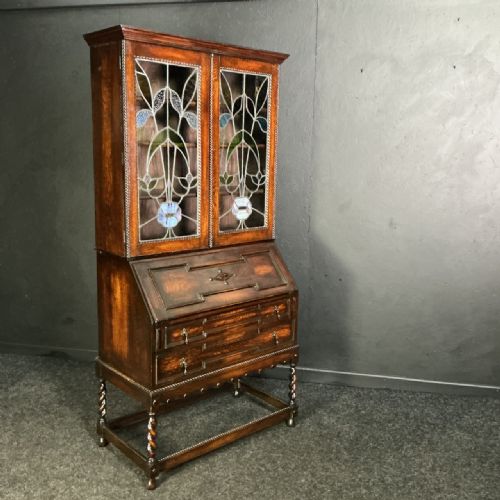
Buyers browsing this selection encounter various regional and stylistic interpretations, such as Arts and Crafts pieces with leaded or stained windows and Jacobean Revival influences. Proportions alter significantly between tall Georgian cabinetwork and smaller Edwardian or nineteen-twenties workspace furniture.
How they were made
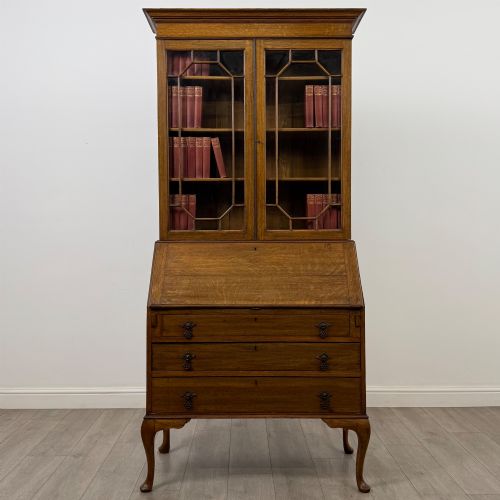
Construction relies primarily on solid oak, frequently paired with brass for handles, escutcheons, and hinges. Upper cabinet doors incorporate glass panes held by lead or wooden framing, occasionally featuring bevelled mirrors or stained glass panels.
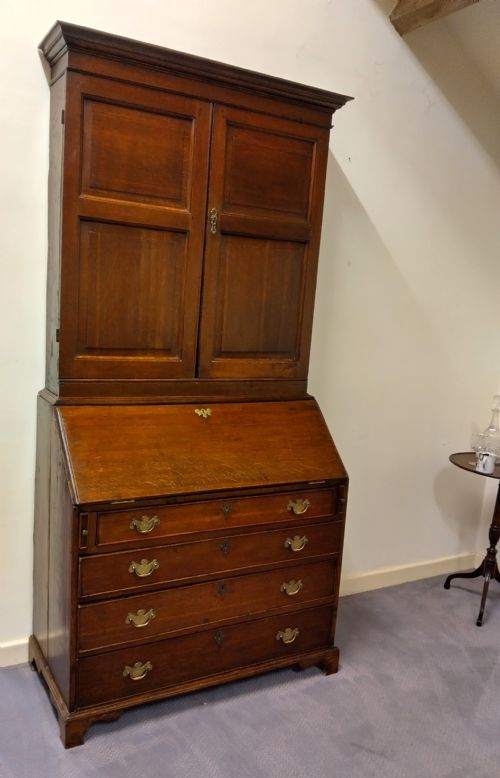
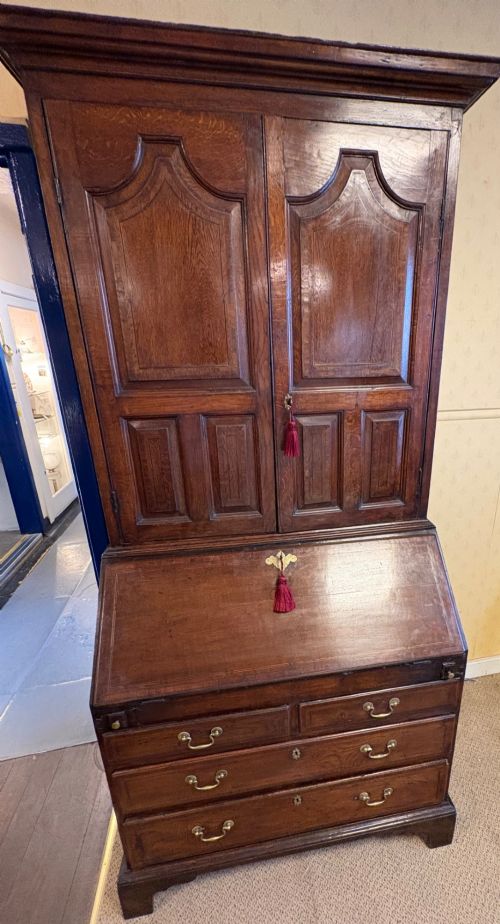
Cabinetmakers utilised traditional joinery to build the two-part carcasses, integrating crossbanding for decorative surface contrast on select eighteenth-century doors and drawers. Interiors of the writing compartments are meticulously fitted with tiny drawers, secret compartments, and stationery pigeonholes.
One early-eighteenth-century oak bureau bookcase has been adapted specifically to accommodate a television.
What varies in quality
The sophistication of the internal fittings defines much of the distinction between standard utilitarian desks and finer architectural cabinetwork. Step-front interiors, secret compartments, and finely arranged stationery dividers demonstrate superior craftsmanship.
Timber selection and exterior ornamentation also set pieces apart, from plain solid oak boards to those enhanced by crossbanding, brass panels, or architectural elements like arched broken pediments and dome tops.
The Oak Bureau with Bookcase Glossary
- Bureau bookcase
- A combination furniture form featuring a writing desk compartment below a shelving cabinet. The desk usually has a hinged fall-front or a roll-top.
- Fall-front
- A hinged writing flap that pulls down to form a horizontal desk surface. It conceals pigeonholes and small drawers inside.
- Crossbanding
- A decorative border technique where veneer strips are laid across the grain of the primary wood. This method frames drawer fronts and cabinet doors.
- Dome top
- A rounded upper canopy structure found on certain early eighteenth-century cabinets. It adds height and architectural presence to the piece.
- Secretaire bookcase
- A variation of the bureau bookcase incorporating a fitted writing drawer or drop-front desk mechanism. It serves the same dual purpose of storage and writing space.
Oak Bureau with Bookcase: Frequently Asked Questions
What is an oak bureau with bookcase?
An oak bureau with bookcase is a combined workstation and shelving unit made from oak. It brings together a drop-front desk and an upper cabinet for books.
These pieces provide workspace and storage within a single footprint. They appear in styles ranging from early eighteenth-century designs to nineteen-twenties editions.
How do I date an oak bureau bookcase?
Dating relies on observing construction methods, hardware, and stylistic traits like bracket feet or pediments. Eighteenth-century models often feature crossbanding and stepped interiors, whereas Edwardian and nineteen-twenties versions show lighter framing.
Hardware changes over time, from early brass drop handles to later bun handles and key-operated locks. Examining the interior drawer construction helps confirm the period of manufacture.
Are these pieces suitable for modern laptops?
Many fall-front and roll-top compartments accommodate compact modern laptops and tablets on the writing surface. The internal pigeonholes also hold modern stationery.
Buyers should measure the depth of the open writing flap against their specific computer dimensions. Some historical pieces have shallow writing surfaces intended for ledgers and letters rather than modern electronics.
How do I maintain oak furniture?
Oak furniture benefits from regular dusting with a soft, dry cloth to prevent dirt accumulation. Avoiding direct sunlight and sudden temperature shifts protects the timber and finish.
Periodic application of suitable wax preserves the lustre of the wood without building up heavy residue. Keeping the interior ventilated prevents moisture retention in enclosed cabinet sections.