




Oak Bureau Top Cabinet
An oak bureau top cabinet combines a fitted writing desk with upper shelving, offering practical workspace and display space in one sturdy piece.
Oak Bureau Top Cabinet
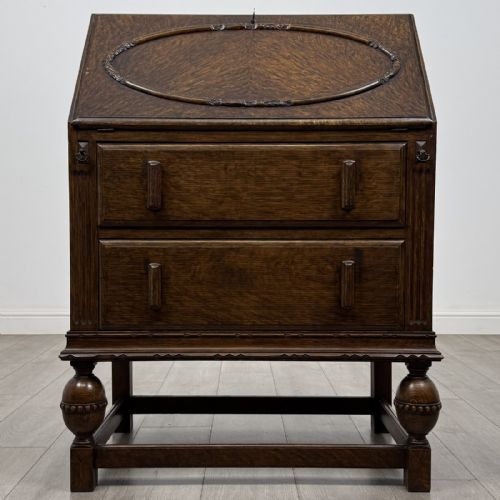
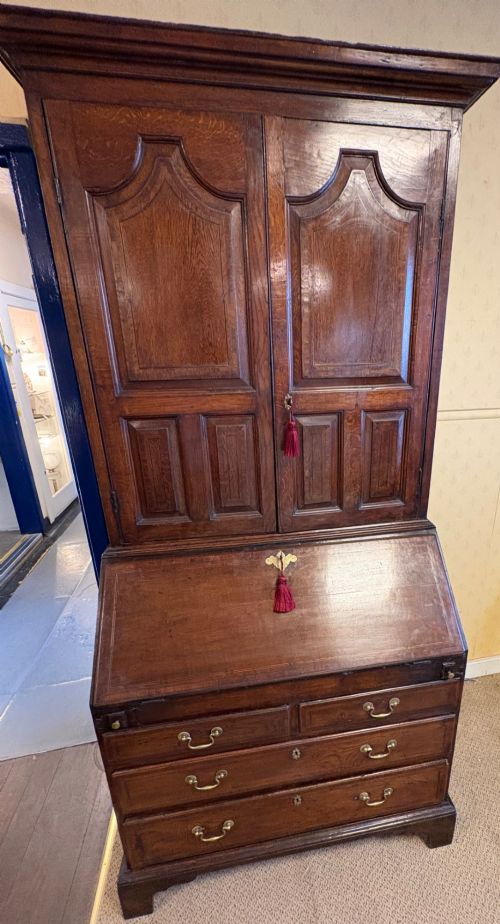
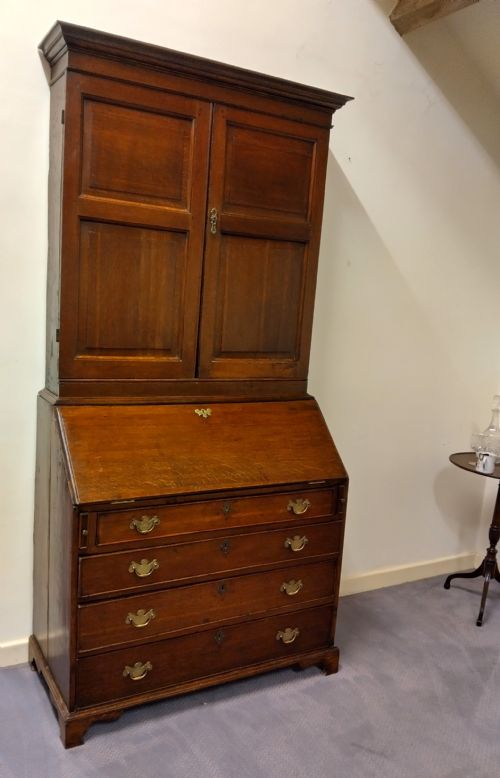
An oak bureau top cabinet is a dual-purpose piece of furniture that brings together a lower writing desk and an upper bookcase or cabinet. You will frequently encounter Edwardian and 1920s examples alongside pieces originating in the eighteenth and seventeenth centuries. The form spans multiple styles, including Georgian, Jacobean Revival, and Victorian interpretations of earlier designs.
How they were made
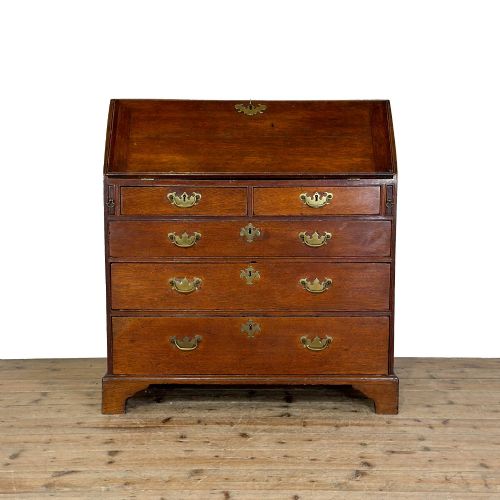
Solid oak serves as the primary structural material across these pieces, frequently complemented by burr oak veneers on finer surfaces. Cabinet makers utilised brass for handles, escutcheons, and hinges, while glass panels protect the upper shelving sections. Leather inserts occasionally line the writing surfaces of desks.
Construction techniques range from traditional hand-cut joinery on earlier centuries to industrial production methods in the twentieth century. Carving appears on specific styles, such as Victorian green man motifs or Jacobean Revival ornamentation, adding sculptural detail to the timber framework.
Oak Bureau Top Cabinet Retail Price Guide 2026
Typical asking prices for oak bureau top cabinet among the pieces listed under this phrase on Sellingantiques today, from the lower quarter to the upper quarter. They describe what is for sale here now, not the wider market.
Listings for this phrase include pieces spanning from the seventeenth century through to the Edwardian period and the 1920s.
What varies in quality
The grade of timber and the choice of veneers largely separate standard items from superior examples. A piece utilising finely figured burr oak displays a higher level of material selection than plain stock.
Interior architecture also defines quality, particularly the complexity of stepped pigeonholes, secret drawers, and fitted compartments inside the desk. The crispness of hand-carving and the integrity of the original glass and brass hardware further distinguish finer cabinets from later or simpler vernacular builds.
The Oak Bureau Top Cabinet Glossary
- Bureau bookcase
- A combination of a sloping writing desk and an upper shelving unit enclosed by doors. This form houses books above and writing materials below.
- Fall-front
- A hinged writing flap that pulls down to create a horizontal desk surface. It conceals internal pigeonholes and small drawers when closed.
- Davenport
- A compact form of small desk featuring a sloping top and side drawers. It often includes a stationery compartment on the upper section.
- Pigeonhole
- A small compartment within a desk interior used for sorting letters and papers. These compartments often form a stepped arrangement in better pieces.
Oak Bureau Top Cabinet: Frequently Asked Questions
How do I use an oak bureau top cabinet today?
These cabinets serve well as compact home workstations where you can close the fall-front to hide laptop computers and papers at the end of the day. The upper shelving provides practical display space for books or ceramics.
Ensure you measure your available wall space and ceiling height before purchase, as these combination pieces often reach substantial heights. Consider the clearance needed for the fall-front or roll-top mechanism when open.
How can I tell an eighteenth-century piece from a later revival?
Eighteenth-century examples display timber patination, hand-cut joinery marks, and construction methods appropriate to the period. Revival pieces from the Victorian or Edwardian eras often show machine-sawn timber and different interior secondary woods.
Examine the backboards, drawer linings, and hinges for consistency with known manufacturing dates. Secondary woods and fastener types provide reliable clues to the actual age of the cabinet.
How do I care for antique oak furniture?
Maintain oak surfaces by dusting with a dry lint-free cloth and applying occasional quality beeswax to nourish the timber. Avoid placing these cabinets near direct heat sources or strong sunlight, which can dry out the wood and warp panels.
Keep leather writing inserts conditioned with appropriate balms if present. Ensure the environment maintains stable humidity levels to protect both solid oak and any veneered sections.