

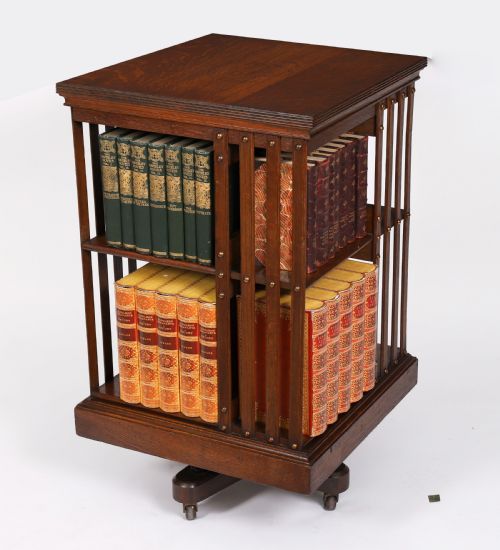


Oak Box on Stand
When you search for an oak box on stand, you are looking at utilitarian storage elevated onto dedicated legs, combining compact desk or chest forms with structural support.
Oak Box on Stand
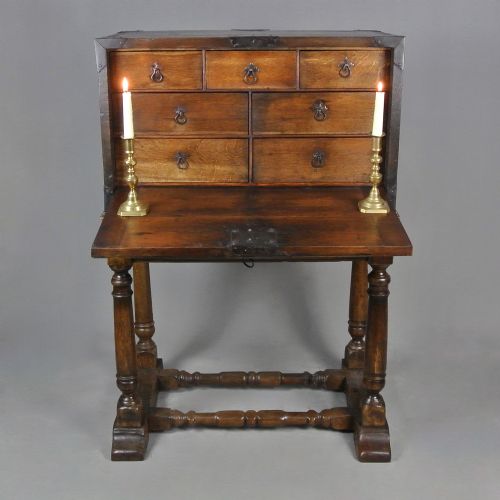
An oak box on stand brings together a closed container, often historically designed for scripture, documents, or valuables, and a raised supporting frame that places the storage at a convenient height for daily use. These pieces span centuries, appearing in sturdy seventeenth-century iterations alongside later Georgian and Victorian reinterpretations.
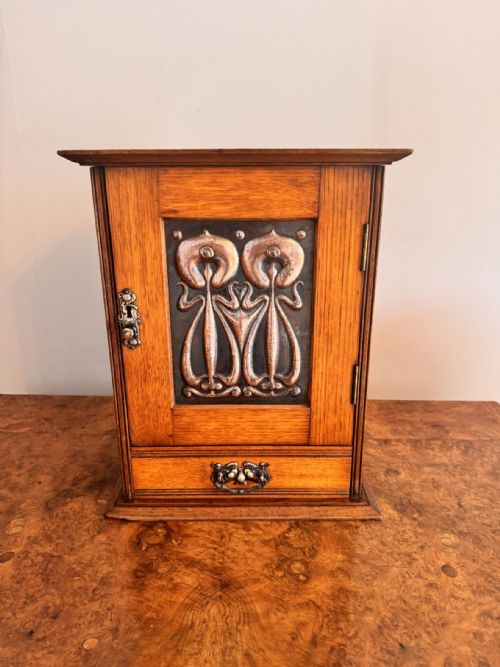
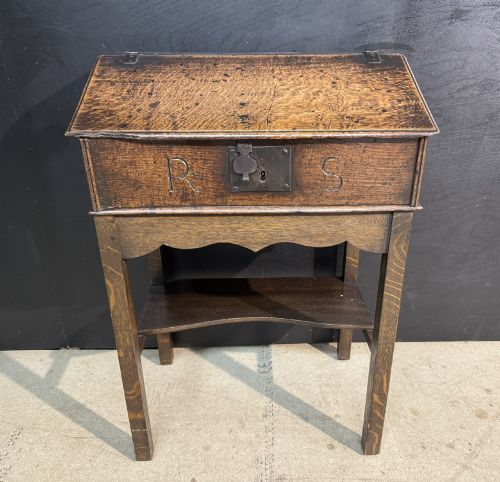
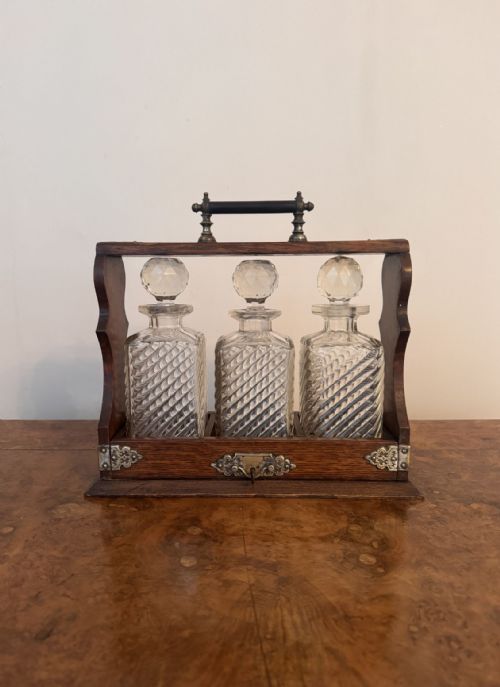
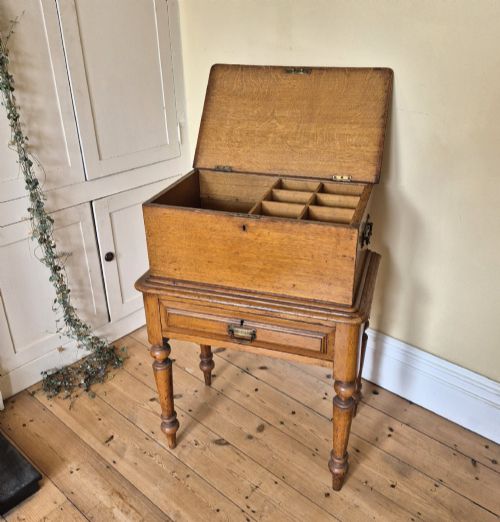
The format encompasses seventeenth-century bible boxes resting on period or later stands, along with writing slopes, storage chests, and specialised canteens or decanter cases raised off the floor. Seventeenth-century and eighteenth-century examples frequently combine earlier carved boxes with complementary stands, while nineteenth-century versions often present as unified pieces of furniture.
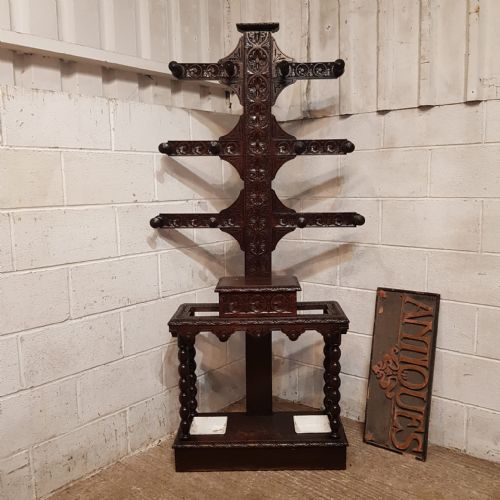
Buyers encounter everything from simple country house storage to heavily carved Jacobean revival desks and specialised utilitarian cabinets. The core function remains portable or stationary security for small items, translated into a freestanding furniture form that anchors a hallway, study, or living space.
How they were made
Cabinetmakers built these pieces primarily using solid English oak, chosen for its durability and prominent grain, frequently employing frame-and-panel construction to accommodate the natural expansion and contraction of the timber. Joinery relied on mortise and tenon joints secured with wooden pegs, ensuring structural rigidity for the box and its supporting stand.
Metalwork played a functional and decorative role, with heavy brass or iron hinges, lock plates, and drop handles fitted to secure contents and facilitate handling. Later nineteenth-century iterations introduced marquetry stringing, turned legs, and carved detailing reflecting prevailing Victorian and Arts and Crafts tastes.
Materials paired with oak across these records include brass, iron, cut glass, and silver plating found on tantalus frames and hardware.
What varies in quality
The relationship between the box and its stand dictates much of the piece's integrity, distinguishing integrated original constructions from marriages of older boxes to later replacement stands. Harmony in timber patina, proportion, and wear patterns across both elements separates superior historical examples from more disparate assemblies.
Carving depth, crispness of detail, and the retention of original hardware such as locks and hinges elevate individual pieces above plain utility. Superior examples exhibit thoughtful grain selection and refined joinery that withstands centuries of movement without compromising structural stability.
Mappin And Webb
The Oak Box on Stand Glossary
- Bible box
- A small, sloping-lidded wooden chest historically used to store household scriptures and documents. These boxes often formed the upper component before being placed upon dedicated stands.
- Stand
- The supporting frame, legs, or trestle base beneath a chest or cabinet. Stands can be contemporary to the box or added in subsequent centuries.
- Writing slope
- A box with an angled hinged lid designed to provide a comfortable writing surface. Inside compartments typically organise stationery and inkwells.
- Marquetry
- Decorative veneer work inlaid into the wood surface to form patterns or pictures. Craftsmen utilised contrasting timbers to create visual depth on box lids and drawer fronts.
- Canteen
- Fitted storage housing a set of cutlery or flatware. These containers frequently occupied a dedicated stand in dining rooms and large households.
Oak Box on Stand: Frequently Asked Questions
Are the boxes and stands always from the same period?
Many seventeenth-century bible boxes survive paired with eighteenth or nineteenth-century stands. Cabinetmakers frequently united older tabletop chests with newly constructed legs to create usable freestanding furniture.
Examining the timber colour, wear patterns, and joinery helps determine whether the base and top share a simultaneous origin or represent a later pairing.
What were bible boxes originally used for?
These compact lidded chests stored family Bibles, important documents, and valuable personal items in households before dedicated desks became common. Their sloping lids also served as a portable writing surface when rested on tables.
When placed upon a stand, the box transitioned from a tabletop object into a permanent room fixture for storage and correspondence.
How do I distinguish seventeenth-century oak from later revivals?
Seventeenth-century oak exhibits distinct medullary rays, deep hand-planed surfaces, and evidence of early iron nails or wooden trunnels. The timber shows dry, dense ageing and authentic patination accumulated over centuries of handling.
Revival pieces from the Victorian era often display machine-sawn consistency, sharper factory-cut carving, and brighter initial finishing beneath the wax.
How do I place an oak box on stand in a modern room?
These versatile pieces function effectively as side tables, hallway storage for small accessories, or compact writing desks in studies. Their elevated height allows them to occupy minimal floor space while offering internal organisation.
Pairing them with simple modern seating or placing them beneath wall mirrors highlights their historical texture without cluttering contemporary interiors.