

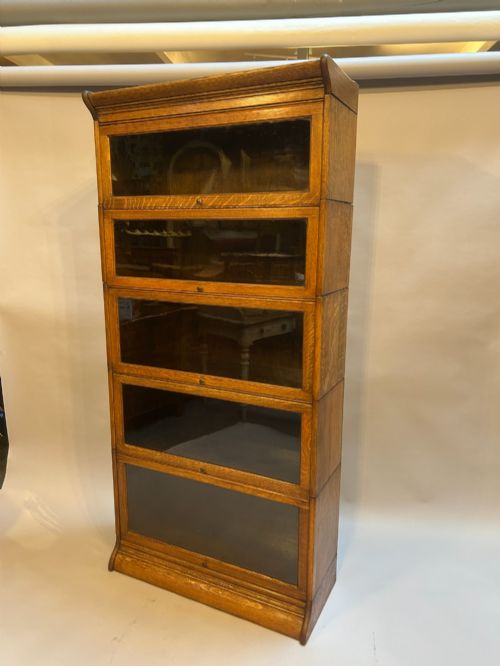
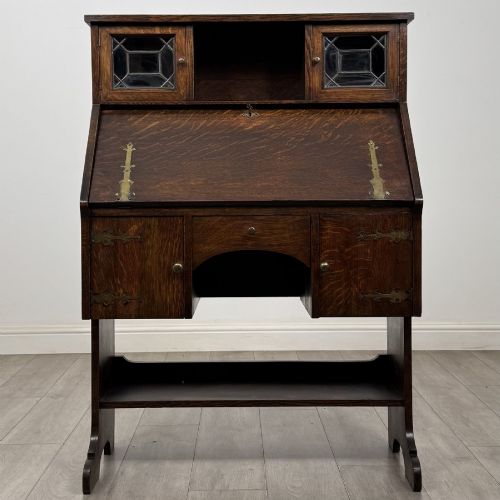
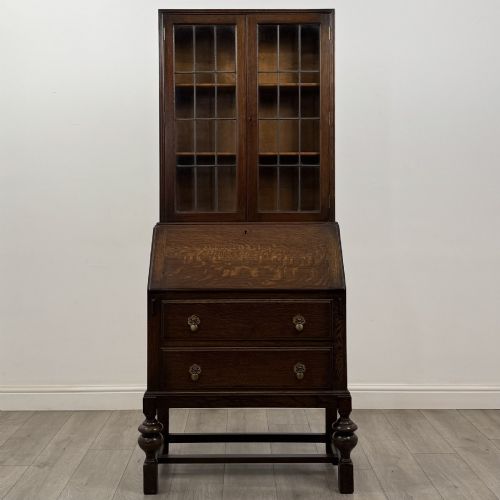
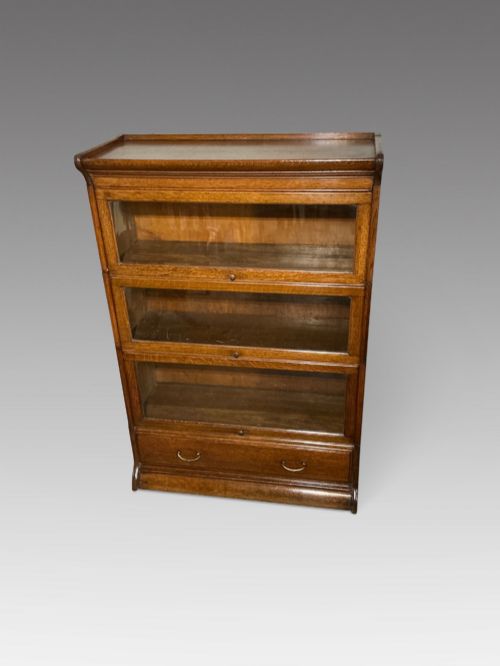
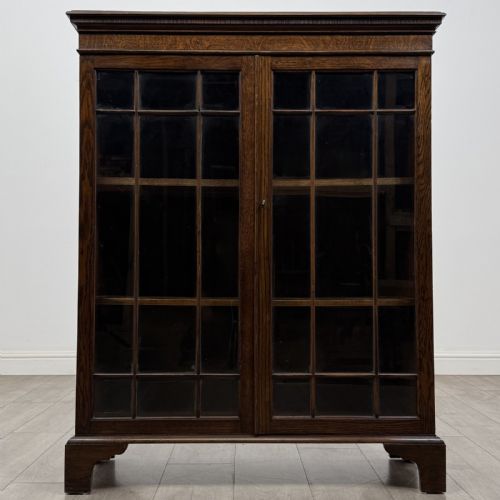
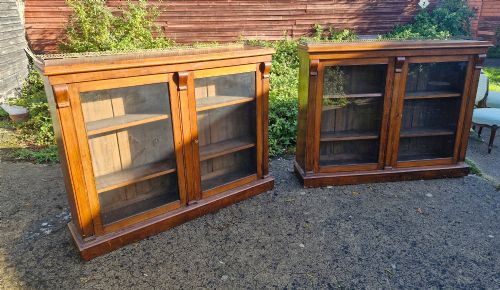
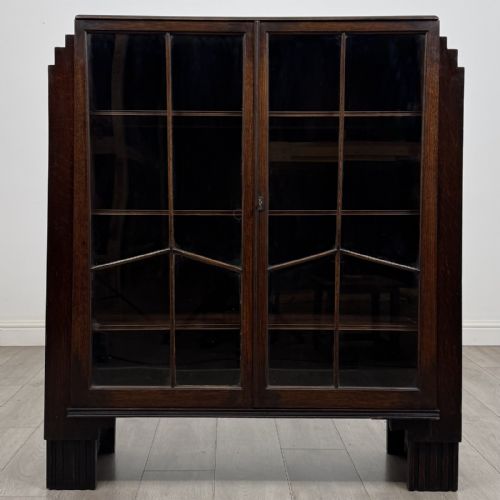
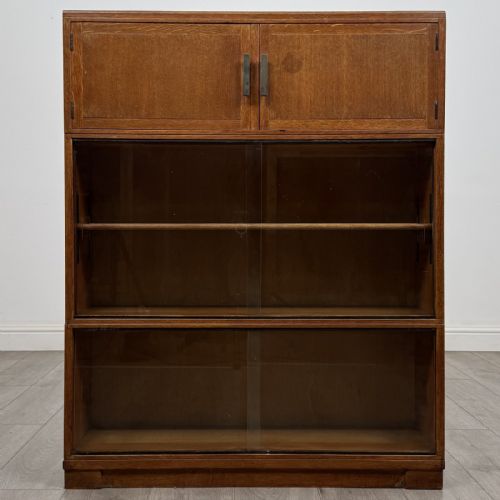
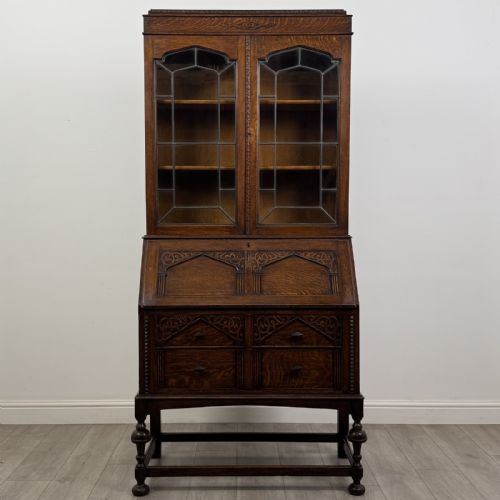
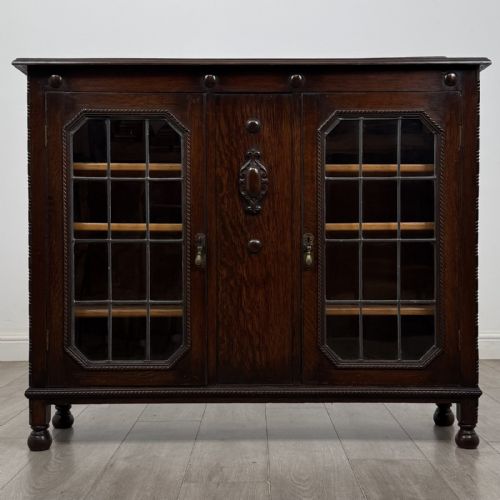
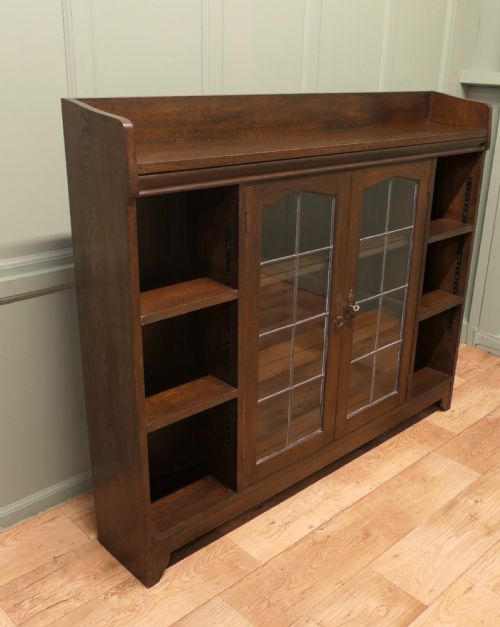
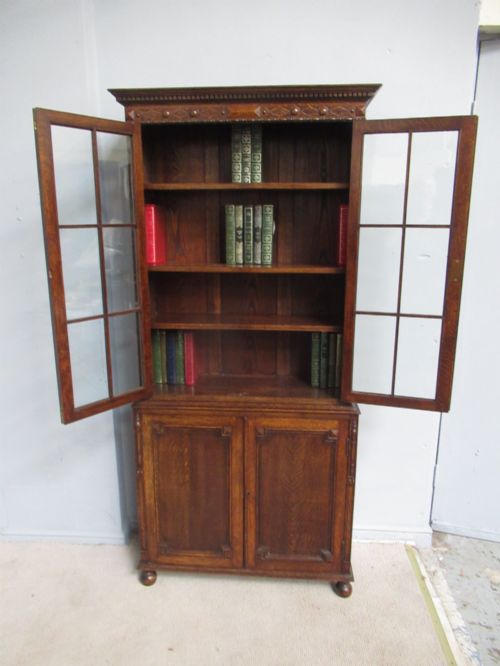
Oak Bookcase with Glass Doors
These oak bookcase with glass doors pieces combine sturdy timber with glazed panels to protect and display volumes, spanning Edwardian and later twentieth-century periods.
Oak Bookcase with Glass Doors
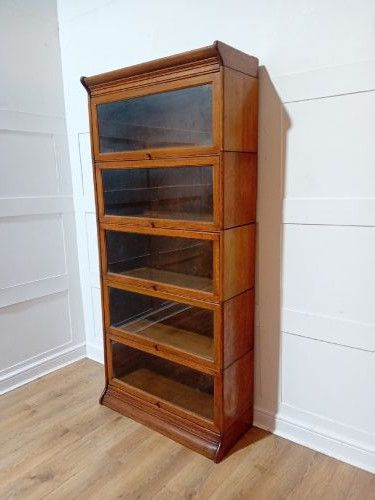
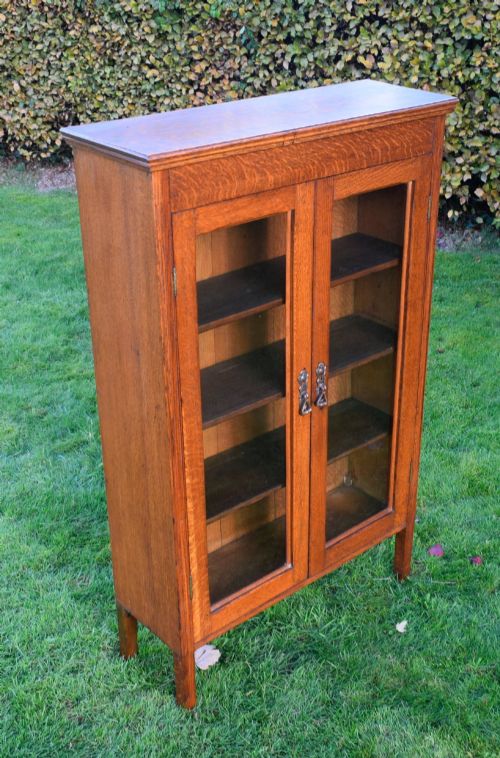
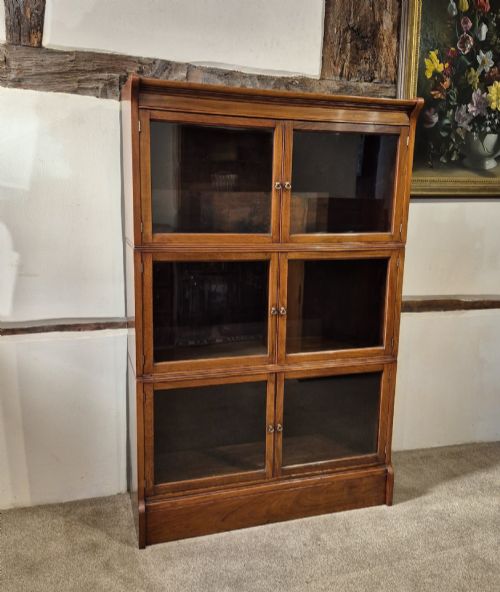
An oak bookcase with glass doors serves primarily to house libraries while keeping volumes visible yet secure from dust. The items gathered here range from floor-standing display cabinets and office bookcases to sectional barrister designs.
Edwardian examples appear frequently alongside pieces from the nineteen-tens, nineteen-twenties, and nineteen-thirties. Buyers encounter variations including open shelving, two-door glazed cabinets, and stacking units.
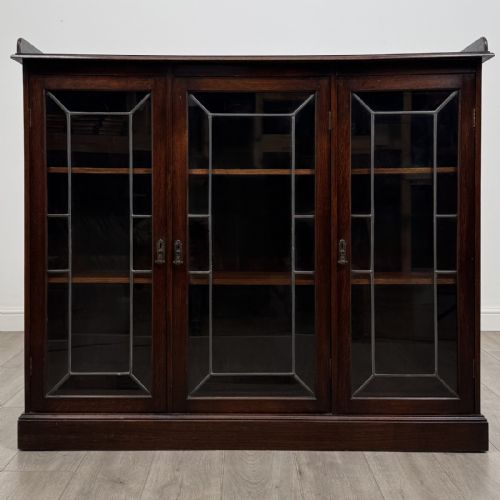
Stylistic influences vary across the selection, drawing upon Arts and Crafts, Art Deco, and Jacobean Revival traditions. Certain formats incorporate leaded glass or internal mirrors to enhance the display.
What varies in quality
Mechanical execution in sectional or stacking systems dictates the smooth operation of sliding or lifting glass doors. The integrity of the oak framing and the clarity of the glass panels further define the standard of individual cabinets.
Oak Bookcase with Glass Doors Retail Price Guide 2026
Typical asking prices for oak bookcase with glass doors among the pieces listed under this phrase on Sellingantiques today, from the lower quarter to the upper quarter. They describe what is for sale here now, not the wider market.
Some barrister bookcases feature clever lifting glass doors designed so lawyers could retrieve reference volumes without standing up.
Globe Wernicke·Minty·Liberty
The Oak Bookcase with Glass Doors Glossary
- Barrister bookcase
- A modular office bookcase featuring stacked sections with upward-lifting glass doors. This design allowed legal professionals to transport and expand their libraries easily.
- Leaded glass
- Small panes of glass joined together by lead cames to form geometric or decorative patterns. It frequently appears in Edwardian and Arts and Crafts cabinet doors.
- Globe Wernicke
- A prominent maker name associated with sectional stacking bookcases. Their patented modular system revolutionised how offices stored growing collections of books.
- Gallery
- A low decorative railing or pierced upstand positioned along the top edge of a cabinet or cupboard. It provides a finished architectural profile to smaller oak pieces.
- Veneer
- A thin layer of superior oak applied over a secondary wood base to provide a decorative surface. This technique permits stable construction while displaying choice grain patterns.
Oak Bookcase with Glass Doors: Frequently Asked Questions
What is a barrister bookcase?
A barrister bookcase utilises a stacking design with individual tiers that feature glass doors lifting upward on metal pivots. This format allowed legal professionals to stack units vertically and access volumes quickly.
Such sectional pieces are constructed in oak, frequently incorporating leaded glass panels within the doors to secure professional libraries.
How do I date an oak bookcase?
Dating relies on stylistic clues and construction methods observed across Edwardian, Arts and Crafts, and early twentieth-century examples. Details like leaded glass, gilt brass mounts, and gallery tops point toward specific decades between nineteen-hundred and nineteen-thirty.
Comparing the hardware and overall proportions helps determine whether a piece belongs to the Edwardian period or the interwar decades.
Where were these bookcases used?
These cabinets served primarily in domestic libraries, studies, and professional offices to organise and protect bound volumes. Floor-standing display versions allowed owners to exhibit curated collections alongside books.
Smaller cupboards with glazed doors functioned effectively in restricted spaces, combining enclosed storage with a top display surface.
What is golden oak?
Golden oak refers to a warm, honey-toned finish applied to oak timber to highlight the natural grain pattern. It appears commonly on Edwardian and vintage twentieth-century display cabinets.
This treatment brightens the appearance of the timber compared to darker Jacobean Revival finishes.