


Oak Book Trough Stand
These oak book trough stand pieces combine practical reading storage with solid timber construction, offering a sturdy home for volumes in any room.
Oak Book Trough Stand
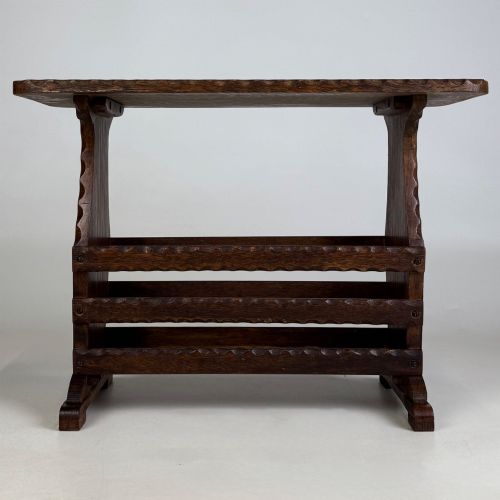
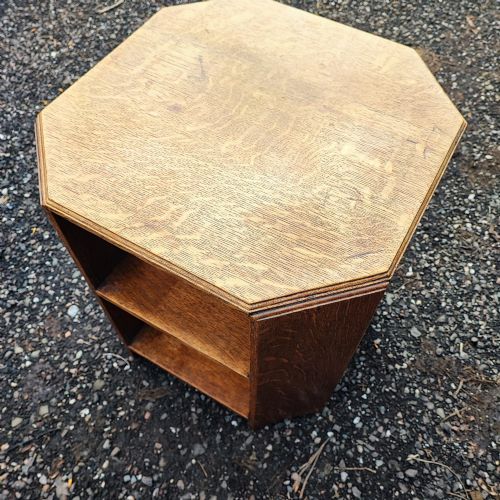
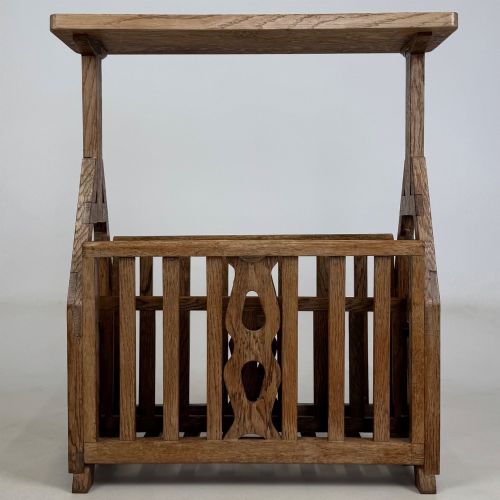
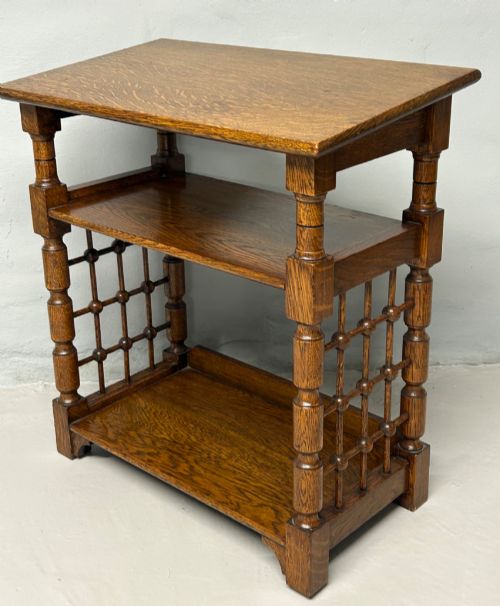
An oak book trough stand serves as a dedicated holder for volumes, combining open troughs, sloping shelves, and occasional tables designed for easy access to reading material. You will frequently encounter Edwardian and Arts and Crafts examples, alongside Victorian Gothic Revival pieces and later 1930s designs.
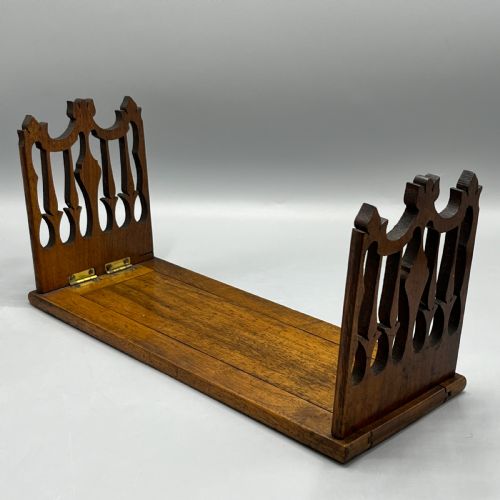
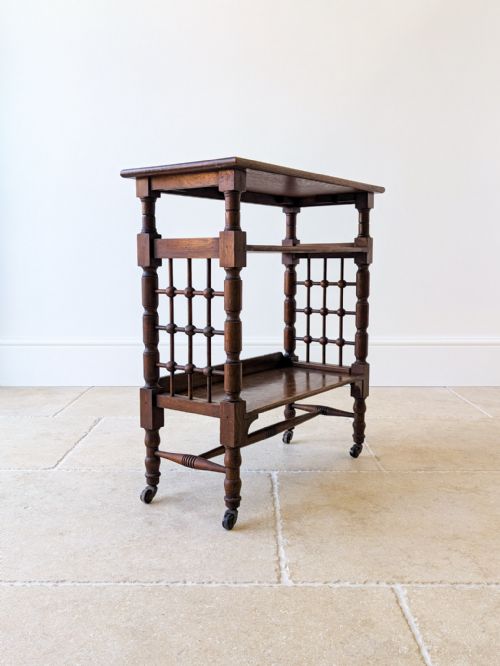
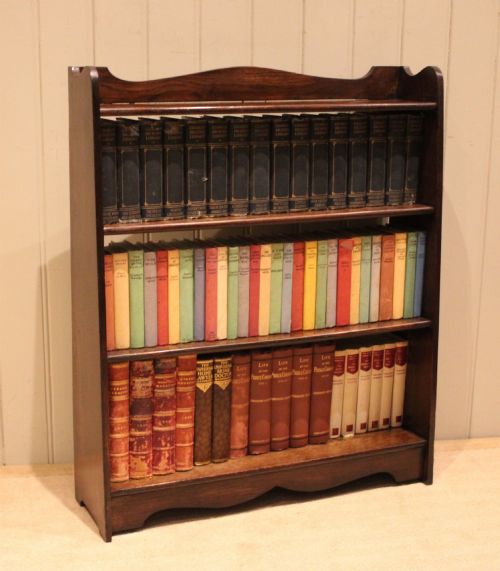
The forms range from compact table-top revolving bookcases and extending book slides to multi-tiered stands, side tables with integrated magazine racks, and floor-standing open bookcases. Most pieces date from the late nineteenth century through to the interwar period, reflecting domestic reading habits of the era.
Makers and designers of the period, including Arthur Simpson and workshops in the manner of Liberty or attributed to Heal's, produced these items to suit domestic libraries, studies, and firesides. The overarching oak book trough stand category bridges functional utility and period craftsmanship.
How they were made
Makers relied primarily on oak as the principal timber, utilising its durability and pronounced grain to build rigid frames for book storage. Golden oak variants and darker fumed finishes appear across the selection, often highlighting the natural figuring of the wood.
Construction frequently incorporates brass fittings for extending mechanisms or hinges, alongside cane panels in select designs. Joinery methods range from traditional pegged mortise and tenon joints seen in Arts and Crafts pieces to simpler mechanical adjustments on extending book slides.
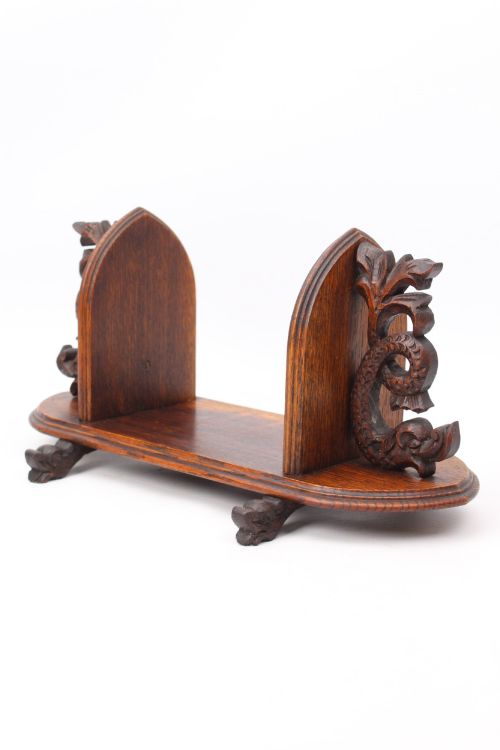
A few whimsical pieces incorporate carved horses and novel animal rests to guard your daily reading.
What varies in quality
The division between standard workshop production and superior craftsmanship rests on the depth of hand-carving, the crispness of chamfered edges, and the selection of quarter-sawn oak boards that display attractive medullary rays. Pieces bearing maker labels or attributed to notable workshops command attention for their documented provenance.
Structural integrity depends on the tightness of the joinery in weight-bearing troughs and shelves, particularly in metamorphic or extending items where moving parts must operate smoothly without sagging.
Arthur Simpson·Liberty
The Oak Book Trough Stand Glossary
- Book trough
- An open-topped container designed to hold books upright or at a slight angle for easy title viewing.
- Arts and Crafts
- A design movement emphasising handcraftsmanship, simple forms, and local materials rather than mass-produced ornamentation.
- Gothic Revival
- An architectural and decorative style drawing inspiration from medieval forms, featuring pointed arches, heavy mouldings, and carved tracery.
- Metamorphic
- Describing furniture that transforms from one form into another, such as a table converting to incorporate a rack or stand.
- Extending book slide
- A desktop stand with adjustable ends that expand or contract to hold a varying number of volumes securely.
Oak Book Trough Stand: Frequently Asked Questions
What is an oak book trough stand used for?
These stands provide accessible storage for everyday reading material, keeping volumes upright and close to hand beside a chair or desk.
They serve both functional and decorative roles in a home library, study, or living room.
How do I date an oak book stand?
Dating relies on stylistic markers such as Arts and Crafts joinery, Victorian Gothic carvings, or later Art Deco lines.
Construction details, timber finishes, and occasional maker labels or stamps also help narrow down the period of origin.
Where should I place a book trough in a room?
Compact table-top versions sit well on side tables or desks, while floor-standing variants fit neatly beside firesides or armchairs.
Their open construction allows easy access to books from multiple angles in a study or reading nook.
Are these stands suitable for heavy books?
Solid oak construction provides the natural strength required to support rows of heavy volumes without warping the base.
Well-joined frames distribute weight evenly across the shelves and troughs during daily use.