


Vintage Oak Magazine Holder
A vintage oak magazine holder keeps periodicals tidy with the honest grain and warmth that only solid timber brings to a room.
Vintage Oak Magazine Holder
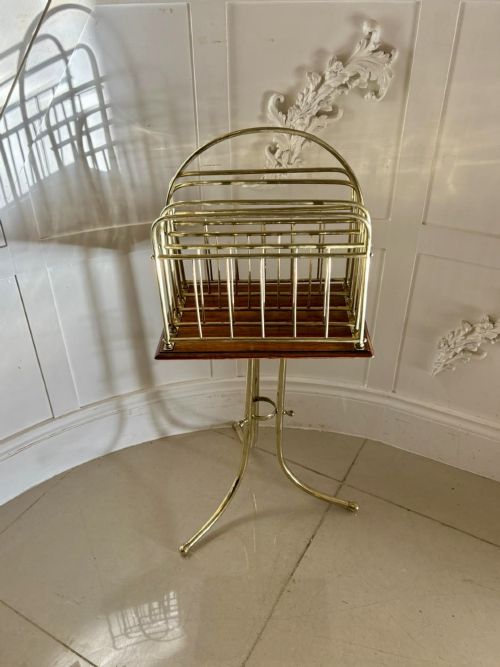
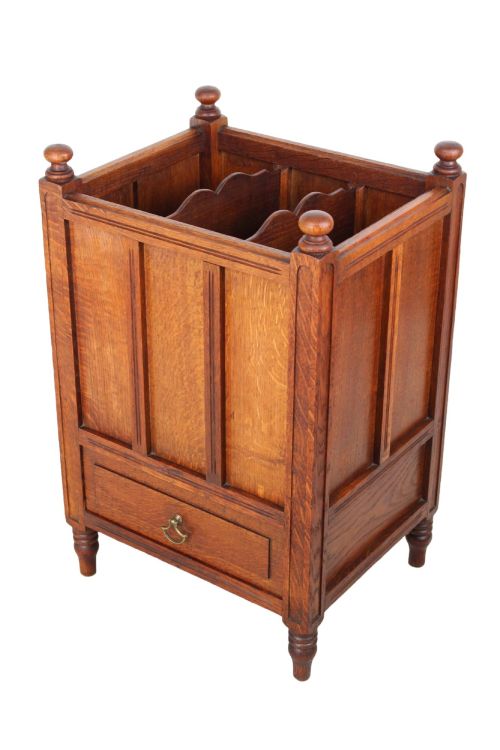
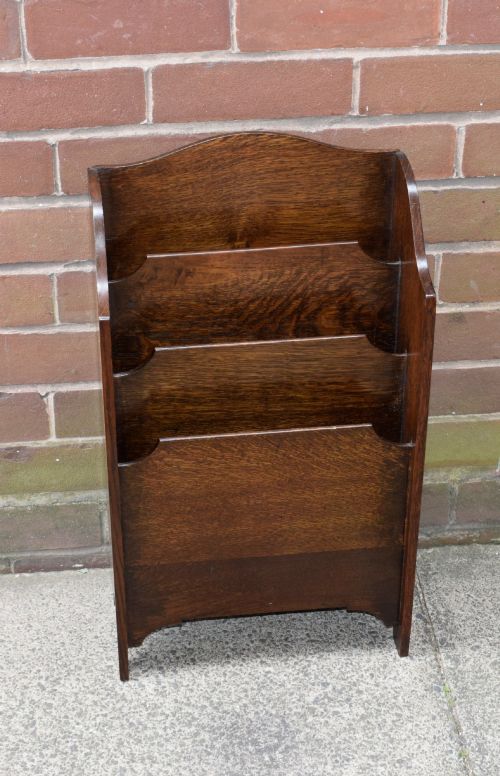
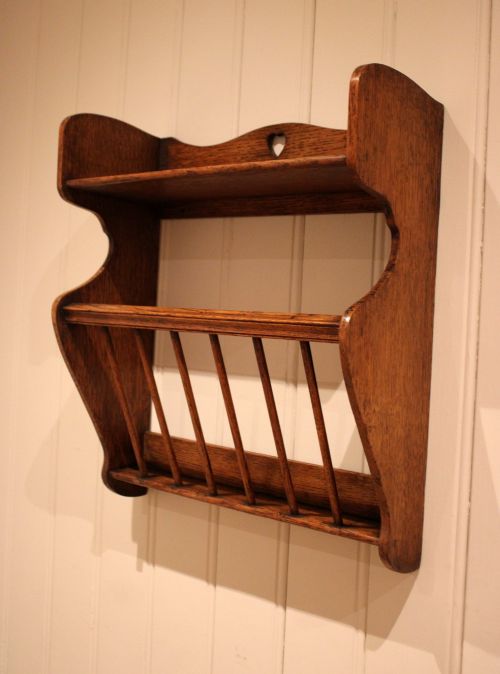
A vintage oak magazine holder takes several distinct forms, including freestanding floor stands, chairside newspaper racks, and wall-mounted shelves equipped with compartments. You will frequently encounter Edwardian and Victorian examples alongside pieces from the 1920s and 1930s.
Many of these items function as versatile household furniture, doubling as canterbury stands or metamorphic pieces that combine shelf space with dedicated slots for periodicals. The heavy grain of oak dominates these designs, often accented by brass handles, feet, or fittings.
Makers working in the Arts and Crafts style produced many of the standout items found in this category, prioritising sturdy construction and visible timber characteristics. These functional accessories suit studies, living rooms, and hallways where everyday clutter needs a tidy home.
Materials and construction
The primary material across these pieces is solid oak, selected for its durability and strong grain pattern, sometimes complemented by contrasting satinwood details. Cabinet makers utilised traditional joinery techniques to ensure these stands could handle the daily weight of newspapers and heavy magazines.
Metal elements appear frequently in the form of brass mounts, carrying handles, and decorative bars that support the wooden dividers. These brass components were often cast or polished to contrast against the dark or natural tones of the aged oak.
Listings span the Victorian and Edwardian eras alongside the 1920s and 1930s, constructed primarily from oak with occasional brass and satinwood accents.
Assessing quality and craftsmanship
Superior examples of a vintage oak magazine holder display thoughtful design details such as integrated brass fittings, crisp carving, or clever metamorphic mechanisms. The integration of satinwood inlay or well-executed Arts and Crafts joinery elevates a piece above standard utility items.
Lower tiers of quality tend to feature plain, unadorned construction with simpler box joints and minimal attention to the finish of the timber. A heavier, more stable frame with solid brass hardware indicates a higher standard of original manufacture.
The Vintage Oak Magazine Holder Glossary
- Canterbury
- A low, open-partitioned stand originally designed for holding sheet music, newspapers, or periodicals. These often feature carrying handles and small feet or castors.
- Metamorphic
- Furniture designed to transform into another form or serve multiple distinct functions. In this category, it describes stands that adapt their configuration for storage.
- Arts and Crafts
- A design movement spanning the late nineteenth and early twentieth centuries that emphasised handcrafting, honest construction, and simple forms. Pieces from this era celebrate natural wood finishes.
- Satinwood
- A pale, durable hardwood with a lustrous sheen, frequently utilised for decorative stringing or inlay work on oak furniture. It provides a bright contrast to darker timbers.
Vintage Oak Magazine Holder: Frequently Asked Questions
Where should I place a magazine holder?
These holders suit living rooms beside armchairs or sofas, keeping daily papers within arm's reach. They also fit nicely in hallways or studies to prevent clutter on desks and tables.
The compact footprint allows them to tuck into narrow gaps between furniture. Standing them away from direct heat sources protects the timber from drying out over time.
How do I clean antique oak?
Dust the timber regularly with a soft, dry cloth to prevent grit from settling into the grain. Apply a traditional beeswax periodically to nourish the wood and maintain its natural lustre.
Avoid using modern silicone sprays or harsh chemical cleaners, as these strip the aged patina. Gentle care preserves the historical surface finish of the oak.
Can these hold heavy books?
Most models are engineered for newspapers, magazines, and periodicals rather than heavy hardback volumes. The internal partitions and base slats suit lighter reading material.
Overloading the compartments with encyclopaedias or large folios risks straining the internal dividers. Stick to standard periodicals to ensure the longevity of the joints.
How do I date an oak rack?
Examine the hardware, joinery methods, and overall stylistic influences to narrow down the era. Edwardian and Victorian pieces often show distinct turning, brass fittings, or characteristic Arts and Crafts motifs.
Patina and the method of construction offer reliable clues regarding age. Comparing the wood colour and wear patterns helps distinguish between nineteenth-century and later twentieth-century production.