
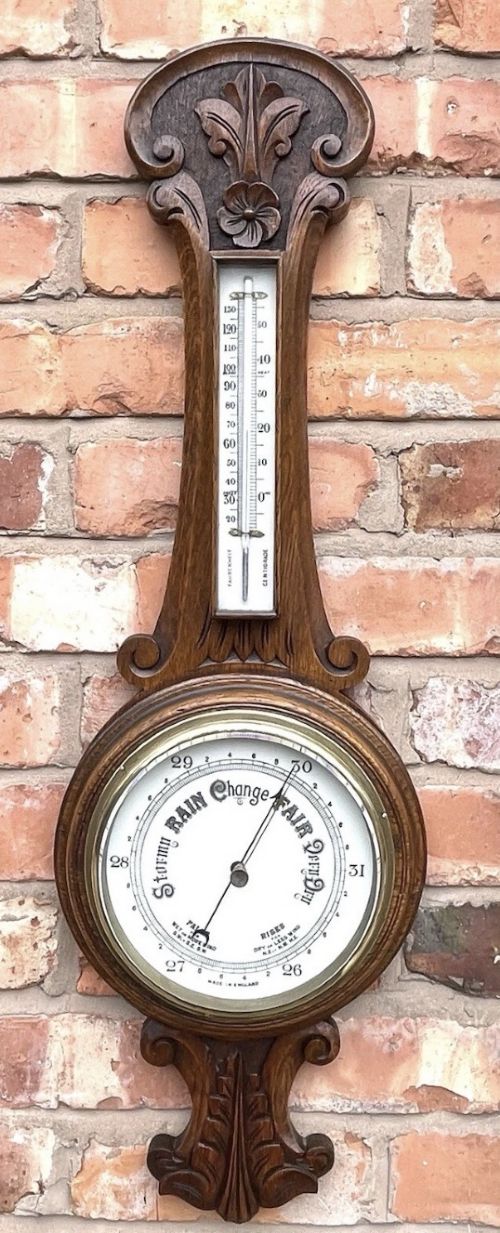


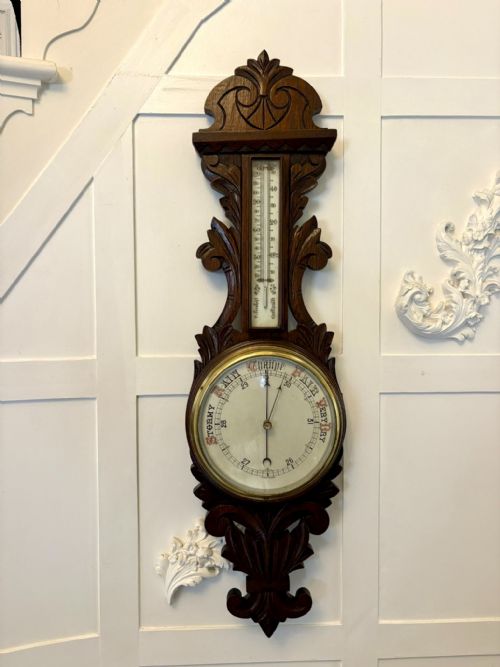


Oak Barometer Thermometer
These oak barometer thermometer combinations combine domestic weather tracking with solid timber cabinetry.

Oak Barometer Thermometer
An oak barometer thermometer brings together atmospheric pressure tracking and temperature recording within a timber housing. The search phrase covers domestic weather instruments produced across the nineteenth and early twentieth centuries.
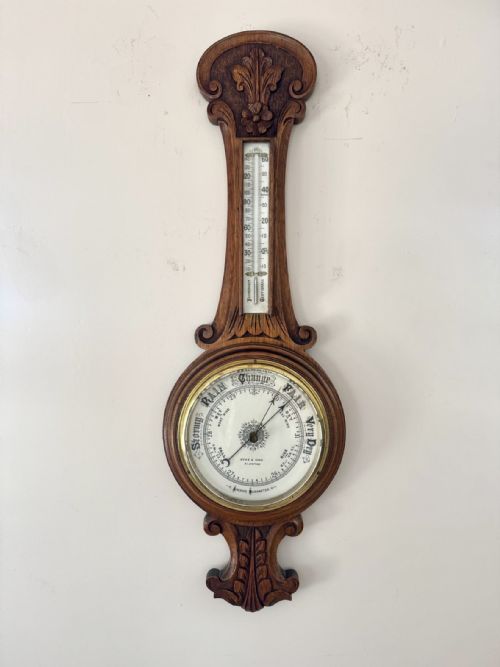
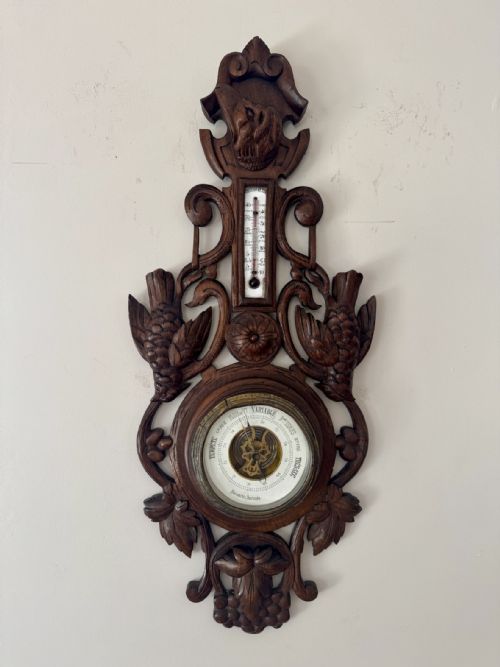
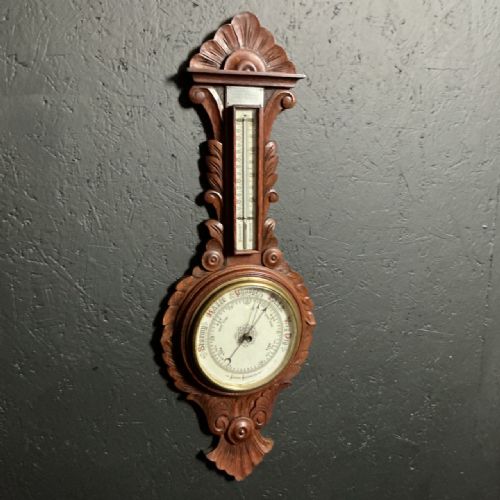
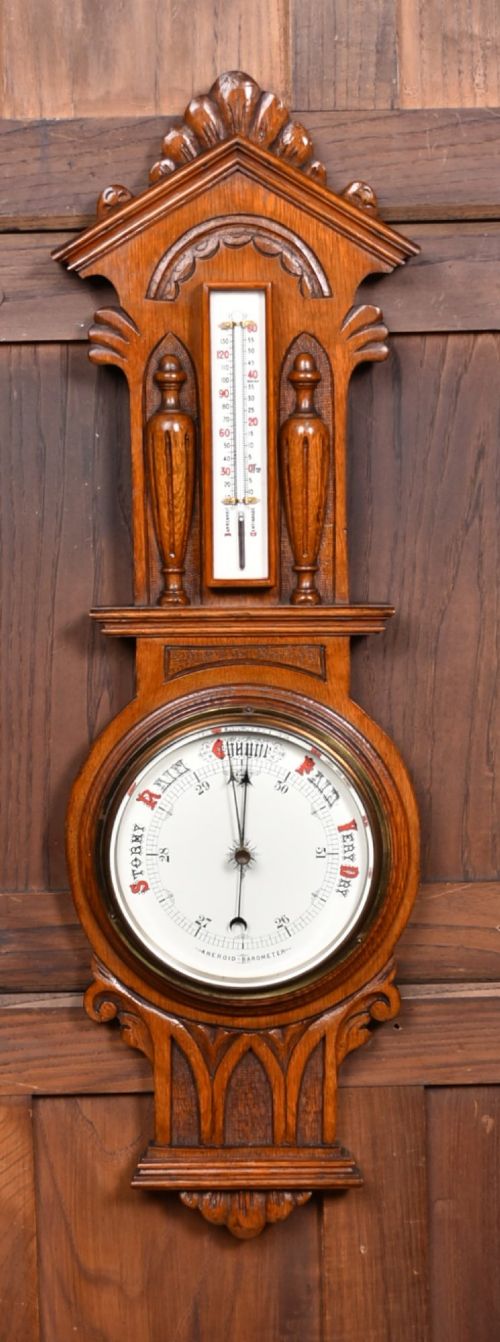
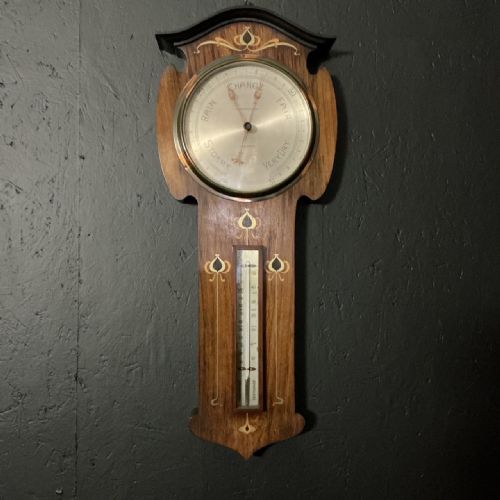
Most examples found here date from the Victorian and Edwardian periods, manifesting primarily as carved banjo barometers, wall-hanging instruments, and desk sets. The timber framework relies heavily on oak, occasionally presented in honey tones or polished finishes.
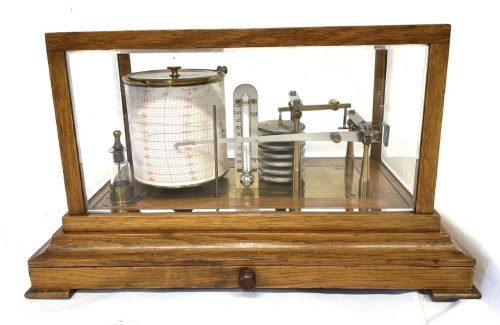
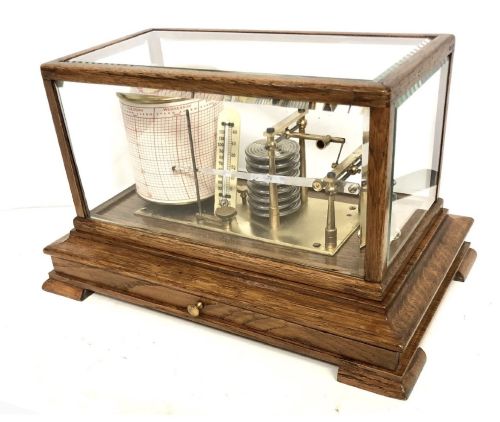
Makers integrated mercury tubes, aneroid dials, and crescent thermometers into the timber panels. Certain pieces incorporate bevelled glass and chart drawers for recording weekly barographic shifts.
How They Were Made
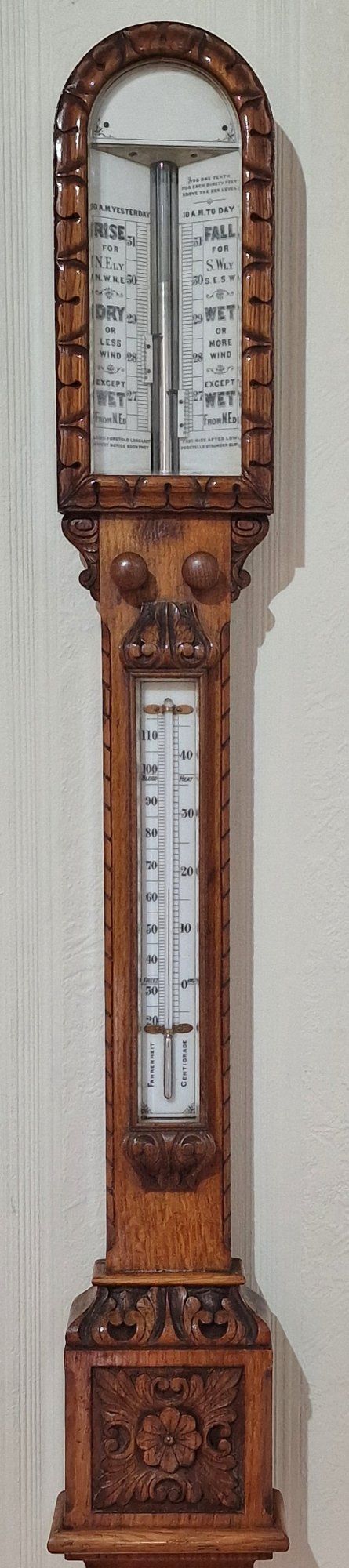
Cabinet makers utilised solid oak and carved wood to house delicate scientific instruments. Craftsmen shaped the timber into banjo profiles, architectural desk clocks, and stick barometer trunks.
Brass fittings, steel components, and bevelled glass protect the dials and thermometer scales. Makers incorporated ceramic elements and porcelain faces alongside traditional paper charts.
Listings feature scientific instruments alongside domestic weather stations incorporating ceramic and porcelain components.
What Varies In Quality
Quality rests upon the depth and precision of the timber carving, particularly on Black Forest and Victorian wall pieces. Crisp execution of avian motifs or foliate scrolls separates standard production from superior examples.
The reputation of the maker and the legibility of the scientific scale influence the standing of an instrument. Signed brass dials by established opticians denote higher manufacturing standards.
Hyde & Sons Sleaford·Negretti & Zambra·W Watson & Sons·J Hughes London·Maple & Co·Jules Richard·Dobbie son and Hutton London·Charles Baker London·Carpenter and Westley·J Hicks of London
The Oak Barometer Thermometer Glossary
- Aneroid barometer
- An instrument that measures atmospheric pressure through the expansion and contraction of a sealed metal capsule, avoiding the use of liquid mercury. This mechanism allowed makers to construct compact banjo and wall-hanging instruments.
- Stick barometer
- A tall, vertical instrument containing a mercury column that rises and falls with barometric pressure. These pieces typically display an exposed glass tube backed by a wooden trunk.
- Barograph
- A mechanical weather recording device that plots barometric pressure onto a rotating paper chart over time. These enclosed oak cases frequently feature glazed panels and integrated thermometers.
- Banjo barometer
- A household weather station shaped with a circular dial at the top and an extended lower trunk carrying a thermometer. Victorian and Edwardian makers often decorated these frames with elaborate wood carvings.
- Crescent thermometer
- A curved temperature scale housed within the timber case alongside the main pressure dial. This configuration appears frequently on ship barometers and Victorian wall instruments.
Oak Barometer Thermometer: Frequently Asked Questions
How do I read an aneroid barometer?
The pointer indicates current atmospheric pressure, while the secondary manual needle tracks changes. Tap the glass lightly to settle the mechanism before reading.
Rising pressure points towards improving weather, whereas falling pressure signals approaching rain or wind.
Where should I hang a wall barometer?
Select an interior wall away from direct sunlight, radiators, and draughty doors. Temperature fluctuations can interfere with the internal calibration.
Secure the instrument firmly to a wall plug or timber stud to support the weight of the oak case.
How do I date an oak barometer?
Examine the style of the wood carving, the shape of the dial, and the fastening screws. Victorian pieces often feature heavy foliate carving and exposed mercury tubes.
Edwardian instruments tend towards simpler oak frames and aneroid dials signed by the retailer or maker.
What is the difference between mercury and aneroid instruments?
Mercury barometers use a column of liquid metal balanced against atmospheric pressure. They represent traditional scientific methods common in earlier nineteenth-century pieces.
Aneroid instruments use a sealed vacuum box, making them safer to move and easier to mount in decorative wooden banjo frames.