



Oak Barley Twist Pedestal
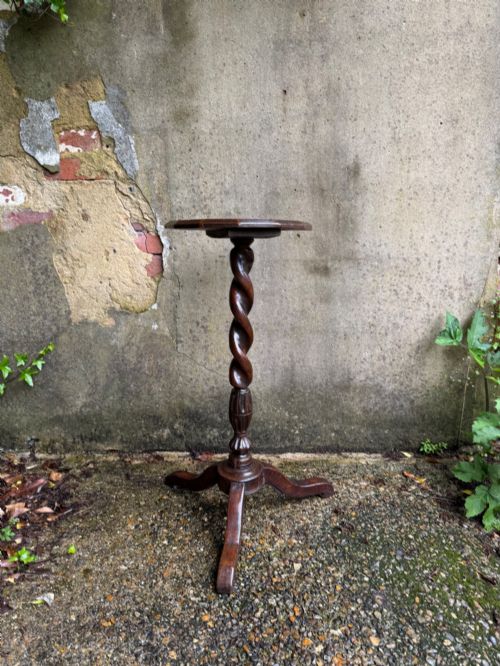
An oak barley twist pedestal brings sturdy timber and helical turning together to elevate ornaments, plants or lamps in a room.
Oak Barley Twist Pedestal
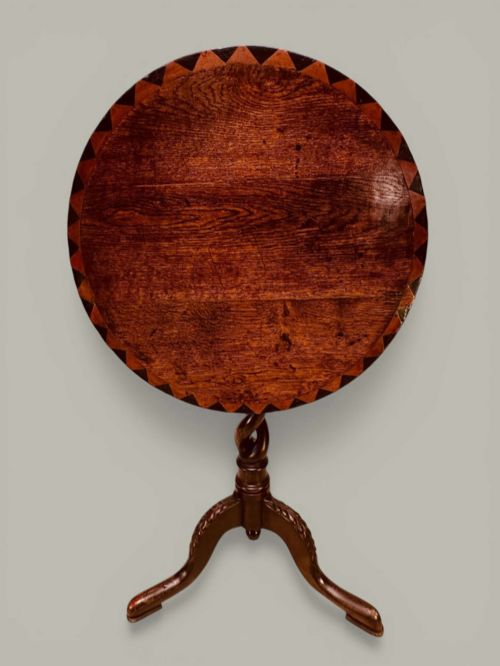
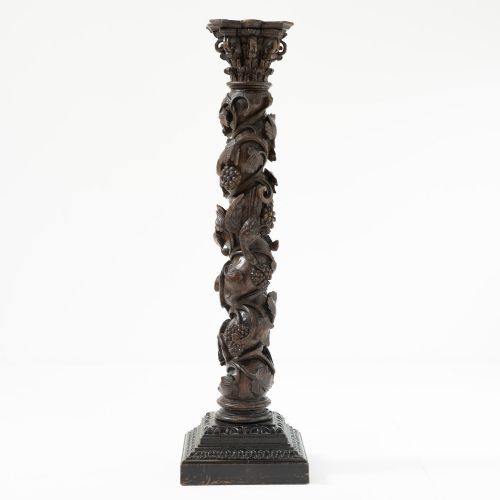
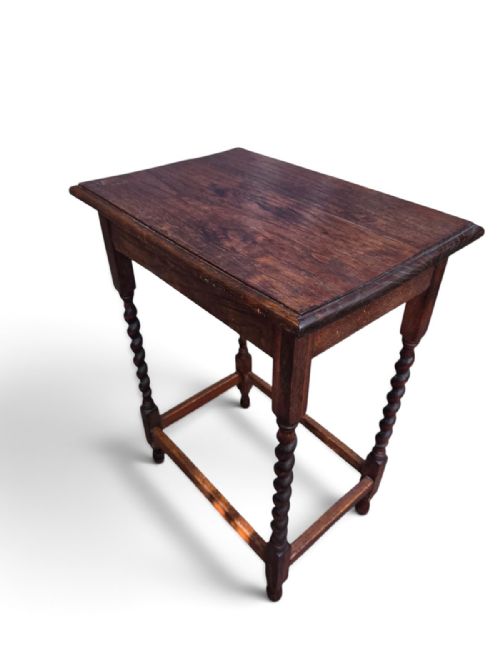
When you search for an oak barley twist pedestal, you are looking at turned columns, plant stands, and occasional furniture rooted in seventeenth-century revival styles. These pieces range from compact stands designed for a single floral arrangement to substantial architectural columns meant to bear heavy urns or sculptures.
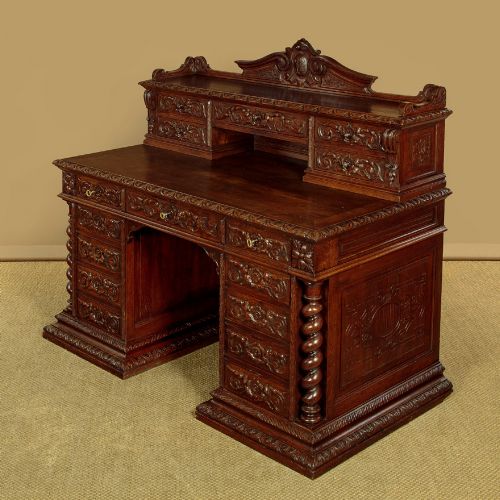
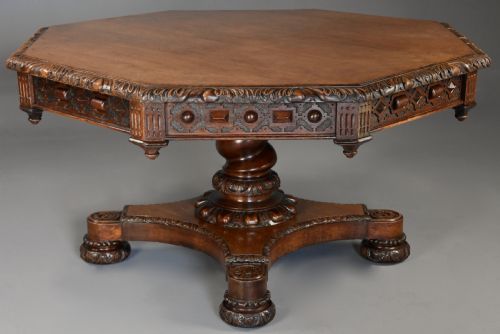
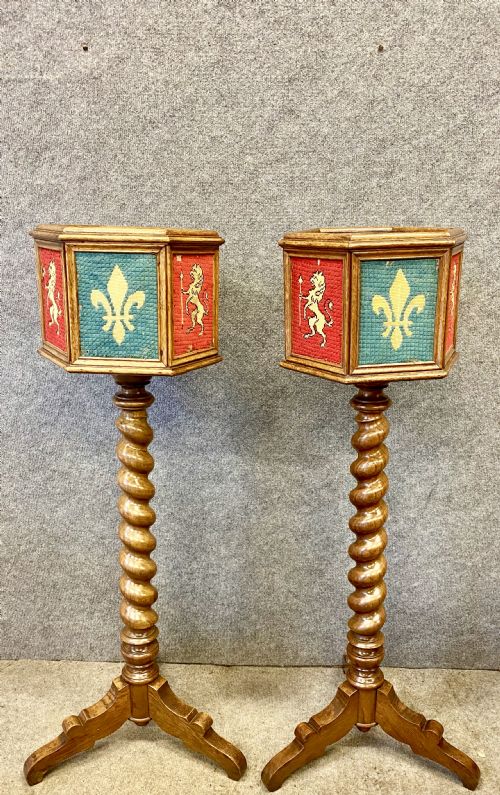
The versions you are most likely to meet on this page date from the nineteenth and early twentieth centuries, drawing on Jacobean, Carolean, and Victorian Renaissance design vocabularies. They appear in forms such as single plant stands, jardinières, and matched pairs of spiral pillars intended for display.
Makers of these stands utilised solid timber, frequently shaping the central shaft with a continuous diagonal spiral that catches the light. The overall effect relies on the rich grain of the wood and the depth of the hand-turned twist.
Assessing quality and proportion
Quality in an oak barley twist pedestal rests on the crispness of the turning and the symmetry of the spiral. Superior examples exhibit deep, clean cuts in the timber with no splintering or flattening along the helical ridges.
The stability of the base dictates functional excellence, as taller stands require heavy, well-balanced feet to support weight safely. Proportion between the turned shaft and the upper and lower platforms determines whether a piece maintains visual harmony.
Oak Barley Twist Pedestal Retail Price Guide 2026
Typical asking prices for oak barley twist pedestal among the pieces listed under this phrase on Sellingantiques today, from the lower quarter to the upper quarter. They describe what is for sale here now, not the wider market.
Listings feature items spanning the eighteenth to the twentieth centuries, utilising solid oak alongside brass and metal components.
The Oak Barley Twist Pedestal Glossary
- Barley twist
- A decorative turning technique resembling a spiral rope, popular in seventeenth-century English furniture and revived during the Victorian era. It creates dynamic shadow lines along the vertical shaft of a stand.
- Solomonic
- A helical column design associated with Baroque architecture and grand furniture forms. The twist curves rhythmically from base to capital.
- Jardinière
- An ornamental pot or stand designed to hold growing plants or floral arrangements. In these listings, it often describes plant stands with integrated container holders.
- Jacobean Revival
- A nineteenth-century style imitating the heavy, dark oak furniture of the early seventeenth century. Pieces from this movement frequently feature geometric mouldings and turned supports.
- Capital
- The uppermost member of a column or pedestal, designed to distribute the weight of an object placed on top. It often receives decorative carving in revivalist pieces.
Oak Barley Twist Pedestal: Frequently Asked Questions
What were oak barley twist pedestals used for?
These pieces served primarily as elevated platforms for display in domestic interiors, holding potted plants, bronze sculptures, or heavy ceramic urns.
In larger rooms, matched pairs framed doorways or fireplaces, while smaller single stands functioned as plant holders or occasional side tables beside seating.
How do I date an oak pedestal?
Dating relies on examining the construction methods, timber patination, and the specific revival style influences present in the carving. Nineteenth-century examples often display machine-assisted turning combined with hand-finishing, whilst earlier pieces show distinct hand-tool marks.
The context of the hardware, where present, and the colour of the oak grain also help distinguish Victorian production from later twentieth-century interpretations.
Are these stands strong enough for heavy items?
Solid oak construction provides substantial weight and structural integrity, making most pedestals capable of supporting heavy bronze figures, large planters, or table lamps.
The stability depends largely on the width of the base and how securely the central shaft joins the upper and lower platforms.
How do I care for antique oak furniture?
Maintaining the finish requires regular dusting with a dry, soft cloth to prevent particulate build-up in the deep grooves of the barley twist. Avoiding direct sunlight and sudden temperature shifts preserves the moisture content and natural colour of the oak timber.
Occasional application of appropriate wax polish helps protect the surface grain without creating a heavy buildup.