

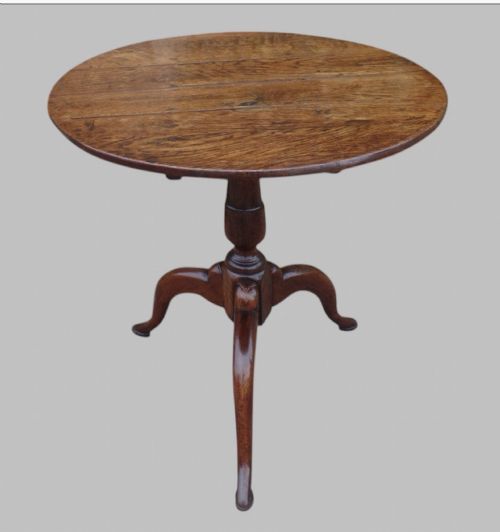
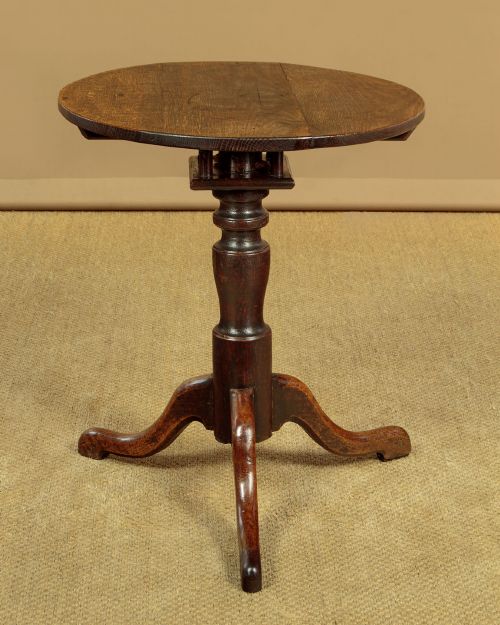
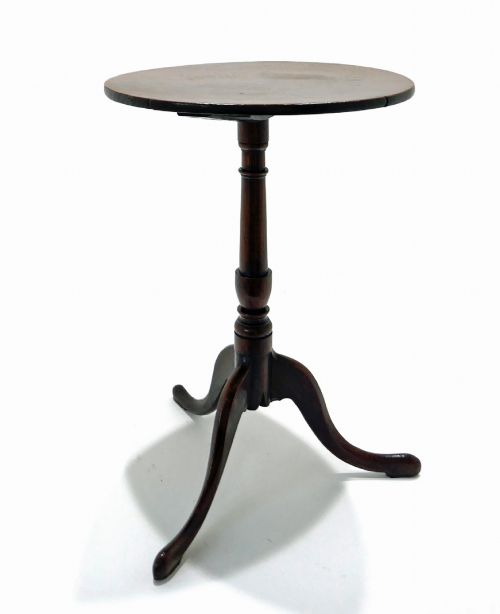


Oak Occasional Column Stand
These oak occasional column stand examples bring practical surface space and architectural form into a room.
Oak Occasional Column Stand
An oak occasional column stand serves as a versatile small table or plant support, typically taking the form of a tripod base supporting a central shaft and a flat top. When searching for an oak occasional column stand, collectors encounter diverse configurations ranging from late Victorian plant holders to vernacular occasional tables and tilt-top designs. The pieces on this page span several centuries, including eighteenth-century country examples, Georgian tripod tables, and later nineteenth-century interpretations.
The dominant form across the listings is the tripod table, featuring three legs radiating from a central pillar to ensure stability on uneven floors. These tables often incorporate circular or rectangular tops, sometimes with tilt mechanisms for convenient storage against a wall when not in use. Materiality remains consistent to the genre, relying heavily on solid English timber with occasional contrasting woods for visual interest.
How they were made
Cabinet makers constructed these pieces using solid oak, frequently selecting native timber for its durability and strong grain patterns. Selected examples incorporate yew wood or burr wood accents to add decorative contrast to table tops and structural elements.
Joinery techniques relied on traditional methods suited to turning and framing, such as mortise and tenon joints for the underframes and secure lathe work for the central columns. Hardware such as brass components appears selectively for hinges, catches, or adjustments on tilt-top variants.
Oak Occasional Column Stand Retail Price Guide 2026
Typical asking prices for oak occasional column stand among the pieces listed under this phrase on Sellingantiques today, from the lower quarter to the upper quarter. They describe what is for sale here now, not the wider market.
A daring plant pot once risked a watery catastrophe on a tilting top.
What varies in quality
Proportion and balance dictate the distinction between standard utilitarian furniture and superior examples, particularly in the relationship between the slender column and the supporting legs. Finer pieces demonstrate careful consideration of timber selection, showing rich patination and harmonious grain alignment across the top.
Refinement in turning and the execution of the tripod base separate simpler vernacular items from more accomplished Georgian works. The crispness of edge profiles on table tops and the structural integrity of the central pillar assembly reveal the original maker's skill.
Gillows
The Oak Occasional Column Stand Glossary
- Tripod table
- A small occasional table supported by three legs radiating from a central column. This construction style prevents wobbling on uneven domestic floors.
- Tilt-top
- A tabletop hinged to the central column so it can be flipped into a vertical position. This clever mechanism allows the furniture to be stored flat against a wall when not in use.
- Vernacular
- Objects made by local craftsmen following regional traditions rather than metropolitan academic designs. These pieces often display charmingly honest construction methods.
- Barley twist
- A decorative turning style resembling a twisted rope, carved into furniture legs or support columns. It gained popularity during the seventeenth century and saw revivals in later periods.
- Patina
- The surface sheen and mellow colour developed by wood over decades of handling, light, and polishing. It serves as a visual indicator of age and careful maintenance.
Oak Occasional Column Stand: Frequently Asked Questions
What is an oak occasional column stand used for?
These pieces functioned historically as flexible surfaces for holding books, tea, lighting, or decorative items within domestic parlours and sitting rooms. Today they serve equally well beside seating or as elevated stands for houseplants and ceramics.
Their compact footprints allow them to fit into tight corners and narrow spaces where larger furniture cannot go, adding both utility and architectural interest to a room.
How do I date an antique oak tripod table?
Dating relies on observing construction marks, timber characteristics, and stylistic details such as leg profiles and turning methods. Earlier eighteenth-century examples often exhibit hand-carved elements and specific patination unique to vernacular workshops.
Later Victorian and Edwardian pieces frequently display machine-assisted precision or stylistic revivals that reference earlier Georgian patterns without possessing the exact construction nuances of the original era.
Are tilt-top tables stable?
A well-made tilt-top table remains remarkably stable when lowered, relying on a secure catch or block beneath the top to lock the surface in place. The three-legged tripod base ensures solid contact with the floor even if the surface is slightly uneven.
Over time, the mechanism connecting the top to the column may experience wear, so checking the tightness of the pivot points helps maintain proper rigidity during everyday use.
How should I care for antique oak furniture?
Preserving the surface requires keeping the wood away from direct heat sources and strong sunlight, which can dry out the timber and fade the historic finish. Applying a natural wax polish occasionally helps nourish the grain and maintain the deep sheen.
Cleaning should be done with a soft, dry cloth to remove dust without introducing excess moisture that might damage older joints or lift historic patination.