




Oak Barley Twist Furniture
Oak barley twist furniture brings distinct turned timberwork into everyday rooms, offering a tangible link to seventeenth-century design revivals.
Oak Barley Twist Furniture
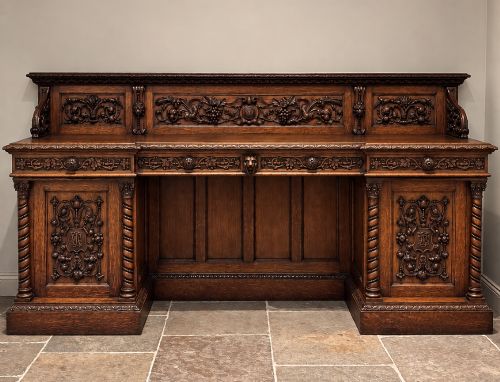
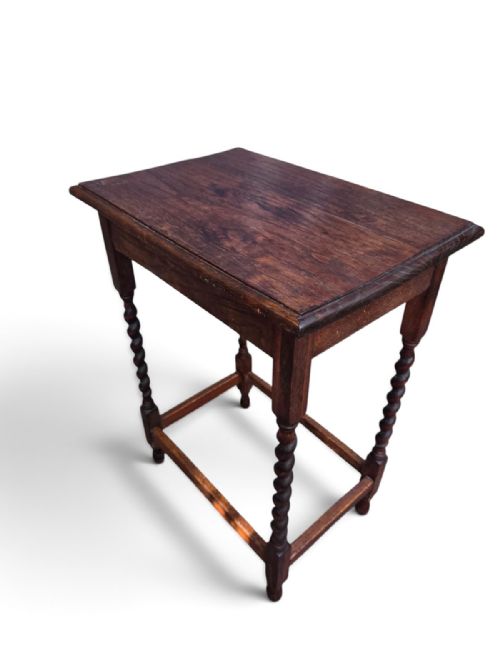
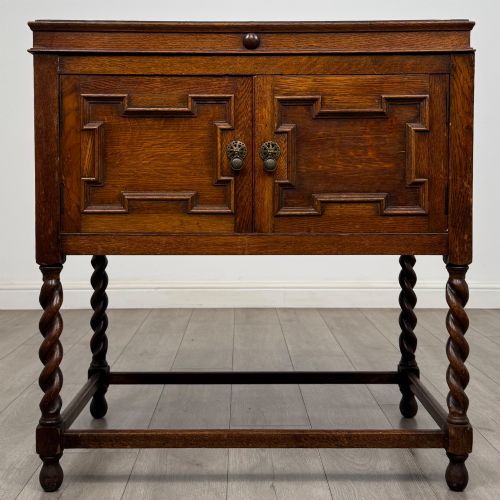
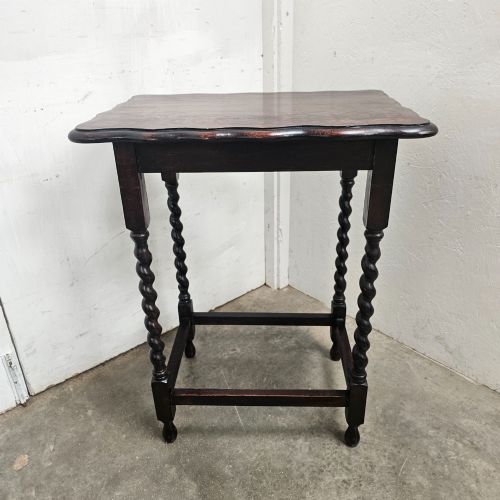
When buyers search for oak barley twist furniture, they encounter a range of domestic forms spanning from the seventeenth century through to the Edwardian period and the nineteen-twenties. These pieces include side tables, gateleg dining tables, sideboards, and armchairs built primarily in revival styles such as Jacobean, Carolean, and Flemish Renaissance.
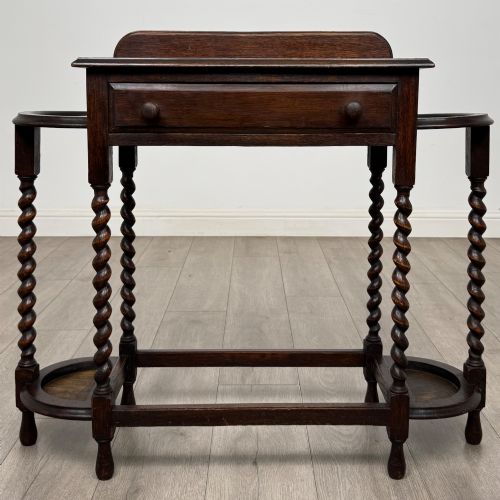
The pieces most frequently met on this page date from the late nineteenth century and the early twentieth century, reflecting revival movements that prized heavy timber and turned supports. Side tables and dining tables with distinctive spiral legs dominate the selection, alongside hall stands and bookcases.
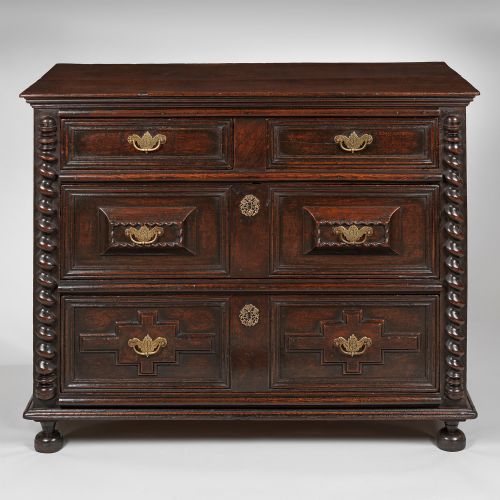
Earlier examples also surface, connecting the heavy proportions of seventeenth-century chests of drawers and gateleg tables with later vernacular adaptations. Makers applied the spiral turning technique across diverse scales, from large sideboards to miniature apprentice pieces and small decorative shelf tables.
Judging quality in turned oak
Quality separates through the crispness of the timber carving and the precision of the spiral turning on the legs and stretchers. Sharply defined cuts in foliate details and balanced proportions distinguish finer workshop output from simpler vernacular items.
The selection of the oak timber itself dictates structural integrity, with well-figured grain and robust joining methods marking superior construction. Original hardware, intact canework, and uncompromised surface patination further elevate the standing of a piece.
Among the heavy sideboards and dining tables, miniature apprentice pieces emerge as tiny test beds where historical turners practiced their most intricate barley twists.
The Oak Barley Twist Furniture Glossary
- Barley twist
- A spiral turning resembling the stalk of barley, created on a lathe or by hand-carving timber. This decorative form appears prominently on table legs, chair supports, and standard lamps.
- Jacobean style
- An English design aesthetic spanning the early seventeenth century, characterised by heavy proportions and geometric panels. Revival versions of this style became popular during the Victorian and Edwardian eras.
- Gateleg table
- A drop-leaf table featuring hinged legs that swing out to support the extended leaves. These practical dining tables frequently incorporate spiral turned legs and stretchers.
- Green man
- A sculptural motif depicting a human face entwined with foliage, leaves, or vines. Carvers often placed this symbol on nineteenth-century sideboards, hall stands, and architectural woodwork.
- Apprentice piece
- A miniature version of a larger furniture item created by a trainee craftsman to demonstrate skill. These small objects often replicate the complex turning and carving of full-sized tables and chests.
Oak Barley Twist Furniture: Frequently Asked Questions
How do I date oak barley twist furniture?
Dating relies on examining construction methods, timber patination, and the specific revival style of the piece. Seventeenth-century originals display hand-split boards and early joinery, whereas nineteenth and twentieth-century revivals often show machine-sawn elements and standardised fixings.
Hardware types, drawer linings, and secondary woods also help establish the correct era. Comparing the piece against documented examples from periods like the Edwardian era or the Victorian decades clarifies its age.
Are these pieces sturdy enough for daily use?
Solid oak construction provides inherent durability, making most items suitable for regular domestic placement. Gateleg tables, side tables, and armchairs handle routine household activities well when joints remain stable.
Careful placement away from direct heat sources prevents timber shrinkage and joint loosening. Routine dusting maintains the finish without requiring aggressive chemical polishes.
What rooms suit oak barley twist furniture?
The substantial presence of turned oak fits dining rooms, hallways, and living spaces where traditional proportions balance other furnishings. Sideboards, gateleg tables, and hall stands serve both decorative and functional roles in these environments.
Lighter Edwardian side tables and miniature pieces adapt easily to smaller corners or bedside settings. The warm tones of the timber complement neutral walls and textured fabrics.
How do I maintain carved oak surfaces?
Maintaining carved oak involves applying traditional beeswax to nourish the timber and preserve the natural patination. Avoid silicone-based sprays that build up and attract dust within the deep recesses of carvings and twists.
Keeping pieces out of direct sunlight prevents the oak from fading or drying out excessively. Gentle cleaning with a soft, dry cloth preserves the original surface texture.