

Oak and Elm Armchairs
Oak and elm armchairs bring solid vernacular comfort to a room, built from regional timbers to last generations.
Oak and Elm Armchairs
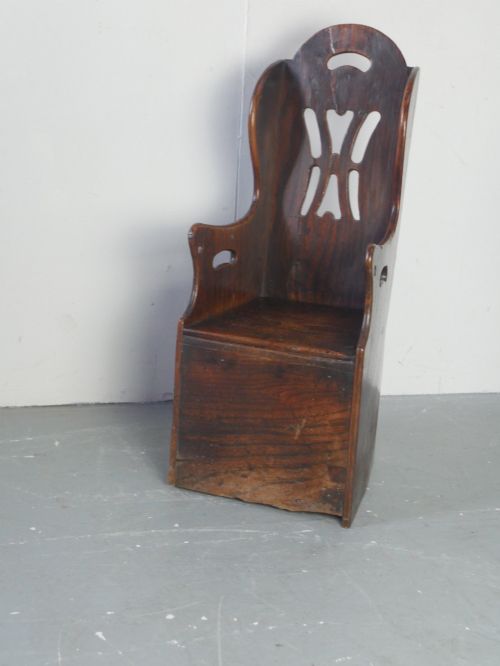
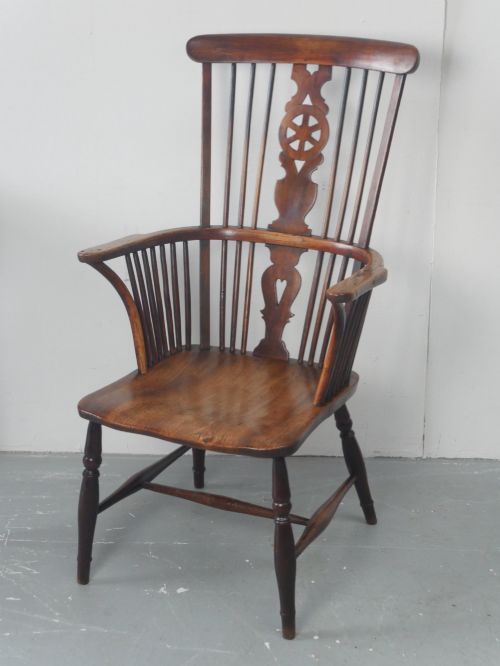
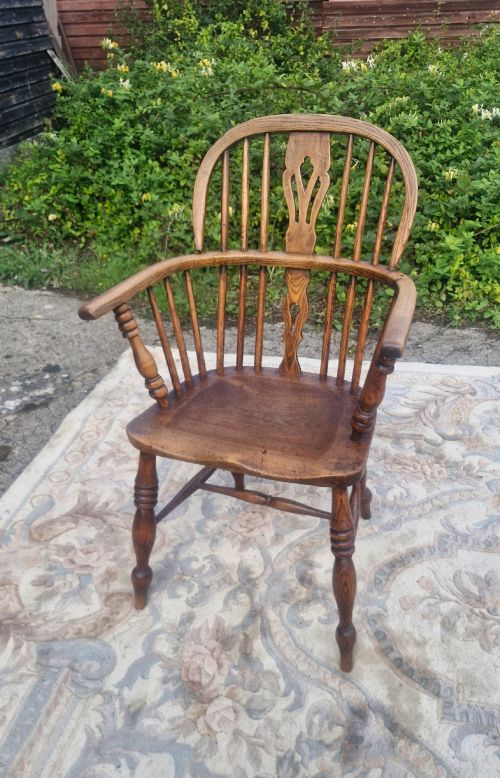
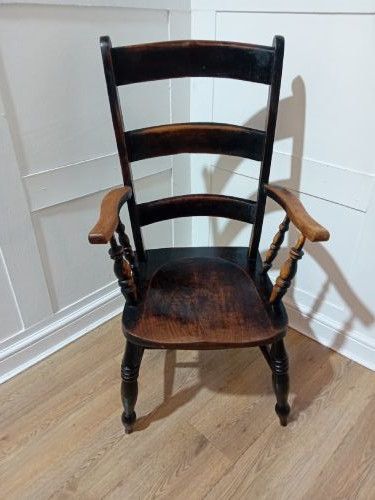
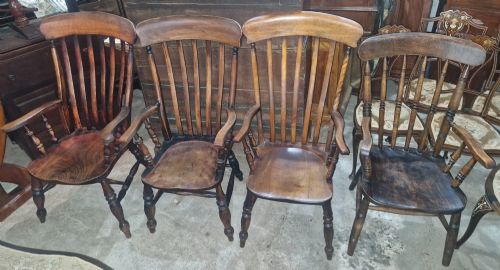
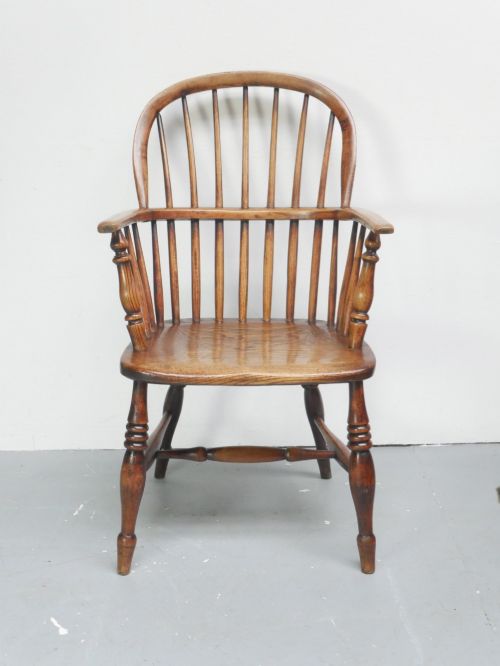
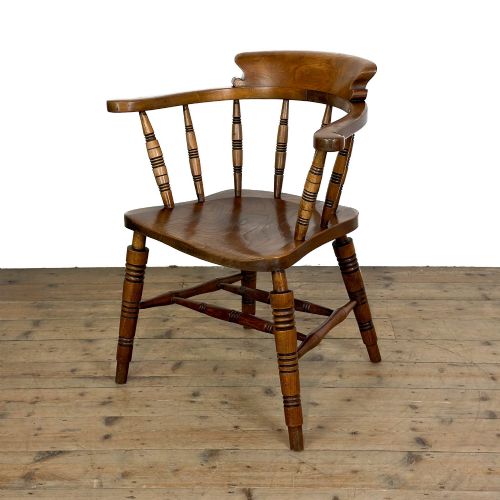
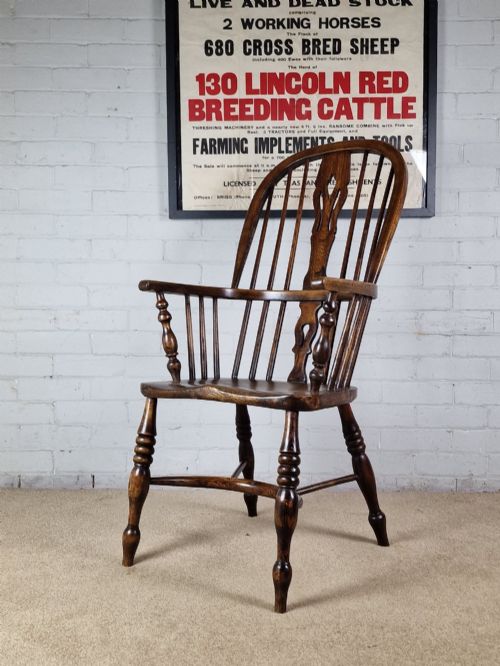
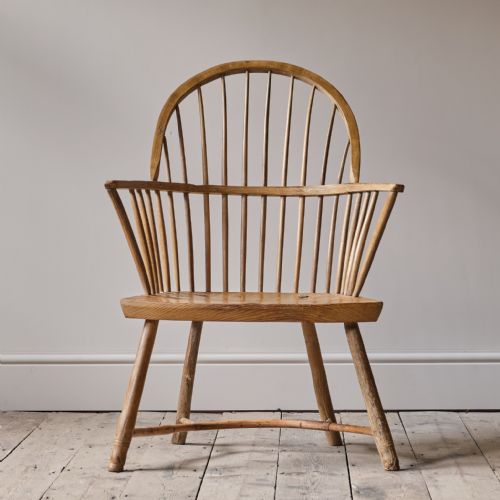
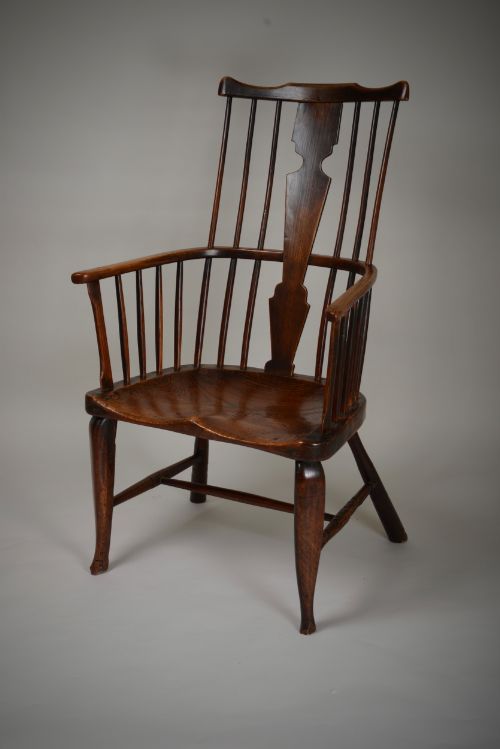
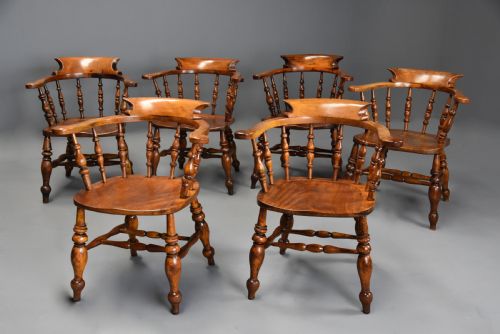
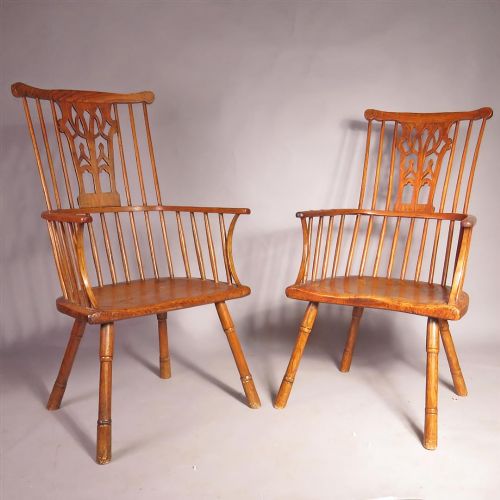
When you search for oak and elm armchairs, you encounter traditional seating built for everyday use in farmhouses, cottages, and country houses. The pieces on this page span the eighteenth and nineteenth centuries, taking forms such as Windsor chairs, smokers' bows, and panel-backed designs.
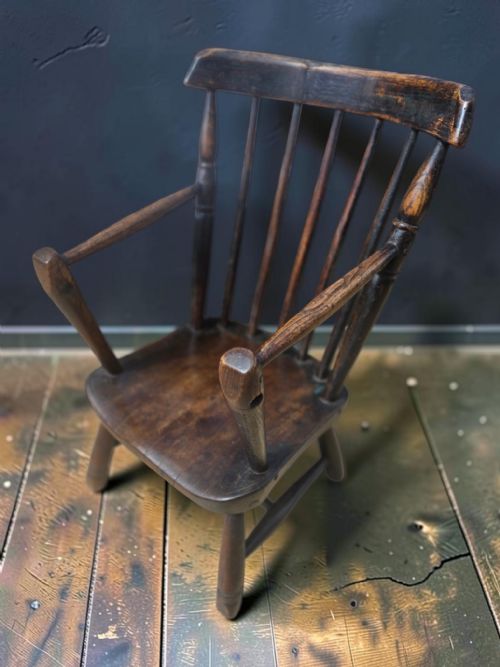
Regional variations appear frequently among the listings, from Thames Valley Oxford chairs to Scottish and West Country examples. You will also find smaller variants including children's chairs, high chairs, and rocking chairs alongside standard armchairs.
The construction typically pairs sturdy oak for frames with resilient elm for seats, though ash, beech, and yew also feature. These combinations reflect the practical choices of regional makers who selected local timber for structural strength.
Construction and Materials
The construction relies on traditional joinery where turned spindles and legs lock into solid, saddled elm seats using through-wedged tenons. Frame members utilise oak and sometimes ash, chosen for their resistance to splitting under daily stress.
Makers shaped the heavy timber seats by hand using adzes and scorps to create deep, comfortable hollows. Steam-bending techniques allowed straight-grained ash and elm to form the continuous curved hoops and armbows seen on Windsor designs.
Defining Quality in Country Seating
The grade of an armchair depends on the balance of its proportions and the integrity of its original timber. Superior examples retain deep surface patination and show minimal replacement parts in their spindle arrays and undercarriages.
Construction details separate standard utility chairs from finer regional pieces, such as the sculptural turning of legs or the presence of a central splat. Comfortable arm scrolls and well-balanced hoop backs indicate careful execution by skilled provincial chairmakers.
The Oak and Elm Armchairs Glossary
- Windsor chair
- A traditional chair built with a solid wooden seat into which the legs and back spindles are inserted directly. This form relies on a strong undercarriage or bow construction for stability.
- Smoker's bow
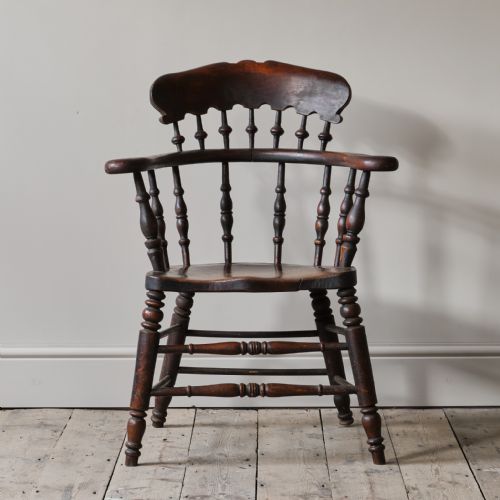
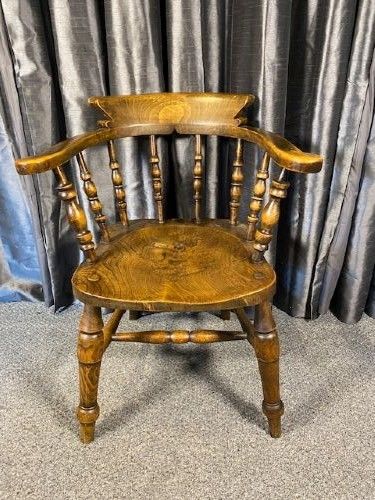
- A low-backed Windsor armchair featuring a continuous curved armrail supported by turned spindles. These chairs often served in domestic smoking rooms or farmhouse kitchens.
- Wheelback
- A vernacular chair design incorporating a pierced wooden splat shaped like a carriage wheel in the centre of the backrest. This decorative motif gained popularity during the Victorian period.
- Vernacular
- Objects made by regional craftspeople following local traditions rather than strict academic design patterns. These pieces prioritise functional utility and available materials over fashionable trends.
Oak and Elm Armchairs: Frequently Asked Questions
What is a smokers bow chair?
A smokers bow is a low-backed Windsor armchair designed with a rounded wooden armrail and short turned spindles. They provide sturdy seating with a compact footprint.
These chairs appear widely in nineteenth-century farmhouse and kitchen settings, offering durable comfort for daily use.
How do I identify a Windsor chair?
A Windsor chair is characterised by stick legs and back supports fitted directly into a thick, carved wooden seat rather than a frame. The upper back often employs a bentwood hoop or comb rail.
Regional variations include low backs, high backs, and wheelbacks built across the eighteenth and nineteenth centuries.
Where were these country chairs made?
Country armchairs were produced by regional workshops across the British Isles, with distinct styles emerging from places like the Thames Valley, West Country, and Scotland. Makers utilised local hardwoods available in their immediate areas.
This regional specialisation resulted in diverse spindle arrangements, turning patterns, and wood combinations.
How should I care for elm and oak?
Keep wooden armchairs away from direct heat sources and sudden temperature shifts to prevent timber shrinkage and cracking. Maintaining stable indoor conditions preserves the original surface patination.
Regular dusting with a dry cloth protects the finish without stripping the historical surface accumulated over centuries.