
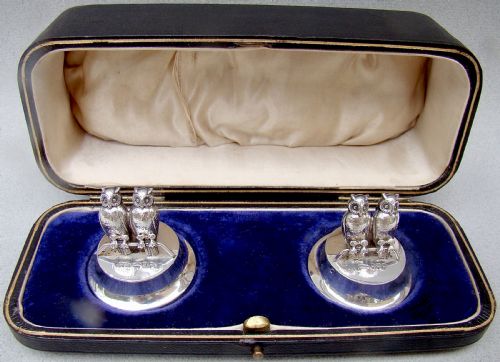
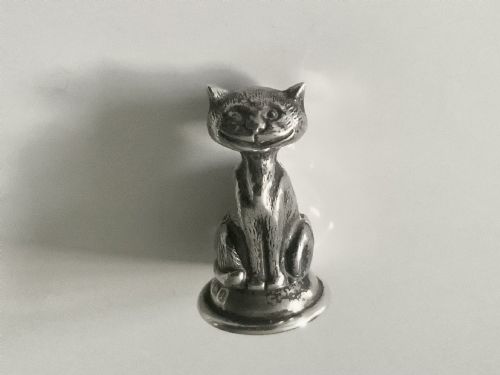

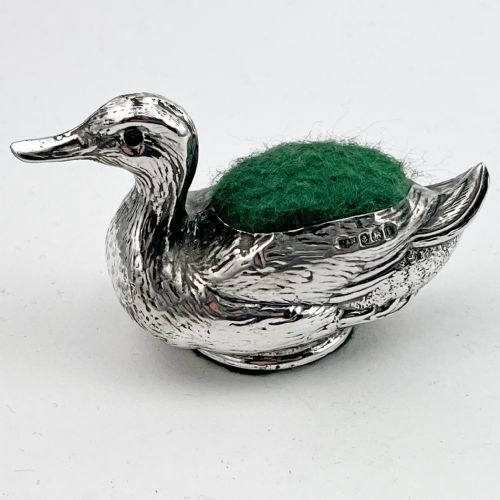


Novelty Silver Figurine
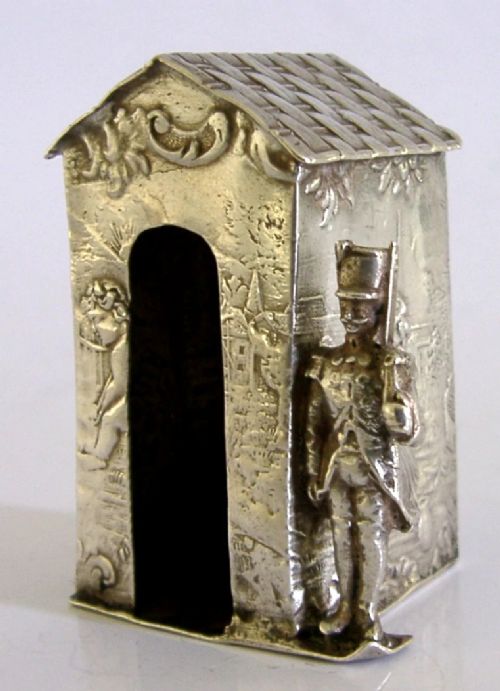
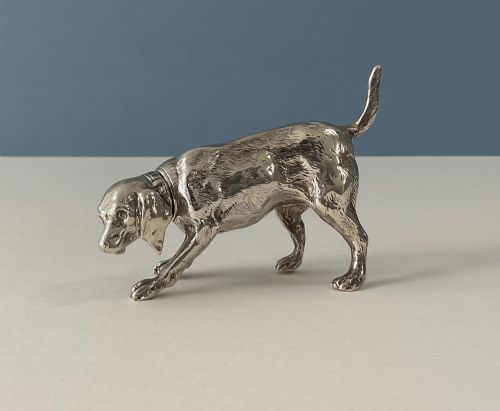
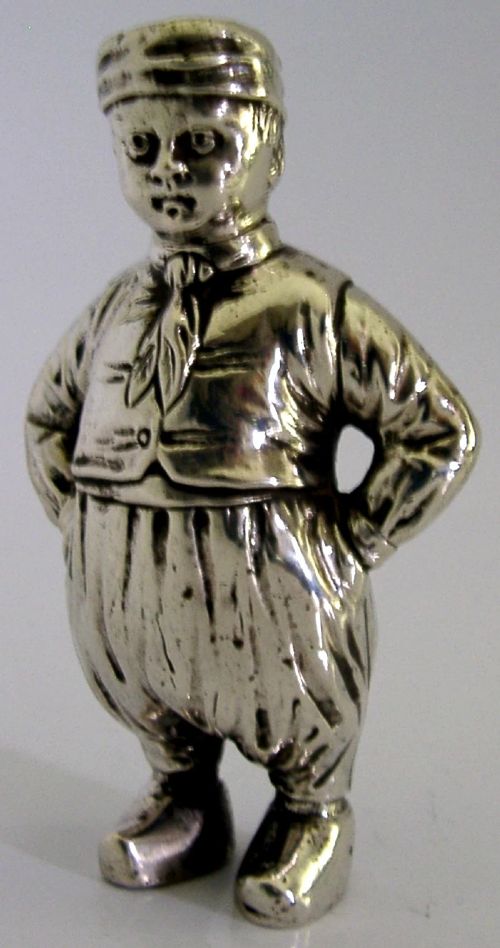
Novelty silver figurine pieces bring wit and character to a room, taking the form of animals, figures, and miniature objects crafted for domestic amusement.
Novelty Silver Figurine
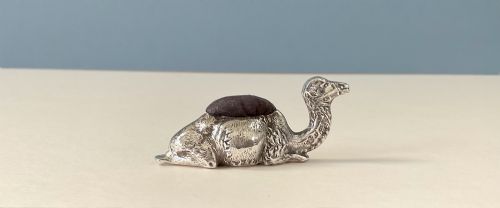
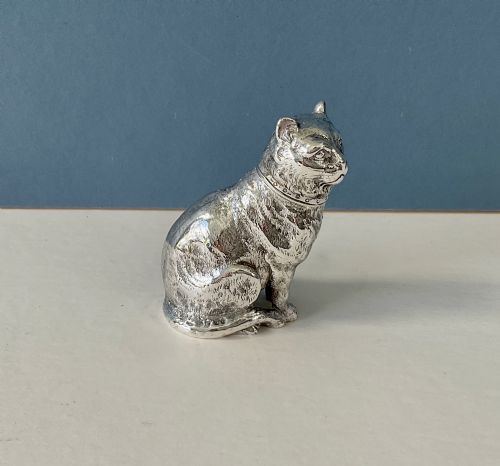
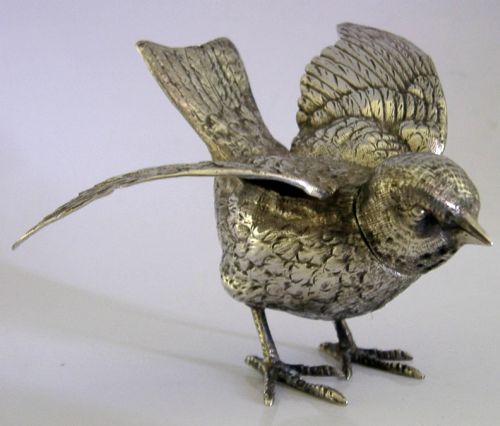
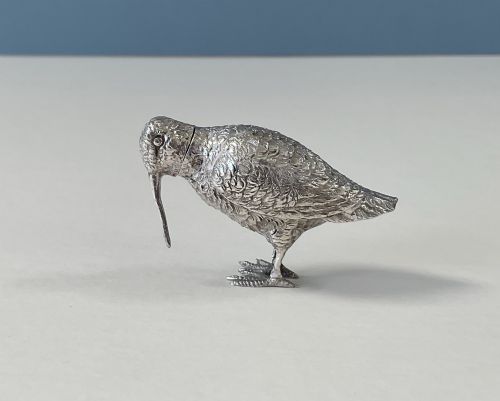
A novelty silver figurine serves a practical purpose while taking the shape of an animal or character, functioning as a pin cushion, pepper pot, pill box, or desk accessory.
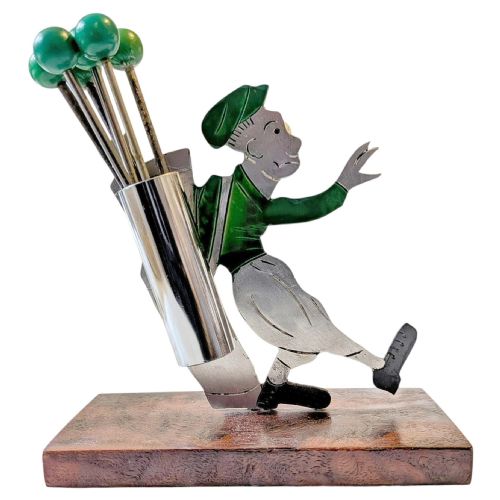
The pieces appearing on this page span the Victorian and Edwardian periods through to the Art Deco era, originating from British workshops as well as Continental centres like Hanau.
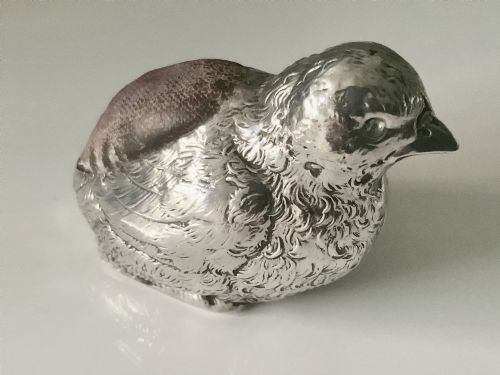
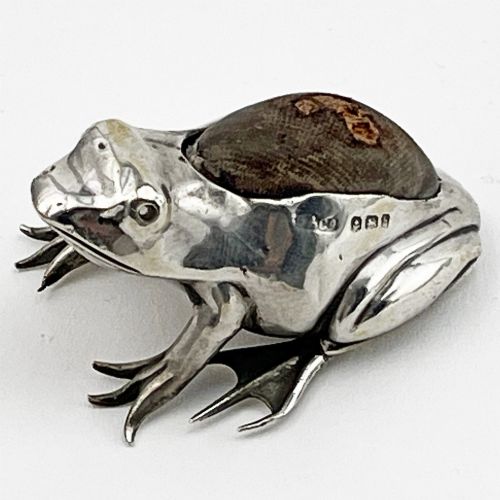
Pin cushions modelled as birds, dogs, and farm animals emerge most frequently, often retaining their original velvet or felt inserts alongside solid silver bodies.
Factors that define quality
The crispness of detail in the chasing and engraving dictates the calibre of a piece, separating lifelike animal models from simpler castings.
The retention of original interior materials, such as coloured velvet in pin cushions or fitted glass inserts in boxes, preserves the integrity of the design.
Listings feature items from the Victorian, Edwardian, and Art Deco periods, created in sterling silver alongside glass, leather, and velvet.
Levi & Salaman·Sudre·Boaz Moses·Thomas Johnson
The Novelty Silver Figurine Glossary
- Pin cushion
- A small fitted object designed to hold pins, frequently styled as animals and birds in silver during the Edwardian period. The base usually contains felt, velvet, or fabric.
- Pepper pot
- A table condiment shaker shaped to resemble a character or creature, discharging spice through holes in the head or body. These cruet items often depict birds and domestic animals.
- Chasing
- A metalworking technique applied from the front to push the silver and create surface decoration, texture, and feather or fur details. It brings depth and realism to the figurine.
- Repoussé
- A method of hammering silver from the reverse side to form raised patterns and contours. This technique shapes the main body of hollow animal figures and boxes.
- Hanau
- A German town known for producing silverwares and novelty figurines in historical styles during the late nineteenth and early twentieth centuries. Makers here often exported detailed animal models.
Novelty Silver Figurine: Frequently Asked Questions
How do I date an antique silver figurine?
Dating relies heavily upon hallmarks stamped into the silver, which indicate the assay office, standard of metal, and year of manufacture. Maker marks provide further clues to the active period of the workshop.
Stylistic shifts also help identify the age, moving from the ornate detailing of Victorian and Edwardian pieces to the geometric lines of Art Deco items from the nineteen-thirties.
Are the pin cushions made with original materials?
Many pieces retain their early velvet, silk, felt, or fabric inserts, though replacement pads do occur due to natural wear over the decades. Inspecting the interior reveals how the textile secures inside the silver casing.
Original fabrics often show fading or wear that aligns with the age of the outer metal body. Collectors value surviving historical linings for maintaining the authenticity of the object.
Where were these novelty silver pieces made?
Production centred largely around British workshops in Birmingham and London, where silversmiths specialised in novelty cruets and dressing table items. Makers in these hubs produced extensive ranges of animal models.
Continental European centres, particularly Hanau in Germany, also manufactured detailed silver figurines and boxes for export. These pieces often reflect historic revival styles popular at the turn of the twentieth century.