




Nomadic Wool Flatweave
When you search for a nomadic wool flatweave, you are looking at utilitarian tribal textiles woven by pastoral groups across Persia, Central Asia, and the Caucasus.
Nomadic Wool Flatweave
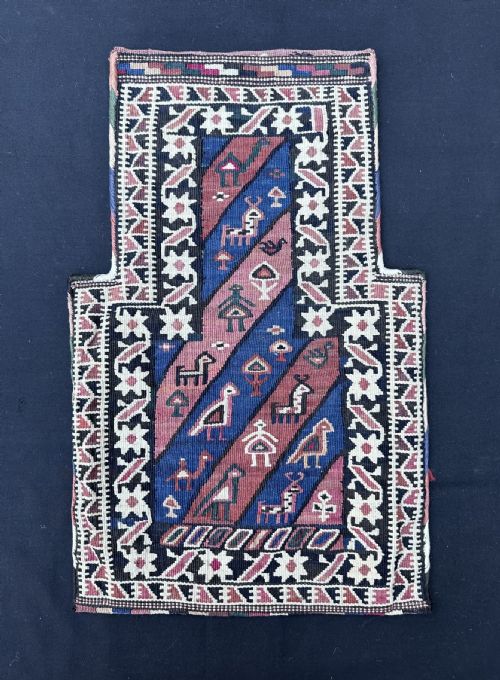
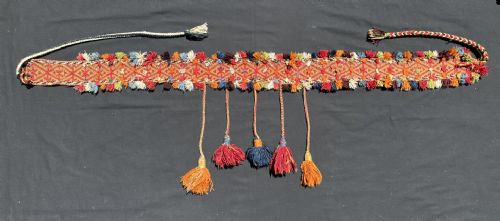
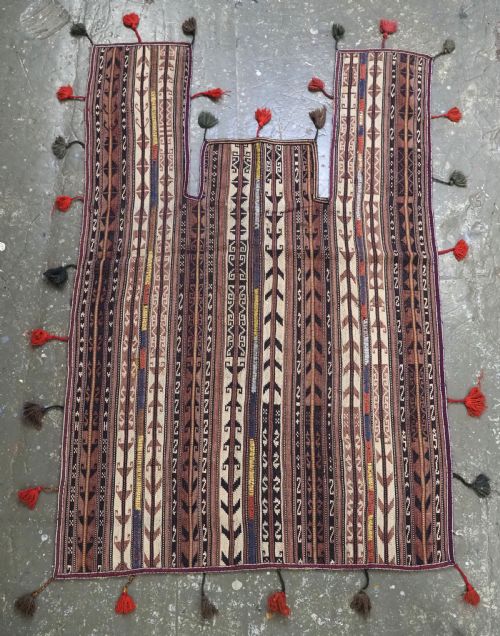
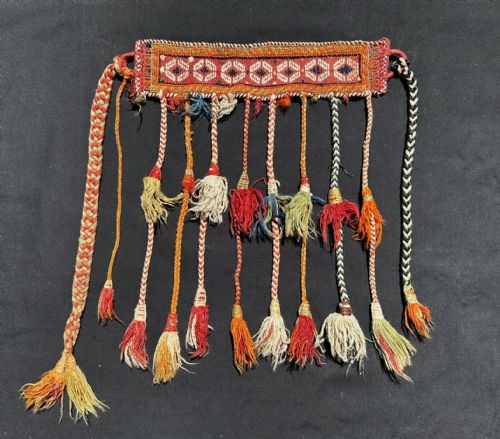
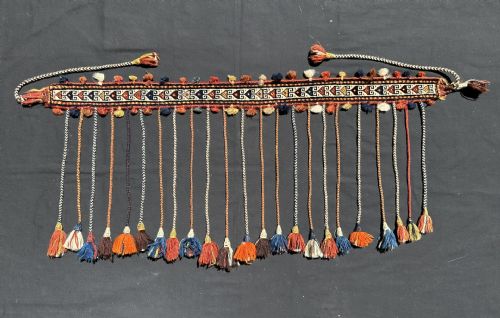
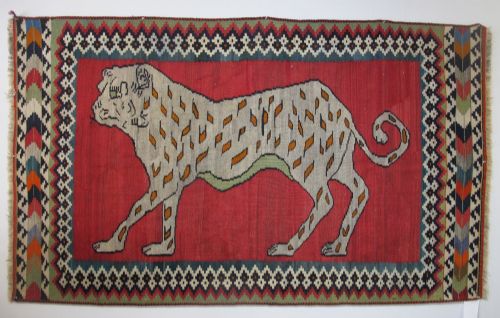
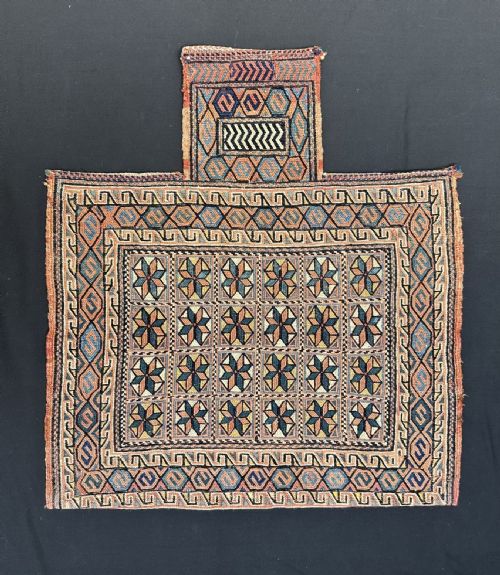
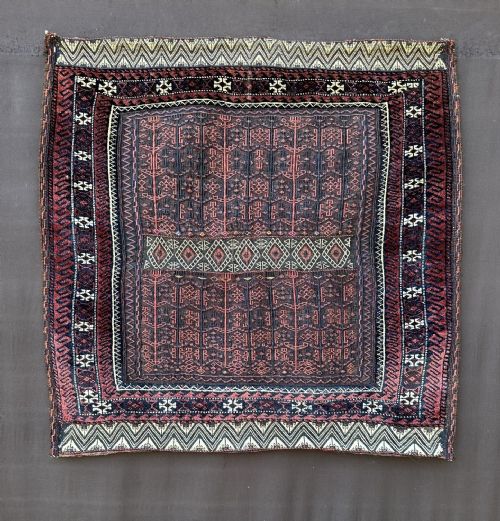
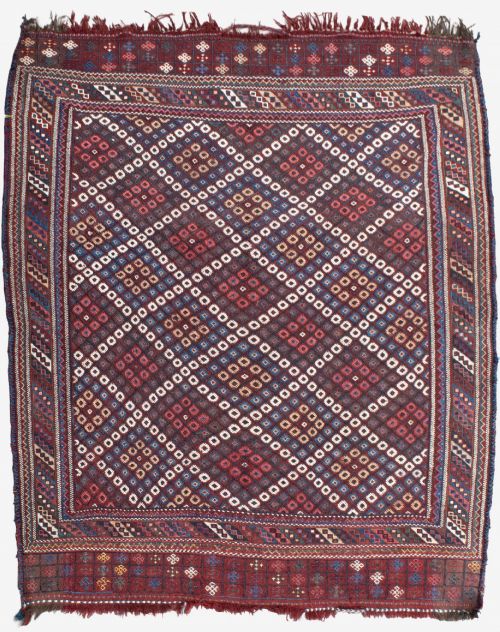
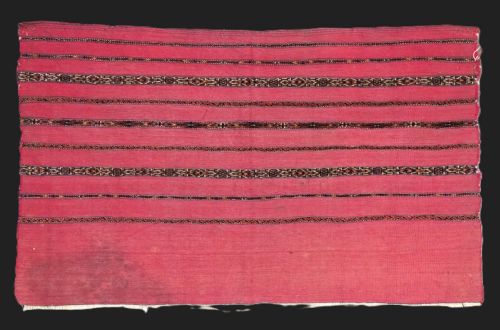
A nomadic wool flatweave is a utilitarian tribal textile created by pastoral groups such as the Qashqai, Shahsevan, Afshar, Bakhtiari, and Yomut Turkmen. These pieces span utility objects made for daily migration and domestic life, including salt-bags, bread sofreh, animal trappings, storage bags, and kilim rugs. On this page, you will frequently encounter smaller functional items like salt-bags and sofreh alongside larger kilim carpets and runners.
The origins of these textiles trace across nineteenth and early twentieth-century Persia, Afghanistan, Central Asia, Azerbaijan, and the Caucasus. Tribal weavers produced them for personal domestic use within their camps rather than for urban commercial export markets. Consequently, the forms reflect the practical needs of nomadic existence, from dining cloths to horse blankets and grain bags.
How they were made
These textiles rely on hand-spun wool and cotton, occasionally incorporating goat hair for structural durability and cowrie shells for decoration. Weavers utilised natural dyes to colour the wool, producing deep, varied tones across the surface of each flatweave. The construction methods span intricate soumac wrapping, banded flatweave designs, and tapestry-woven kilim techniques.
Listings feature nomadic wool flatweaves spanning the mid-nineteenth century through the early twentieth century, originating from Persian, Caucasian, and Central Asian tribal groups.
What varies in quality
Quality in these flatweaves rests on the handled density of the weave, the purity and depth of the natural dyes, and the crispness of the tribal design. Finer examples display tightly packed warps and wefts that hold sharp geometric or figurative motifs, whereas simpler pieces show a more relaxed structure. The skill of the weaver dictates how cleanly the slit-tapestry junctions meet or how complex the supplementary weft-wrapping appears.
Another measure of distinction is the integrity of the surviving material, including the retention of original braided edges, closure loops, and secondary fibres like goat hair. Pieces that maintain their full utility form, such as complete storage bags or intact bread cloths with minimal structural intervention, stand higher in character. The nuance of the natural dye palette, showing subtle abrash or shift in shade, also separates standard domestic weaving from exceptional tribal work.
The Nomadic Wool Flatweave Glossary
- Sofreh
- A spread or cloth used for sharing meals or preparing bread within nomadic households. These flatweaves are typically square or rectangular and display strong geometric field patterns.
- Chuval
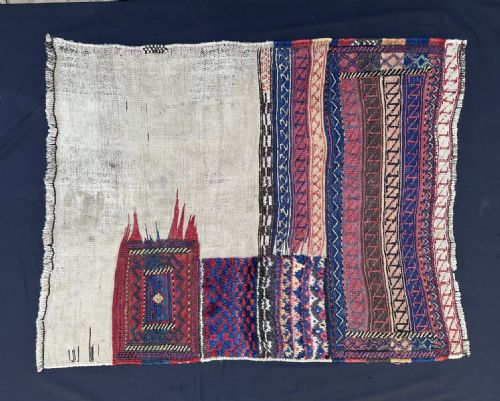
- A large tent-storage bag produced by Turkmen and related tribes to hold household goods during seasonal migrations. Only the decorative face often survives today.
- Soumac
- A supplementary weft-wrapping technique that creates a durable, textured surface resembling braid-work on the face of the textile. It adds considerable weight and structural stability to bags and trappings.
- Abrash
- A natural variation of colour within the same dye lot, appearing as horizontal bands or shifts in tone caused by re-dipping yarn in small batches. Collectors prize this tonal movement for the visual depth it brings to the wool.
- Mafrash
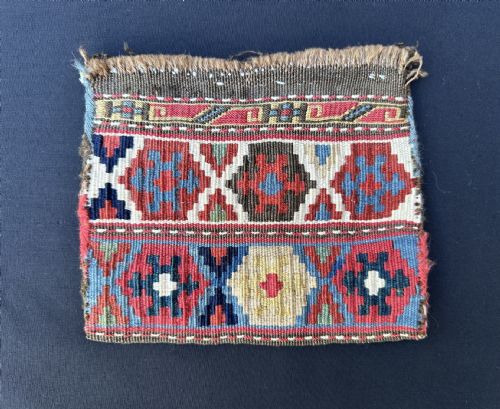
- A rectangular storage bag or pannier face used in pairs on pack animals to transport belongings. They frequently feature banded flatweave designs or soumac panels.
Nomadic Wool Flatweave: Frequently Asked Questions
What is a bread sofreh used for?
A bread sofreh served as a clean surface placed on the ground for rolling dough, kneading, and serving communal meals within the nomadic tent. Families folded and stored them easily between uses during migration.
Over time, constant handling and exposure to hearth environments meant these textiles developed a soft, pliable handle. Their geometric borders and central fields reflect the specific tribal aesthetic of the weavers who made them.
How do you distinguish tribal flatweave regions?
Distinguishing regions depends on observing specific wool preparations, structural techniques, and characteristic motifs unique to tribal confederations like the Qashqai or Shahsevan. For instance, Azerbaijan and Caucasian pieces often display crisp, tightly wrapped soumac structures.
In contrast, southern Persian tribal weavings from Fars or Kerman utilise distinctive natural dye palettes and specific animal or medallion layouts. Examining the selvedges and end finishes provides further clues to the specific nomadic group's workshop traditions.
Are these textiles meant for floor use?
While larger pieces like kilim rugs and runners functioned on tent floors or sleeping platforms, many smaller formats were utilitarian containers. Salt-bags, animal trappings, and saddle-bags were constructed specifically for transport and storage on animals.
Living with these smaller items today usually involves wall display, table placement, or utilising them as decorative textile art rather than heavy floor coverings. Their flatweave structure remains resilient, but protecting them from abrasive foot traffic preserves their historic wool.
Why do some flatweaves use goat hair?
Weavers incorporated dark goat hair along the outer edges and structural selvedges because of its exceptional tensile strength and resistance to wear. It acted as a durable binding that protected the softer inner wool from fraying during migration.
This practical addition also created a natural framing effect around the colourful wool field. Finding intact goat-hair borders indicates that a textile retains its original structural boundaries.