

Nomadic Persian Area Rug
A nomadic persian area rug brings centuries of tribal weaving traditions into a room through geometric motifs and rich, saturated wool.
Nomadic Persian Area Rug
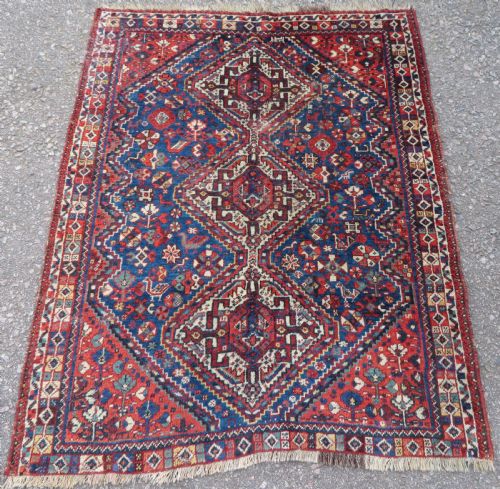
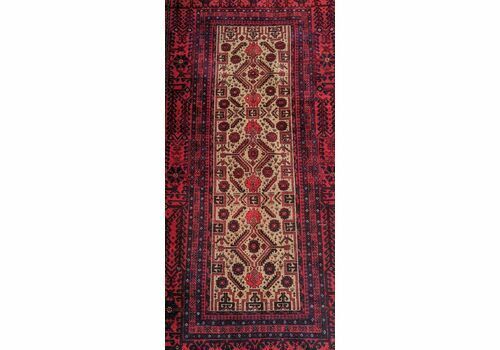
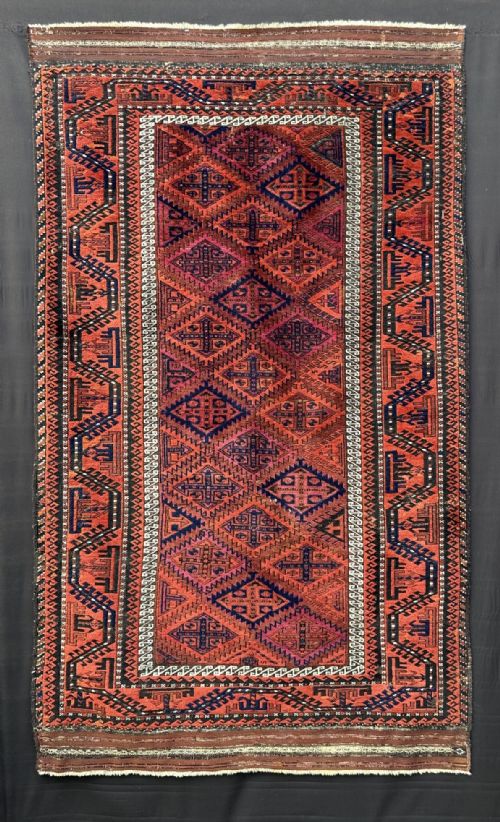
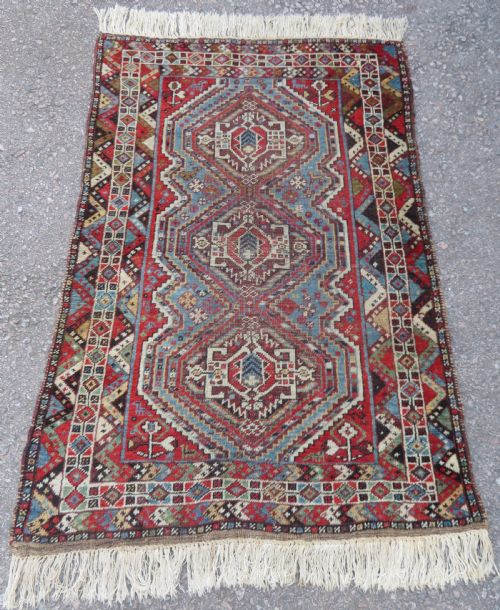
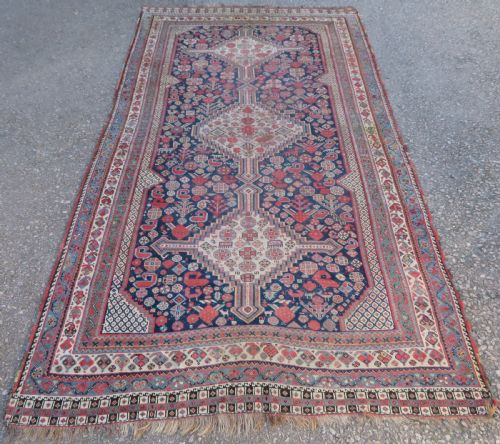
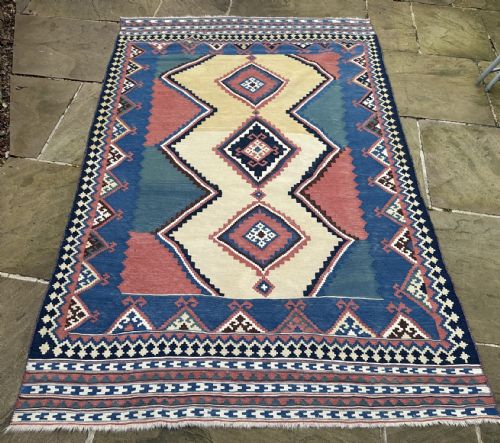
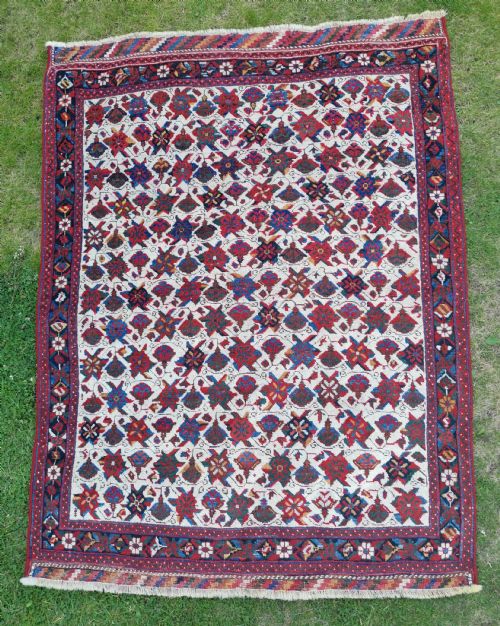
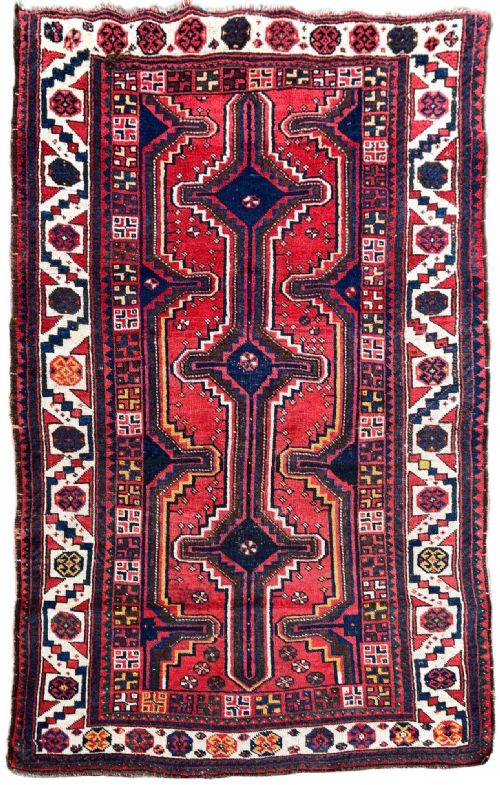
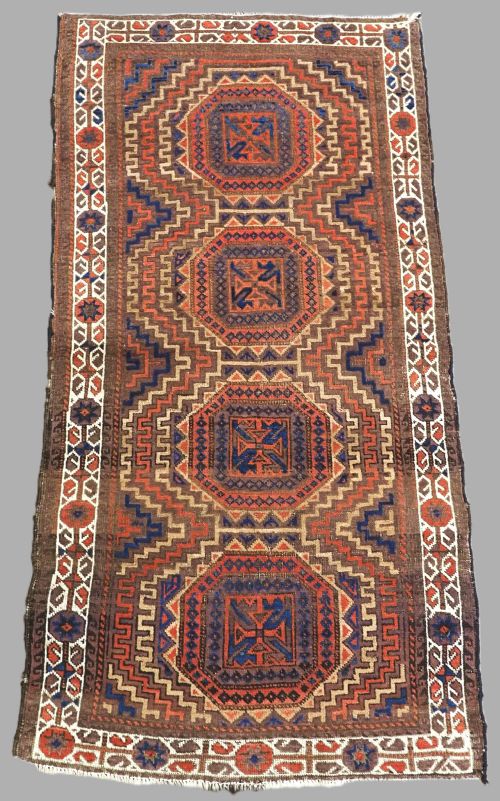
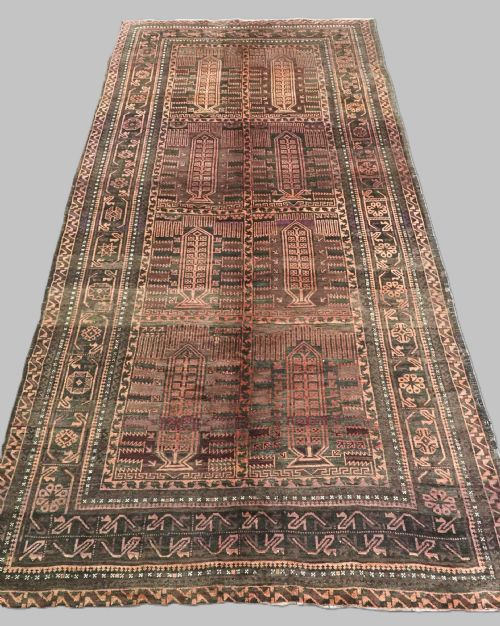
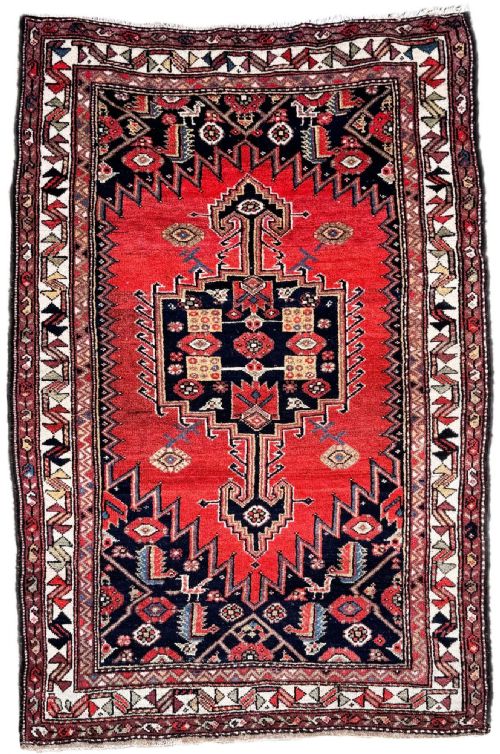
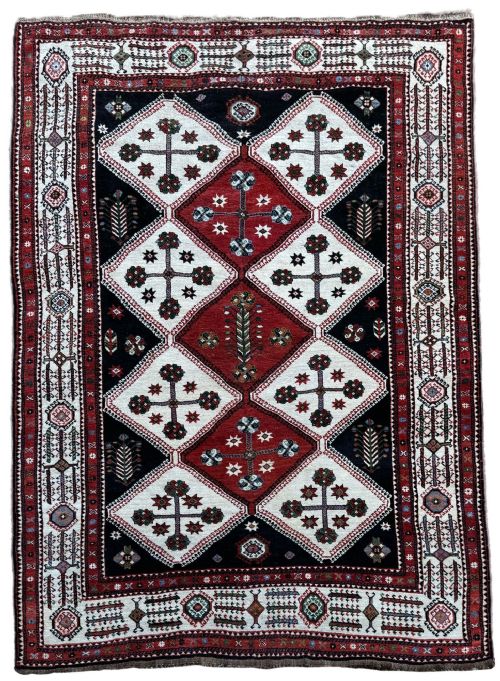
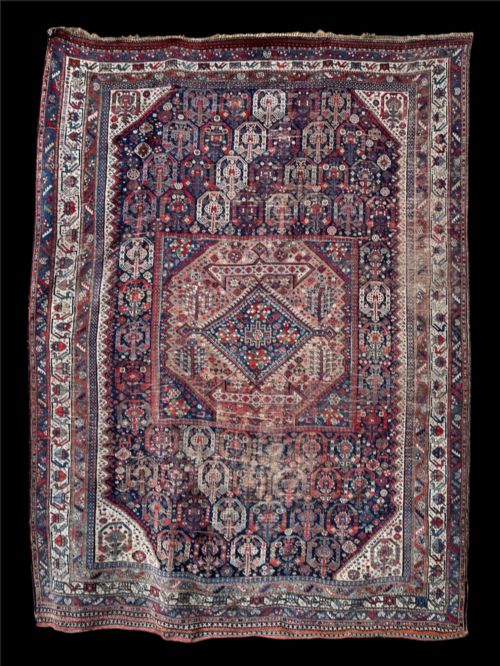
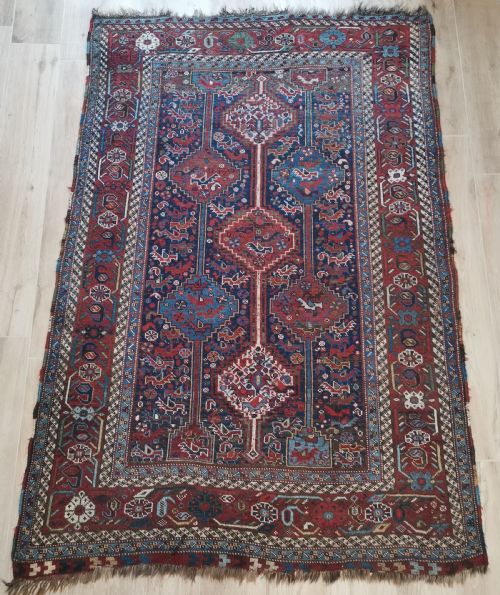
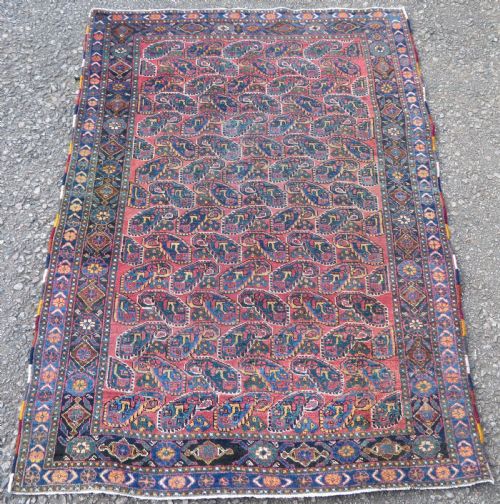
A nomadic persian area rug represents the textile traditions of tribal groups such as the Afshar, Khamseh, Qashqai, Baluch, and Kurdish peoples. These pieces span production periods from the nineteenth century into the mid-twentieth century.
The most common formats on this page are hand-woven area rugs, carpets, prayer rugs, and utilitarian pieces like sofres, originating from regions including Fars and South Khorassan. Their designs rely on tribal iconography, repeated guls, and geometric field patterns rather than formal urban workshop layouts.
Materials and construction
Construction relies heavily on wool and hand-spun wool for the pile, paired with cotton or wool foundations depending on the specific tribal origin. Weavers utilised natural dyes to achieve deep reds, blues, and earthy tones that age with considerable character.
The weaving process is entirely hand-woven on horizontal or vertical tribal looms, resulting in dense structures and asymmetric or symmetric knots adapted to each group's local heritage.
Assessing quality in tribal weaving
Quality rests on the fineness of the knot density, the handling of the hand-spun wool, and the clarity of the natural dye palette. Tighter foundations and more precise execution of geometric motifs distinguish finer examples from standard village or tribal pieces.
Condition also plays a part in daily utility, where intact borders and even pile wear demonstrate how well a rug survived its working life. Pieces retain distinction through the vibrancy of their original dye work and the integrity of the tribal patterns.
The Nomadic Persian Area Rug Glossary
- Gul
- A repeating medallion or octagonal motif often found in tribal weavings, particularly associated with Baluch and Turkmen traditions. These motifs act as clan symbols and anchor the field design.
- Sofre
- A flat-woven or piled cloth used primarily for dining, food preparation, or grain storage within nomadic households. They often feature large open fields and striking geometric borders.
- Hand-Spun Wool
- Wool yarn processed manually on a drop spindle or simple wheel, producing irregular thickness and varied absorption of natural dyes. This variation gives tribal carpets their characteristic textured surface.
- Natural Dyes
- Colourants derived from plants, insects, and minerals before the introduction of synthetic alternatives. They yield complex, mellow tones that develop a rich patina over time.
Nomadic Persian Area Rug: Frequently Asked Questions
What is a nomadic persian area rug?
A nomadic persian area rug is a hand-woven textile created by tribal confederacies and village groups in regions such as Fars, Khorassan, and Northwest Persia. These pieces reflect the daily life, beliefs, and artistic heritage of weavers using traditional motifs.
Production dates range from the nineteenth century into the twentieth century, encompassing varied formats from small scatter rugs to larger tribal carpets.
How do I identify tribal designs?
Tribal designs rely on geometric structures, repeating guls, hooked polygons, and stylized animal or plant forms rather than curving floral court patterns. Each confederacy, such as the Khamseh or Afshar, utilised distinct colour combinations and drawing styles.
Examining the borders and central field reveals the specific tribal vocabulary handed down through generations of weavers.
What materials were used?
The primary material is wool, frequently hand-spun, which provides resilience and a soft lustre to the pile. Foundations typically consist of wool or cotton warps and wefts depending on the tribe's geographic location and access to materials.
Colour comes from natural dyes sourced from local flora and fauna, creating deep hues that age gracefully.