
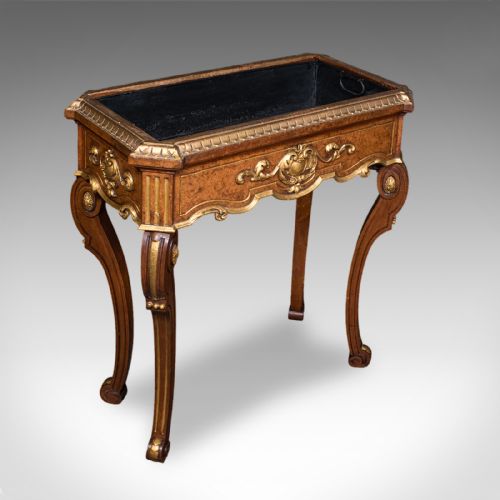
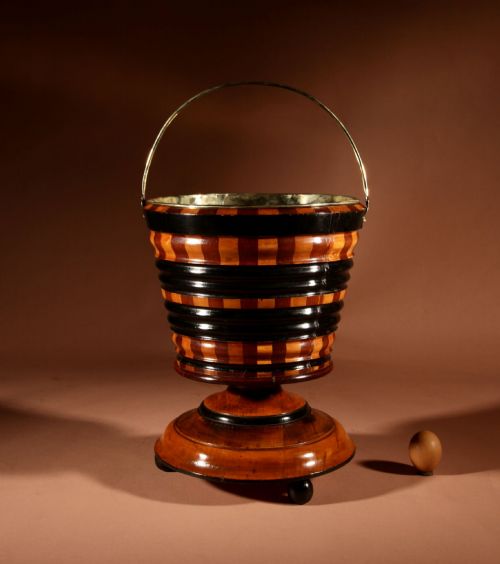


Nineteenth Century Wine Cooler
A nineteenth century wine cooler brings a distinct gravity to the room, built to hold ice and bottles with enduring architectural presence.
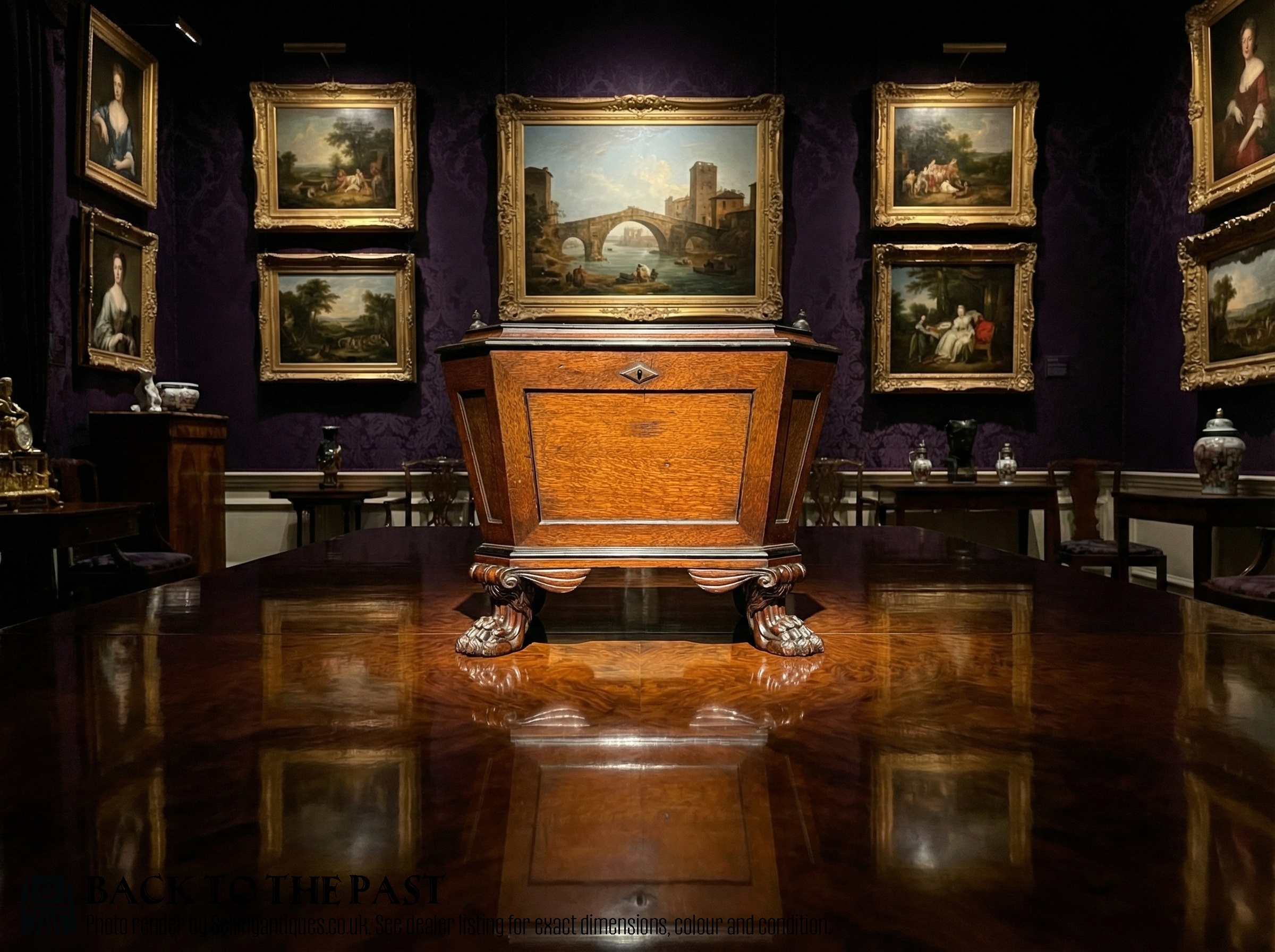
Nineteenth Century Wine Cooler
A nineteenth century wine cooler serves as a formal vessel for chilling bottles, appearing across periods from Regency through to Victorian iterations. Buyers seeking this phrase encounter sturdy timber receptacles and metal vessels designed to hold ice alongside wine and champagne.
The objects take several distinct forms, including mahogany sarcophagus shaped cellarettes, oval brass buckets, and coopered wood jardinieres. Many pieces show dual utility, functioning historically for wine storage or as decorative basins, footbaths, and planter stands.
Origins span English, French, and Dutch workshops, with mahogany remaining the dominant wood alongside walnut, oak, and ebonised timber. These pieces bridge utilitarian dining room requirements and decorative display, often incorporating mounts and stands.
Materials and Construction
Makers utilised traditional coopered wood techniques for stave construction, binding wooden buckets tightly with brass bands to hold liquid securely. Mahogany and walnut timbers were selected for their grain and structural stability, often shaped into curved sarcophagus bodies or oval vessels.
Metalworking played a central role, particularly in ormolu mounts, cast brass handles, and heavy earthenware basins such as Spode footbaths. Decorative elements frequently drew upon French Rococo Revival and Dutch Empire styles, applying cast ornamentation to timber frames.
Several heavy brass buckets double happily as peat carriers, wine chillers, and aristocratic homes for modest ferns.
Assessing Quality and Execution
The calibre of a nineteenth century wine cooler rests on the integrity of its timber selection, the precision of its cooperage, and the weight of its brass fittings. Superior examples display seamless joins in figured mahogany and robust, well-cast metal mounts that sit flush against the wood.
Proportion and stylistic conviction dictate the upper tier of pieces, where Regency and Dutch Empire forms are rendered with architectural clarity rather than heavy-handed revivalism. Lesser examples show simpler secondary timbers and simpler hardware lacking the crisp definition found in top-range pieces.
The Nineteenth Century Wine Cooler Glossary
- Cellarette
- A lockable container used for storing wine and spirits in the dining room. These timber chests often feature fitted interiors to separate individual bottles.
- Coopered
- Built from wooden staves joined edge to edge and bound with metal hoops, much like a barrel. This technique ensured watertight vessels for ice and water.
- Ormolu
- Gilded bronze or brass applied as decorative mounts and handles on furniture and vessels. The technique creates a bright metallic contrast against dark woods.
- Jardiniere
- An ornamental pot or stand designed to hold plants and flowers. Many nineteenth century examples share forms with wine coolers and footbaths.
- Teapoy
- A small table fitted with caddies or containers for storing tea. These pieces often share the mahogany construction and period aesthetics of contemporary cellarettes.
Nineteenth Century Wine Cooler: Frequently Asked Questions
How were nineteenth century wine coolers used?
These vessels were positioned near the dining table to keep wine and champagne cold during long meals, packed with ice and water.
Servants would retrieve bottles directly from the cooler or cellarette as courses progressed, avoiding the need to journey constantly to the cellar.
What is a cellarette?
A cellarette is a specific type of furniture built to store wine bottles securely, often featuring fitted interior compartments and a lockable lid.
While some stood on legs or pedestals, many sat directly on the floor beneath a sideboard.
Can I use an antique wine cooler for plants?
Many surviving pieces transition naturally into planter stands or jardiniere tables, a use recorded throughout the nineteenth century.
Liners should be utilised to protect historic timber and metal from moisture damage during planting.
How do I identify Regency style?
Regency style draws heavily on classical antiquity, featuring clean classical lines, figured mahogany, and restrained brass mounts.
Proportions remain architectural and balanced, avoiding the heavier ornamentation seen in later Victorian revivals.