




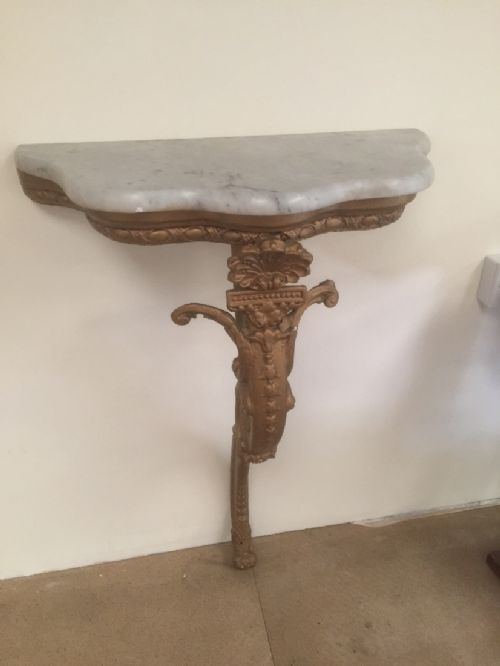


Nineteenth Century Wall Table
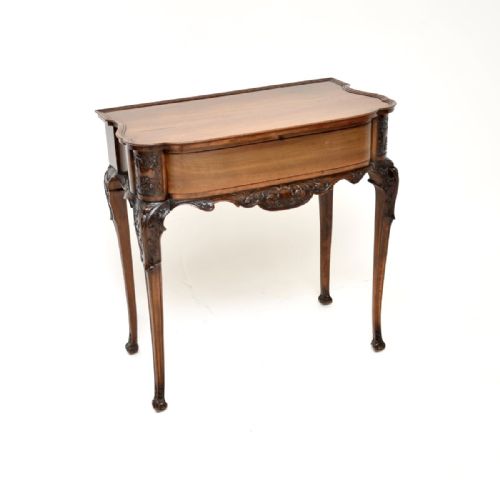
A nineteenth century wall table brings architectural presence to a hallway or drawing room through marble tops and carved timber frames.
Nineteenth Century Wall Table
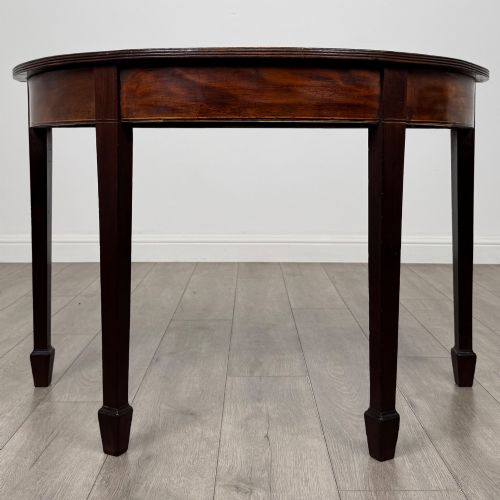
A nineteenth century wall table encompasses console tables, pier tables, and demi-lune side tables designed to stand flush against a room's perimeter. These forms appear across Regency, Victorian, and Empire styles, often incorporating rich timber veneers and decorative supports.
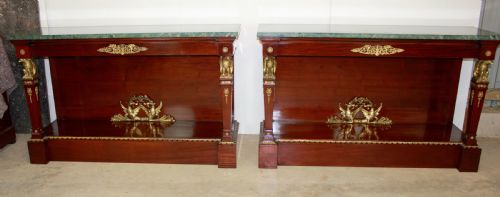
The most common examples on this page are console tables featuring marble tops and carved or giltwood frames. Pieces range from English mahogany designs to French provincial and Swedish demi-lune variants dating from the early decades of the century through to the eighteen-eighties.
Materials and Construction
Cabinetmakers constructed these tables using dense hardwoods such as mahogany, rosewood, and pollard oak, frequently paired with polished marble slabs for the upper surface. Giltwood and gesso enrich the carved frames of French and English console tables from the mid-nineteenth century.
Joinery techniques relied on solid timber carcases to support heavy stone tops, supplemented by brass mounts and gold leaf application on formal Empire and Regency pieces.
Nineteenth Century Wall Table Retail Price Guide 2026
Typical asking prices for nineteenth century wall table among the pieces listed under this phrase on Sellingantiques today, from the lower quarter to the upper quarter. They describe what is for sale here now, not the wider market.
French Rococo Revival and Empire styles appear alongside English Regency designs within the current inventory of wall furniture.
Assessing Quality and Design
Quality in a nineteenth century wall table rests upon the crispness of the carving and the figure of the timber veneer. Superior examples display finely chased giltwood, uncompromised marble slabs, and balanced proportions that reflect the stylistic confidence of their maker.
Lesser pieces show simpler timber selections and heavier, less articulate ornamentation, lacking the architectural harmony seen in works attributed to notable cabinetmakers or specific regional workshops.
Jean Joseph Chapuis·Gillows
The Nineteenth Century Wall Table Glossary
- Console table
- A wall table supported by brackets or legs, designed to stand flat against a partition. These tables often feature decorative friezes and stone surfaces.
- Demi-lune
- A half-moon shape characteristic of tables built to fit neatly into narrow hallways or against flat walls. This curving silhouette is common in late Georgian and Victorian side furniture.
- Giltwood
- Timber treated with gold leaf or metallic paint to simulate solid gold enrichment. This finish appears frequently on frames from the Regency and Victorian periods.
- Pier table
- A low table designed specifically to stand beneath a wall mirror or pier glass between windows. They share the structural format of console tables.
- Gesso
- A plaster-like mixture applied to wood surfaces as a base for moulding and gilding. It allows intricate relief decoration on nineteenth-century frames.
Nineteenth Century Wall Table: Frequently Asked Questions
How do I care for a marble top?
Marble surfaces require gentle cleaning with mild soap and warm water to preserve the polished finish. Avoid acidic substances that can etch the stone over time.
Regular dusting keeps the timber base and stone top in sound condition without harsh chemical intervention.
Are these tables sturdy enough for daily use?
Nineteenth-century wall tables are structurally sound for display and decorative placement. Many feature wall fixings or brackets for additional stability.
Their substantial marble tops and hardwood frames provide natural weight and balance when positioned correctly against a wall.
How do I distinguish Regency from Victorian examples?
Regency pieces often display neoclassical restraint, architectural symmetry, and rosewood or mahogany veneers. Victorian items frequently introduce bolder carving and eclectic revival styles.
Examining the secondary timbers and the specific curvature of the legs helps clarify the period of manufacture.