

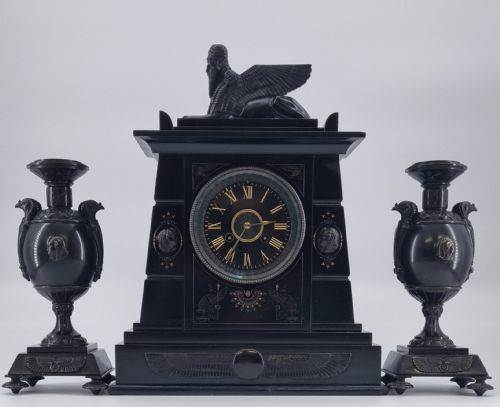


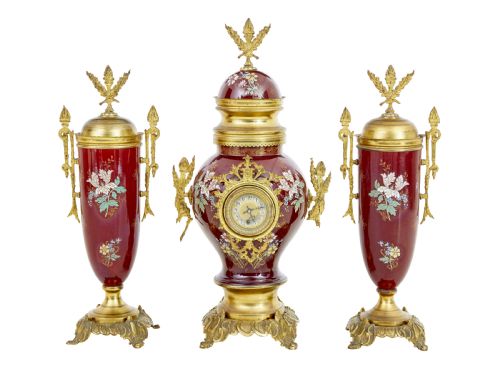


Nineteenth Century Urn Clock
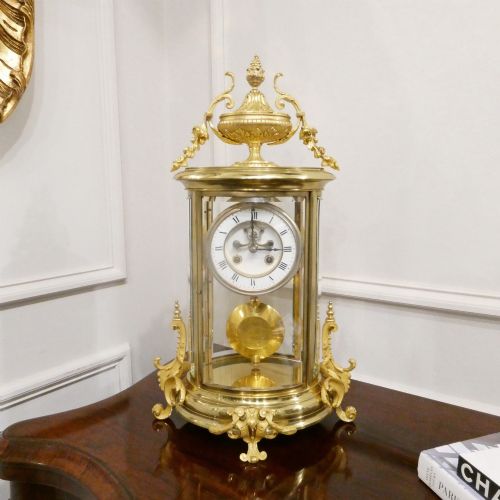
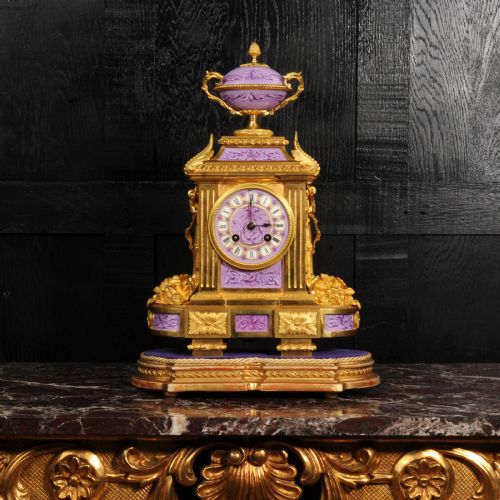
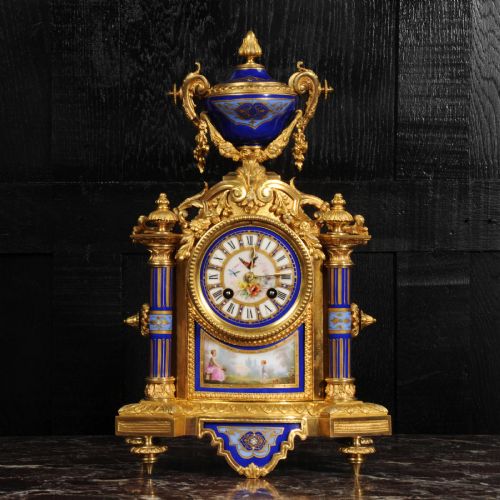
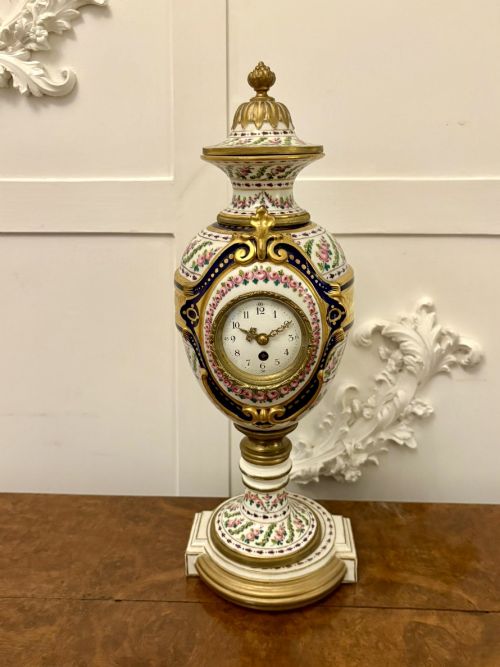
A nineteenth century urn clock stands as a striking centrepiece, combining sculptural ceramic or metal vessels with precise mechanical timekeeping.
Nineteenth Century Urn Clock
A nineteenth century urn clock transforms a classical vessel form into a functional timepiece, frequently accompanied by matching garniture sets. These pieces draw heavily on French Rococo Revival, Napoleon III, Louis XVI, and Egyptian Revival styles, capturing the ornate decorative tastes of the Victorian era.
The objects span periods from the early 1800s through the late 1900s, with many examples originating from French workshops during the 1860s and 1880s. Buyers frequently encounter formats incorporating porcelain vases or mounted gilt bronze urns that dominate the mantelpiece.
Mantel clocks and multi-piece garniture sets form the core of these listings, often integrating side urns or candelabra to create a balanced symmetrical arrangement. The physical presence ranges from intimate porcelain models to massive architectural marble and bronze compositions.
Materials and Construction
Maker workshops utilised cast gilt bronze, ormolu, and brass to build durable skeletal frames and decorative mounts. These metallic elements were frequently chased and gilded to provide rich surface lustre.
Porcelain bodies, often painted with hand-detailed scenes or Sèvres-style motifs, serve as the central urn housings for the clock movements. Materials like black slate, block marble, onyx, and glass provide sturdy structural bases and protective enclosures.
Enamel dials with delicate numerals display the time, driven by mechanical movements produced by prominent horological makers of the period.
Nineteenth Century Urn Clock Retail Price Guide 2026
Typical asking prices for nineteenth century urn clock among the pieces listed under this phrase on Sellingantiques today, from the lower quarter to the upper quarter. They describe what is for sale here now, not the wider market.
The documented periods span from an 1800 French Empire piece through Victorian productions of the 1890s.
Evaluating Quality and Craftsmanship
The refinement of the casting and the depth of the gilding separate standard production pieces from exceptional works of art. Sharply chiselled ormolu mounts and finely hand-painted porcelain panels indicate superior workshop output.
The integration of the movement maker's signature, such as works by Japy Freres or Samuel Marti, elevates the horological standing of the piece. Completeness also dictates value, particularly where original matching garniture urns survive intact with the central clock.
Japy Freres·Achille Brocot·Samuel Marti·VINCENTI of PARIS·JP Delettrez
The Nineteenth Century Urn Clock Glossary
- Garniture set
- A decorative grouping consisting of a central clock flanked by matching side ornaments such as urns, vases, or candelabra.
- Ormolu
- A metallic technique involving the application of finely ground high-carat gold to a bronze object.
- Sèvres style
- An aesthetic imitating the soft-paste porcelain and distinctive colour palettes produced by the historic French royal manufactory.
- Four glass clock
- A mantel clock design featuring glass panels on all four sides, allowing full visibility of the intricate mechanical movement inside.
Nineteenth Century Urn Clock: Frequently Asked Questions
How do I wind a nineteenth century clock?
Most mechanical clocks of this era utilise a key inserted into winding holes on the dial to tension the mainsprings for time and strike functions.
Care must be taken not to over-wind the movement, turning the key only until firm resistance is felt.
What is a garniture set?
A garniture set pairs a central mantel clock with two matching decorative objects, such as urns or vases, designed to sit symmetrically on either side.
This arrangement was popular in nineteenth-century interiors to create a cohesive decorative display across a mantelpiece.
How do I identify French clock movements?
Makers often stamped their company medals, names, and serial numbers directly onto the brass backplate of the internal clock mechanism.
Names like Japy Freres or Samuel Marti frequently appear alongside exhibition awards and stamp dates.
Where should I place an urn clock?
These clocks require a stable, level surface such as a mantelpiece, sideboard, or sturdy table to ensure the pendulum swings evenly.
Keeping them away from direct sunlight and damp environments helps preserve the delicate ormolu gilding and painted porcelain surfaces.