
Nineteenth Century Tripod Table
A nineteenth century tripod table brings compact elegance to a room, offering a sturdy single-pillar support that handles drinks, games and books with ease.
Nineteenth Century Tripod Table
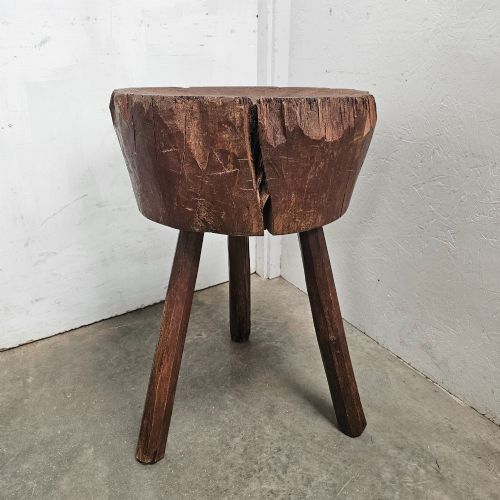
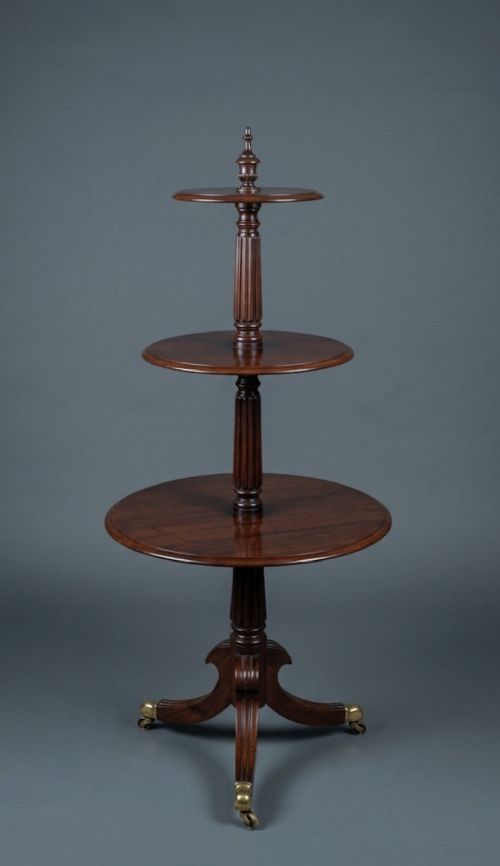
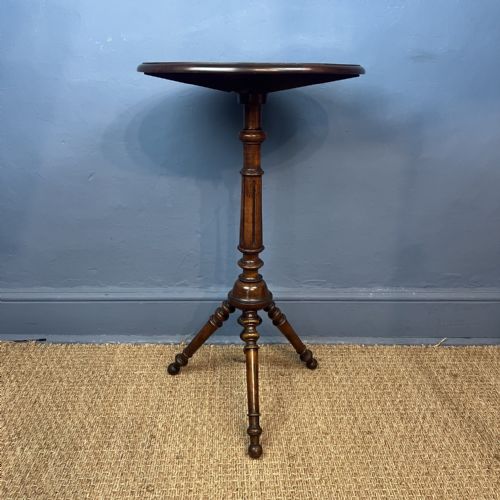
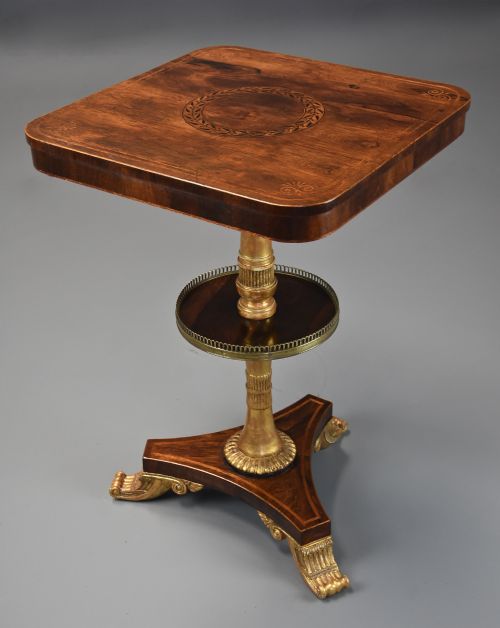
When you search for a nineteenth century tripod table, you encounter a diverse selection of small furniture designed for flexible domestic use. The listings on this page span several decades of the eighteen-hundreds, covering periods from Regency and William IV to the Victorian era and late century revivals.
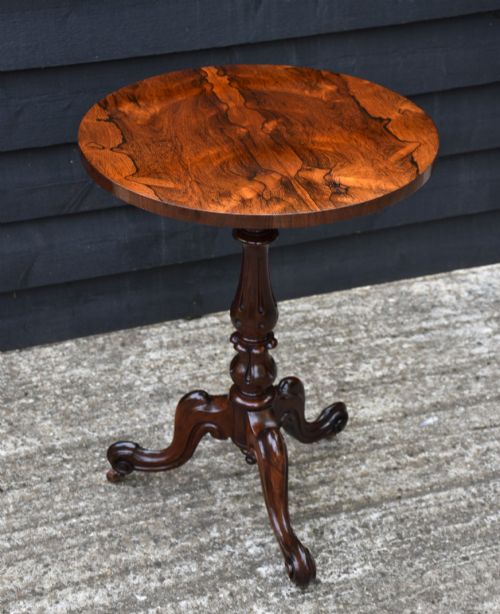
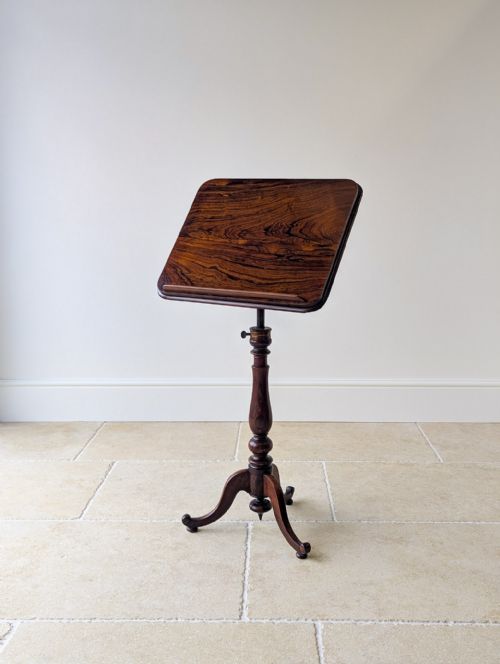
Most pieces function as wine tables, occasional tables, or lamp tables, while others serve specific purposes such as reading stands, games tables, or gueridons. Woods like mahogany, rosewood, and walnut dominate the selection, often accompanied by brass castors, tilt-top mechanisms, and inlaid veneers.
Geographic origins extend across Britain, France, Sweden, Italy, and Burma, showcasing vernacular rural styles alongside refined urban cabinet-making. Whether you select a plain mahogany tilt-top or an elaborate marquetry piece, each item rests upon a characteristic three-legged support.
Materials and Construction
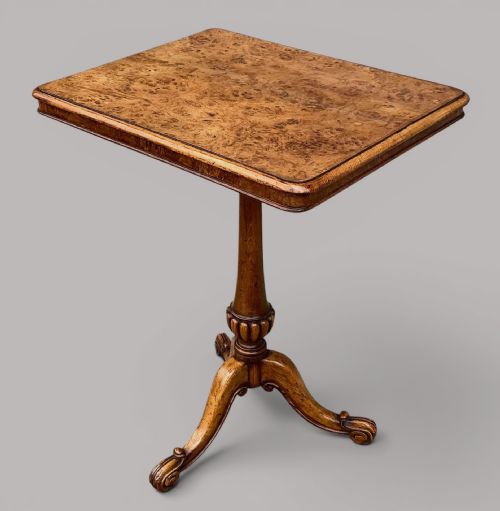
Cabinet-makers of the period relied on dense hardwoods such as mahogany, rosewood, and walnut for the primary structure, frequently utilising burr oak, birch, or beech for specific regional variants. Tops were constructed from solid timber or stable core panels faced with decorative veneers including satinwood, olive, and intricate marquetry or parquetry patterns.
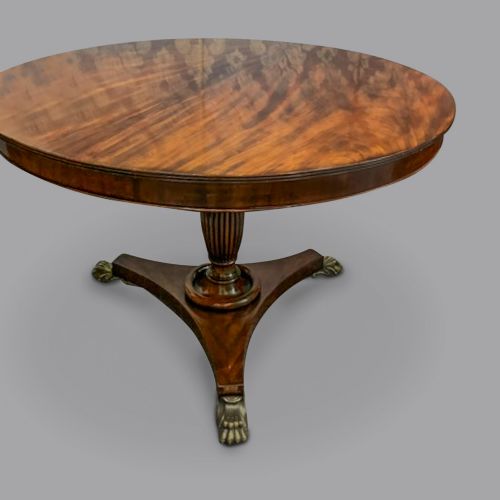
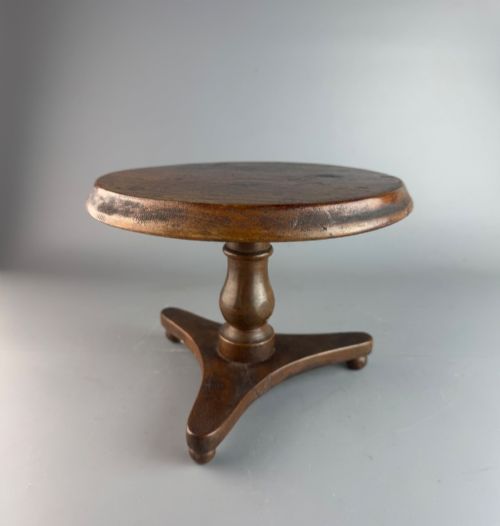
Support stems were typically turned on a lathe from a single piece of timber, rising from three splayed legs that provided balance to the central pillar. Tilt-top mechanisms incorporated brass catches and hinges, allowing the table surface to fold vertically when not in use.
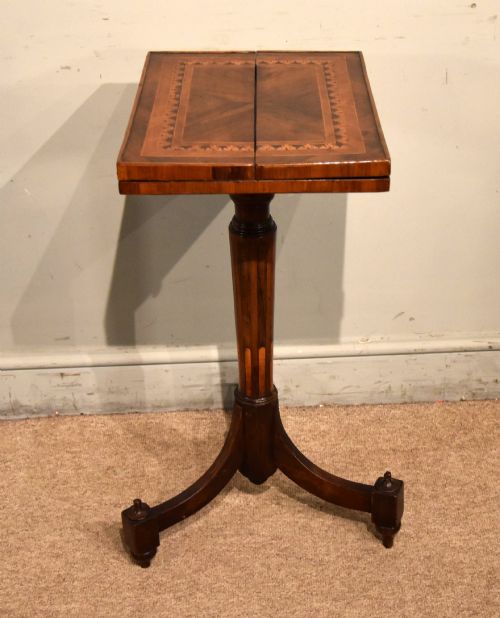
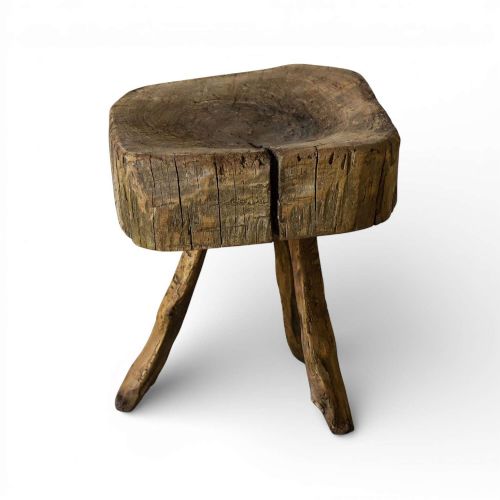
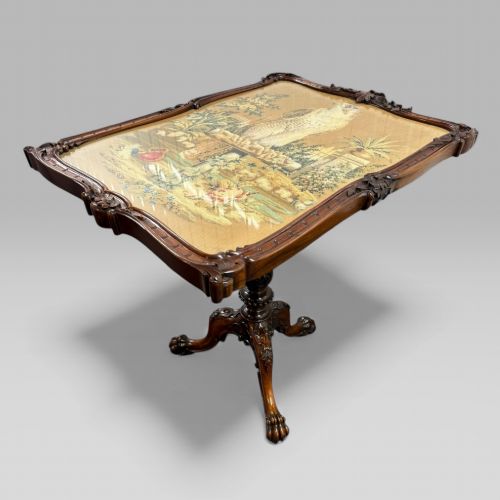
Details such as boxwood stringing, carved swan motifs, brass casters, and gnarled natural root structures defined the aesthetic finish of individual pieces. Joinery relied on traditional pegging and dovetailing methods to ensure longevity without modern adhesives.
Materials represented across the inventory include mahogany, rosewood, walnut, marble, oak, birch, beech, and padouk.
Markers of Distinction
The distinction between standard utility items and superior examples lies in the selection of timber and the precision of the carving. Dense grain patterns in rosewood or mahogany, combined with crisp turning on the pillar and legs, signal workshop execution of a higher order.
Design complexity also separates pieces, with veneered marquetry, boxwood stringing, and pivoting tilt-top mechanisms requiring advanced carpentry skills. Original hardware, such as brass castors and locking catches, preserves the integrity of the design and elevates the standing of the table.
Gillows·George Bullock
The Nineteenth Century Tripod Table Glossary
- Guéridon
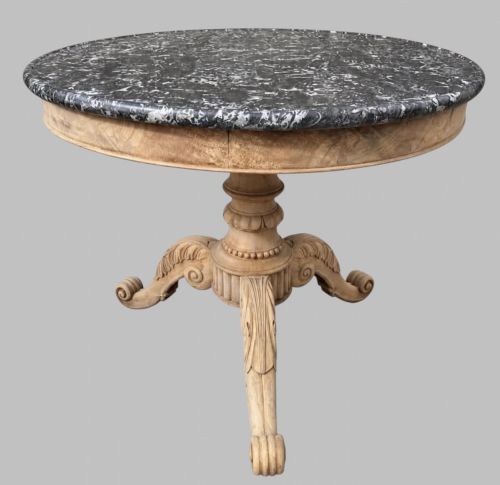
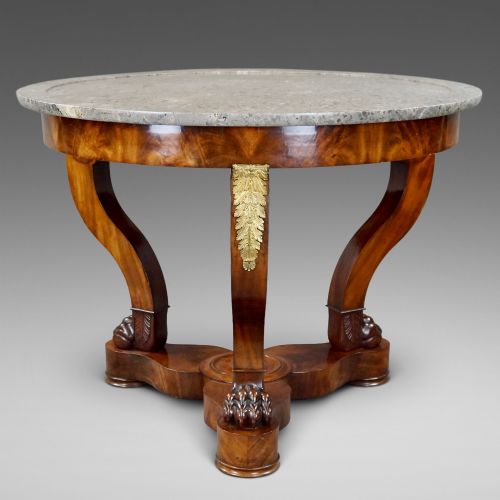
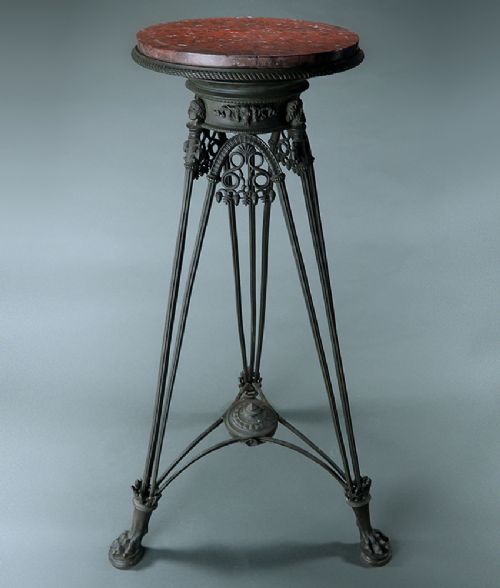
- A small French round table supported by a central pillar and tripod base, popular throughout the nineteenth century. These often feature marble tops or elaborate mahogany veneers.
- Marquetry
- Decorative veneer work forming pictorial or geometric patterns using various woods, ivory, or shell. Italian examples frequently employ this technique on games tables.
- Padouk
- A heavy tropical hardwood with a reddish-brown hue, utilised in imported campaign and colonial furniture. It offers exceptional durability and a deep natural lustre.
- Treen
- Small handmade wooden domestic objects and utensils. Candlestands and small tables sometimes fall into this category when turned from a single piece of wood.
Nineteenth Century Tripod Table: Frequently Asked Questions
How do I use a tilt-top table?
Release the brass catch underneath the top to pivot the surface into a vertical position for storage against a wall.
Return it to the horizontal position and secure the latch before placing items on the surface.
Were these tables used for dining?
Smaller tripod tables served primarily for holding drinks, books, or lamps rather than full meals.
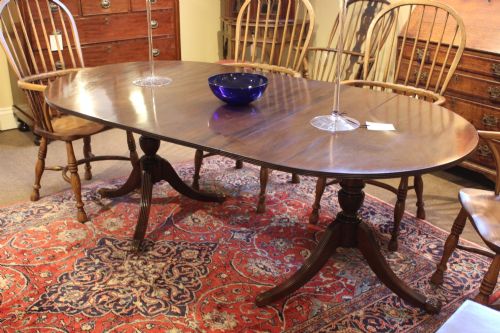
Larger pedestal formats accommodated occasional dining or games, while wine tables remained beside seating areas.
How do I distinguish Regency from Victorian examples?
Regency pieces often display restrained classical lines, brass stringing, and rosewood or mahogany veneers dating from the early decades.
Victorian variations introduce heavier proportions, eclectic revival styles, and darker walnut or oak finishes later in the century.
What is a gueridon table?
A gueridon is a French round occasional table supported by a central pillar and three legs.
They frequently feature marble tops, bronze mounts, or flame mahogany veneers.