



Nineteenth Century Staffordshire Pottery
Nineteenth century staffordshire pottery brings domestic earthenware figures, animals, and blue and white transfer tableware into the room with robust modelling and character.
Nineteenth Century Staffordshire Pottery
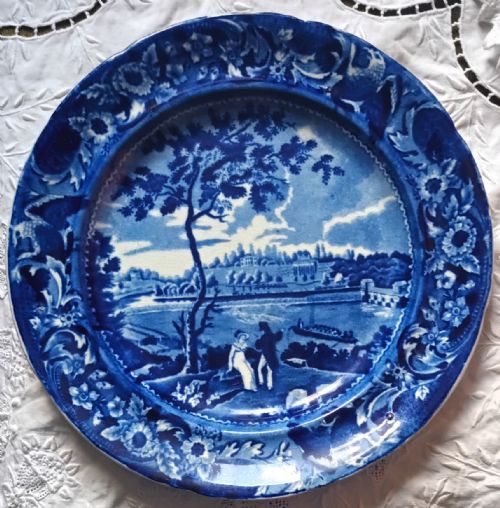
Nineteenth century staffordshire pottery spans a rich variety of earthenwares, from figures and spill vases to blue and white transfer printed plates and jugs. These pieces record the popular tastes, portraits, and domestic animals of the Georgian and Victorian eras.
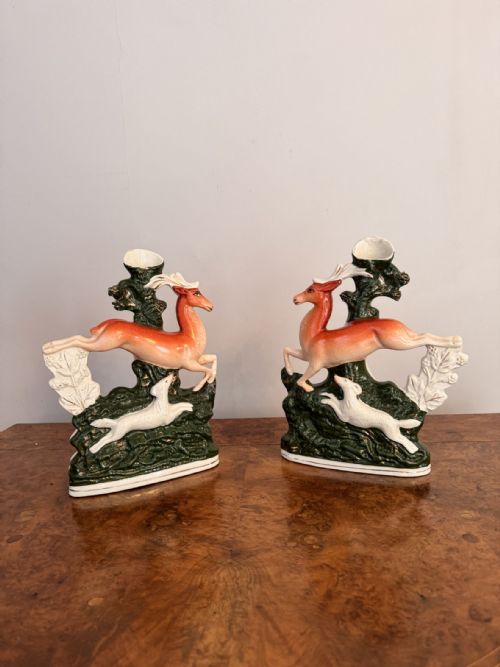
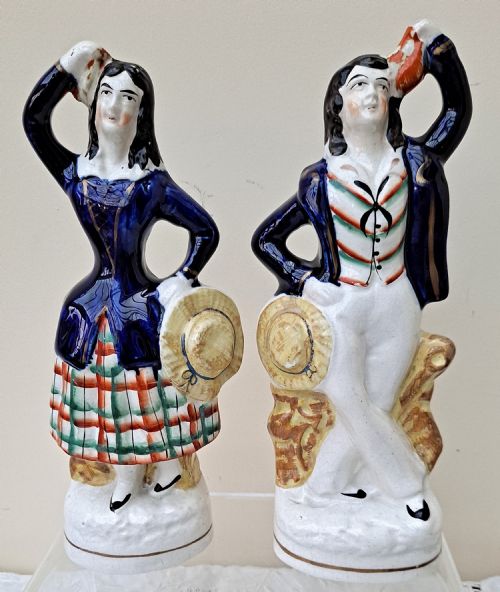
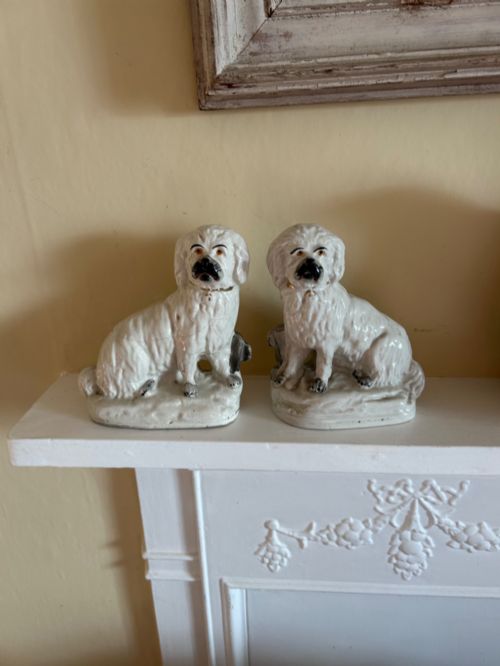
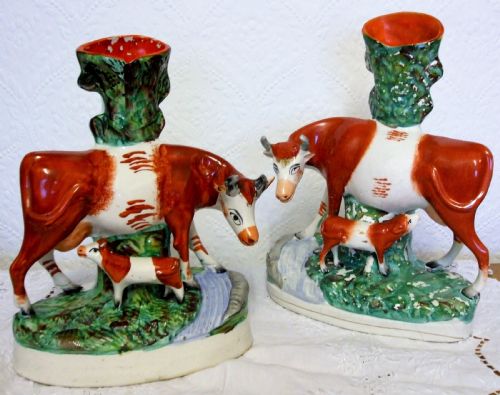
The objects most frequently met on this page include flat-back portrait figures, pairs of dogs, cows with calves, and transfer decorated tableware. Makers produced these ornaments and functional vessels in large numbers for everyday mantelpieces and tables.
Materials and technique
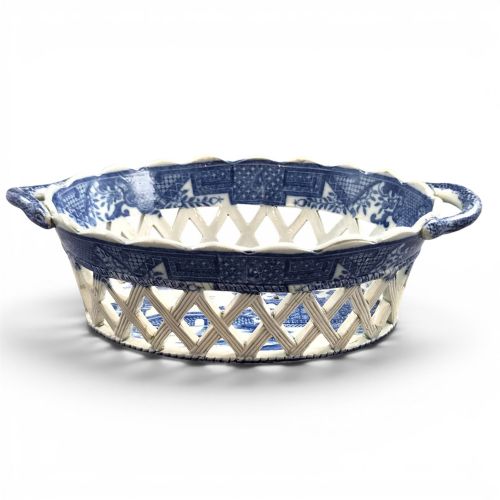
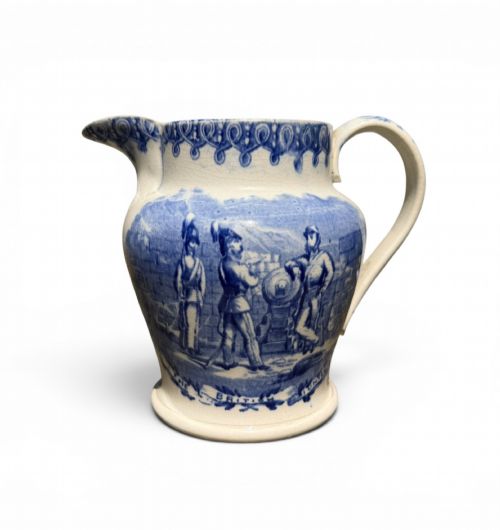
Potters shaped these objects from earthenware and pearlware bodies, applying lead glazes to seal the porous clay. Many figures and vessels received hand-painted enamel colours or purple and blue transfer printed decoration.
Makers often utilised gold leaf highlights and treacle glazes to finish decorative surfaces on lions, dogs, and theatrical figures. Firing took place in traditional kilns, resulting in the characteristic weight and glaze pooling seen across the period.
Nineteenth Century Staffordshire Pottery Retail Price Guide 2026
Typical asking prices for nineteenth century staffordshire pottery among the pieces listed under this phrase on Sellingantiques today, from the lower quarter to the upper quarter. They describe what is for sale here now, not the wider market.
Maltese terriers and zebra figures demonstrate the Victorian fascination with exotic and domestic animals.
Judging quality and modelling
The brightness of the enamel colours and the smooth application of the glaze distinguish finer domestic pieces. Well-modelled pairs show balanced proportions and careful detailing rather than hurried brushwork.
Stubbs·Spode·William Adams·J. and R. Clews·John Rogers and Son·Minton
The Nineteenth Century Staffordshire Pottery Glossary
- Pearlware
- A refined earthenware body developed with a bluish glaze that pools in crevices, popular in the early nineteenth century.
- Spill vase
- A hollow figure or cylindrical vessel designed to hold wooden spills for lighting pipes and fires.
- Transfer printing
- A technique where a design is engraved on a copper plate, transferred on paper, and applied to the ceramic surface before glazing.
- Flat-back
- A style of figure moulded with a plain, unadorned reverse designed to sit flat against a wall or mantelpiece.
- Gaudy Welsh
- A type of colourful earthenware featuring cobalt blue, copper lustre, and iron red painted over a white glaze.
Nineteenth Century Staffordshire Pottery: Frequently Asked Questions
What are flat-back figures?
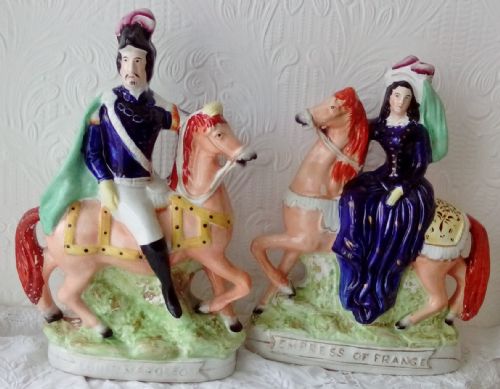
Flat-back figures are ceramic ornaments designed specifically to sit flush against a mantelpiece or shelf. Makers left the reverse side unglazed and unmodelled because the piece was only meant to be viewed from the front.
These figures often depict royalty, theatrical performers, or literary characters. Their flat backs help distinguish them from earlier freestanding Staffordshire figures meant to be seen in the round.
How do I date staffordshire dogs?
Dating Staffordshire dogs involves examining the weight of the clay body, the depth of the glaze, and the style of the facial painting. Earlier examples from the Georgian period show finer potting and more restrained enamel decoration.
Late Victorian dogs from the 1880s tend to have heavier bodies and brighter, more mechanical gilding and spotting. Craze lines in the glaze also develop naturally over decades of ageing.
Were these figures made for children?
Nineteenth century Staffordshire figures and animals were primarily ornamental mantelpiece pieces for adults rather than toys for children. They reflected current events, popular heroes, and domestic pets that families wished to display.
Only specific items like money boxes served a direct functional or saving purpose in the household. The figures were intended to bring colour and respectability to the Victorian parlour.
What is the difference between pearlware and earthenware?
Pearlware is an earlier refined earthenware developed to imitate Chinese porcelain by using a subtle bluish glaze over a whitish body. Standard earthenware uses different clay mixtures and clear lead glazes that lack that characteristic blue pooling.
Most pieces from the early nineteenth century utilise pearlware bodies before standard cream-coloured earthenware took over. Collectors look closely at the glaze tint around the foot ring to identify pearlware.