



Staffordshire Earthenware Dish
When you search for a staffordshire earthenware dish, you encounter utilitarian and decorative ceramics shaped by 18th and 19th-century English kilns for the table and larder.
Staffordshire Earthenware Dish
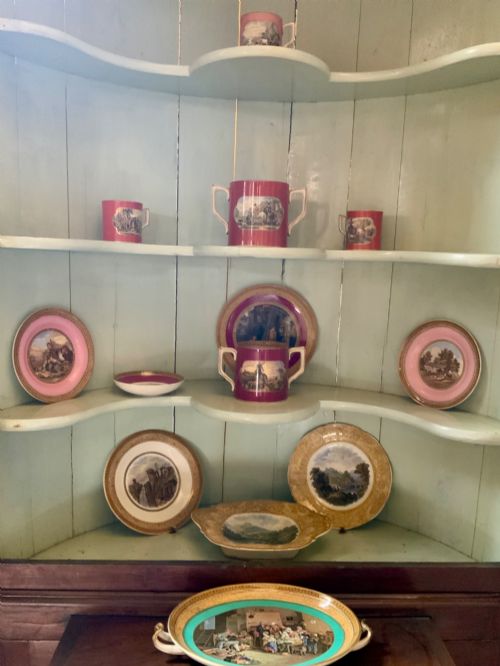
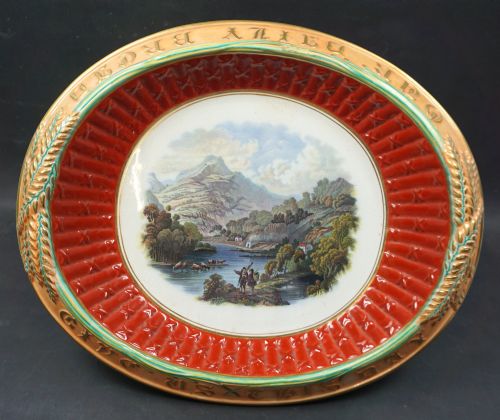
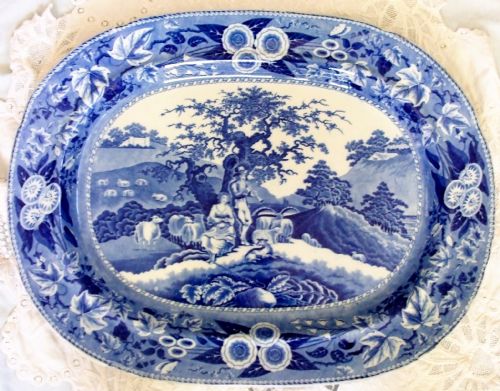
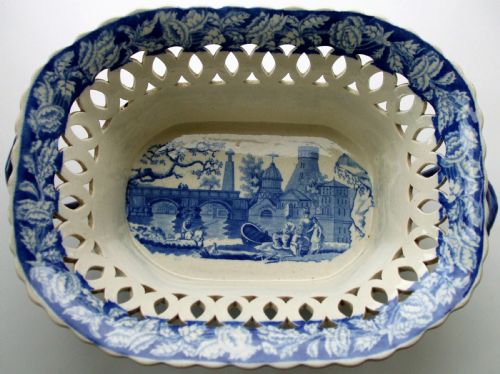
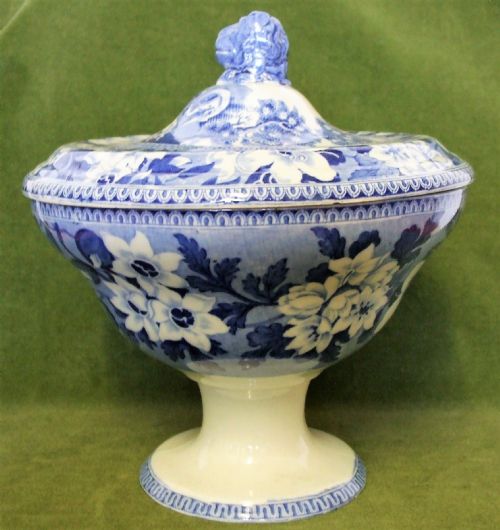
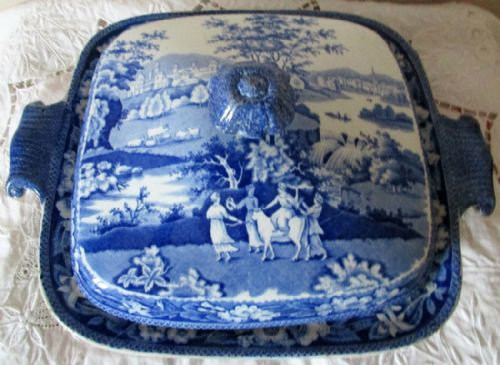
A staffordshire earthenware dish encompasses large serving platters, meat plates, chestnut baskets, and covered tureens designed for domestic dining and food storage. The examples on this page span the Georgian, Regency, and Victorian periods, reflecting shifting tastes from classical landscapes to pictorial transfer prints.
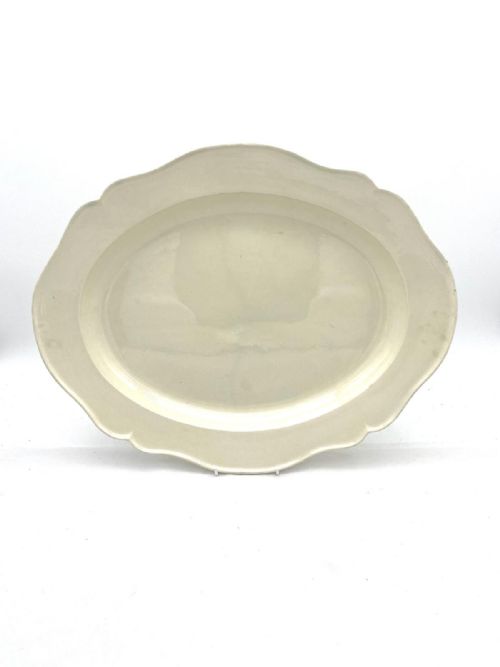
Makers utilised earthenware, pearlware, and creamware bodies, finished with lead glaze or cobalt pigment to achieve durable surfaces. Forms range from utilitarian meat plates to decorative cheese bells and egg crocks modelled as hens.
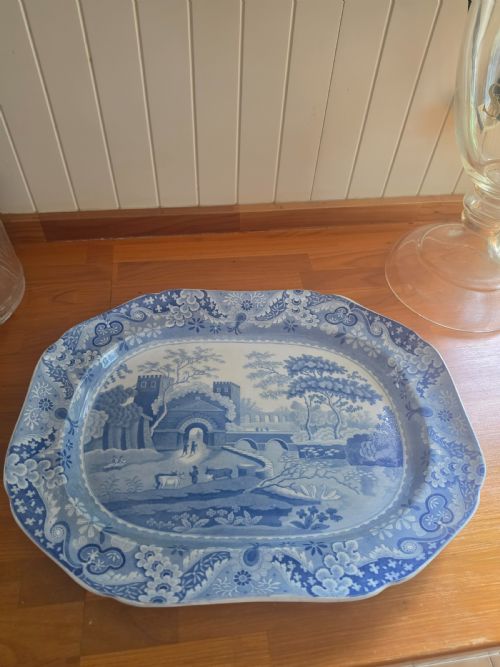
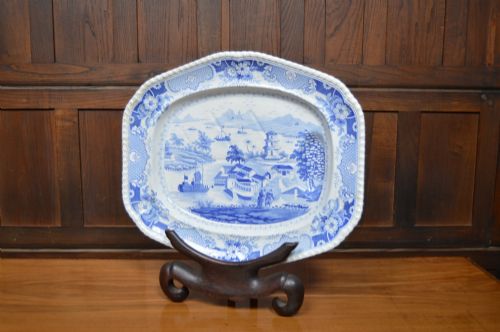
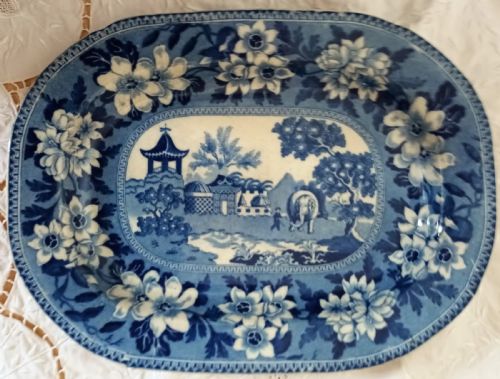
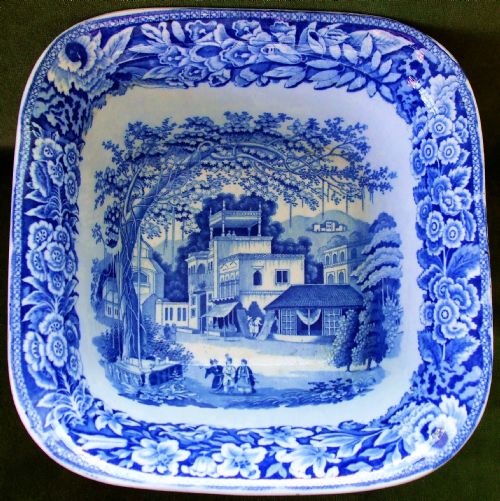
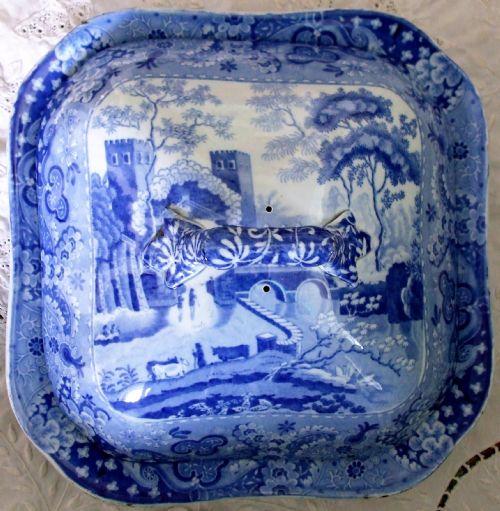
The decorative subjects draw heavily from topographical views, romantic ruins, and chinoiserie patterns applied via transfer printing. Buyers will also find specialised items such as sardine boxes and vegetable tureens bearing named patterns like India Temple or Windsor Castle.
How they were made
Potters shaped refined earthenware, pearlware, and creamware bodies either by throwing on a wheel or pressing into moulds to create chargers, tureens, and platters. These clay bodies provided a porous yet sturdy foundation for subsequent decoration.
Decoration relied primarily on cobalt pigment applied under the glaze through copperplate transfer printing, producing the deep blue hues seen on transferware. Clear lead glazes were then applied over the ceramic body and fired to seal the surface and impart a glossy sheen.
Listings feature earthenware bodies decorated with cobalt pigment under lead glaze, spanning Georgian, Regency, and Victorian manufacturing periods.
What varies in quality
Quality in a staffordshire earthenware dish rests on the crispness of the transfer print and the balance of the cobalt pigment across the ceramic surface. Pieces exhibiting sharp definition in complex patterns like eastern street scenes or historical castles demonstrate superior execution by the pottery.
The refinement of the underlying earthenware body and the evenness of the lead glaze also distinguish finer items. Heavier moulding work, seen in relief-decorated cheese bells or figural egg crocks, requires precise ceramic control to maintain structural integrity during the kiln firing.
J. & R. Clews·John Rogers & Son·J. & R. Riley·Thomas Forester & Sons·Charlotte Rhead Bursley Ware
The Staffordshire Earthenware Dish Glossary
- Earthenware
- A porous pottery body fired at lower temperatures, requiring a glaze to render it waterproof for domestic use.
- Transferware
- Ceramic decorated by transferring a printed design from a copper plate onto paper, then onto the unfired or biscuit-fired pottery.
- Pearlware
- A refined earthenware developed in the late 18th century featuring a bluish glaze that pooled in recesses to mimic Chinese porcelain.
- Creamware
- A pale yellow-hued earthenware perfected by English potters during the 18th century, prized for its warm tone and smooth surface.
- Cobalt Pigment
- A metallic oxide colourant used to produce deep blue underglaze decoration on pottery and porcelain.
Staffordshire Earthenware Dish: Frequently Asked Questions
What is a staffordshire earthenware dish used for?
These ceramic pieces served practical roles in the dining room and kitchen, functioning as meat platters, vegetable tureens, and serving plates for family meals.
Heavier items such as egg crocks and cheese bells were specifically made for larder storage and dairy presentation.
How do I identify a Georgian piece?
Georgian items typically exhibit creamware or pearlware bodies paired with hand-painted or early transfer-printed designs depicting romantic landscapes and classical ruins.
They often feature subtle stylistic cues like silver-shaped rims rather than the heavier borders found on later Victorian wares.
Are these dishes safe for food?
While historic earthenware was designed for daily dining, the age and composition of nineteenth-century lead glazes mean modern use requires careful consideration.
Collectors generally treat these ceramics as decorative display pieces or historical study items rather than active kitchenware.
What is blue and white transferware?
Blue and white transferware is pottery decorated using an engraved copper plate to stamp cobalt designs onto paper before applying them to the clay body.
This technique allowed potteries to mass-produce intricate pictorial scenes depicting everything from biblical stories to contemporary topographical views.