


Nineteenth Century Serving Table
A nineteenth century serving table is a grand dining room staple designed to hold dishes and silver, offering both elegance and practical utility.
Nineteenth Century Serving Table
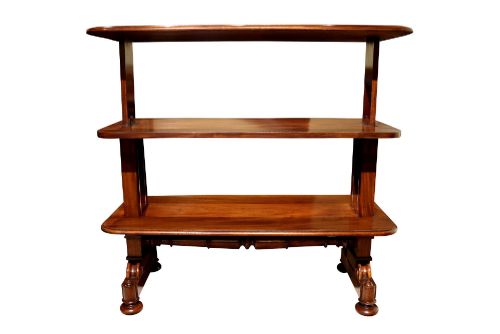
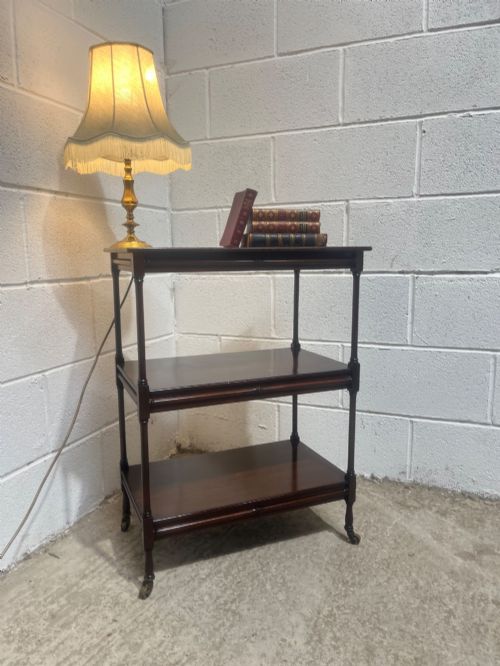
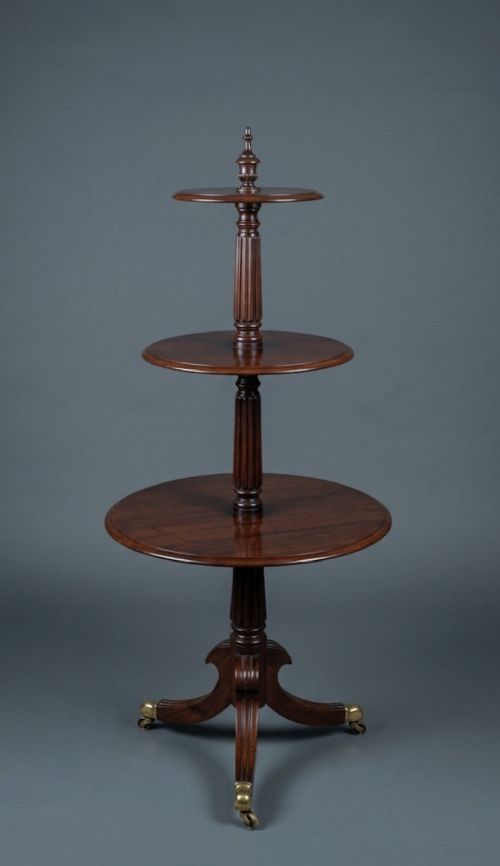
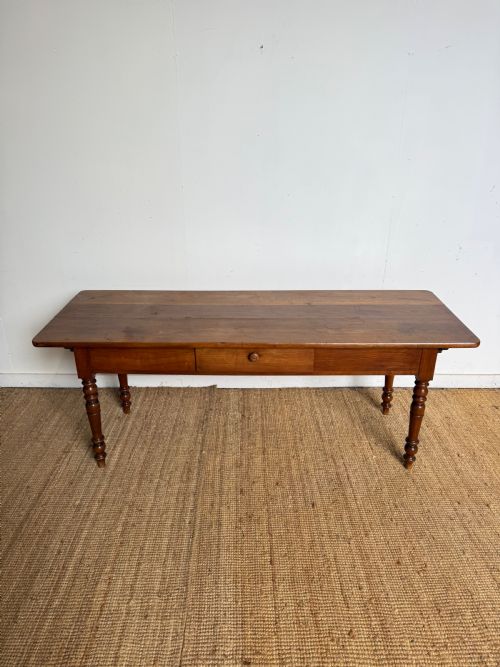
A nineteenth century serving table provides a solid surface for dining room hospitality, appearing in forms ranging from straightforward mahogany sideboards to elaborate tiered dumb waiters and console tables. These pieces accommodate everything from heavy silver dishes to porcelain lamps during formal meals.
The selection on this page leans heavily towards mahogany and cherrywood structures from the Regency, Victorian, and William IV periods. Buyers will frequently encounter sideboards, console tables, and metamorphic buffets alongside smaller serving items like sterling silver spoons.
Originating from English and French traditions, these serving tables reflect the shifting dining habits of the period. Dumb waiters and trolleys show a clear demand for movable service during multi-course dinners.
How they were made
Cabinet makers built these serving tables primarily using dense timbers such as mahogany, walnut, and cherrywood, often employing flame veneer to create striking grain patterns. Ebony stringing and brass inlay frequently accent the primary wood surfaces, adding geometric definition to the edges and drawer fronts.
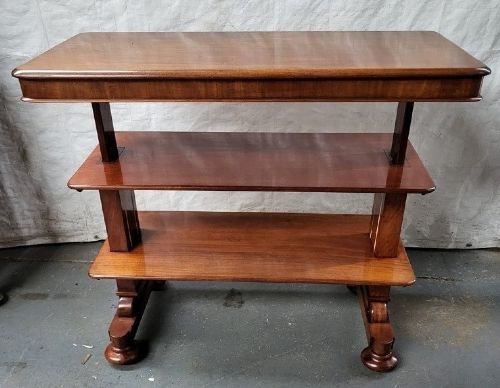
Specialised mechanisms define the more complex pieces, such as the rise and fall movement found on tiered buffets and dumb waiters. These functional joints allowed servants to adjust shelf heights or rotate dishes easily during a meal.
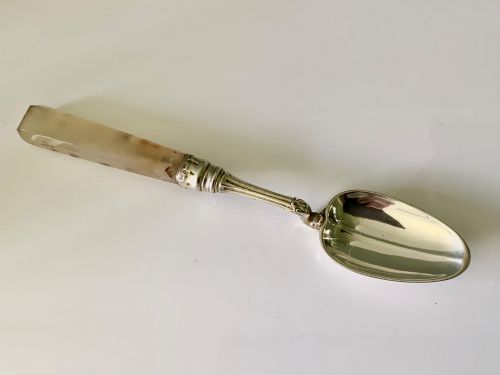
Silver sifter spoons arrived ready to dust sugar over Victorian puddings with absolute precision.
What varies in quality
The distinction between standard and exceptional pieces rests upon the choice of timber and the precision of the joinery. Tables utilising heavily figured flame mahogany or finely executed brass inlay demonstrate a higher level of workshop skill.
Proportion and decorative restraint dictate the visual success of each piece. Items retaining original hardware and smoothly operating metamorphic actions represent the peak of period craftsmanship.
Gillows·Holland and Sons·Tiffany and Co·Henri Soufflot
The Nineteenth Century Serving Table Glossary
- Dumb waiter
- A tiered freestanding table or trolley used to hold food and utensils without the need for attendants. These items often feature rotating shelves or rise and fall mechanisms.
- Metamorphic
- A term describing furniture that transforms from one form to another, such as a buffet that alters its height or tier configuration. This engineering required expert cabinet making.
- Sideboard
- A large dining room piece designed for serving food, displaying dinnerware, and storing cutlery in drawers. They often feature breakfront designs or pedestals.
- Console table
- A table fixed against a wall, frequently used as a serving surface in hallways or dining rooms. These are often supported by decorative brackets or legs.
- Stringing
- A narrow inlay of contrasting wood or metal used to outline panels and drawer fronts. This decorative technique creates a delicate border.
Nineteenth Century Serving Table: Frequently Asked Questions
How were nineteenth century serving tables used?
These tables served as staging areas for heavy platters, silver dishes, and wine coolers during formal meals. They kept food within reach of attendants while clearing space on the main dining table.
Tiered versions and dumb waiters allowed households to manage courses efficiently with fewer servants present in the room.
Where should I place a serving table?
A dining room is the traditional and most practical home for a serving table, positioned against a main wall for easy access during meals. Console variants also function well in large entrance halls.
Ensure there is enough clearance around the piece to open drawers or operate any sliding and rising mechanisms.
How do I identify a Regency serving table?
Regency pieces often display classical architectural influences, featuring mahogany surfaces accented by brass inlay or ebony stringing. The lines tend to be clean and balanced, reflecting early nineteenth-century taste.
Look for proportion and specific decorative motifs such as reeded legs or brass lion paw feet.
What is a metamorphic buffet?
A metamorphic buffet is a specialised dining room piece designed with adjustable tiers or rising mechanisms. These allowed the height or configuration of the shelves to change according to the needs of the host.
They represent a high point in nineteenth-century functional furniture design.